
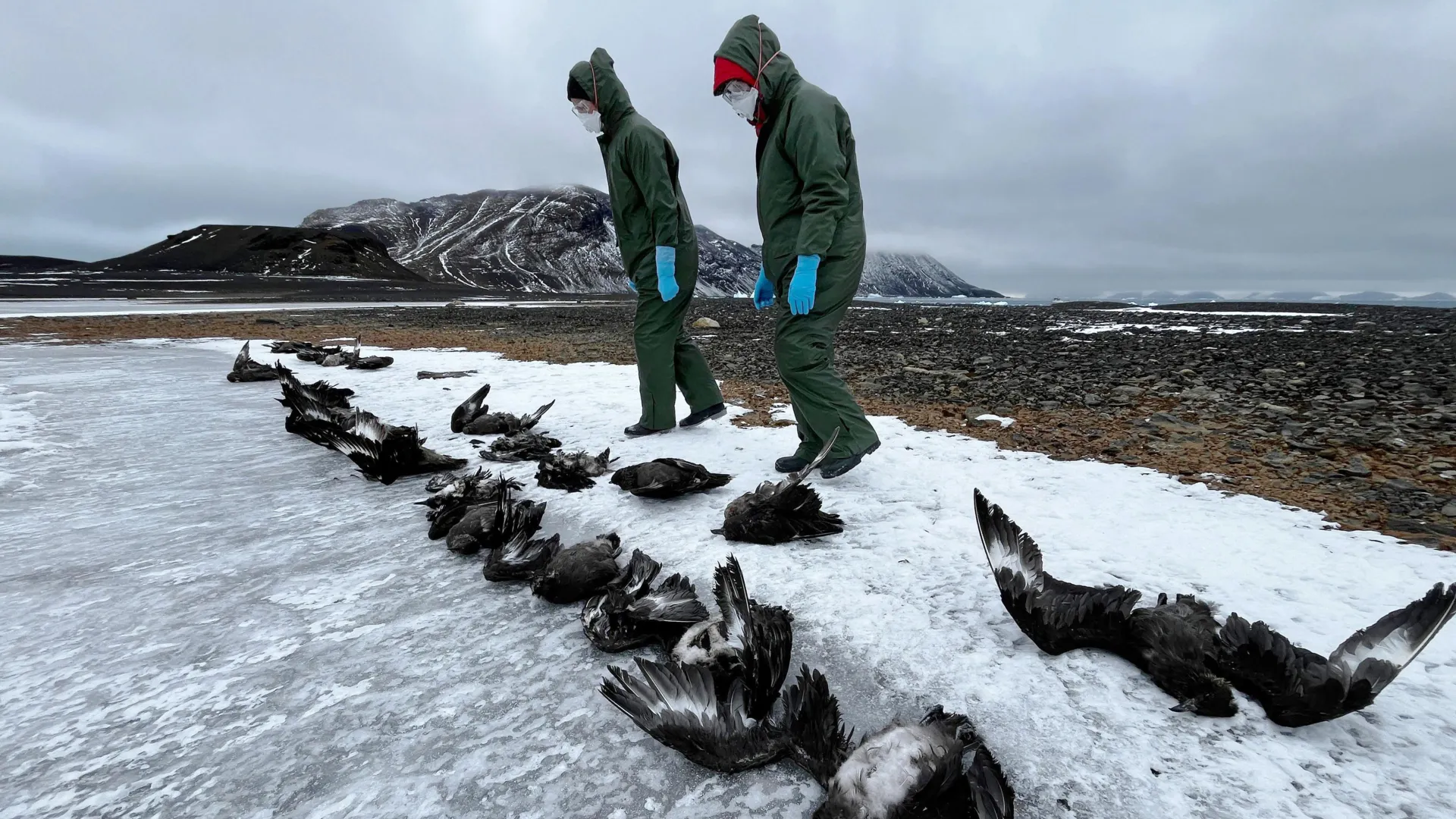
More than 50 skuas, large predatory seabirds, perished across Antarctica during the austral summers of 2023 and 2024, succumbing to the highly pathogenic avian influenza (HPAI) virus H5N1. This grim discovery marks a pivotal moment for the continent, representing the first confirmed large-scale wildlife die-off attributed to the virus in this otherwise pristine environment. The findings, published recently in Scientific Reports, stem from a collaborative study spearheaded by Erasmus MC in The Netherlands and the University of California, Davis, confirming fears that the global H5N1 pandemic has finally reached the southernmost reaches of the planet with devastating consequences.
A New Threat to an Isolated Continent
Antarctica, long considered one of Earth’s last great wildernesses, is characterized by its extreme conditions and unique biodiversity, much of which has evolved in relative isolation from widespread pathogens. The arrival and confirmed impact of H5N1 signal a significant ecological challenge, adding a formidable new pressure to an ecosystem already grappling with the profound effects of climate change, increased human activity, and other environmental stressors. The confirmed deaths of skuas, highly adapted predators and scavengers vital to the Antarctic food web, underscore the potential for widespread disruption across the continent’s marine and avian communities.
Skuas, often referred to as "pirates of the polar seas," are robust brown seabirds closely related to gulls. They inhabit polar and subpolar regions, playing a crucial role as apex predators and efficient scavengers. Their scavenging behavior, which involves consuming carrion and preying on eggs, chicks, and even adult birds from penguin and other seabird colonies, is essential for nutrient cycling and maintaining ecosystem health. However, this very behavior, while ecologically beneficial, unfortunately renders them particularly vulnerable to infectious diseases like H5N1, facilitating both contraction and potential onward transmission as they move between different animal populations and locations.
Unraveling the Antarctic Outbreak: A Chronology
The presence of H5N1 in the Antarctic region was first indicated earlier in 2024. Initial reports documented the detection of the virus in a kelp gull and two skuas found deceased in January and February. While these findings were concerning, they did not definitively prove that the virus was the direct cause of death. Establishing a causal link is a critical step in understanding the true impact of an emerging pathogen.
The definitive confirmation of H5N1 as the cause of death came through rigorous scientific investigation. Dr. Ralph Vanstreels, a wildlife veterinarian with the UC Davis One Health Institute within the Weill School of Veterinary Medicine and co-senior author of the study, emphasized the significance of these findings: "We knew there were animals with the infection, but this is the first study to show they died of the viral infection. It’s an important distinction in the early days of an outbreak." This distinction moves H5N1 from a mere presence in the Antarctic to an active, lethal threat.
To ascertain the extent and impact of the virus, a dedicated research team embarked on the HPAI Australis Expedition in March 2024, immediately following the peak breeding season for many Antarctic species, including skuas and penguins. The expedition targeted 10 critical wildlife sites across the South Shetland Islands, the northern Weddell Sea, and the Antarctic Peninsula – regions renowned for their dense concentrations of seabirds and marine mammals.
During their extensive fieldwork, scientists meticulously examined sick or deceased animals they encountered. This involved the careful collection of tissue and environmental samples, coupled with detailed necropsies – post-mortem examinations – to pinpoint the precise cause of death. While the team investigated the remains of several iconic Antarctic species, including gentoo penguins, Adélie penguins, and Antarctic fur seals, H5N1 was not identified as the cause of mortality in these populations during this initial phase of the study.
However, a clear pattern emerged among the skuas. "As the expedition progressed, it became obvious quickly that skuas were a major victim," stated Vanstreels. The virus was specifically detected in skuas at three distinct locations: Hope Bay, Devil Island, and, most alarmingly, Beak Island. Beak Island witnessed a particularly significant die-off event, primarily affecting the South Polar skua populations.
Matteo Iervolino, a Ph.D. candidate at Erasmus MC in Rotterdam, The Netherlands, and the study’s first author, recounted the stark reality observed on the ground: "We diagnosed high pathogenicity avian influenza as the cause of death for nearly all of the dead skuas we found at Beak Island. There, I could really see with my eyes the impact this virus can have on these populations." This firsthand account paints a vivid picture of the crisis unfolding in one of Earth’s most remote environments.
The Pathology of H5N1: A Crisis of Suffering
The symptoms exhibited by infected skuas are profoundly distressing, indicative of the severe neurological damage inflicted by H5N1. Dr. Vanstreels described the situation as a "crisis in animal suffering." The virus primarily targets the brain and central nervous system, leading to a range of debilitating neurological symptoms. Affected birds have been observed with twisted necks, unusual body stretching, and erratic behaviors such as walking or swimming in circles. In severe cases, infected individuals may lose coordination, crash into objects, or even fall out of the air, highlighting the extreme distress and disorientation caused by the disease.
The researchers unequivocally stress that human activities have played a significant and undeniable role in the emergence and global proliferation of H5N1. Consequently, human intervention and responsible practices are equally critical in limiting its further spread, particularly in vulnerable ecosystems like Antarctica.
Global Trajectory of a Pandemic Virus
The journey of the H5N1 virus to Antarctica is a testament to its relentless global spread, a pandemic that originated decades ago. The virus was first identified in 1996 on a domestic goose farm in Southeast China. In its early stages, H5N1 circulated largely unchecked within poultry populations, evolving and adapting. This initial period of uncontrolled spread in commercial farming operations created the conditions for the virus to spill over into wild bird populations.
Once established in wild birds, H5N1 leveraged their migratory patterns and extensive ranges to spread rapidly across continents. From Asia, it progressively moved into Europe, the Middle East, and Africa. By the mid-2000s, it had gained a firm foothold in these regions, causing localized outbreaks and significant economic losses in the poultry industry. The virus then crossed the Atlantic, arriving in North America, and subsequently swept through South America. By early 2024, its presence was confirmed in Antarctica, marking the completion of its circumglobal journey, leaving virtually no major continental landmass untouched.
The current H5N1 strain affecting Antarctic skuas is genetically similar to variants that have caused widespread devastation elsewhere. Notably, it was responsible for massive die-offs of elephant seals and sea lions along the coasts of Argentina, decimating thousands of marine mammals in 2023. Globally, the toll on poultry has been catastrophic, with more than 400 million birds either dying from the infection or being culled to control its spread, leading to profound economic impacts and disruptions to food security. Beyond birds and marine mammals, H5N1 has demonstrated its ability to infect a broad spectrum of mammalian species, including dairy cows, mink, foxes, bears, and otters, underscoring its significant zoonotic potential and adaptability.
The virus also poses a serious, albeit relatively rare, threat to human health. Of approximately 1,000 reported human cases worldwide, roughly half have proven fatal, highlighting the severity of the disease when it jumps to humans and the critical need for continued vigilance and robust public health surveillance.
Professor Thijs Kuiken, a corresponding senior author from Erasmus MC, articulated a stark assessment of humanity’s role in this crisis: "We let the virus slip out through our fingers when it first emerged in the poultry industry. Once it got into wild bird populations, we lost ability to control this virus. Now it’s established in wild bird populations in all the continental regions of the world except Oceania." This statement serves as a powerful reminder of the consequences of failing to contain emerging zoonotic diseases at their source.
A Call for Enhanced Surveillance in a Vulnerable Continent
Antarctica’s wildlife populations already face a daunting array of threats. Climate change, with its effects on sea ice, krill populations, and ocean temperatures, poses an existential risk to many species. Growing tourism, while offering educational opportunities, introduces the potential for disturbance and pathogen transmission. Invasive species, accidentally introduced, can outcompete native fauna or disrupt delicate ecological balances. Overfishing in surrounding waters depletes vital food sources, and widespread pollution, including plastics and microplastics, contaminates marine environments. The arrival of H5N1 adds an unprecedented and highly aggressive pathogen to this complex web of pressures, potentially pushing vulnerable populations to their brink.
One significant complication in assessing the true impact of the H5N1 outbreak on Antarctic skuas is the glaring lack of current population data. The last comprehensive census of Antarctic skuas was conducted as far back as the 1980s, which estimated a population of approximately 800 breeding pairs. Without updated numbers, it is exceedingly difficult for scientists and conservationists to accurately gauge the significance of the loss of 50 or more birds. This data deficit hampers the ability to predict future trends, allocate resources effectively, and implement targeted conservation strategies.
"Everything points toward this virus spreading further," Professor Kuiken warned. "If nobody is watching, we won’t know what is happening." This highlights the urgent and critical need for sustained, comprehensive, and collaborative surveillance efforts across the Antarctic continent. Such efforts would involve regular monitoring of wildlife health, extensive sampling, and the rapid deployment of research teams to investigate unusual mortality events.
The HPAI Australis Expedition, which provided these crucial insights, received vital funding from the International Association of Antarctica Tour Operators (IAATO) and Ocean Expeditions. Further support for the study was provided by the European Union, Consejo Superior de Investigaciones Científicas (CSIC), and PTI Global Health. This multi-stakeholder support underscores the growing recognition of the severity of the H5N1 threat and the necessity of international cooperation in addressing it.
Broader Implications and the Path Forward
The confirmation of H5N1-related wildlife deaths in Antarctica is more than an isolated incident; it is a stark indicator of a global ecological crisis that has now infiltrated one of Earth’s last remaining strongholds of biodiversity. The potential implications for Antarctic wildlife are profound. If the virus becomes endemic, it could lead to sustained population declines in skuas and potentially spread to other susceptible avian species, including the continent’s iconic penguins, and marine mammals. The dense colonial nesting habits of many Antarctic birds could facilitate rapid and devastating transmission, mirroring outbreaks observed in other parts of the world.
The "One Health" approach, which recognizes the interconnectedness of human, animal, and environmental health, is more relevant than ever in the context of H5N1. The virus’s origins in poultry, its spillover into wild birds, its jump to diverse mammalian species, and its capacity to infect humans, all underscore the intricate links between our food systems, biodiversity, and public health.
Moving forward, international collaboration will be paramount. This includes increased funding for scientific expeditions, the establishment of long-term wildlife health monitoring programs, and the sharing of data and expertise among nations. Furthermore, robust biosecurity measures for all human activities in Antarctica, including tourism and research, must be strictly enforced and continuously reviewed to minimize any potential for further pathogen introduction or spread. The fate of Antarctica’s unique ecosystems, and potentially global health, hinges on a proactive, coordinated, and urgent response to this unprecedented viral threat.