
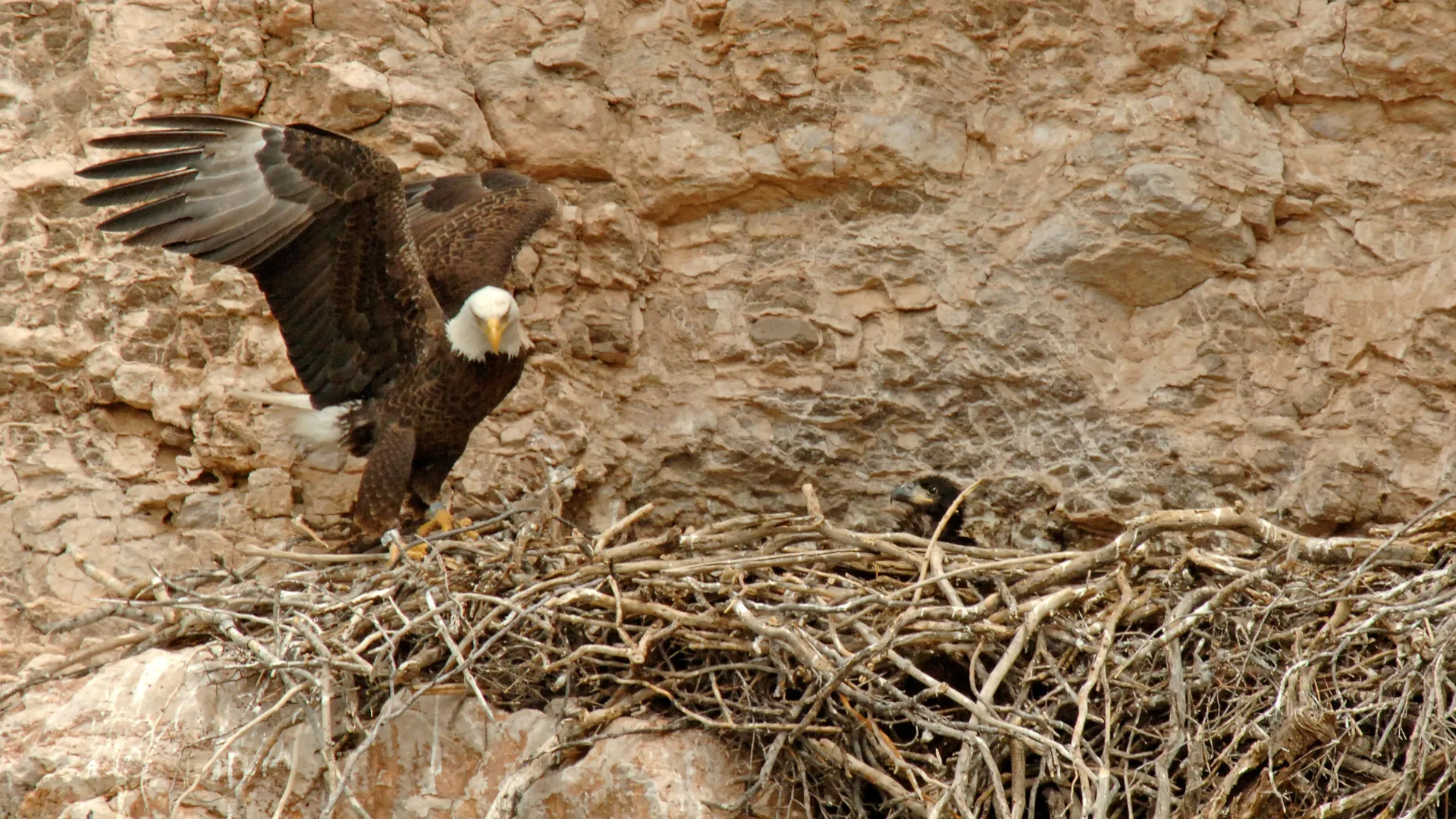
A groundbreaking study published in the Journal of Raptor Research has unveiled an extraordinary migratory pattern among Bald Eagles ( Haliaeetus leucocephalus) from Arizona, challenging long-held assumptions about avian movement in temperate regions. Contrary to the common wisdom that migratory birds primarily head south during non-breeding seasons, these southwestern raptors are embarking on extensive journeys northward, an exploratory behavior researchers believe is driven by the pursuit of ephemeral food sources. The paper, titled "Northward Migrations of Nonbreeding Bald Eagles from Arizona, USA," also documents a rare instance of an eagle establishing new territory far from its natal grounds, offering critical insights into emigration rates, a notoriously difficult aspect of population dynamics to quantify. These findings underscore the highly adaptable and exploratory nature of southwestern Bald Eagles, emphasizing the urgent need for flexible conservation strategies to protect key travel corridors and habitats amidst accelerating climate and landscape changes.
A Departure from Tradition: The Northward Enigma
For generations, the conventional understanding of North American avian migration has been a predictable southward exodus as winter approaches, driven by the search for warmer climates and more abundant food resources. This pattern is deeply ingrained in both scientific literature and public consciousness. However, the Bald Eagles of Arizona present a compelling anomaly. Unlike their counterparts in more northern latitudes, Arizona’s breeding Bald Eagles initiate their nesting season in the winter months, typically from December to June. Consequently, their non-breeding season spans the warmer periods of summer and autumn. This unique temporal reversal of life stages sets the stage for their unusual northward movements, prompting researchers to question the historical and contemporary pressures shaping these unexpected strategies.
The Bald Eagle, a majestic symbol of North American wildlife, has made a remarkable recovery from the brink of extinction, largely due to the banning of DDT in 1972 and robust conservation efforts. Once listed as endangered, and later threatened, by the U.S. Fish and Wildlife Service, the species was famously delisted in 2007. Despite this success story, the species continues to face myriad threats in a human-dominated landscape, from habitat loss to environmental contaminants. Understanding their movement patterns, particularly in geographically distinct populations like Arizona’s, is paramount to ensuring their long-term resilience. The Arizona population, often considered distinct due to its desert riparian habitat, has been a focus of state-level conservation for decades.
Tracking the Explorers: A Seven-Year Odyssey
Between 2017 and 2023, an Arizona-based research team embarked on an ambitious project to meticulously track the movements of these intriguing raptors. Utilizing advanced satellite transmitter technology, they affixed devices to 24 newly fledged Bald Eagles and two non-breeding adults. This robust tracking effort, spanning a seven-year study period, allowed scientists to map the intricate trajectories of individual birds both within and far beyond Arizona’s state lines. While the movements of breeding Bald Eagles in Arizona are relatively well-documented, largely centered around their nesting territories along perennial rivers and reservoirs, comprehensive data on the dispersal and migration of non-breeding birds has historically been scarce.
The importance of this particular focus cannot be overstated. Survival rates and movement patterns can vary significantly across different life stages of a species. By comparing the behavior of non-breeding eagles with that of established breeders, scientists gain a more holistic and accurate understanding of the species’ overall health, population dynamics, and the various factors that shape its success across its range. Individual eagles were tracked for as long as their devices remained operational, with some providing invaluable data for up to four consecutive years, offering an unprecedented look into their early life movements and long-distance explorations. The research team included experts from the Arizona Cooperative Fish and Wildlife Research Unit, the University of Arizona, and the U.S. Geological Survey (USGS), bringing a wealth of experience in wildlife ecology and conservation.
Pathways to the North: Unveiling Uncharted Routes
The study’s most striking revelation was the consistent northward trajectory of the tracked eagles. Instead of heading south to Mexico or other traditionally warmer climes, these birds embarked on extensive journeys into the northern U.S. and even southern Canada. This expansive migratory behavior challenges the conventional paradigm for birds breeding in temperate zones. Dr. Caroline D. Cappello, the lead author of the study, articulated the profound implications of this finding, noting that "northward migratory behavior raises interesting questions about the recent and historical pressures that shape these movement strategies." This suggests that the eagles are responding to specific ecological cues that are stronger to the north during their non-breeding season.
A significant observation was the correlation between age and migratory precision. While younger, more exploratory eagles exhibited broader and less predictable travel patterns, those tracked for at least two years demonstrated increasing fidelity to their routes, with many returning to Arizona in the fall of their hatch year after spending the summer months roaming farther north. This suggests a learning curve, where young eagles initially explore widely before refining their routes based on successful foraging experiences. The researchers hypothesize that these young eagles are capitalizing on "seasonal food bonanzas" available in northern ecosystems during the summer. These could include the abundant salmon runs in the Pacific Northwest and Rocky Mountain regions, the proliferation of nesting waterfowl in the prairies and boreal forests, or the availability of large mammal carcasses in areas with active hunting or natural mortality. Such high-energy, short-lived food sources would offer a powerful incentive for long-distance, directed movements, providing critical fuel for growth and survival during their formative years.
Enduring Sanctuaries: Historic Stopover Sites Remain Vital
Despite their novel northward trajectories, the tracked eagles demonstrated a remarkable consistency in their use of specific stopover sites. The authors reported that many of the same lakes and rivers identified as crucial gathering points for Bald Eagles in a similar study from the 1980s continue to serve this vital role today. This remarkable overlap across generations underscores the enduring ecological significance of these habitats. It suggests that these areas possess unique characteristics – perhaps reliable food sources, safe roosting sites, or strategic geographical positions – that have rendered them indispensable for multiple cohorts of Bald Eagles navigating the vast North American landscape.
The study confirmed a strong reliance on the Intermountain Flyway, a broad migratory corridor that spans the western United States and Canada, for these northward movements. Lakes and rivers along this flyway act as critical refueling and resting points. Dr. Javan M. Bauder, a coauthor on the study, Assistant Unit Leader at the Arizona Cooperative Fish and Wildlife Research Unit, and Assistant Professor at the University of Arizona, emphasized the broader implications of this finding: "managing and conserving wildlife populations requires that we understand the movement of patterns of individuals of all age classes within those populations." This highlights that conservation efforts cannot solely focus on breeding adults but must encompass the dynamic and often more vulnerable exploratory phases of younger birds. The continued use of these historic sites also provides a valuable baseline for monitoring the health of aquatic ecosystems and the prey populations they support, which are vital for raptor survival.
The Emigrant’s Tale: A Rare Glimpse into Dispersal
Among the 26 eagles tracked, one individual’s journey provided a particularly poignant and scientifically significant narrative. This female eagle embarked on an extraordinary odyssey during her early life, traversing ten U.S. states and four Canadian provinces. Her travels covered thousands of miles, a testament to the immense exploratory capacity of young raptors. Ultimately, she appeared to settle in northern California, where, at four years old, she seemed poised to establish a breeding territory of her own, signaling a rare instance of emigration from her natal Arizona population.
This individual’s decision to disperse so widely and potentially breed outside her birth population offered a unique opportunity to quantify a phenomenon that is notoriously challenging for wildlife biologists to measure: the rate at which individuals leave their home population to establish elsewhere. Such dispersal events are crucial for gene flow and the resilience of metapopulations. Tragically, her life was cut short by electrocution, a fate all too common for large birds of prey in a landscape crisscrossed by power lines. Dr. Cappello expressed the profound sense of loss, stating that it "underscored the ongoing risks these birds face," and lamenting the lost opportunity for "rare insight into how often Bald Eagles hatched in Arizona disperse to other regions." Her story, while ending tragically, illuminated the scale of movement and the inherent risks associated with the exploratory phase of a young raptor’s life.
Navigating a Perilous World: Threats to Young Raptors
The tragic death of the California eagle highlights the myriad hazards Bald Eagles, particularly young, inexperienced individuals, must navigate in a world increasingly shaped by human infrastructure and activity. Electrocution is a leading cause of mortality for large birds of prey globally, as power poles offer convenient, elevated perches that can become death traps if not designed with avian safety in mind. The wingspan of an adult Bald Eagle, which can exceed seven feet, often bridges the gap between energized wires or between a wire and a grounded component, completing a fatal circuit.
Beyond electrocution, young raptors face a gauntlet of other anthropogenic threats. These include poisoning from lead ammunition fragments in carrion and rodenticides used to control pest populations, both of which can bioaccumulate in the food chain. Collisions with wind turbines, an increasingly common form of renewable energy infrastructure, pose another significant risk, especially in migratory corridors. Loss of suitable habitat due to urban expansion, agriculture, and resource extraction further fragments their hunting grounds and nesting sites. Underlying all these threats is the overarching uncertainty related to a rapidly changing climate, which can alter food availability, water regimes, and habitat suitability, making long-term survival increasingly precarious. The exploratory nature of young eagles, while essential for discovering new resources, also exposes them to a wider array of these dangers across vast geographical areas.
Conservation in a Changing Climate: Future Imperatives
The findings of this study provide critical insights for the future of Bald Eagle conservation, particularly in the context of a dynamically changing environment. As global climate patterns shift and human landscapes continue to transform, understanding how wildlife adjusts its movements becomes an imperative for designing effective and adaptive conservation strategies. Research that documents such behavioral plasticity, like the northward migration of Arizona’s Bald Eagles, is invaluable.
The research team strongly advocates for future studies focused on route fidelity. As Dr. Cappello points out, "if consistent patterns exist it could help focus conservation efforts on specific, high-use areas along their migratory route." Identifying these predictable corridors and stopover sites would enable targeted protection measures, such as land acquisition, habitat restoration, and mitigation of human-caused mortality risks. This includes implementing bird-safe designs for new power infrastructure and retrofitting existing high-risk poles.
Furthermore, the team highlights the importance of comparative research, urging scientists to investigate other wildlife populations that exhibit northward migration from the southern edges of their ranges. By comparing the ecological tradeoffs, costs, and benefits of this unusual migratory strategy across different species and ecosystems, researchers can develop a more comprehensive understanding of its evolutionary drivers and its implications for species resilience in a warming world. The proactive identification and protection of key travel corridors and critical stopover habitats, informed by such rigorous scientific inquiry, will be indispensable for ensuring the continued recovery and long-term survival of Bald Eagles and other vulnerable migratory species facing unprecedented environmental challenges. This study not only sheds light on the remarkable adaptability of a iconic species but also serves as a clarion call for integrated, evidence-based conservation efforts across national and international boundaries.