
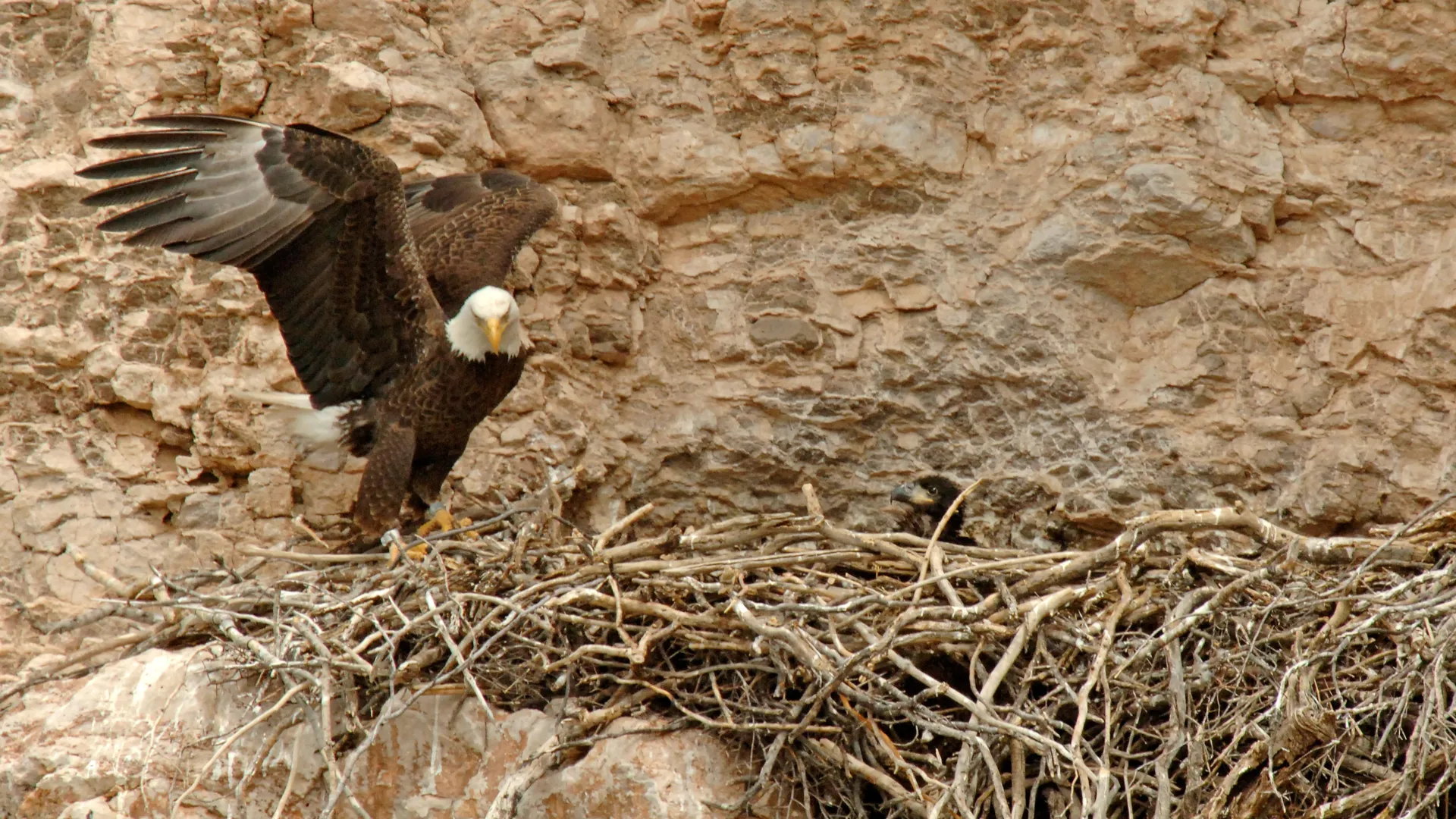
A groundbreaking study published in the Journal of Raptor Research has unveiled an unexpected migratory pattern among Bald Eagles ( Haliaeetus leucocephalus) originating from Arizona, challenging the long-held adage that birds of a feather always flock together and, more specifically, that migratory birds in temperate regions invariably head south for the non-breeding season. The research, titled "Northward Migrations of Nonbreeding Bald Eagles from Arizona, USA," meticulously details how these majestic raptors are embarking on extensive journeys northward, a significant departure from the typical southward migration observed in most avian species. Furthermore, the study documented a single eagle that ventured from Arizona to ultimately establish itself in California, a finding that introduces new complexities to our understanding of emigration rates and population dispersal within this iconic species. Researchers involved in the study posit that the southwestern Bald Eagles exhibit a remarkable degree of exploratory behavior, a trait likely honed to efficiently locate ephemeral food sources across dynamic landscapes. As global climates continue their inexorable shift and natural habitats undergo transformation, such research, which meticulously chronicles how wildlife adjusts its movement strategies, becomes indispensable for crafting effective conservation blueprints and safeguarding critical travel corridors for species facing increasing vulnerabilities.
Unraveling the Northward Enigma: A Six-Year Study
Between 2017 and 2023, a dedicated research team based in Arizona embarked on an ambitious project, employing advanced satellite transmitters to monitor the movements of 24 newly fledged Bald Eagles and two nonbreeding adults. This cutting-edge technology allowed scientists to meticulously map their trajectories both within and beyond the state’s borders. While the breeding Bald Eagle population in Arizona has generally been presumed to maintain close proximity to their established nesting territories throughout much of the year, a considerable knowledge gap has persisted regarding the behaviors and movements of nonbreeding individuals. Understanding the movement patterns and survival rates of these nonbreeding eagles, and subsequently comparing them with those of breeding individuals, offers scientists a far more comprehensive perspective on the overall health and demographic trends of the species across its expansive range, providing crucial insights into the processes that shape population dynamics at a broader level.
The researchers maintained continuous tracking of individual eagles for the maximum operational lifespan of their respective devices, with some birds providing data for up to four years within the comprehensive seven-year study period. The prevailing scientific and public perception of North American migratory birds typically involves a southward movement during the nonbreeding season—our conventional "winter"—in pursuit of milder climatic conditions and more reliable food resources. However, Arizona’s Bald Eagles present a fascinating counter-narrative; their nesting season commences in the winter, which consequently shifts their non-breeding period to the warmer months of summer and autumn. Dr. Caroline D. Cappello, the lead author of the study, expressed particular intrigue regarding this inverted timing of seasonal movement. She noted that this "northward migratory behavior raises interesting questions about the recent and historical pressures that shape these movement strategies," suggesting a complex interplay of environmental factors and evolutionary adaptations at play.
A Challenge to Traditional Avian Migration Paradigms
The findings of this study fundamentally challenge some entrenched ideas about avian migration. For decades, ornithologists have largely observed a latitudinal migration pattern in the Northern Hemisphere, where birds move from higher latitudes to lower, warmer latitudes during colder months. This strategy is primarily driven by resource availability, particularly food and suitable breeding conditions. The Arizona Bald Eagles, by migrating north during their non-breeding summer and autumn, are essentially reversing this conventional wisdom. This unique strategy suggests that the availability of specific, often transient, food sources in northern ecosystems during the summer months – such as spawning salmon runs in the Pacific Northwest, abundant nesting waterfowl populations in Canada, or carcasses of large mammals – might be a more potent driver for these particular eagles than the typical pursuit of warmer climates.
This observation opens new avenues for understanding the flexibility and adaptability of migratory strategies, especially in long-lived, opportunistic predators like Bald Eagles. It implies that "migration" itself might be a more nuanced concept than previously assumed, encompassing a broader spectrum of movements tailored to regional ecological conditions rather than a universal, hemisphere-wide rule.
The Intermountain Flyway: Enduring Havens and Refined Pathways
A significant corroboration emerging from the study involved the identification of critical stopover sites. The tracked eagles consistently utilized many of the same lakes and rivers that an earlier study conducted in the 1980s had already pinpointed as vital gathering points for Bald Eagles. This remarkable overlap provides compelling evidence that these specific habitats have maintained their ecological importance, serving as crucial waypoints for multiple generations of eagles traversing the landscape. This continuity underscores the enduring value of these natural landmarks for avian populations.
Beyond confirming a robust reliance on the Intermountain Flyway—a major migratory corridor stretching across the western United States—and a profound dependence on the network of lakes and rivers along their routes, the research revealed that eagles of varying age classes undertook migrations to the northern U.S. and southern Canada. Dr. Javan M. Bauder, a coauthor on the study, a USGS researcher, Assistant Unit Leader at the Arizona Cooperative Fish and Wildlife Research Unit, and Assistant Professor at the University of Arizona, emphasized the profound significance of this finding. He stated, "managing and conserving wildlife populations requires that we understand the movement of patterns of individuals of all age classes within those populations." This highlights the necessity of comprehensive data that encompasses the entire demographic spectrum of a species, not just breeding adults, for effective conservation. The research team also made an intriguing observation: as the eagles matured, their migratory pathways exhibited increased precision and refinement, suggesting a learning curve or a consolidation of successful routes over time. Most of the birds tracked for at least two years demonstrated a pattern of returning to Arizona in the fall of their hatch year, after having spent the preceding summer months exploring and foraging farther north. The researchers hypothesize that these younger, more exploratory eagles might be capitalizing on seasonal "food bonanzas"—such as the aforementioned spawning salmon, nesting waterfowl, or carrion from large mammals—which are temporarily abundant in these northern regions. However, confirming this hypothesis will necessitate further dedicated research.
A Chronology of Conservation and Discovery
The Bald Eagle’s journey from the brink of extinction to a remarkable recovery provides essential context for this study.
- 1940: The Bald Eagle Protection Act was enacted, providing federal protection against hunting and commercial exploitation, though it was largely ineffective against broader environmental threats.
- 1960s: The population plummeted, primarily due to the widespread use of the pesticide DDT, which caused thinning of eggshells and reproductive failure.
- 1972: The Environmental Protection Agency (EPA) banned DDT in the United States, a pivotal moment for the species’ recovery.
- 1973: The Bald Eagle was listed as an endangered species under the newly enacted Endangered Species Act (ESA), providing comprehensive legal protection and spearheading recovery efforts, including habitat protection and reintroduction programs.
- 1980s: A critical period for understanding Bald Eagle ecology, with studies like the one mentioned in the current paper beginning to identify key stopover sites and migratory routes. This laid foundational knowledge for subsequent research.
- 1995: The Bald Eagle was downlisted from "endangered" to "threatened" as populations showed significant recovery.
- 2007: After decades of concerted conservation efforts, the Bald Eagle was officially removed from the ESA’s list of threatened and endangered species, hailed as one of the greatest success stories in wildlife conservation. By this time, populations had rebounded significantly, estimated at over 10,000 nesting pairs in the contiguous U.S.
- 2017-2023: The period of the current Arizona study, utilizing modern satellite telemetry to investigate previously unknown aspects of nonbreeding Bald Eagle movements.
- 2020: A U.S. Fish and Wildlife Service report estimated over 71,000 nesting pairs in the contiguous U.S., a testament to the species’ resurgence.
- 2024: Publication of the "Northward Migrations of Nonbreeding Bald Eagles from Arizona, USA" in the Journal of Raptor Research, shedding new light on the species’ adaptability.
This timeline illustrates how decades of conservation efforts, coupled with evolving scientific understanding and technological advancements, continue to shape our knowledge and protection of iconic species like the Bald Eagle.
Perils on the Journey: Lethal Threats to Young Raptors
Bald Eagles, much like many other large raptors, are compelled to navigate a complex array of hazards within an increasingly human-dominated world. The study poignantly highlighted these dangers through the tragic fate of one particular eagle. This individual, in her formative years, embarked on an extraordinary odyssey, traversing ten U.S. states and four Canadian provinces, a testament to the exploratory spirit of young eagles. Her journey culminated in northern California, where she appeared to be settling, seemingly poised to establish her own breeding territory. However, at the tender age of four, her life was cut short by electrocution, an alarmingly prevalent cause of mortality for large birds of prey.
Dr. Cappello underscored the profound sorrow and significance of this loss, explaining that it "underscored the ongoing risks these birds face," and also highlighted the inherent difficulty in accurately measuring emigration—the movement of individuals out of a population—within population dynamics. Her apparent decision to live and potentially breed in California would have offered invaluable, rare insight into the frequency with which Bald Eagles hatched in Arizona disperse to and establish themselves in other geographical regions.
Electrocution from power lines is a well-documented and pervasive threat to raptors globally. Large birds, with their wide wingspans, often inadvertently bridge the gap between energized components or between an energized component and a grounded structure, leading to fatal electrical shocks. Efforts by organizations like the Avian Power Line Interaction Committee (APLIC), a collaboration between the utility industry and wildlife agencies, have focused on modifying power infrastructure to make it "bird-safe" through insulation, spacing adjustments, and the installation of perch deterrents. Despite these initiatives, incidents remain tragically common.
Beyond electrocution, young raptors face a spectrum of other anthropogenic threats. These include poisoning from lead, primarily ingested when scavenging carcasses or gut piles left by hunters using lead ammunition, and rodenticides, which accumulate in the food chain when raptors prey on poisoned rodents. Collisions with wind turbines, a growing concern with the expansion of renewable energy infrastructure, also contribute to raptor mortality. Furthermore, ongoing habitat loss due to agricultural expansion, urbanization, and resource extraction diminishes vital foraging and nesting grounds. Underlying all these threats is the overarching uncertainty related to a rapidly changing climate, which can alter prey availability, shift migratory routes, and impact breeding success. By meticulously studying raptors across every stage of their life cycle, particularly the extensive and often perilous exploratory journeys of young birds, scientists can formulate evidence-based recommendations. These recommendations are crucial for prioritizing the protection of the most critical stopover sites and for advocating for modifications to various types of infrastructure, including electrical systems, to significantly enhance the survival rates of eagles and other large raptors.
Broader Context: The Bald Eagle’s Resurgence and Continued Vigilance
The Bald Eagle’s recovery from near extinction serves as a powerful testament to the efficacy of targeted conservation efforts. In the mid-20th century, their numbers plummeted to fewer than 500 nesting pairs in the lower 48 states, primarily due to the devastating effects of DDT. The subsequent ban of DDT, combined with the protection afforded by the Endangered Species Act, allowed the species to rebound dramatically. Today, with over 71,000 nesting pairs documented in 2020, the Bald Eagle stands as a symbol of conservation success.
However, this success does not negate the need for ongoing research and vigilance. As this study from Arizona demonstrates, even a recovered species faces new and evolving challenges. Understanding the nuances of their behavior, particularly the less-understood life stages and migratory patterns, is crucial for ensuring their long-term resilience. The species’ adaptability, highlighted by the northward migration, is a double-edged sword: while it speaks to their ability to exploit new opportunities, it also means they are constantly interacting with human-modified landscapes and their associated risks.
Implications for Conservation in a Changing Climate
The "highly exploratory" nature of southwestern Bald Eagles, as identified by the researchers, carries profound implications for conservation planning, especially in an era of unprecedented environmental change. This inherent drive to explore likely equips them to efficiently locate and exploit short-lived, geographically dispersed food sources. However, this exploratory behavior also exposes them to a wider array of risks across a larger geographical footprint.
The findings underscore the paramount importance of protecting not only established nesting territories but also the extensive network of travel corridors and critical stopover sites that these birds utilize. These areas, often lakes and rivers, act as vital refueling stations and temporary refuges during their arduous journeys. As climate change continues to alter ecosystems, affecting water levels, prey populations, and vegetation, understanding how species adjust their movements becomes a cornerstone of adaptive conservation strategies. Protecting these dynamic corridors allows for flexibility in the face of environmental shifts, rather than focusing solely on static, historically important sites.
Furthermore, the individual eagle’s journey from Arizona to California and her subsequent electrocution powerfully illustrates the challenges of measuring emigration—a critical demographic parameter. Without accurate data on how individuals disperse from their natal populations to establish new ones, it becomes difficult to assess the true health and connectivity of regional populations. The study’s insights emphasize the need for continued investment in tracking technologies and long-term monitoring programs to capture these complex movements and their demographic consequences. The analysis also reinforces the urgency for infrastructure modification, particularly of electrical systems and potentially wind energy facilities, to mitigate lethal threats to these and other large raptors.
Future Research and Collaborative Conservation Imperatives
Looking ahead, the research team advocates for further investigation into route fidelity—whether eagles consistently follow the same migratory paths over time. As Dr. Cappello notes, "if consistent patterns exist it could help focus conservation efforts on specific, high-use areas along their migratory route." Such insights would allow conservationists to prioritize and target protection efforts more efficiently, maximizing the impact of limited resources.
Additionally, the team highlights the significance of conducting comparative studies between these Arizona Bald Eagles and other wildlife populations that exhibit northward migration from the southern fringes of their ranges. Such comparisons could illuminate the evolutionary tradeoffs, energetic costs, and ecological benefits associated with this specific northward migration strategy, providing a broader understanding of its adaptive value across different species and ecosystems.
The collaborative nature of this research, involving federal agencies like USGS and academic institutions like the University of Arizona, exemplifies the multi-disciplinary approach essential for tackling complex conservation challenges. Future efforts will likely require continued collaboration among state and federal wildlife agencies, academic researchers, and even public stakeholders through citizen science initiatives to gather comprehensive data and implement effective management actions. Ultimately, this pioneering study from Arizona not only enriches our understanding of Bald Eagle biology but also provides a crucial framework for designing dynamic and adaptable conservation strategies, ensuring the continued survival of this iconic raptor in an ever-changing world.