
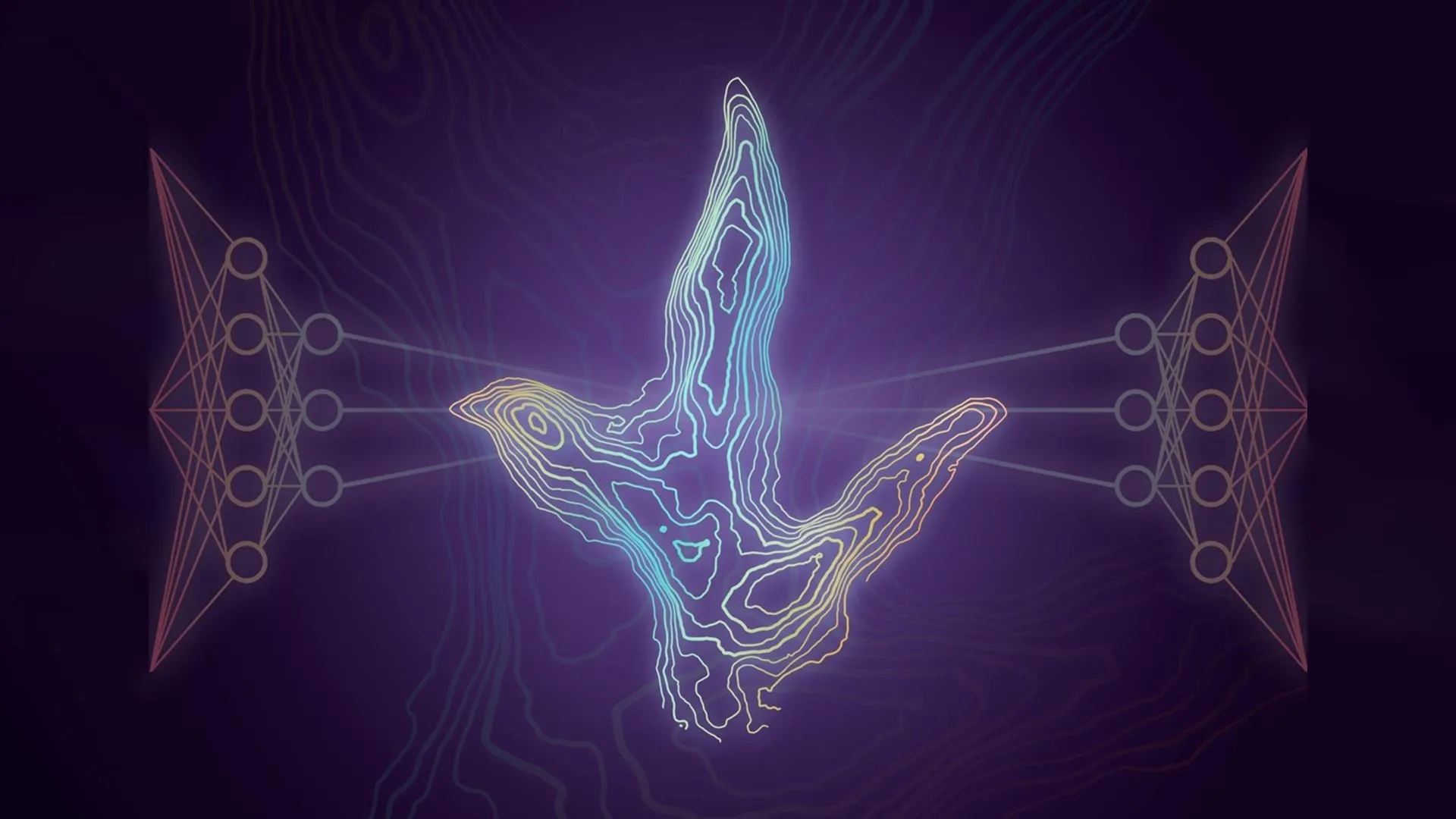
A newly developed application, powered by sophisticated artificial intelligence (AI), is transforming the way scientists and the general public can identify dinosaur footprints, known as ichnofossils, left behind millions of years ago. This innovative technology, detailed in a recent study, aims to bring clarity to fossil tracks that have long posed significant interpretive challenges for paleontologists worldwide.
For centuries, the study of ancient footprints has been a cornerstone of paleontology, providing invaluable glimpses into the locomotion, behavior, and environments of extinct creatures. However, identifying the specific animals responsible for these tracks has been a notoriously complex endeavor. Paleontologists have frequently debated whether certain impressions were left by swift carnivorous predators, colossal herbivorous dinosaurs, or even, in some intriguing cases, early bird species. The inherent difficulties stem from the dynamic nature of track formation and preservation, where original shapes can be significantly altered by sediment consistency, erosion, and diagenesis over geological timescales. This ambiguity often led to subjective interpretations, sparking academic disagreements that sometimes spanned decades.
The Enduring Challenge of Ichnology
The field of ichnology, dedicated to the study of trace fossils like footprints, burrows, and feeding marks, complements the study of body fossils (bones, teeth). While body fossils provide direct evidence of an organism’s anatomy, trace fossils offer a unique window into an animal’s life activities and paleoecology. Dinosaur footprints, in particular, are crucial for understanding aspects such as gait, speed, social behavior (e.g., herd movements), and even the presence of certain species in specific ancient landscapes where their bones might never be found. For instance, the famous "dinosaur stampede" trackways in Lark Quarry, Australia, offer compelling evidence of complex social dynamics among small dinosaurs, something difficult to infer solely from skeletal remains.
Historically, the identification of a track maker relied heavily on comparative morphology – matching the shape and size of a fossil footprint to the known anatomy of potential dinosaur feet. This process was often manual, requiring extensive expert knowledge and a keen eye for subtle distinctions. Researchers would build vast, often subjective, mental or physical databases of track types, attempting to link them to specific dinosaur groups. However, the inherent variability of footprints – a single dinosaur could leave different-looking tracks depending on the substrate, speed, and individual foot morphology – complicated this approach. For example, a dinosaur walking on firm ground would leave a clear, deep impression, whereas the same dinosaur moving quickly across soft mud might leave a shallower, distorted, or even "underprint" (an impression made by underlying sediment layers). Moreover, the lack of associated skeletal remains for many trackways meant that definitive attribution was frequently elusive, leading to "ichnotaxa" (trace fossil classifications) that existed independently of osteological taxa. This introduced a significant level of uncertainty and potential bias into the classification process, especially when dealing with unusual or poorly preserved specimens.
Introducing DinoTracker: AI at the Forefront of Fossil Discovery
The new DinoTracker app represents a significant leap forward, democratizing and streamlining the identification process. Designed for both seasoned researchers and enthusiastic dinosaur aficionados, the application allows users to simply upload a photograph or even a detailed drawing of a footprint using a standard mobile phone. The app then leverages its sophisticated AI engine to perform an immediate, comprehensive analysis. By meticulously evaluating the intricate shape, structure, and distinctive features of the track, DinoTracker provides an estimated identification of the dinosaur type most likely responsible for its creation. This rapid, accessible analysis stands in stark contrast to the laborious, often time-consuming methods of the past. It effectively translates complex ichnological analysis into a user-friendly digital experience.
The development of DinoTracker addresses a critical need in ichnology. While fossilized dinosaur footprints provide invaluable insights into prehistoric life, helping scientists reconstruct how these magnificent creatures moved, interacted, and inhabited their ancient worlds, their interpretation has remained a persistent bottleneck. Previous studies have repeatedly highlighted the interpretative difficulties arising from the morphological alterations tracks undergo during the fossilization process, from the initial impression to millions of years of geological compression and erosion. The AI’s ability to account for these post-depositional changes is a key innovation, offering a more robust and less subjective analytical framework.
Beyond Traditional Databases: The Power of Machine Learning
The conventional approach to classifying dinosaur footprints often involved researchers constructing manually curated computer databases. These systems attempted to establish direct links between specific footprint morphologies and known dinosaur species. While useful to a degree, this method was inherently limited by its reliance on human expertise and the potential for subjective bias, particularly when dealing with tracks whose identities were ambiguous, controversial, or entirely unknown. The introduction of human interpretation at every stage, from data input to classification rules, inevitably led to inconsistencies and prolonged debates within the scientific community. For instance, some trackways have been re-attributed multiple times over decades as new skeletal evidence emerged or new interpretive frameworks were proposed, highlighting the inherent fluidity and challenges of traditional ichnological classification.
To overcome these entrenched challenges, a collaborative research team, spearheaded by the Helmholtz-Zentrum research centre in Berlin and working closely with experts from the University of Edinburgh, embarked on developing a radically different approach. Their innovation centered on advanced algorithms that empower computers to autonomously learn the subtle, yet critical, variations in dinosaur footprint shapes. This paradigm shift from rule-based systems, where human experts encode classification logic, to machine learning, where the AI develops its own understanding of ichnological diversity through data analysis, allows for a more objective and comprehensive assessment without pre-programmed human biases. This move echoes the broader trend in scientific fields utilizing deep learning techniques to identify complex patterns in vast datasets.
The core of this AI system’s intelligence was forged through an intensive training regimen. The model was exposed to an extensive dataset comprising nearly 2,000 real fossil footprints, meticulously documented from various geological periods and locations around the globe. This dataset spanned a wide range of dinosaur types, including theropods (carnivores), sauropods (long-necked herbivores), and ornithopods (beaked herbivores), representing diverse track morphologies. Crucially, this real-world data was augmented by millions of additional simulated examples. These simulated tracks were not merely artificial; they were painstakingly generated to reflect the realistic range of changes that affect footprints during preservation. Factors such as varying substrate consistency (e.g., wet mud vs. firm sand), the effects of compression over geological time, and edge displacement due to erosion and sediment infilling were all incorporated into these simulated variations, equipping the AI with a robust understanding of how a single type of dinosaur foot might manifest in a multitude of fossilized forms. This blend of authentic and simulated data allowed the AI to generalize effectively, recognizing underlying patterns despite superficial variations and significantly enhancing its predictive capabilities compared to systems trained solely on limited real-world data.
Deciphering Ancient Signatures: What the AI Looks For
The sophisticated machine learning model, likely employing a convolutional neural network (CNN) architecture known for its prowess in image recognition, was trained to discern and analyze eight fundamental features that serve as critical discriminators between different types of footprints. These key morphological indicators include, but are not limited to:
- Toe Spread: The angular divergence between individual digits, offering clues about the foot’s structure and the animal’s stance, which can vary significantly between bipedal and quadrupedal dinosaurs.
- Heel Position: The relative placement and prominence of the heel impression, indicating the degree of plantigrady (walking on the sole of the foot) or digitigrady (walking on the toes), crucial for understanding locomotion.
- Surface Area Contact: The total area of the foot that made contact with the ground, reflecting the animal’s weight distribution and foot morphology, which can indicate the size and bulk of the trackmaker.
- Weight Distribution: How pressure was distributed across different parts of the foot, providing insights into gait, biomechanics, and potential pathologies or injuries.
- Digit Length and Proportions: The relative lengths of individual toes and their overall shape, often characteristic of specific dinosaur groups (e.g., three strong, sharp-clawed toes for theropods).
- Claw Marks: Presence, absence, and morphology of claw impressions, which can differentiate between groups like ornithopods (often blunt claws or no impressions) and theropods (sharp, distinct claw marks).
- Pad Impressions: The distinctness and shape of foot pads, providing finer anatomical details.
- Overall Footprint Outline: The general shape, symmetry, and overall dimensions of the entire impression, which helps in initial broad classification.
By meticulously analyzing these variations and their complex interrelationships, the AI system can then compare newly submitted footprints with its vast database of known fossil examples. This comparative analysis enables it to predict with remarkable accuracy which dinosaur or dinosaur group most likely made the tracks. When subjected to rigorous evaluation against classifications made by human experts, the algorithm demonstrated an impressive success rate, matching human classifications approximately 90 percent of the time. This high level of agreement extended even to species whose tracks are traditionally considered controversial or exceptionally challenging to identify, underscoring the AI’s robust and objective analytical capabilities. This level of accuracy is particularly significant given the historical difficulties in reconciling ichnotaxa with osteological taxa.
Unexpected Avian Connections: Rewriting Evolutionary Timelines?
One of the most intriguing and potentially paradigm-shifting discoveries yielded by the DinoTracker system emerged from the analysis of footprints dating back over 200 million years, placing them firmly in the Triassic period. The AI detected striking and unexpected similarities between certain ancient dinosaur footprints and the feet of both extinct avian species and modern birds. This finding has profound implications for our understanding of avian evolution.
For decades, the consensus among paleontologists has placed the emergence of birds (avian dinosaurs) in the Late Jurassic period, around 150 million years ago, with iconic fossils like Archaeopteryx from the Solnhofen Limestone in Germany serving as key evidence. Archaeopteryx famously exhibited a mosaic of reptilian and avian features, cementing its status as a transitional fossil. If the AI’s analysis proves correct, indicating bird-like foot morphologies in the Triassic, it could suggest that the evolutionary lineage leading to birds, or at least the development of key avian anatomical features, emerged tens of millions of years earlier than currently believed. This would necessitate a significant re-evaluation of established evolutionary timelines and the relationships between various dinosaur groups, potentially pushing back the origin of Aves into a much earlier chapter of dinosaur history.
The research team prudently offers two primary interpretations for this surprising link. One possibility, as mentioned, is a much earlier divergence of avian ancestors, suggesting that the "birdness" of feet evolved long before flight or other avian specializations. The other, equally fascinating, is that some early dinosaur species, unrelated to the direct lineage of modern birds, coincidentally evolved foot anatomies that closely resembled those of birds. This phenomenon, known as convergent evolution, where unrelated species develop similar traits independently due to similar environmental pressures or lifestyles, is well-documented in the fossil record (e.g., the streamlined bodies of sharks, ichthyosaurs, and dolphins). Regardless of the exact interpretation, this finding underscores the power of AI to unearth patterns and raise questions that might elude traditional human analysis, thereby stimulating new avenues of research into the deep evolutionary history of birds and their dinosaurian relatives.
New Clues from the Isle of Skye: Unlocking Scotland’s Prehistoric Past
The DinoTracker system has also offered fresh perspectives on some of the most enigmatic footprints discovered on the Isle of Skye in Scotland. These particular tracks, formed approximately 170 million years ago during the Middle Jurassic period, were imprinted on the muddy edges of an ancient lagoon. For decades, their precise identification has puzzled scientists, contributing to the island’s reputation as a rich, yet challenging, paleontological site. Skye’s geology, with its combination of volcanic and sedimentary rocks, has preserved a remarkable record of Jurassic life, but the identification of many ichnofossils there has remained contentious.
The AI’s advanced analysis of these mysterious Skye footprints suggests a groundbreaking attribution: they may have been left by some of the oldest known relatives of duck-billed dinosaurs, scientifically known as hadrosaurs. Hadrosaurs were a highly successful group of herbivorous dinosaurs characterized by their distinctive broad beaks and dental batteries, flourishing primarily during the Late Cretaceous period across North America, Asia, and Europe. Identifying their early relatives in the Middle Jurassic, particularly in Scotland, would make these tracks among the earliest examples of this globally widespread group discovered anywhere in the world. This discovery not only extends the known temporal range of hadrosaur evolution by tens of millions of years but also provides crucial insights into their early paleobiogeography, suggesting their presence in northern latitudes much earlier than previously thought. The Isle of Skye has previously yielded important dinosaur finds, including the discovery of large sauropod footprints, but this new analysis adds a critical piece to its prehistoric puzzle, demonstrating the AI’s ability to refine and challenge existing paleontological narratives.
Democratizing Paleontology: Opening Research to Everyone
Beyond its profound scientific implications, researchers emphasize that this AI-powered technology harbors the potential to revolutionize how paleontological research is conducted and shared. Dr. Gregor Hartmann of the Helmholtz-Zentrum research centre articulates this vision: "Our method provides an unbiased way to recognize variation in footprints and test hypotheses about their makers. It’s an excellent tool for research, education, and even fieldwork." This sentiment highlights the app’s utility as a versatile instrument that can assist professional paleontologists in the field, serve as an educational resource for students, and empower citizen scientists.
The DinoTracker app significantly lowers the barrier to entry for individuals interested in contributing to fossil research. By providing an accessible tool for analyzing footprints, it enables members of the public to actively participate in scientific discovery. Imagine a hiker stumbling upon a fossilized trackway in a remote location and, with a simple photo upload, contributing valuable data that could inform scientific understanding without needing to be a trained paleontologist. This citizen science aspect not only accelerates data collection but also fosters greater public engagement and appreciation for paleontology and Earth sciences. It transforms passive observation into active participation, potentially uncovering new sites or re-evaluating known ones with fresh perspectives, thus broadening the geographical and demographic scope of paleontological exploration.
Professor Steve Brusatte, a renowned Personal Chair of Palaeontology and Evolution at the School of GeoSciences, University of Edinburgh, lauded the study as a landmark contribution. "This study is an exciting contribution for paleontology and an objective, data-driven way to classify dinosaur footprints – something that has stumped experts for over a century," he stated. His comments underscore the long-standing nature of the ichnological classification problem and the AI’s capacity to offer a robust, empirical solution, moving the field forward from reliance on subjective expert consensus.
Brusatte further elaborated on the broader implications, stating, "It opens up exciting new possibilities for understanding how these incredible animals lived and moved, and when major groups like birds first evolved. This computer network might have identified the world’s oldest birds, which I think is a fantastic and fruitful use for AI." This emphasizes the AI’s role not just as a classification tool but as a catalyst for fundamental questions about evolutionary history and paleobiology. The potential re-dating of avian origins, if substantiated through further research, would be one of the most significant paleontological discoveries in recent memory, prompting a re-examination of numerous fossil records.
Future Directions and Broader Impact
The success of DinoTracker signals a broader trend in scientific research: the increasing integration of artificial intelligence and machine learning to tackle complex data analysis challenges. In paleontology, this could extend beyond footprints to other trace fossils, or even to the automated classification of bone fragments, microfossils, or dental morphology, accelerating the pace of discovery and reducing reliance on purely manual, expert-driven processes. Such tools could significantly aid in the initial sorting and identification of vast collections, allowing human experts to focus on more nuanced interpretive work.
The implications for understanding dinosaur paleobiogeography are also significant. By enabling more accurate and widespread identification of tracks, researchers can build more detailed maps of dinosaur distribution across different continents and through various geological epochs. This, in turn, can shed light on ancient land bridges, continental drift, and environmental factors that influenced dinosaur dispersal patterns, offering insights into ancient ecosystems. Furthermore, more reliable track identification contributes to a better understanding of dinosaur behavior, including social structures, predatory strategies, and migratory patterns, helping to reconstruct the dynamic lives of these ancient creatures with unprecedented detail.
The study, which promises to be a cornerstone publication in ichnology, was published in the prestigious journal PNAS (Proceedings of the National Academy of Sciences). Its development was made possible through a consortium of funding bodies, highlighting the collaborative nature of cutting-edge scientific research. Key financial support came from the innovations pool of the BMBF-Project: Data-X, the Helmholtz project ROCK-IT, the Helmholtz-AI project NorMImag, the National Geographic Society, and the Leverhulme Trust. This diverse funding base underscores the broad scientific interest and perceived importance of this innovative AI application, setting a precedent for future interdisciplinary projects at the intersection of technology and natural history.
In conclusion, the DinoTracker app represents more than just a technological novelty; it is a transformative tool poised to redefine the study of dinosaur footprints. By providing an objective, data-driven, and accessible method for identification, it not only resolves long-standing paleontological mysteries but also opens new frontiers for scientific inquiry, potentially reshaping our understanding of dinosaur evolution, behavior, and the very origins of birds. Its capacity to engage and empower a wider public ensures that the wonders of prehistoric life will continue to inspire and inform future generations of scientists and enthusiasts alike.