
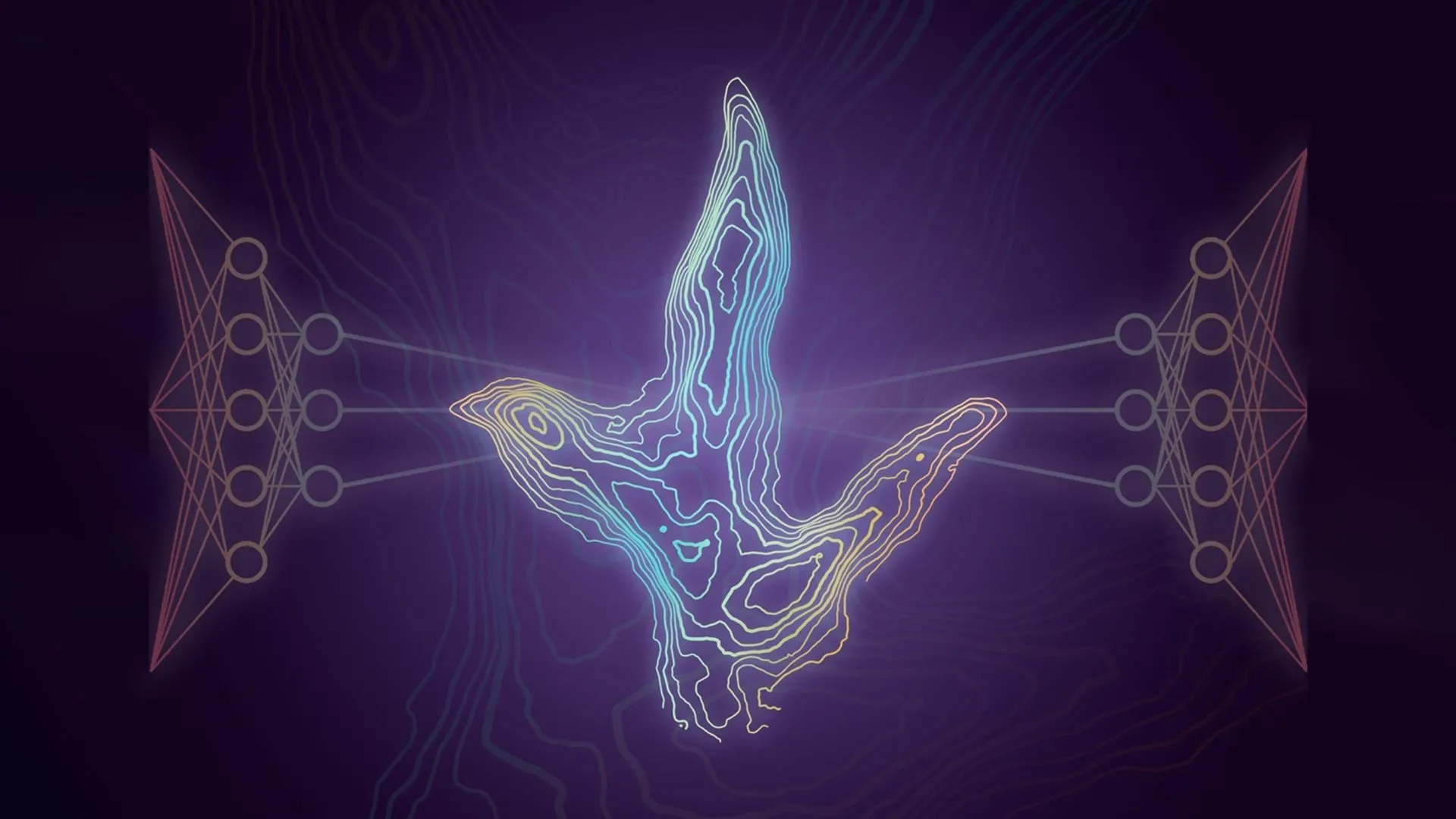
A groundbreaking application powered by artificial intelligence (AI) is transforming the field of ichnology, offering scientists and the public an unprecedented tool to accurately identify dinosaur footprints etched into stone millions of years ago. This innovative technology promises to resolve long-standing debates surrounding fossil tracks that have historically challenged paleontological research. Developed through a collaborative effort between the Helmholtz-Zentrum research centre in Berlin and the University of Edinburgh, the "DinoTracker" app leverages advanced machine learning to analyze the subtle characteristics of ancient impressions, providing instant insights into the creatures that once roamed prehistoric Earth.
For decades, paleontologists have meticulously studied ancient footprints, known as ichnofossils, as invaluable windows into prehistoric life. Unlike skeletal remains, which provide anatomical information, footprints offer dynamic insights into how dinosaurs moved, their gait, speed, weight distribution, and even social behaviors like herding or hunting. These trace fossils can also reveal details about the paleoenvironment, such as the type of sediment, water levels, and the presence of other organisms. However, interpreting these fossilized tracks has always been fraught with challenges, often leading to scientific disagreements about the identity of the trackmaker.
The Enduring Mysteries of Ancient Tracks
The science of ichnology, the study of trace fossils, is critical for understanding aspects of dinosaur life that skeletal fossils cannot fully convey. A footprint captures a moment in time, preserving evidence of locomotion and behavior. For instance, the spacing between successive prints can help estimate a dinosaur’s speed, while the depth and shape can indicate its weight and the consistency of the ground it walked upon. Scientists have long debated whether certain tracks belonged to swift, meat-eating predators (theropods), lumbering plant-eating sauropods, or the diverse group of ornithopods. Some enigmatic tracks have even fueled speculation about the earliest appearance of bird species, pushing the boundaries of known avian evolution.
The inherent difficulties in interpreting these ancient marks stem from several factors. Firstly, the original shape of a foot can be significantly altered during the preservation process, a phenomenon known as taphonomy. Factors such as the type of sediment (mud, sand, silt), moisture content, subsequent erosion, compaction over millions of years, and weathering can distort, enlarge, or obscure the original impression. A perfectly preserved track is a rare find, and most tracks represent a complex interplay of the foot’s morphology and the substrate’s response. Secondly, even the same dinosaur species could leave different-looking tracks depending on its speed, gait, and individual variations in foot anatomy. This variability within a single ichnotaxon (a classification based on trace fossils) adds layers of complexity. Finally, convergent evolution can result in similar foot structures across distantly related dinosaur groups, making it difficult to differentiate trackmakers based solely on print morphology. Traditionally, human experts relied on their experience and comparative anatomy, an approach that, while invaluable, was inherently subjective and prone to bias, especially when dealing with ambiguous or partially preserved tracks.
From Manual Databases to Autonomous AI Learning
In the past, paleontologists often employed manually built computer databases to compare newly discovered footprints with known fossil examples. These systems, while helpful, were often rule-based and required explicit programming for each feature. This approach struggled significantly with novel track morphologies or tracks that had been heavily altered by geological processes. Experts note that such methods could inadvertently introduce bias, particularly when the identity of a track was uncertain or subject to ongoing scientific dispute. The limited scope of these databases also meant they were less effective at identifying subtle variations or entirely new types of tracks.
To fundamentally address these limitations and move beyond subjective analysis, the research team, spearheaded by the Helmholtz-Zentrum research centre in Berlin in collaboration with the University of Edinburgh, embarked on developing a new methodology. Their solution involved creating advanced algorithms capable of autonomous learning – a hallmark of modern artificial intelligence. Specifically, the team employed deep learning techniques, likely utilizing convolutional neural networks (CNNs), which are particularly adept at recognizing complex patterns in visual data without explicit human programming. Instead of being told what to look for, the AI system was trained to learn the intricate relationships between various features in a footprint and the probable identity of its maker.
The robustness of this AI system hinges on its extensive training data. The model was initially trained on a substantial dataset of nearly 2,000 real fossil footprints collected from various paleontological sites worldwide. Crucially, this empirical data was augmented by millions of additional simulated examples. This data augmentation strategy was vital for several reasons. Firstly, it significantly expanded the dataset, which is a prerequisite for training robust deep learning models that can generalize well to new, unseen data. Secondly, these simulated tracks were meticulously designed to reflect realistic taphonomic changes, such as compression in soft mud, displacement of sediment around the edges, infilling by subsequent sediment layers, and various degrees of erosion and weathering. By exposing the AI to this vast array of realistic variations, the researchers ensured that the model could accurately interpret tracks regardless of their preservation state, overcoming a major hurdle in traditional ichnology. This innovative approach to data generation effectively bridges the gap caused by the inherent incompleteness of the fossil record.
Deciphering the Digital Footprint: What the AI Analyzes
The AI model was meticulously trained to recognize and interpret eight key features that serve as distinguishing characteristics between different types of footprints. These features represent a comprehensive analysis of the track’s morphology and the biomechanics inferred from it:
- Toe Spread (Digit Splay): The angular divergence between the individual digits, which can vary significantly between different dinosaur groups and even within a species depending on gait.
- Heel Position and Depth: The placement of the heel relative to the toes, its overall shape, and the depth of its impression, indicating how the animal’s weight was distributed at the rear of the foot.
- Overall Surface Area Contact: The total area of the foot that made contact with the ground, providing clues about the animal’s weight and the nature of the substrate.
- Weight Distribution Across the Foot: Inferred from the varying depths and pressures observed across different parts of the print, offering insights into the animal’s posture and gait.
- Digit Length and Curvature: The relative lengths and shapes of the individual toe impressions, crucial for differentiating between, for example, a theropod’s sharp, curved claws and an ornithopod’s broader digits.
- Presence or Absence of Claw Marks: Clear indicators of ungual (claw) morphology, often critical for distinguishing predatory from herbivorous dinosaurs.
- Overall Outline Shape: The general contour of the entire footprint, providing a macroscopic identifier.
- Symmetry/Asymmetry of the Print: The degree of bilateral symmetry, which can vary depending on the foot’s structure and the dynamics of locomotion.
By meticulously analyzing these variations, the AI system could compare new, unidentified footprints with its vast knowledge base of known fossil examples and millions of simulated scenarios. This allowed it to predict with high confidence which dinosaur most likely made the tracks. When rigorously evaluated, the algorithm demonstrated remarkable accuracy, matching the classifications made by human experts about 90 percent of the time. This high level of agreement is particularly impressive given that the AI performed equally well on species that are considered controversial or notoriously difficult for human experts to identify, highlighting its objectivity and robustness.
Unearthing Revolutionary Discoveries: The Early Birds and Skye’s Enigma
The application of this AI system has already yielded surprising and potentially paradigm-shifting findings. One of the most unexpected revelations came from the analysis of tracks dating back more than 200 million years, placing them firmly in the Triassic or early Jurassic periods. The AI detected striking morphological similarities between some of these ancient dinosaur footprints and the feet of both extinct and modern birds.
This discovery holds profound implications for our understanding of avian evolution. The generally accepted scientific consensus places the origin of birds, as we understand them, in the Late Jurassic, with iconic fossils like Archaeopteryx (circa 150 million years ago) serving as transitional forms derived from small feathered theropod dinosaurs. If these 200-million-year-old tracks are indeed avian, it would mean that birds emerged tens of millions of years earlier than scientists have previously believed, pushing back their evolutionary timeline significantly into a much older geological epoch. Such a revelation would necessitate a fundamental re-evaluation of phylogenetic trees and the interpretation of the existing fossil record. Alternatively, the research team acknowledges another possibility: that some early dinosaurs happened to have feet that closely resembled bird feet by coincidence, a remarkable example of convergent evolution where unrelated species develop similar traits due to similar environmental pressures or lifestyles. Regardless of the ultimate explanation, this finding underscores the power of AI to uncover patterns that might elude human observation and challenge long-held scientific paradigms.
Beyond the potentially revolutionary implications for bird evolution, the AI system also offered crucial new clues regarding mysterious footprints found on the Isle of Skye in Scotland. These enigmatic tracks, preserved in the muddy edge of a lagoon approximately 170 million years ago during the Middle Jurassic period, have puzzled paleontologists for decades. The unique geological conditions and the unusual morphology of the tracks made them particularly challenging to classify using traditional methods.
The AI’s comprehensive analysis provided a compelling new interpretation: it suggests that these footprints may have been left by some of the oldest known relatives of duck-billed dinosaurs, specifically hadrosaurs or their ancestral hadrosauroids. Hadrosaurs are renowned as the "cows of the Cretaceous," dominating terrestrial ecosystems during the Late Cretaceous period with their large herds, complex dental batteries for processing tough vegetation, and diverse crests. Identifying their earliest known relatives in the Middle Jurassic in Scotland is a significant discovery. It provides crucial insights into the evolutionary radiation and geographical dispersal of this highly successful dinosaur group, tracing their lineage much further back in time and placing them in a new paleogeographic context. This finding could help fill a substantial gap in the fossil record concerning hadrosaur origins and early evolution.
Democratizing Paleontology: Science for Everyone
Beyond its profound scientific contributions, researchers emphasize that this AI-powered technology also creates unprecedented opportunities for public engagement in fossil research. The "DinoTracker" app, designed for mobile phones, allows both seasoned paleontologists and enthusiastic dinosaur fans to upload a photo or drawing of a footprint and receive an immediate analysis. This innovative approach effectively democratizes paleontology, inviting citizen scientists from around the globe to participate actively in scientific discovery.
The potential benefits of such public involvement are immense. It can significantly accelerate data collection, as amateur paleontologists, hikers, and even schoolchildren can contribute by documenting and analyzing footprints they encounter. This widespread participation could lead to the discovery of new tracks in previously overlooked areas, expanding our understanding of dinosaur distribution and behavior. Furthermore, it fosters greater public awareness and interest in science, serving as an invaluable educational tool for schools, museums, and science communication initiatives.
The scientific community has lauded the development of this AI system. Dr. Gregor Hartmann of Helmholtz-Zentrum research centre stated, "Our method provides an unbiased way to recognize variation in footprints and test hypotheses about their makers. It’s an excellent tool for research, education, and even fieldwork." His emphasis on the "unbiased" nature of the AI highlights its ability to overcome the subjective interpretations that have historically plagued ichnology.
Professor Steve Brusatte, Personal Chair of Palaeontology and Evolution at the School of GeoSciences, University of Edinburgh, echoed this sentiment: "This study is an exciting contribution for paleontology and an objective, data-driven way to classify dinosaur footprints — something that has stumped experts for over a century." He further elaborated on the broader implications, stating, "It opens up exciting new possibilities for understanding how these incredible animals lived and moved, and when major groups like birds first evolved. This computer network might have identified the world’s oldest birds, which I think is a fantastic and fruitful use for AI."
The groundbreaking study was published in the prestigious journal PNAS (Proceedings of the National Academy of Sciences), underscoring its scientific rigor and significance. Funding for this innovative research was provided by a consortium of organizations, including the innovations pool of the BMBF-Project: Data-X, the Helmholtz project ROCK-IT, the Helmholtz-AI project NorMImag, the National Geographic Society, and the Leverhulme Trust, reflecting a broad recognition of its potential impact.
Looking ahead, the successful application of AI to dinosaur footprints opens doors for similar advancements in other areas of trace fossil analysis. This technology could potentially be adapted to study other ichnofossils, such as invertebrate tracks, burrows, and even coprolites (fossilized dung), offering new insights into ancient ecosystems. Future developments might also see the integration of this AI with 3D scanning technologies for even more precise analysis, or its deployment in real-time during paleontological expeditions, providing immediate feedback to researchers in the field. As AI continues to evolve, its capacity to unlock the secrets held within Earth’s ancient past appears limitless, promising a new era of discovery in paleontology.