
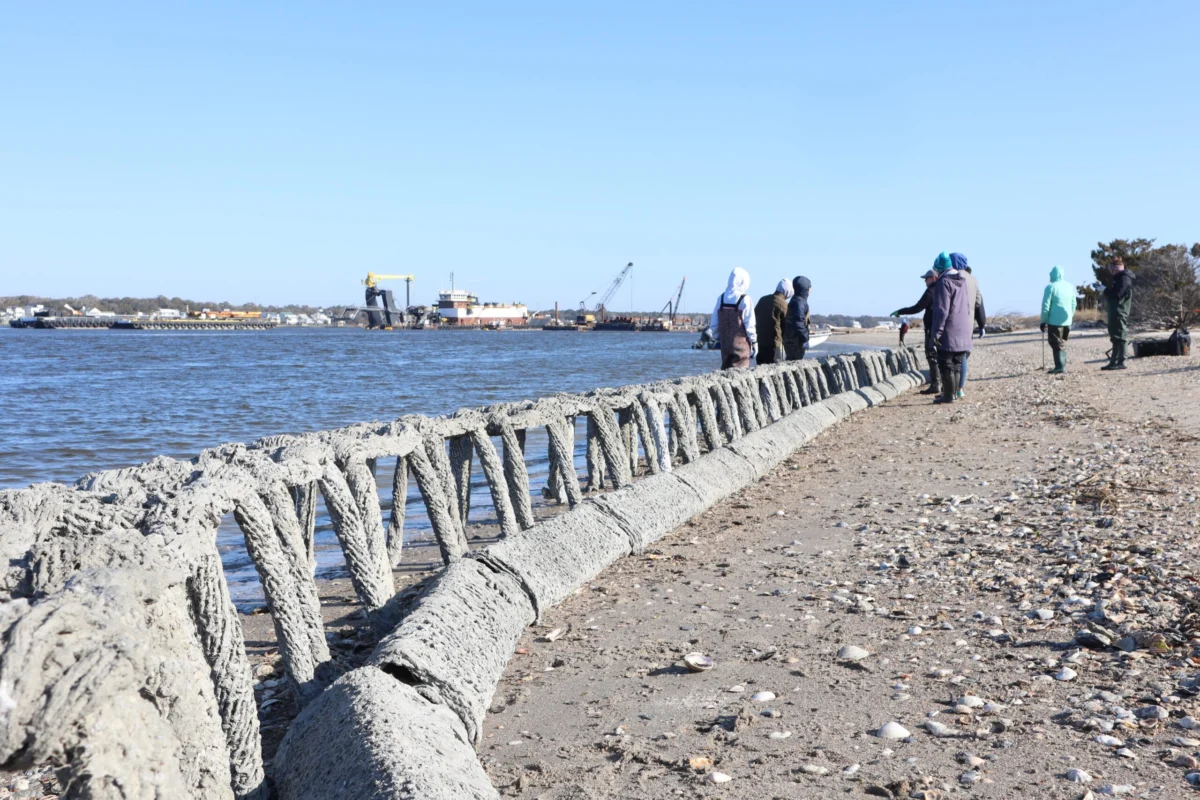
The National Audubon Society, in a crucial initiative to combat the accelerating erosion of critical bird nesting habitats along the Lower Cape Fear River, has successfully completed the installation of test living shoreline projects on Battery and Shellbed Islands. This pioneering effort, supported by a coalition of partners including Cape Fear Audubon and the North Carolina Coastal Federation, aims to protect the fragile ecosystems that serve as indispensable breeding grounds for a diverse array of coastal birds, even as the public is called upon to play its part in safeguarding parents and chicks on the beaches.
The Precarious State of Cape Fear River’s Nesting Islands
The small islands dotting the Cape Fear River, chief among them Battery Island, are facing an alarming rate of degradation and disappearance. These islands are not merely geographical features; they are vital sanctuaries, providing essential nesting and foraging grounds for thousands of birds, including one of North Carolina’s largest wading bird colonies on Battery Island itself. The urgency of the situation is underscored by a confluence of environmental stressors: the powerful wakes generated by an increasing volume of private boats and commercial container ships traversing the river, the relentless force of natural events such as hurricanes and tropical storms, and the insidious, escalating impacts of king tides and long-term sea-level rise.
Coastal erosion is a pervasive issue across North Carolina’s 300-mile coastline, but its effects are particularly acute in estuarine environments where wave action, boat traffic, and storm surge combine to rapidly reconfigure landforms. For sensitive nesting islands composed largely of sand and shell, this erosion translates directly into habitat loss, reducing the available space for nests and increasing the risk of inundation, heat stress, and predation for eggs and chicks. Scientists have documented a measurable loss of landmass on many of these islands over the past few decades, directly correlating with declines in certain bird populations that rely on these specific, undisturbed sites for successful reproduction.
Innovative Solutions: Deploying Living Shorelines
Recognizing the multifaceted nature of the threat, Audubon developed a strategic approach focused on "living shorelines." Unlike traditional hardened structures such as bulkheads or seawalls, which often exacerbate erosion elsewhere and diminish ecological value, living shorelines utilize natural and nature-based materials to stabilize shorelines, absorb wave energy, and foster habitat creation. These projects are designed to adapt to environmental changes, providing long-term, sustainable protection.
The implementation phase for these test projects commenced with Battery Island in February. In collaboration with Sandbar Oyster Company, a local business specializing in eco-friendly shoreline solutions, a unique biodegradable hardscape was deployed. This innovative structure consists of plant-fiber cloths impregnated with a mineral-based hardening agent. Submerged at high tide, this foundation provides an ideal substrate for oyster larvae to settle and grow, eventually forming robust oyster reefs. These reefs serve multiple ecological functions: they naturally filter water, improving water quality; they provide habitat for fish and invertebrates, boosting local biodiversity; and crucially for this project, they act as natural breakwaters, dissipating wave energy and protecting the vulnerable shoreline behind them from erosion. The initial 70-foot test section on Battery Island will be meticulously monitored to assess its performance, with findings informing future, potentially larger-scale, deployments.
Simultaneously, a different but equally innovative approach was implemented on nearby Shellbed Island. Here, the challenge centered on the degradation of "shell rakes"—linear deposits of accumulated oyster shell that naturally form along shorelines adjacent to oyster resources. Historically, these shell rakes would grow sufficiently high to support nesting birds like American Oystercatchers, which prefer elevated, well-drained sites for their nests. Approximately half of the Cape Fear River’s American Oystercatcher pairs rely on these specific formations for nesting. However, severe hurricanes like Florence and Dorian, coupled with ongoing erosion, have flattened these rakes, scattering their constituent shells backward into the marsh. This dispersal renders the rakes ineffective as nesting sites, making nests highly vulnerable to frequent flooding and diminishing their capacity to buffer the marsh shoreline from further erosion.
To counteract this, Sandbar Oyster Company, in consultation with Audubon coastal biologists, designed and installed "backstops" along the rear edge of the shell rakes on Shellbed Island. These backstops are engineered structures intended to catch and retain the migrating shell, concentrating it in the desired area to allow the rakes to rebuild naturally. Crucially, the design allows for some dynamic response to storms, preventing a rigid, artificial barrier while ensuring the essential shell material remains available for habitat reconstruction. Lindsay Addison, Audubon Coastal Biologist, expressed keen anticipation regarding this novel technique, noting, "This novel technique has never been trialed before, so we are anxious to see how they work." The success of these backstops could provide a scalable solution for restoring critical oystercatcher habitat across the region.
A Broader Conservation Strategy and Partnership Synergy
These living shoreline projects are integral components of a much broader, long-term strategy to protect and enhance nesting islands throughout the Cape Fear River system. Audubon is concurrently finalizing a comprehensive shoreline protection plan specifically for Battery Island, bolstered by support from the North Carolina Land and Water Fund. This plan will further delineate strategies and actions to fortify the site against environmental threats. Additionally, future work includes the planned placement of new loose shell material on some of the degraded shell rakes, an initiative made possible through a grant awarded by the National Fish and Wildlife Foundation. These complementary efforts underscore a holistic approach to island conservation, combining innovative engineering with direct habitat restoration.
The success of these initiatives hinges on robust partnerships. The involvement of organizations like Cape Fear Audubon, which provides invaluable local expertise and volunteer support, and the North Carolina Coastal Federation, a leader in coastal restoration and policy, has been crucial. Sandbar Oyster Company’s specialized knowledge in ecological engineering exemplifies how local businesses can contribute significantly to conservation goals. These collaborations not only bring diverse skills and resources to the table but also build a stronger, more resilient network for environmental stewardship in the region.
The Crucial Nesting Season: A Call for Public Engagement
All these preparations have been meticulously timed to precede the annual waterbird nesting season, which typically runs from March 1 to September 15. This period marks a critical window for numerous species, including Least Terns, Common Terns, Black Skimmers, Piping Plovers (a federally threatened species), and American Oystercatchers, as they return to coastal beaches and islands to lay eggs and raise their young.
These waterbirds predominantly nest on open, bare sand, often near inlets or within sandy patches of marsh systems. Their nests are deceptively simple: small, shallow depressions scraped directly into the sand, making the camouflaged eggs incredibly difficult for casual observers to spot. The inherent vulnerability of these nests is amplified when humans or pets approach too closely, causing adult birds to "flush"—fly away from their eggs or chicks. This abrupt departure leaves the vulnerable offspring exposed to extreme temperatures, making them susceptible to overheating on hot days or chilling during cooler periods, in addition to increased risks of predation by gulls, crows, or other opportunistic scavengers. Without the protective shade and vigilance of their parents, chicks can suffer lethal mishaps within minutes.
To mitigate these threats, Audubon and its partners annually delineate and post "bird nesting sanctuaries" in critical areas. Key posted sites from March 1 to September 15 include the South End of Wrightsville Beach, Lea-Hutaff Island, and several islands within the lower Cape Fear River. These efforts are mirrored by dozens of other partner sites along the North Carolina coast. These postings serve as clear visual indicators for beachgoers, urging them to maintain a safe distance and prevent disturbance.
However, birds do not always confine themselves to posted areas; they may wander closer to the shoreline to forage for food or access freshwater. Moreover, not every nesting site can be formally posted, making public awareness and responsible behavior paramount across the entire coastline. The "Share the Shore" campaign is a vital public outreach effort aimed at educating beach visitors about the presence of nesting birds and the simple actions they can take to ensure their survival.
Guidelines for Responsible Beach Use During Nesting Season:
- Respect Posted Areas: Always observe and obey signs and ropes marking bird nesting sanctuaries. These barriers are in place for a reason – to give vulnerable birds the space they need.
- Maintain Distance: If you encounter birds exhibiting agitated behavior (e.g., calling loudly, dive-bombing, feigning injury), it’s a strong indicator that nests or chicks are nearby. Move away quietly and quickly.
- Leash Your Pets: Dogs, even well-behaved ones, can be perceived as predators by nesting birds. Keep pets leashed in coastal areas and strictly adhere to rules regarding pets in posted bird sanctuaries.
- Remove All Trash: Litter can attract predators and entangle birds, posing additional threats to nesting colonies. Pack out everything you pack in.
- Observe from Afar: Use binoculars or telephoto lenses to observe birds without disturbing them.
- Avoid Entering Dunes: Dunes provide important habitat and protection for coastal ecosystems. Stay on designated paths.
By following these simple guidelines, beachgoers can become active participants in conservation, ensuring that these iconic waterbirds have the best possible chance to successfully raise their young. Giving birds ample space can make the difference between a successful breeding season and a catastrophic failure for an entire colony.
Broader Impact and Future Implications
The work on the Cape Fear River islands represents a crucial step forward in coastal habitat conservation, offering scalable models for addressing erosion and habitat loss in other vulnerable regions. The innovative use of biodegradable materials and novel techniques like "backstops" demonstrates a commitment to adaptive management and ecological engineering. As sea levels continue to rise and extreme weather events become more frequent and intense, the lessons learned from these test projects will be invaluable.
Beyond the immediate ecological benefits for bird populations, healthy oyster reefs and resilient shorelines provide broader ecosystem services. They protect human infrastructure from storm surge, support commercial and recreational fisheries, and contribute to the overall health and biodiversity of the Cape Fear estuary. The economic implications of a healthy coastal ecosystem are substantial, supporting tourism, fishing industries, and local economies.
The long-term success of these projects, and indeed, the future of coastal bird populations, hinges on a sustained commitment from conservation organizations, government agencies, local communities, and the public. The Cape Fear River initiatives serve as a powerful reminder that while scientific innovation and dedicated fieldwork are essential, the simple act of "sharing the shore" with mindfulness and respect is equally critical in the ongoing effort to protect our natural heritage. Be a good egg and share the shore this spring and summer, ensuring a thriving future for North Carolina’s magnificent coastal birds.