
Washington, D.C. (April 7, 2026) – The National Audubon Society today announced a significant investment in the future of North America’s threatened Central Grasslands, securing a $4 million grant from the National Fish and Wildlife Foundation (NFWF) through its ambitious Grassland Resilience and Conservation Initiative. This critical funding is earmarked to substantially expand bird-friendly ranching practices across 13 states, enrolling 32 new ranches and bringing an additional 500,000 acres under the Audubon Conservation Ranching program’s unique Audubon Certified Bird-Friendly Land certification over the next three years. This initiative directly addresses the precipitous decline of grassland bird populations, a crisis largely attributed to widespread habitat loss and degradation across agricultural landscapes.
The Ecological Imperative: Safeguarding the Central Grasslands
The Central Grasslands, stretching from Canada to Mexico, represent one of North America’s most expansive and ecologically vital ecosystems. Often referred to as the continent’s "breadbasket," this vast biome is not only crucial for agricultural production but also serves as a critical habitat for an extraordinary diversity of wildlife, including numerous bird species, pollinators, and large mammals. Beyond its biodiversity, the grasslands play an indispensable role in climate regulation, acting as a massive carbon sink. Healthy grassland soils are capable of storing vast amounts of atmospheric carbon, mitigating the impacts of climate change, while also enhancing water infiltration and preventing soil erosion, particularly in an era of increasing extreme weather events.
Historically shaped by grazing bison and periodic fires, these grasslands fostered complex ecological relationships that maintained their health and productivity. However, over the past two centuries, an estimated 70% of North America’s original grasslands have been lost or severely degraded, primarily due to conversion to row crop agriculture, urban sprawl, and unsustainable land management practices. This extensive habitat fragmentation and alteration have profound consequences for the species that depend on this unique environment.
The Silent Crisis: Declining Grassland Birds
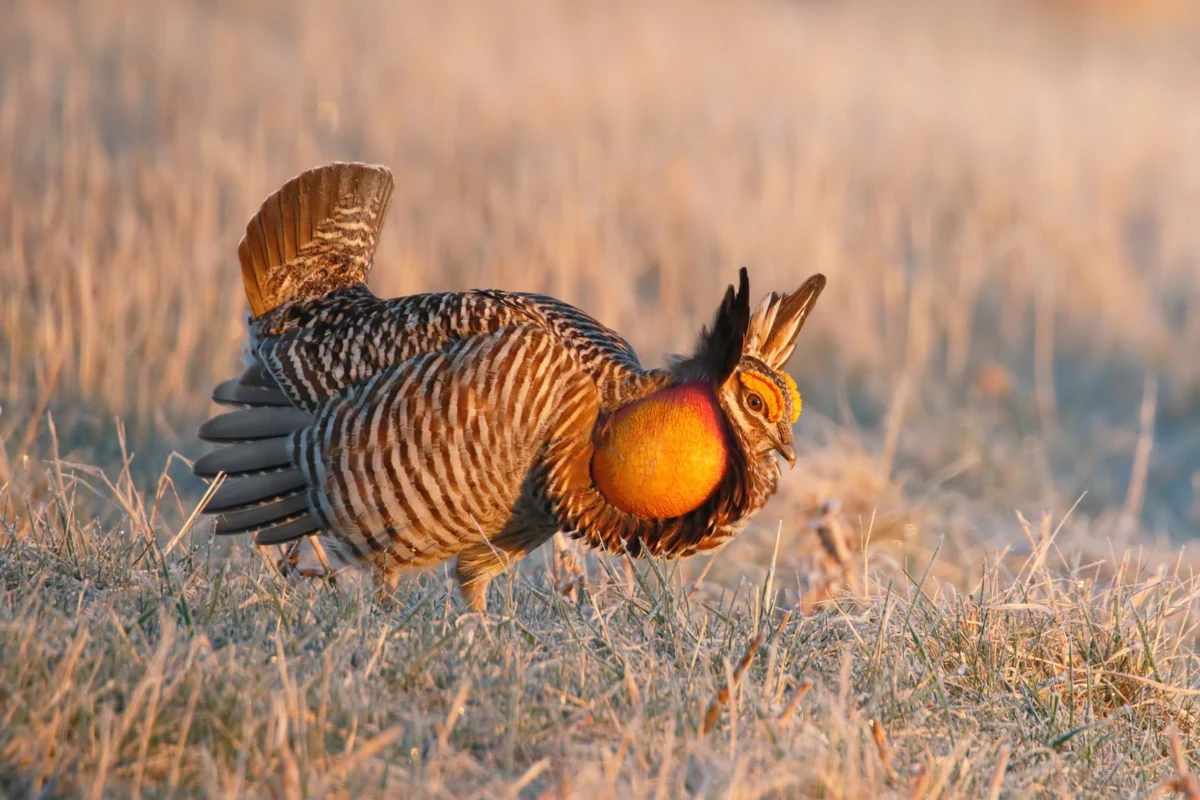
Among the most alarming indicators of grassland health is the status of its avian inhabitants. Grassland birds represent one of the fastest-declining groups of birds on the continent, having experienced a staggering 53% population reduction since 1970 – a loss of more than 700 million birds. Species such as the Greater Prairie-Chicken, Western Meadowlark, Grasshopper Sparrow, Bobolink, and Dickcissel, once common across vast swathes of the plains, are now facing severe threats to their survival. The loss of their breeding, nesting, and foraging grounds, combined with altered vegetation structures, has pushed many of these species to the brink.
The National Audubon Society’s project directly confronts this crisis by fostering regenerative grazing and habitat management practices. These practices are designed to restore the structural diversity and ecological complexity of grasslands, providing the essential habitat components that birds need to thrive. Simultaneously, these methods bolster the productivity and resilience of grass-based agricultural operations, demonstrating a symbiotic relationship between conservation and sustainable ranching.
Audubon Conservation Ranching: A Model for Success
At the heart of this expanded effort is Audubon’s acclaimed Audubon Conservation Ranching (ACR) program. In less than a decade, ACR has evolved into one of the most impactful and recognizable grassland conservation initiatives in the United States. The program works collaboratively with farmers and ranchers, recognizing them as key stewards of the land. Through a voluntary, market-driven approach, ACR helps ranchers implement scientifically-backed habitat management plans that benefit birds and other wildlife, while simultaneously improving soil health, water quality, and the overall ecological function of their lands.
Participating ranches undergo a rigorous certification process, adhering to specific standards for bird-friendly land management. Once certified, their beef products can carry the "Audubon Certified Bird-Friendly Land" seal, providing consumers with a tangible way to support conservation efforts with their purchasing decisions. This market-based incentive provides a direct economic benefit to ranchers for their conservation stewardship. Currently, the ACR program encompasses 150 farms and ranches, collectively managing nearly 4.5 million acres across the Central Grasslands. The NFWF investment will accelerate this growth, adding another half-million acres and further solidifying the program’s reach and impact.
The Grassland Resilience and Conservation Initiative: A Landmark Partnership
The $4 million grant to Audubon is part of a much larger, landmark public-private partnership spearheaded by NFWF: the Grassland Resilience and Conservation Initiative. This ambitious initiative commits over $200 million over seven years to voluntary conservation across working lands, recognizing that private landowners are essential partners in large-scale conservation.
The initial round of grants from this initiative, totaling $15.6 million, was awarded to six leading conservation organizations. Besides the National Audubon Society, these grantees include the American Bird Conservancy, American Farmland Trust, Mule Deer Foundation, Sand County Foundation, and the University of Missouri. Together, these initial six grantees are projected to collaborate with over 750 private cattle ranch operations across 26 states, creating a powerful, interconnected network of conservation efforts.
A distinguishing feature of the Grassland Resilience and Conservation Initiative is its broad coalition of funders. In addition to NFWF, significant support comes from McDonald’s USA, the USDA Natural Resources Conservation Service (NRCS), and several key McDonald’s USA beef and beverage suppliers. This multi-stakeholder engagement underscores a growing recognition that conservation is a shared responsibility, requiring collaboration across government, corporate, and non-profit sectors.
Jeff Trandahl, executive director and CEO of NFWF, emphasized the collaborative spirit of the initiative, stating, “Today is a great day for America’s wildlife, its ranching communities and its beef supply chain. This first round of grants from the Grassland Resilience and Conservation Initiative shows what can happen when corporations, federal agencies, conservation organizations, and private landowners join forces to support both wildlife conservation and economic prosperity. This initiative is just getting started. We are confident it will play a leading role in grasslands conservation across the nation for years to come.” His comments highlight the initiative’s potential to create a lasting legacy for both nature and the economy.
Ranchers as Conservation Leaders: A Producer-Led Movement
Marshall Johnson, Audubon’s Chief Conservation Officer, lauded the current 150 farms and ranches in the ACR program as a testament to a "true producer-led conservation movement." He noted that the NFWF funding would further amplify this momentum. “Thanks to NFWF and program partners, this project increases the power and profile of voluntary, rancher-led conservation efforts to deliver measurable benefits for working lands, wildlife, and rural communities on half a million acres in America’s Central Grasslands,” Johnson affirmed.
This sentiment was echoed by Dave Haubein, owner of Round Rock Ranch in Missouri and the pioneering rancher to achieve Audubon Certified Bird-Friendly Land certification. Haubein underscored the critical importance of recognizing ranchers as frontline conservation leaders. “It’s heartening to see growing support for partnerships that center on ranchers as conservation stewards for our nation’s grasslands,” Haubein remarked. “Ranchers know if soil, water, and grasslands aren’t healthy, neither are our operations. Being part of Audubon Conservation Ranching helped us put a name and a framework around practices we believe in, while showing that proper grazing can not only support birds and wildlife, but can increase productivity of the land and the animals.”
Haubein’s experience highlights a crucial aspect of the ACR program: it aligns ecological benefits with economic viability. Regenerative grazing practices, such as planned rotational grazing, can lead to improved forage quality, increased drought resilience, and enhanced soil fertility, ultimately benefiting the rancher’s bottom line. This approach moves beyond traditional conservation easements, offering a dynamic model where agricultural productivity and environmental stewardship are mutually reinforcing.
Broader Implications and Future Outlook
The expansion of Audubon’s Conservation Ranching program, buoyed by the NFWF grant, carries significant implications across ecological, economic, and social spheres. Ecologically, scaling regenerative grazing practices across an additional half-million acres will provide vital habitat corridors and breeding grounds for numerous imperiled grassland bird species, potentially reversing decades of decline. Improved soil health across these lands will also enhance carbon sequestration, contribute to cleaner water sources, and bolster overall ecosystem resilience against climate variability.
Economically, the program empowers ranchers by offering pathways to sustainable profitability. By improving land productivity and potentially opening access to premium markets for certified beef, ACR helps fortify rural economies. The collaboration with major corporations like McDonald’s also signals a growing trend of supply chain sustainability, where consumer demand for ethically and environmentally produced goods can drive large-scale change.
Socially, the initiative fosters a deeper understanding and appreciation for the role of ranchers as environmental stewards. By highlighting their voluntary efforts and the tangible benefits of their practices, the program helps bridge divides between agricultural communities and conservation advocates, promoting a shared vision for healthy working landscapes.
The success of this initiative will serve as a powerful testament to the efficacy of collaborative, incentive-based conservation models. As the Grassland Resilience and Conservation Initiative continues to deploy its substantial resources over the next seven years, it is poised to become a transformative force in the conservation landscape of North America, ensuring that the Central Grasslands remain a vibrant ecosystem for both people and wildlife.
Ranchers interested in participating with Audubon through the Grassland Resilience and Conservation Initiative are encouraged to contact Thomas Schroeder, Senior Partnership Manager with the Audubon Conservation Ranching program, at [email protected].
About Audubon Conservation Ranching
Audubon Conservation Ranching partners with ranchers to sustain healthy grasslands, abundant birdlife, and resilient rural communities. Through its bird-friendly land certification and science-based approach, the program empowers land stewards to enhance habitat, improve soil health and water quality, and strengthen the connection between conservation and ranching. By purchasing products from Audubon Certified Bird-Friendly Land, consumers become conservationists, helping protect America’s grasslands and the birds, wildlife, and people that depend on them. For more information, visit www.audubon.org/ranching.
About the National Fish and Wildlife Foundation
The National Fish and Wildlife Foundation (NFWF) works with partners to foster sustainable and impactful conservation solutions so that people and nature thrive together. Chartered by Congress in 1984, NFWF has grown to become the nation’s largest conservation foundation. Since its founding, NFWF has funded more than 23,900 projects that have generated a total conservation impact of more than $12 billion. Learn more at nfwf.org.