
Audubon Southwest’s twelve independent chapters are actively engaged in diverse and impactful conservation initiatives across New Mexico and Arizona, addressing critical issues ranging from species protection and habitat restoration to community engagement and scientific monitoring. These localized efforts are integral to the broader mission of the National Audubon Society, leveraging grassroots enthusiasm and expert knowledge to safeguard avian populations and their vital ecosystems within the unique biomes of the American Southwest. The synergy between regional strategy and local action is evident in a series of ongoing projects, demonstrating a comprehensive approach to environmental stewardship that spans urban, riparian, and desert landscapes.
Fostering Regional Collaboration: The Biannual Joint State Chapter Meeting
A cornerstone of Audubon Southwest’s collaborative framework is the biannual Joint State Chapter Meeting, a crucial gathering designed to unite members, volunteers, and leaders from across New Mexico and Arizona. Scheduled for April 2-4 in Phoenix, Arizona, this event serves as a vital platform for information exchange, strategic planning, and networking among the region’s dedicated conservationists. The meeting’s agenda is meticulously crafted to offer a rich tapestry of presentations, interactive break-out groups, and, notably, immersive birding excursions. Presentations typically cover a wide array of topics pertinent to Southwest conservation, including updates on regional bird populations, habitat restoration techniques, policy advocacy, and the latest in avian research. Expert speakers, often from local universities, government agencies, or Audubon’s own scientific staff, share insights into challenges such as climate change impacts on desert ecosystems, water resource management affecting riparian habitats, and the conservation needs of specific at-risk species.
Break-out groups provide an invaluable opportunity for focused discussion and problem-solving. These sessions allow chapter representatives to delve into shared challenges, brainstorm innovative solutions, and coordinate efforts on region-wide campaigns, such as advocating for specific legislative measures or organizing multi-chapter citizen science projects. The collaborative environment fosters a sense of unity and shared purpose, ensuring that individual chapter initiatives align with overarching regional conservation goals. Beyond the formal sessions, the inclusion of birding activities is a testament to the core passion that drives Audubon members. Phoenix in early April offers diverse birding opportunities, from riparian species along the Salt River to desert dwellers in the surrounding Sonoran Desert. These excursions not only provide participants with opportunities to observe local avifauna but also serve as practical demonstrations of habitat types and conservation successes or challenges discussed during the meeting.
The significance of these joint meetings extends beyond immediate knowledge transfer. They are instrumental in building capacity within local chapters, empowering volunteers with new skills and fostering leadership. By bringing together diverse perspectives, the meetings strengthen the collective voice of Audubon Southwest, enabling more effective advocacy on state and federal levels concerning critical environmental policies. An Audubon Southwest representative, commenting on the event, highlighted its role: "These biannual gatherings are indispensable. They allow us to consolidate our efforts, share best practices, and ensure that our conservation strategies are adaptive and impactful across the entire Southwest region. The collaboration that sparks here translates directly into tangible wins for birds and habitats." The continuity of these meetings over the years has built a robust network, contributing to a coherent and resilient conservation movement in a region facing escalating environmental pressures.
Safeguarding Vulnerable Species: Desert Rivers Audubon and the Lucy’s Warbler Initiative
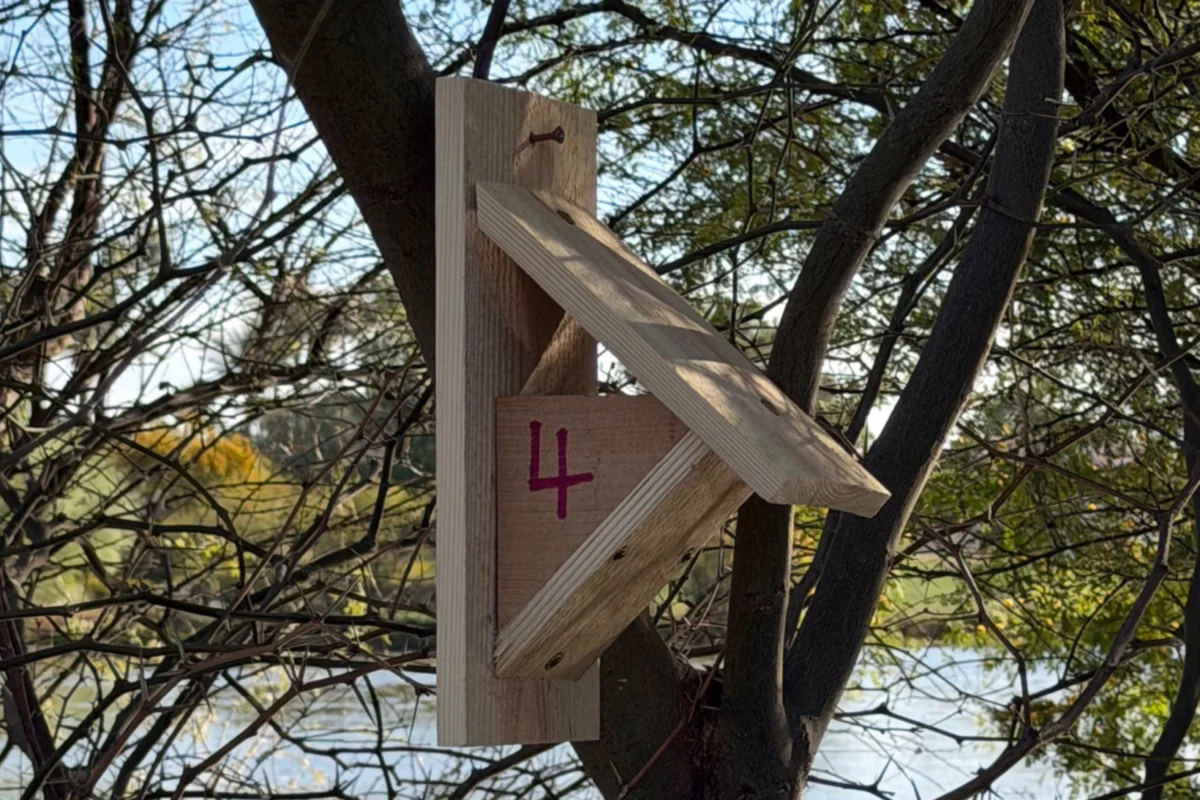
In a targeted effort to protect a charismatic yet declining species, the Desert Rivers Audubon chapter recently deployed seven specialized nest boxes for Lucy’s Warblers ( Oreothlypis luciae) at the Marriott’s Camelback Golf Club in Scottsdale, Arizona. This initiative underscores the crucial role of local chapters in implementing direct conservation actions, particularly in urban environments where human activity often encroaches upon natural habitats. The Lucy’s Warbler, a diminutive and distinctive songbird, is the smallest North American warbler and the only one that nests in cavities in the arid Southwest. Its preference for dense mesquite bosques and other riparian vegetation along major waterways makes it particularly vulnerable to habitat loss and degradation. The Arizona Game and Fish Department lists the Lucy’s Warbler as a Species of Conservation Concern, primarily due to the ongoing loss of its preferred nesting sites. Historically, these birds would utilize natural tree cavities or old woodpecker holes in the trunks and limbs of mesquite trees. However, urban development, agricultural expansion, and changes in water regimes have significantly reduced the availability of such critical nesting habitat.
The nest boxes provided by Desert Rivers Audubon are based on a proven triangle design, originally developed and validated by the Tucson Bird Alliance. This specific design has demonstrated high effectiveness in attracting Lucy’s Warblers, providing a secure and suitable alternative to natural cavities. Each box was carefully numbered and strategically placed on mesquite trees within the riparian habitat present on the golf club grounds, ensuring they were situated away from active golfing areas to minimize disturbance. This collaboration with an urban establishment like Marriott’s Camelback Golf Club is noteworthy, illustrating how green spaces within metropolitan areas can be repurposed or managed to support local biodiversity. Golf courses, with their often extensive landscapes and water features, can inadvertently become crucial refuges for wildlife if managed with conservation principles in mind.
The project is designed with a follow-up phase: in the fall, Desert Rivers Audubon volunteers will revisit the golf club to monitor the nest boxes, determine usage rates, and clean out any that were occupied. This data collection is essential for assessing the project’s success and informing future conservation strategies. Understanding which boxes were used, and under what conditions, can lead to refinements in design or placement for subsequent deployments. The implications of this project are twofold: first, it directly provides much-needed nesting opportunities for Lucy’s Warblers in an urbanized desert landscape, contributing to the local population’s stability. Second, it serves as a powerful model for urban conservation, demonstrating that human-modified environments can be integrated into broader conservation efforts. A representative from Desert Rivers Audubon noted, "Even in a bustling city like Scottsdale, pockets of habitat can support vulnerable species. Our partnership with the Marriott’s Camelback Golf Club shows that urban development and conservation can coexist, offering critical resources for birds like the Lucy’s Warbler." The initiative not only aids a specific species but also raises awareness among urban residents and businesses about the ecological value of their immediate surroundings.
Restoring Ecosystems: Yuma Audubon’s Collaboration with the Cocopah Tribe
A landmark partnership between the Yuma Audubon Society and the Cocopah Indian Tribe is yielding significant conservation dividends along the Lower Colorado River in Arizona. This collaboration focuses on comprehensive bird monitoring alongside extensive habitat restoration efforts on the Cocopah Indian Reservation, a vital ecological corridor. The Cocopah Tribe, with its deep historical and cultural ties to the Colorado River, is leading a large-scale project to revitalize their ancestral lands, recognizing the intrinsic link between a healthy environment and cultural well-being. The restoration efforts involve the systematic removal of invasive species, most notably tamarisk (Tamarix spp.), at two distinct sites. Tamarisk, an exotic tree introduced from Eurasia, has aggressively colonized riparian areas throughout the American West, outcompeting native vegetation, altering soil salinity, and reducing biodiversity. Its removal is a critical first step in restoring the ecological integrity of the riverine landscape.
Following the removal of invasive species, the project involves the replanting of native vegetation, carefully selected to recreate the diverse and complex habitats historically found along the Colorado River. This includes the establishment of extensive wetlands, crucial for migratory waterfowl and shorebirds, and the development of cottonwood-willow forests (Populus fremontii and Salix gooddingii), which are quintessential riparian habitats providing nesting, foraging, and roosting sites for a multitude of bird species. Additionally, efforts are underway to restore upland habitats adjacent to the river, creating a mosaic of interconnected ecosystems. The bird monitoring component, spearheaded by Yuma Audubon Society, is integral to this restoration. Trained volunteers and tribal members conduct systematic surveys to track bird presence, abundance, and breeding success within the restored areas and control sites. This data is critical for evaluating the effectiveness of the habitat restoration techniques and providing scientific justification for ongoing and future conservation actions.
The restored habitats are expected to benefit a wide range of bird species, including several of high conservation priority. The Bald Eagle (Haliaeetus leucocephalus), a symbol of American wildlife recovery, relies on large riparian trees for nesting and roosting near fish-rich waterways. The Marbled Godwit (Limosa fedoa), a long-legged shorebird, requires extensive wetlands and mudflats for foraging during its migratory journeys. The Yellow-billed Cuckoo (Coccyzus americanus), a species listed as threatened in some western states, is particularly dependent on dense cottonwood-willow forests for nesting and breeding, making the restoration of these specific habitats paramount to its survival. This partnership exemplifies a powerful model of conservation, integrating modern ecological science with the traditional ecological knowledge and stewardship ethics of Indigenous communities. The Cocopah Tribe’s long-term vision for their lands, combined with Audubon’s scientific expertise and volunteer network, creates a robust framework for sustained ecological recovery. "This collaboration is a testament to what can be achieved when scientific conservation organizations and Indigenous communities work together," stated a Yuma Audubon spokesperson. "The Cocopah Tribe’s dedication to restoring their ancestral lands, coupled with our expertise in bird monitoring, is creating a vibrant future for wildlife along the Lower Colorado River." The project contributes significantly to the health of the entire Lower Colorado River ecosystem, acting as a critical stopover and breeding ground for thousands of migratory birds traversing the Pacific Flyway.
Monitoring Biodiversity: Bird Alliance of Central New Mexico on the Rio Grande
For the sixth consecutive year, the Bird Alliance of Central New Mexico, in partnership with Audubon Southwest, is orchestrating crucial riparian bird surveys along the Isleta Reach of the Rio Grande. This long-term monitoring project is a cornerstone of conservation efforts in one of New Mexico’s most ecologically vital corridors. The Rio Grande bosque, the ribbon of cottonwood-willow forest that lines the river, represents a critical migratory flyway and breeding habitat in an otherwise arid landscape. It is a dynamic ecosystem, constantly shaped by natural processes and human interventions, including water management, agricultural practices, and urban encroachment. Understanding how birds utilize these bosque habitats during the breeding season is essential for effective management and conservation.
The survey project mobilizes dedicated volunteer teams who visit seven designated outfall sites stretching from Los Chavez to La Joya. These outfall sites represent specific points where water is returned to the river or where unique hydrological features create distinct habitat conditions. The volunteers, often working in pairs, conduct surveys three times during the breeding season: in May, June, and July. This temporal replication allows researchers to capture a more complete picture of breeding activity, including species arrival, nesting, and fledgling success. The methodology typically involves point counts or transect surveys, where birders identify and count all species observed or heard within a defined area over a set period. Data collected includes species presence, abundance, and evidence of breeding behavior. This consistent, long-term data collection provides invaluable insights into population trends, habitat preferences, and the overall health of the Rio Grande bosque ecosystem.
The project offers a unique and highly beneficial opportunity for citizen scientists, particularly new birders. Working alongside experienced birders, novices can rapidly develop their identification skills, learn survey protocols, and gain practical field experience. This not only contributes to the scientific data collection but also fosters a new generation of informed and engaged conservationists. The data collected over these six years has been instrumental in informing land managers and policymakers about the ecological status of the Isleta Reach. For instance, it can highlight areas where specific species are declining, potentially indicating habitat degradation, or identify areas of high biodiversity that require enhanced protection. The information can also help assess the impacts of various restoration projects, such as invasive species removal or targeted replanting efforts, by monitoring avian responses.
"Our long-running bird surveys on the Rio Grande are more than just data collection; they are a vital sign for the health of our river," commented a project coordinator from the Bird Alliance of Central New Mexico. "Every year, our volunteers contribute to a growing dataset that informs how we manage this irreplaceable ecosystem. It’s also an incredible way to mentor new birders and build a stronger community of environmental stewards." The continuity of this project allows for the detection of subtle shifts in bird populations over time, which can be critical indicators of broader environmental changes, such as altered water flows, climate change effects, or the spread of new invasive plants. This long-term dataset forms a critical foundation for adaptive management strategies aimed at preserving the unique avian biodiversity of the Rio Grande bosque.
Broader Implications and the Future of Conservation in the Southwest
The collective efforts of Audubon Southwest’s chapters in New Mexico and Arizona represent a dynamic and multi-faceted approach to conservation in a region characterized by its unique biodiversity and significant environmental challenges. From the strategic coordination at biannual meetings to targeted species recovery, large-scale habitat restoration, and ongoing ecological monitoring, these initiatives are crucial for the health of the Southwest’s ecosystems and the long-term survival of its avian inhabitants.
The joint state chapter meetings exemplify the power of collaboration and knowledge sharing, ensuring that conservation efforts are cohesive and impactful across state lines. The Desert Rivers Audubon’s project with Lucy’s Warblers highlights the potential for localized, species-specific interventions, even within urbanized landscapes, proving that thoughtful design and community engagement can provide critical support for vulnerable birds. The Yuma Audubon Society’s partnership with the Cocopah Tribe stands out as a model for integrating Indigenous knowledge and land stewardship with scientific conservation practices, demonstrating the profound benefits of culturally sensitive and community-driven restoration on a large scale. Finally, the Bird Alliance of Central New Mexico’s sustained bird surveys on the Rio Grande underscore the indispensable role of long-term monitoring and citizen science in understanding ecological dynamics and informing adaptive management strategies for vital riparian corridors.
These chapter highlights collectively illustrate Audubon Southwest’s commitment to addressing complex conservation issues through a combination of scientific rigor, community involvement, and strategic partnerships. The challenges facing birds in the Southwest, including climate change, water scarcity, habitat fragmentation, and invasive species, are immense. However, the dedication and innovative spirit demonstrated by these local chapters provide a strong foundation for resilience and progress. By empowering local communities, fostering scientific understanding, and advocating for sound environmental policies, Audubon Southwest and its chapters are not only safeguarding the region’s rich avian heritage but also inspiring a broader movement for ecological health across New Mexico and Arizona, ensuring that these vital landscapes continue to thrive for generations to come.