
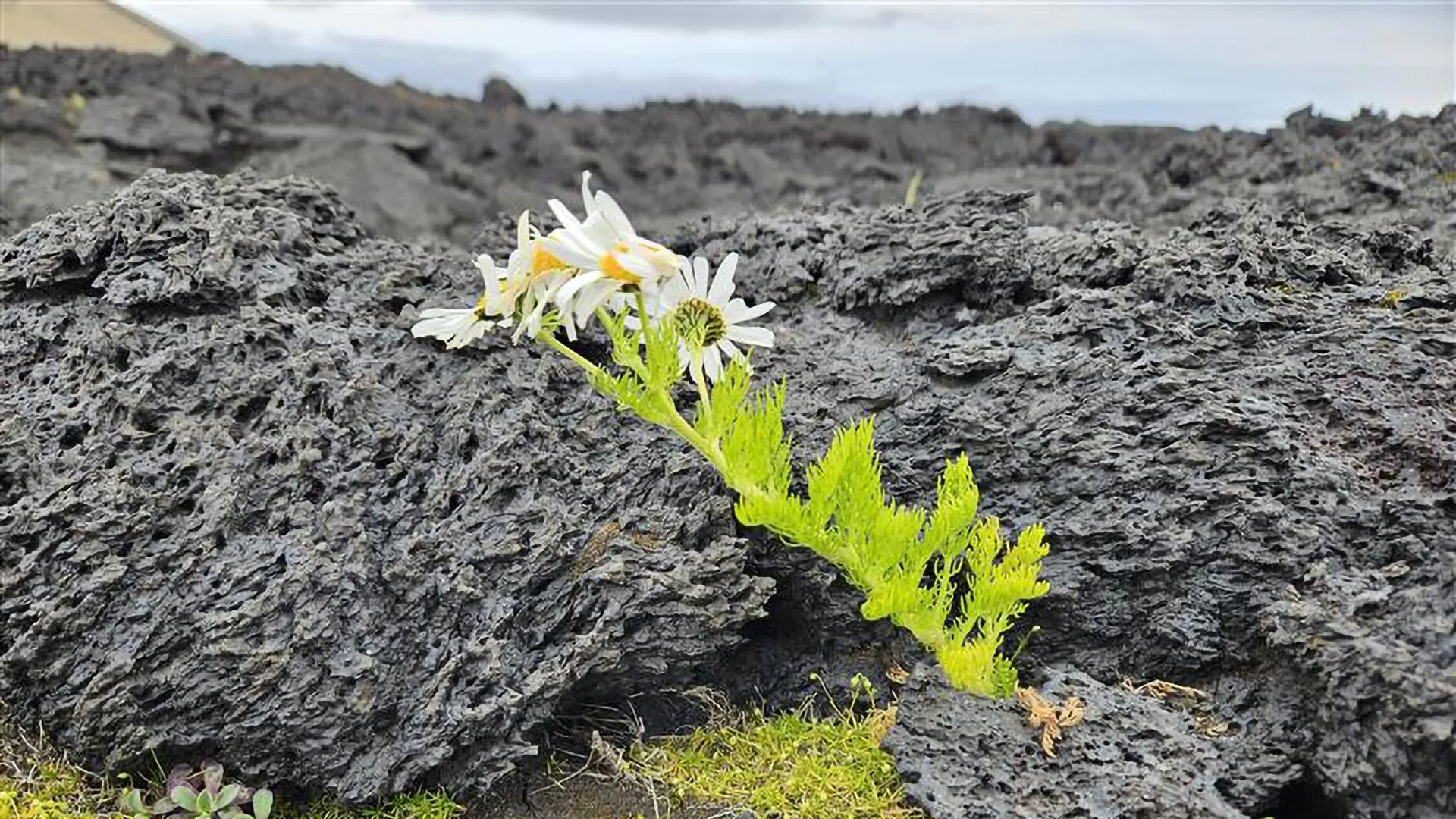
When the volcanic island of Surtsey dramatically emerged from the frigid North Atlantic Ocean in 1963, a cataclysmic underwater eruption giving birth to new land off the southern coast of Iceland, it instantaneously presented the global scientific community with an unprecedented natural experiment. This virgin territory, devoid of any pre-existing life, offered an unparalleled opportunity to observe, from its very genesis, the intricate processes by which life colonizes and establishes itself on untouched land. For decades, the prevailing ecological assumption regarding plant dispersal to such remote and isolated islands posited that success hinged primarily on species possessing specialized traits facilitating long-distance travel. These traits typically included adaptations like buoyant seeds capable of surviving oceanic currents, lightweight seeds designed for wind dispersal over vast distances, or fleshy fruits that entice birds to consume them, thereby dispersing their seeds through defecation at new locations. Species endowed with such inherent advantages were widely believed to hold a definitive edge in the arduous and competitive endeavor of colonizing novel, isolated environments.
However, a groundbreaking study recently published in the esteemed journal Ecology Letters has significantly challenged and, in many respects, upended this long-accepted theoretical framework. A collaborative team of researchers hailing from Iceland, Hungary, and Spain meticulously investigated the plant life on Surtsey and made a startling discovery: the vast majority of the 78 vascular plant species identified on the island since systematic observations began in 1965 remarkably lack any of the typical features traditionally associated with efficient, long-distance seed dispersal. Instead, the comprehensive analysis points to an entirely different, and largely underestimated, set of primary agents of colonization: migratory birds, specifically gulls, geese, and various shorebird species. These avian pioneers, through their regular movements and foraging habits, inadvertently transported a surprising diversity of plant seeds, primarily within their digestive systems (endozoochory) or clinging to their feathers and feet (epizoochory), deposited through their droppings or simply dislodged during their rest periods. This continuous, albeit unintentional, avian shuttle service has played a foundational role in shaping the nascent and progressively developing ecosystem of Surtsey.
Surtsey: A Living Laboratory Born from Fire
The birth of Surtsey was a spectacle of geological power. Beginning on November 14, 1963, a submarine eruption commenced approximately 32 kilometers off Iceland’s south coast, eventually breaching the ocean surface and forming a new island. The eruptions continued for nearly four years, finally ceasing in June 1967, by which time Surtsey had stabilized into an island covering about 2.7 square kilometers. Its very existence, a pristine landmass formed entirely by volcanic activity, immediately captured the attention of biologists and ecologists worldwide. Recognizing its unique scientific value, the Icelandic government swiftly declared Surtsey a protected natural reserve, restricting human access to a select few scientists. This strict conservation measure ensured that the island’s colonization processes could be observed in an almost entirely undisturbed state, making it an unparalleled "living laboratory" for studying primary succession – the process of ecological development on newly formed land.
Initial scientific expeditions to Surtsey, beginning shortly after its formation, focused on documenting every arrival and establishment of life. The earliest life forms observed were typically microorganisms, mosses, and lichens, followed by invertebrates and seabirds establishing colonies. For vascular plants, the traditional wisdom held that species like sea rocket (Cakile maritima), known for its buoyant seeds, or various grasses with wind-dispersed seeds, would be among the first and most successful colonizers. Researchers meticulously monitored the arrival of plant seeds, the establishment of seedlings, and the subsequent growth of plant communities, aiming to validate or refine the existing ecological theories on island biogeography. The long-term nature of this monitoring, spanning nearly six decades, has provided an invaluable dataset for the recent study.
Birds as Unexpected Architects of Life and Ecological Engineers
"Birds turned out to be the true pioneers of Surtsey – carrying seeds of plants that, according to conventional theories, shouldn’t be able to get there," explains Dr. Pawel Wasowicz of the Natural Science Institute of Iceland, a leading author of the pivotal study. His statement encapsulates the profound shift in understanding brought about by their findings. The research revealed that a significant proportion of the 78 vascular plant species found on Surtsey, many of which are common mainland species, possess seeds that are not inherently adapted for long-distance oceanic or atmospheric travel. Their presence on Surtsey, therefore, strongly implicates an active biological vector. The study painstakingly documented the presence of various bird species, including numerous gulls (such as the Great Black-backed Gull, Larus marinus, and Herring Gull, Larus argentatus), Brent Geese (Branta bernicla), and various waders, which frequently visit Surtsey for nesting, resting, and foraging.
These birds, traversing hundreds or even thousands of kilometers during their migratory routes or daily foraging trips between the Icelandic mainland and Surtsey, effectively act as mobile dispersal agents. Seeds ingested by birds often remain viable after passing through their digestive tracts, being deposited with nutrient-rich droppings that provide a fertile microenvironment for germination. Furthermore, sticky seeds, or those with hooks and barbs, can readily attach to feathers or feet, traveling "hitchhiker" style before being dislodged. The study’s comprehensive data analysis indicates that this avian-mediated dispersal mechanism has introduced a far greater diversity of plant species to Surtsey than would ever be possible through passive wind or water dispersal alone for species lacking specialized traits. This mechanism not only facilitates the arrival of new species but also enhances genetic diversity within existing plant populations by introducing new genetic material.
A Paradigm Shift in Ecological Understanding
Dr. Andy Green of the Estación Biológica de Doñana (CSIC, Spain), who co-led the groundbreaking research, emphasizes the wide-reaching implications of these findings for the fields of ecology and conservation. "Animals – especially birds – are key drivers of plant dispersal and colonization. As migration routes shift under a warming climate, birds will play a vital role in helping plants move and adapt to new environments." This statement underscores a critical insight: ecological models and conservation strategies must move beyond a sole focus on inherent plant characteristics and give greater weight to the dynamic, interspecies interactions that shape ecosystems.
The traditional "equilibrium theory of island biogeography," for instance, while foundational, primarily considers island size and isolation as determinants of species richness, with dispersal often simplified to passive mechanisms or specialized adaptations. The Surtsey study injects a crucial biological dynamism into this framework, highlighting that the agents of dispersal – particularly mobile organisms like birds – can profoundly alter colonization patterns and rates. This challenges the notion that only the most "fit" (in terms of dispersal traits) species succeed in colonizing new territories, suggesting instead a more opportunistic and interaction-driven process. The findings compel ecologists to re-evaluate how they model species distribution, predict ecological succession, and understand the resilience of ecosystems in the face of environmental perturbations.
Broadening Implications for Conservation and Climate Change Adaptation
The insights gleaned from Surtsey hold profound implications for global conservation efforts, particularly in an era dominated by rapid environmental change and habitat fragmentation. Understanding the critical role of birds in facilitating plant movement means that protecting bird populations and their migratory corridors becomes an even more urgent conservation priority. If birds are indeed "architects of life," then safeguarding their ability to move freely and healthily across landscapes is essential for maintaining biodiversity and the adaptive capacity of plant communities.
In the context of anthropogenic climate change, where species ranges are projected to shift dramatically in response to altered temperatures and precipitation patterns, the role of avian dispersal becomes even more vital. As Dr. Green points out, birds could act as crucial biological conduits, enabling plants to track suitable climatic conditions by dispersing their seeds to new, more hospitable habitats. This "assisted migration" by natural means could be a significant, albeit unpredictable, factor in how ecosystems adapt to a warming planet. Conservation strategies might need to explicitly consider how to maintain and enhance bird-mediated dispersal networks to bolster the resilience of plant communities, perhaps by protecting key stopover sites, breeding grounds, and foraging areas that serve as dispersal hubs.
A Living Laboratory for Evolution and Future Ecological Models
The research undeniably reinforces Surtsey’s extraordinary value as an active, living laboratory where scientists can directly observe the earliest, most fundamental stages of ecosystem development, evolutionary adaptation, and ecological succession in real-time. The island continues to provide an unparalleled window into how life establishes itself on virgin land, how species interact to form complex communities, and how these nascent ecosystems react and adapt to both internal dynamics and external environmental changes. The authors of the Ecology Letters study strongly advocate that future ecological models should place a significantly greater emphasis on these real, dynamic biological interactions between species, rather than solely focusing on static physical traits of seeds or rigid classifications of plant species.
This shift in modeling philosophy implies a move towards more complex, multi-trophic models that integrate the movement and behavior of animals as active components of dispersal and community assembly. Such models would be better equipped to predict the trajectories of ecosystems, particularly in rapidly changing environments. The insights from Surtsey challenge a reductionist view of ecology, urging a holistic perspective that recognizes the intricate dance between flora and fauna as the true engine of ecological change and resilience.
"Long-term research like that carried out on Surtsey is invaluable for biology," Dr. Wasowicz reiterates, underscoring the enduring significance of sustained scientific inquiry. "It allows us to witness ecological processes that would otherwise remain invisible – how life colonizes, evolves, and adapts. Such work is essential for understanding the future of ecosystems in a rapidly changing world." The continuous monitoring of Surtsey, which began within months of its emergence, exemplifies the power of dedicated, longitudinal ecological research. The island’s story, from its fiery birth to its current state as a vibrant, if still young, ecosystem, serves as a compelling narrative for how life finds a way, often through unexpected and wonderfully complex interactions, even in the most isolated and challenging environments. It is a testament to the fact that to truly understand the spread and evolution of life, one must acknowledge that "Life does not move in isolation – it follows life."