
In late February 2026, an international delegation of ornithologists and wildlife enthusiasts completed a high-density biodiversity survey across the primary forests of Belize and the archaeological complexes of Tikal, Guatemala. Over the course of a 10-day expedition, the group documented 252 distinct avian species, providing critical data on the health of the Mesoamerican Biological Corridor. This expedition occurred against a backdrop of severe meteorological volatility in North America, where record-breaking winter storms drove a seasonal surge in "avtourism"—a sector of the travel industry that has become a vital economic pillar for Central American conservation efforts.

The expedition, which concluded on March 3, 2026, utilized a multi-nodal itinerary designed to sample diverse ecosystems, including broadleaf tropical forests, freshwater lagoons, and high-canopy archaeological sites. The success of the mission was attributed to a combination of professional logistical management and the utilization of local ecological knowledge provided by specialized guides.
Sustainable Infrastructure and Primary Forest Observation
The initial phase of the survey was conducted at Jade Jungle, a remote lodge located at the terminus of the regional road network in Belize. The site was selected specifically for its adherence to sustainable land-use practices, which serve as a model for low-impact tourism in sensitive habitats. According to the expedition’s records, the facility utilizes a closed-loop hydroponic system for food production and generates thermal energy by incinerating the endocarps of the Cohune tree (Attalea cohune), a native palm species whose seeds are harvested from the forest floor.

Ornithological observations at this site focused on the Trogonidae family. Expedition members recorded three distinct species: the Slaty-tailed Trogon (Trogon massena), the Black-headed Trogon (Trogon melanocephalus), and the Gartered Trogon (Trogon caligatus). The presence of these species in high concentrations suggests a robust forest structure with sufficient fruit-bearing trees and nesting cavities.
Furthermore, the expedition documented the complex social behaviors of the Pipridae family. Within a 100-meter radius of the central lodge, researchers observed leks of both White-collared Manakins (Manacus candei) and Red-capped Manakins (Ceratopipra mentalis). The observation of these lekking grounds—where males perform ritualized displays to attract females—provides essential data on the reproductive health of these populations in the Belizean interior.

Geopolitical Context and Cross-Border Logistics
The second phase of the expedition required a complex transition from Belize to the Petén Department of Guatemala. This transit served as a practical case study in the regional history of the two nations. The expedition’s logistics were managed by Neil, a Belizean national whose commentary highlighted the historical and demographic disparities between Belize, with a population of approximately 400,000, and Guatemala, with a population exceeding 19 million.
The border crossing at Benque Viejo del Carmen remains a critical point for regional integration. Professional facilitators noted that the efficiency of such transfers is vital for the continued growth of the multi-country tourism circuit. The expedition utilized pre-ordering protocols and strategic scheduling to minimize downtime, ensuring that the maximum number of daylight hours was dedicated to field observation.

Tikal: The Intersection of History and Avian Migration
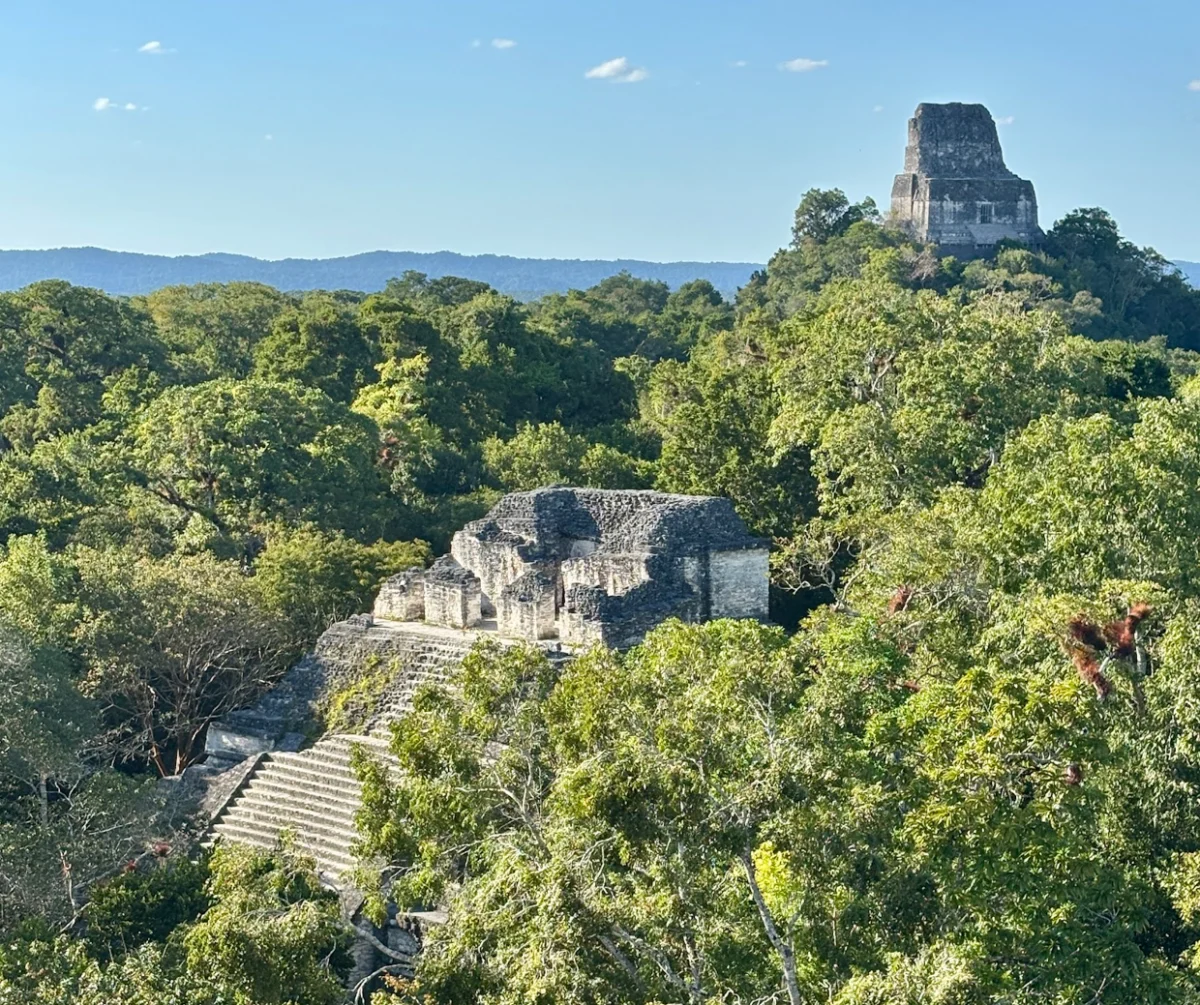
The expedition’s arrival at the Tikal National Park in Guatemala marked a shift toward the study of mixed-species foraging flocks. Tikal, a UNESCO World Heritage site, is not only a pinnacle of Mayan architectural achievement but also a critical sanctuary for both resident and migratory birds.
Ornithologists documented a high frequency of "mixed-nationality" flocks, where North American migrants, such as the Hooded Warbler (Setophaga citrina) and the American Redstart (Setophaga ruticilla), were observed foraging alongside Neotropical residents. This phenomenon underscores the importance of the Tikal canopy in supporting the energetic requirements of birds participating in the Central American Flyway.

The survey recorded several specialized species with distinct niche requirements, including:
- Fawn-throated Foliage-gleaner (Automolus ochrolaemus): An insectivore that specializes in searching dead leaf clusters.
- White-whiskered Puffbird (Malacoptila panamensis): A sit-and-wait predator of the forest understory.
- Stub-tailed Spadebill (Platyrinchus cancrominus): A small tyrant flycatcher known for its rapid aerial maneuvers.
- Tawny-winged Woodcreeper (Dendrocincla anabatina): A species frequently associated with army ant swarms.
Archaeological Context and High-Altitude Observation
The expedition was guided through the Tikal complex by Miguel Antonio, a veteran guide and descendant of the Maya. The integration of indigenous history provided a deeper understanding of the landscape’s evolution. Observations were conducted from the summits of several pyramids, including Temple IV, which stands at approximately 65 meters (213 feet). From these vantage points, the group was able to observe the canopy from above, a perspective that is essential for identifying high-flying raptors and canopy-dwelling passerines.

The extreme thermal conditions of the Petén jungle during the afternoon hours necessitated a strategic approach to fieldwork. While the heat index reached significant levels, the group maintained its observation schedule, eventually documenting the Orange-breasted Falcon (Falco deiroleucus). This species is one of the rarest falcons in the Americas, and its presence at Tikal is a significant indicator of the park’s status as a high-value conservation area. The falcon is known to utilize the ancient limestone temples as nesting platforms, a rare example of a species adapting to anthropogenic structures that have since been reclaimed by the forest.
Wetland Ecology at Crooked Tree Wildlife Sanctuary
The final phase of the 2026 expedition took place at the Crooked Tree Wildlife Sanctuary in Belize, a Ramsar-designated wetland of international importance. Under the guidance of local specialists, the group conducted a waterborne survey of the northern lagoons.

The biological productivity of the Crooked Tree ecosystem was evidenced by the sighting of 62 species within a three-hour window. Key observations included:
- Jabiru (Jabiru myceteria): The tallest flying bird found in South and Central America, whose presence indicates a healthy aquatic food web.
- Agami Heron (Agami agami): A notoriously reclusive species known for its iridescent plumage and specialized hunting techniques in shaded margins.
- Sungrebe (Heliornis fulica): A unique aquatic bird with lobed feet, often difficult to detect due to its cryptic nature.
- Pygmy Kingfisher (Chloroceryle aenea): The smallest of the American kingfishers, demonstrating the diversity of the Alcedinidae family in the region.
The sanctuary also provided extensive views of Snail Kites (Rostrhamus sociabilis), which are highly specialized predators that feed almost exclusively on apple snails (Pomacea). The abundance of these kites is a direct correlate of the health of the freshwater snail population and the overall water quality of the lagoon.

Statistical Summary and Environmental Impact Analysis
The recording of 252 species over a 10-day period represents a significant achievement for a short-term survey. Data collected during the trip has been uploaded to the eBird database, a global citizen-science platform managed by the Cornell Lab of Ornithology. This data contributes to long-term trend analysis regarding species distribution and the impact of climate change on migratory patterns.
Expedition Statistics:

- Total Duration: 10 Days
- Total Species Recorded: 252
- Key Families Observed: Trogonidae, Pipridae, Parulidae, Alcedinidae, Accipitridae.
- Regional Coverage: Cayo and Orange Walk Districts (Belize), Petén Department (Guatemala).
Broader Implications for Regional Conservation
The 2026 expedition highlights the growing importance of "integrated tourism," where archaeological exploration and biological surveying are combined. This model provides the financial incentive for governments to maintain large tracts of primary forest. In Belize, tourism accounts for approximately 40% of the GDP, with nature-based tourism being the fastest-growing sub-sector.
The collaboration between Belizean and Guatemalan authorities in facilitating these cross-border expeditions is seen by analysts as a positive step toward regional stability. Despite historical territorial disputes, the shared management of the Maya Biosphere Reserve and the promotion of the "Mundo Maya" circuit have fostered a pragmatic partnership based on environmental and economic mutual interest.

As habitat loss continues to threaten avian populations globally, the preservation of corridors like those found in Belize and Tikal is paramount. The 2026 expedition serves as a reminder that the synergy between local expertise, sustainable infrastructure, and international interest remains the most effective defense against the encroachment of deforestation in Central America. The findings of this group will likely influence future conservation priorities and eco-tourism strategies in the region for years to come.