
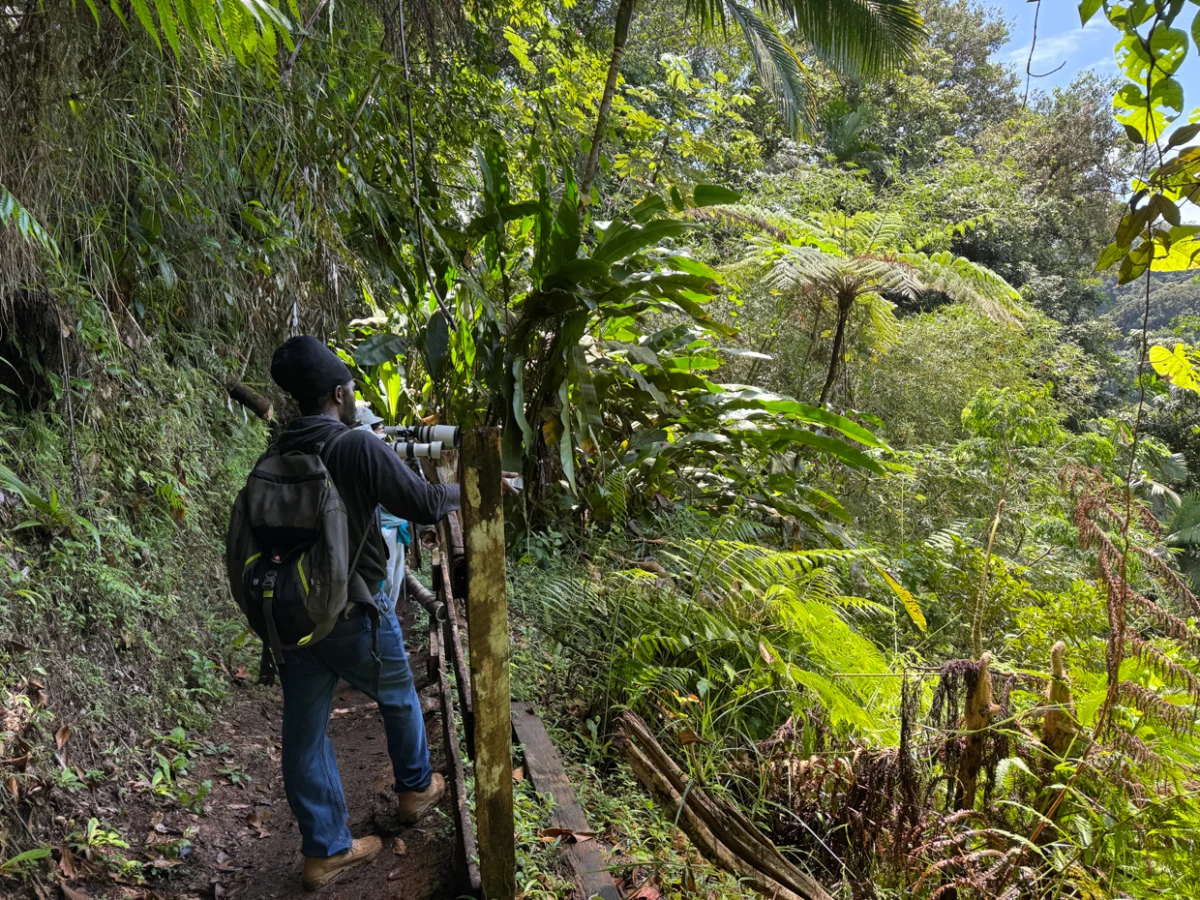
The 2026 biological survey of the eastern Caribbean’s avian populations has concluded, revealing a complex landscape of taxonomic evolution and remarkable ecological resilience. Spanning the islands of St. Vincent, St. Lucia, and Dominica, the expedition documented the current status of some of the world’s rarest bird species in the wake of significant environmental disturbances, including the 2021 eruption of La Soufrière and the 2024 landfall of Hurricane Beryl. This comprehensive field report details the sightings of critical endemic species, the impact of recent natural disasters on montane habitats, and the shifting taxonomic classifications that have increased the number of recognized endemic species within the Lesser Antilles.

Taxonomic Shifts and the Emergence of New Endemics
One of the most significant developments noted during the 2026 expedition was the practical application of recent taxonomic revisions. Historically, many of the region’s wrens were classified under the umbrella of the Southern House Wren (Troglodytes musculus). However, recent phylogenetic studies and vocalization analyses have led to the recognition of distinct island-specific species. Birders and ornithologists now distinguish between the St. Vincent Wren, the St. Lucia Wren, and the Kalinago Wren of Dominica.

These "splits" are not merely academic; they carry profound implications for conservation priority. By recognizing these birds as unique island endemics rather than widespread subspecies, local governments and international conservation bodies are compelled to implement more localized protection strategies. The 2026 survey confirmed that all three newly recognized wren species remain extant, though their vocalizations and physical appearances vary significantly from their mainland relatives, providing a clear justification for their elevated taxonomic status.

St. Vincent: Avian Recovery in a Post-Volcanic Landscape
The island of St. Vincent has faced a series of catastrophic events over the last five years. The April 2021 eruption of La Soufrière deposited thick layers of ash across the northern forests, and the 2024 passage of Hurricane Beryl caused significant defoliation and canopy loss. Despite these challenges, the 2026 survey indicates a robust recovery for several key species.

The expedition began in the suburban environs of Prospect, where the St. Vincent Wren was successfully located. Observations noted that the species’ song and plumage are remarkably distinct from the Southern House Wren, suggesting a long period of evolutionary isolation. Following this, the team moved to the Prospect Mangroves, a critical coastal ecosystem. Here, regional endemics such as the Lesser Antillean Tanager and the Grenada Flycatcher were documented. Notably, these species are restricted to the southern end of the Lesser Antilles and are absent from the islands further north, making St. Vincent a vital stronghold for their continued survival.

In the highlands above Kingstown, the search for the Whistling Warbler (Catharopeza bishopi) highlighted the ongoing impact of the 2021 volcanic eruption. This species, which relies on dense understory and primary rainforest, has become increasingly difficult to locate as its habitat recovers from ash accumulation and structural damage. While the 2026 team recorded other species like the Spectacled Thrush and the all-black "dark morph" Bananaquit (Coereba flaveola atrata), the Whistling Warbler remained elusive, underscoring the need for continued monitoring of this vulnerable endemic.

The highlight of the St. Vincent leg was the observation of the St. Vincent Amazon (Amazona guildingii). At the Jemmings lookout, the team recorded several individuals in flight. This parrot, the national bird of St. Vincent, has seen its population fluctuate due to habitat loss and natural disasters, but the 2026 sightings suggest that the population is maintaining its presence in the mid-region Atlantic forests.

St. Lucia: High-Altitude Endemics and Habitat Specialization
The second phase of the survey focused on St. Lucia, an island characterized by its rugged volcanic topography and diverse microclimates. St. Lucia holds the distinction of having the highest number of endemic bird species in the region.

Initial observations in the Babonneau region provided data on the St. Lucia Warbler and the Lesser Antillean Pewee. The latter is currently under consideration for a taxonomic split that would recognize it as a St. Lucia endemic. The survey also documented the Gray Trembler, a member of the thrasher family known for its peculiar vibrating behavior, and the St. Lucia Wren.

The eastern dry forests of Micoud provided a different ecological context. Here, the team located the St. Lucia Thrasher, a species with a highly restricted range and a preference for dense leaf litter. After a period of patient observation, a specimen was recorded in the open, providing valuable data on its current health and plumage condition. Nearby, the St. Lucia Oriole was sighted, though its flighty nature made prolonged observation difficult.

The Des Cartier Rainforest Trail offered insights into the island’s montane species. Despite heavy unseasonable rainfall—a recurring theme of the 2026 season—the team successfully observed the St. Lucia Amazon (Amazona versicolor) and the Rufous-throated Solitaire. The solitaire is renowned for its haunting, flute-like song, which is often heard but rarely seen in the dense canopy. The 2026 survey was particularly successful in documenting a perched individual, allowing for a detailed assessment of its physical characteristics at high altitude.

Dominica: The Struggle of the Sisserou
Dominica, known as the "Nature Isle of the Caribbean," remains the most forested island in the archipelago. However, it is also the most vulnerable to Atlantic hurricanes. The 2026 survey in Dominica centered on the Syndicate Forest, the primary habitat for the island’s two endemic parrots: the Red-necked Amazon (Amazona arausiaca) and the Critically Endangered Imperial Amazon (Amazona imperialis), also known as the Sisserou.

The Red-necked Amazon, locally called the Jaco, appears to be thriving, with numerous individuals observed feeding on fruiting magnolia and ficus trees. The Sisserou, however, remains one of the rarest parrots in the world. Following the devastation of Hurricane Maria in 2017, the population was severely depleted. The 2026 expedition spent several days at the Syndicate lookout, battling persistent rain and wind. Their persistence was rewarded with a sighting of a pair of Imperial Amazons perched high in the canopy. This sighting is a significant data point, confirming the continued survival and potential breeding activity of the species in its traditional stronghold.

Further surveys in the Lower Colihaut region focused on the Plumbeous Warbler and the Kalinago Wren. The Plumbeous Warbler, a regional endemic shared only with Guadeloupe, was found to be common in the secondary forests. The Kalinago Wren proved more secretive, but eventually provided clear views, allowing researchers to document its specific vocalizations, which differ from those of the St. Vincent and St. Lucia wrens.

Regional Rarities and Migratory Patterns
Beyond the endemic species, the 2026 survey recorded several notable regional rarities and neotropical migrants. In Dominica, an American Barn Owl of the subspecies nigrescens was documented at a day roost in Portsmouth. The taxonomy of Tyto owls in the Lesser Antilles is currently a subject of intense debate among ornithologists, with some suggesting that the Caribbean populations may represent a distinct species.

In the coastal mangroves of Portsmouth, the team recorded a variety of shorebirds and ducks, including Blue-winged Teal and Wilson’s Snipe. A significant highlight was the discovery of a second-year Black-headed Gull, a rare vagrant in the Lesser Antilles. This sighting, along with observations of Northern Waterthrush and American Redstart, provides valuable information on the migratory corridors and wintering grounds of North American species in the Caribbean.

Environmental Analysis and Conservation Outlook
The findings of the 2026 expedition suggest that while the avian populations of the Lesser Antilles are remarkably resilient, they remain in a precarious state. The combination of volcanic activity, increasingly frequent and severe hurricanes, and habitat fragmentation poses a constant threat to these specialized island endemics.

The role of local guides—such as Lystra in St. Vincent, Willow in St. Lucia, and "Dr. Birdy" in Dominica—cannot be overstated. Their deep knowledge of local phenology and bird behavior was instrumental in the success of the survey. Furthermore, the 2026 report emphasizes the importance of ecotourism as a conservation tool. The presence of international birding groups provides an economic incentive for local communities to preserve critical habitats and supports the work of national parks and forestry departments.

As the "dry season" in the Caribbean continues to exhibit unpredictable weather patterns—characterized by the high winds and heavy rains experienced during this survey—the need for long-term habitat monitoring becomes even more urgent. The data collected during the 2026 tour will be integrated into global databases like eBird, contributing to a broader understanding of how climate change and natural disasters are reshaping the biodiversity of the Lesser Antilles.

In conclusion, the 2026 survey confirms that despite the scars left by volcanoes and hurricanes, the "Green Islands" of the Caribbean continue to host a vibrant and evolving avian community. The recognition of new endemic wrens and the continued presence of the Imperial Amazon offer hope for the future, provided that conservation efforts remain a priority for the regional governments and the international community.