
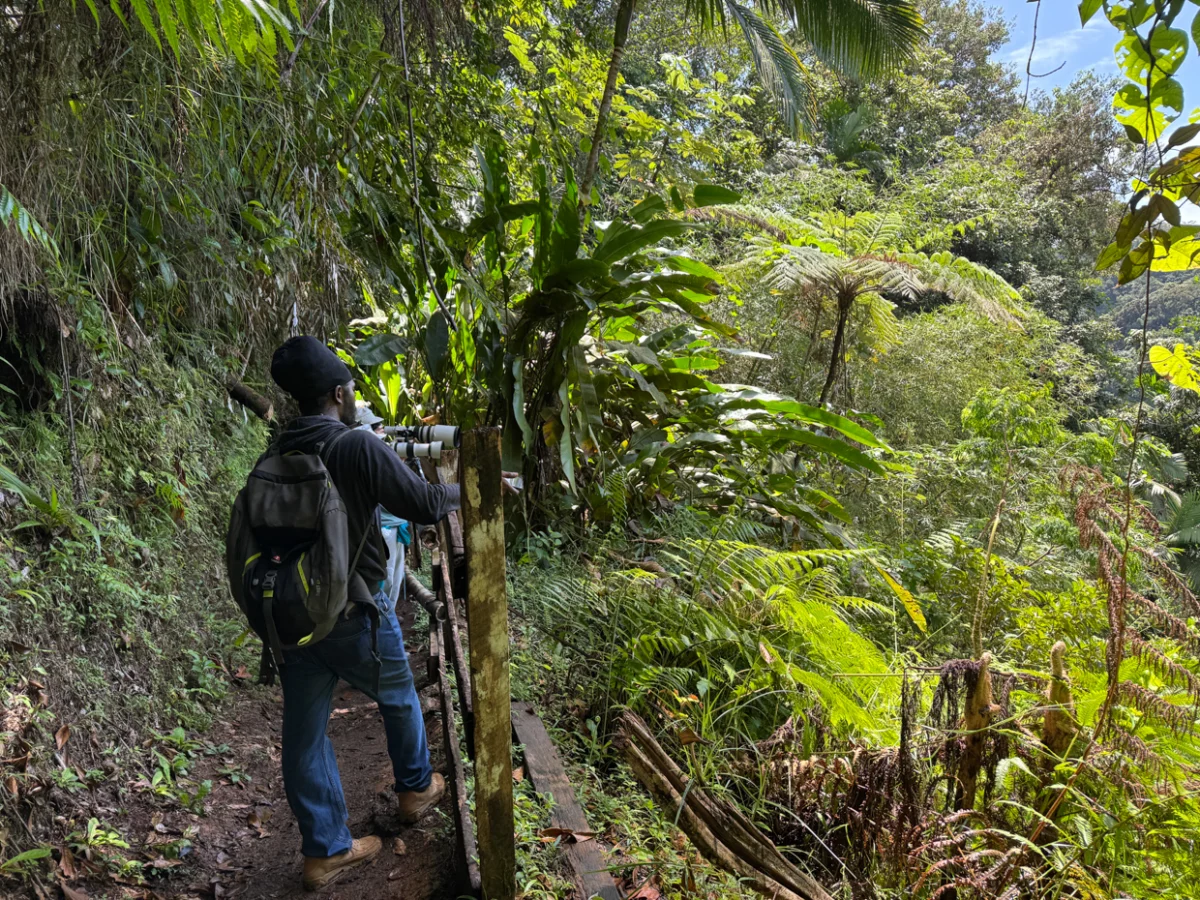
The 2026 expedition across the Windward Islands of the eastern Caribbean has provided a critical update on the status of some of the world’s most localized avian species. Conducted by Eagle-Eye Tours, the nine-day survey spanned the islands of St. Vincent, St. Lucia, and Dominica, offering a detailed look at how regional bird populations are faring in the wake of significant geological and meteorological disruptions. Since the previous major survey in 2022, the region has faced the dual challenges of the 2021 La Soufrière volcanic eruption on St. Vincent and the catastrophic passage of Hurricane Beryl in 2024. Despite these environmental pressures, the 2026 observations suggest a remarkable level of resilience among endemic species, bolstered by recent taxonomic revisions that have recognized a greater number of island-specific endemics than previously recorded.

Taxonomic Revisions and the Rise of Island Endemism
A primary driver of interest for the 2026 expedition was the recent shift in avian taxonomy, particularly regarding the Troglodytidae family. What was formerly classified under the umbrella of the Southern House Wren (Troglodytes musculus) has been split into several distinct species based on vocalizations, morphology, and genetic divergence. This reclassification has officially recognized the St. Vincent Wren, the St. Lucia Wren, and the Kalinago Wren (of Dominica) as full species.

For ornithologists and conservationists, these "splits" are more than just a change in nomenclature; they elevate the conservation priority of these birds. When a species is recognized as endemic to a single island, its vulnerability to extinction increases significantly, necessitating more focused habitat protection. The 2026 tour confirmed that all three newly recognized wren species are currently maintaining stable populations, though they exhibit distinct behavioral differences that justify their new taxonomic status.

St. Vincent: Recovery in the Shadow of La Soufrière
The expedition began on St. Vincent, an island still bearing the scars of the April 2021 eruption of La Soufrière. The volcanic event displaced thousands of residents and blanketed much of the island’s northern forests in ash, severely impacting the habitat of the Whistling Warbler (Catharopeza bishopi), a species found nowhere else on Earth.

Under the guidance of local expert Lystra, the group focused on the southern and mid-island regions. Observations at Prospect provided immediate confirmation of the St. Vincent Wren’s distinctiveness. Visually and aurally different from its counterparts on neighboring islands, the wren appears to have adapted well to the suburban-forest interface. Nearby, the Prospect Mangrove served as a vital site for regional endemics such as the Grenada Flycatcher and the Lesser Antillean Tanager. Notably, these species are absent from St. Lucia and Dominica, marking St. Vincent as a critical southern limit for their range.

The search for the Whistling Warbler in the highlands above Kingstown highlighted the lingering effects of the volcanic eruption. While the forest has regained much of its lush, green canopy, the warbler remains elusive. Observers noted an abundance of the black-morph Bananaquit (subsp. atrata), a local variant that dominates the island’s nectar-feeding niche. The highlight of the St. Vincent leg was the late-afternoon flyby of the St. Vincent Amazon (Amazona guildingii). Perched views in the Jemmings area confirmed that the population of this vulnerable parrot remains robust, despite the 2021 eruption and the subsequent 2024 hurricane.

St. Lucia: Navigating Post-Hurricane Landscapes
On Day 3, the expedition moved to St. Lucia, where the focus shifted to the island’s five endemic species. St. Lucia’s avian populations faced a significant test in 2024 with Hurricane Beryl, which brought high winds and heavy rainfall to the island’s interior. Led by local guide Willow, the group surveyed the upland regions of Babonneau and the dry forests of Micoud.

The St. Lucia Warbler (Setophaga delicata) remains the most frequently encountered endemic, appearing resilient to the thinning of the canopy caused by recent storms. More concerning was the status of the St. Lucia Thrasher (Ramphocinclus brachyurus), one of the rarest birds in the world. Restricted to a small area of dry forest on the island’s eastern coast, the thrasher is highly susceptible to habitat loss. The 2026 survey successfully located several individuals in the Micoud area, including one bird that provided prolonged views in open sunlight—a rarity for this typically shy species.

In the high-altitude Des Cartier rainforest, the expedition encountered the St. Lucia Amazon (Amazona versicolor). After a heavy downpour, several parrots were observed drying their plumage on exposed snags, a behavior that allowed for detailed plumage assessment. The presence of the Rufous-throated Solitaire and the St. Lucia Black Finch in the same region suggests that the core of St. Lucia’s rainforest remains a functional ecosystem capable of supporting its most specialized inhabitants.

Dominica: The Sisserou and the Kalinago Wren
The final leg of the journey took place on Dominica, often referred to as the "Nature Isle of the Caribbean." Dominica’s rugged, mountainous terrain provides a haven for two endemic parrots: the Red-necked Amazon (Amazona arausiaca) and the Imperial Amazon (Amazona imperialis), also known as the Sisserou.

Guided by "Dr. Birdy," the expedition prioritized the Syndicate Forest, a known stronghold for both parrot species. The Imperial Amazon is the national bird of Dominica and the largest member of the Amazona genus. It is also one of the most endangered, with a population that was nearly decimated by Hurricane Maria in 2017. The 2026 sighting of a pair of Imperial Amazons high in the canopy is a significant indicator of the species’ slow but steady recovery.

Dominica also provided the final piece of the wren puzzle. The Kalinago Wren, found in the Lower Colihaut and Syndicate areas, proved to be the most difficult of the three newly split wrens to observe. However, repeated attempts yielded excellent views, confirming its preference for dense undergrowth and its unique vocal repertoire. Other highlights on Dominica included the Blue-headed Hummingbird and the Plumbeous Warbler, both of which are restricted to Dominica and Guadeloupe.

Environmental and Conservation Implications
The findings of the 2026 survey underscore several critical points regarding Caribbean biodiversity. First, the resilience of these island endemics is not guaranteed. While species like the St. Vincent Amazon and the Red-necked Amazon have shown an ability to survive volcanic eruptions and hurricanes, their long-term survival depends on the preservation of old-growth forests. These forests provide the nesting cavities required by parrots and the complex micro-habitats needed by specialists like the Whistling Warbler and the St. Lucia Thrasher.

Second, the impact of "unseasonable" weather cannot be ignored. The 2026 expedition was hampered by persistent wind and rain, which local guides noted as increasingly common during what should be the dry season. These shifts in precipitation patterns can affect the fruiting and flowering cycles of forest trees, potentially leading to food shortages for nectar-dependent and frugivorous birds.

Finally, the survey highlighted the essential role of local expertise. Guides like Lystra, Willow, and Dr. Birdy are not only skilled at locating rare species but serve as the primary monitors of their islands’ ecological health. Their ongoing work in habitat restoration and community education is the most effective defense against the loss of endemism.

Chronology of the 2026 Expedition
The expedition followed a rigorous schedule designed to maximize sightings across diverse habitats:

- Day 1-2: Arrival in St. Vincent; survey of Prospect Mangrove and the Kingstown hills. Successful observation of the St. Vincent Wren and St. Vincent Amazon.
- Day 3: Transfer to St. Lucia via Barbados. Initial surveys in Babonneau yielded the St. Lucia Warbler and Gray Trembler.
- Day 4: Detailed survey of the Micoud dry forest and Des Cartier rainforest. Key sightings: St. Lucia Thrasher, St. Lucia Amazon, and Rufous-throated Solitaire.
- Day 5: Roadside birding along the Bouton Road and the Pitons. Observation of the St. Lucia Black Finch and St. Lucia Oriole.
- Day 6: Arrival in Dominica. Immediate survey of the Syndicate forest for the Red-necked Amazon.
- Day 7: Successful sighting of the Imperial Amazon (Sisserou) in the Syndicate canopy despite heavy rain.
- Day 8: Final searches for the Kalinago Wren and Blue-headed Hummingbird. Visit to a day-roosting American Barn Owl (subsp. nigrescens) in Portsmouth.
- Day 9: Departure from Dominica amidst heavy unseasonable rains, concluding the survey of all targeted island endemics.
Conclusion
The 2026 birding expedition to the Lesser Antilles confirms that while the region’s avian life remains under threat from natural disasters and climate change, the current population trends for most endemic species are stable. The recognition of new species through taxonomic splits has provided a renewed sense of urgency for conservation efforts. As these islands continue to navigate the complexities of environmental recovery, the 2026 data serves as a vital benchmark for the health of some of the most unique biological communities in the Western Hemisphere. The success of the tour, despite challenging weather, reflects both the expertise of local conservationists and the enduring appeal of the Caribbean’s "Nature Isles" as a global priority for biodiversity research.