
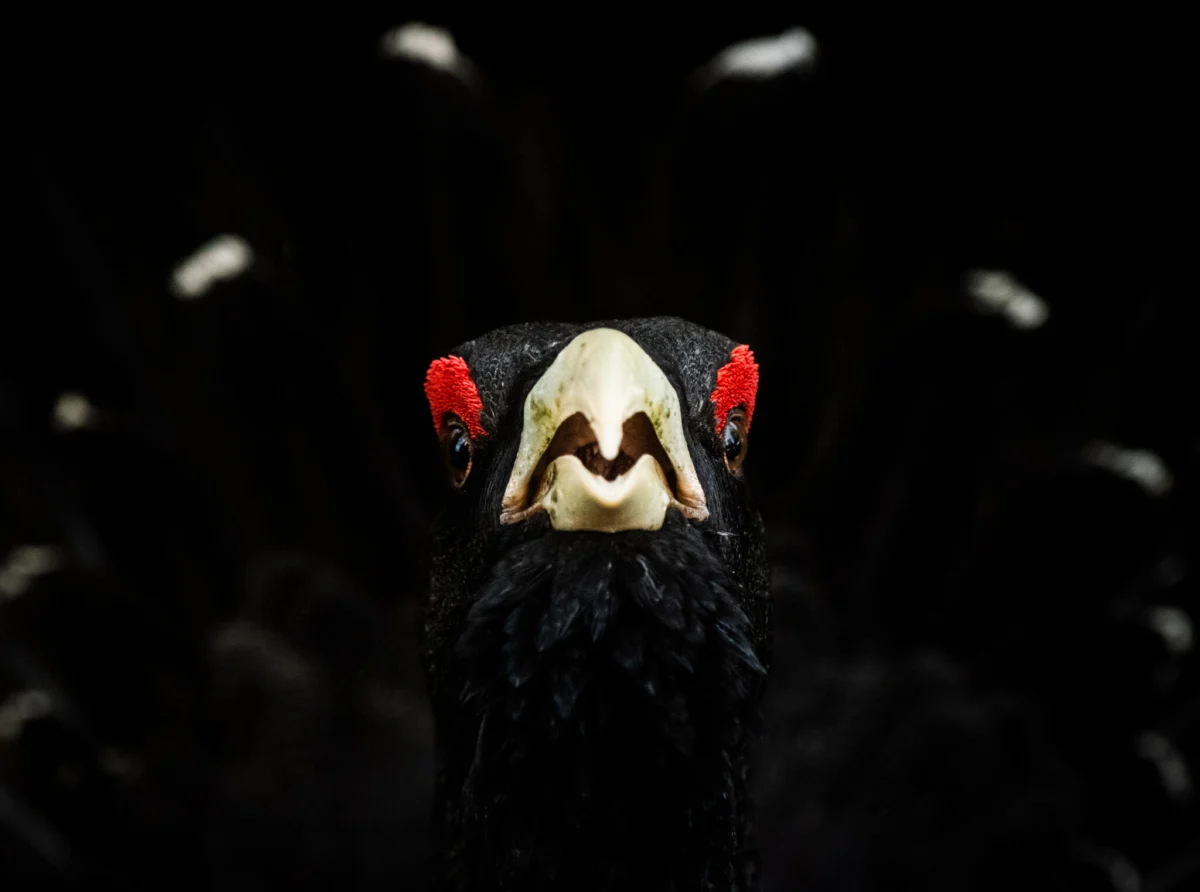
In the dynamic world of nature photography, a compelling philosophy has emerged, centered on leveraging the extreme ends of photographic techniques to transcend mere documentation and convey profound emotional impressions. This approach champions the use of ultra-wide or super-telephoto lenses, deliberate blackout or whiteout exposures, extended shutter speeds, and unconventional compositions, arguing that at these extremities, distractions dissipate, essential elements are magnified, and the inherent narrative within an image gains unprecedented strength. This methodology seeks to capture not just the visual aspects of nature, but the felt experience, translating the ephemeral into impactful visual stories.

Seeking Order Amidst Nature’s Grandeur
Photography is fundamentally an act of imposing order on a world that often appears overwhelming and chaotic. Nature, in its rawest form, presents itself as an intricate tapestry of elements—dense forests, migrating herds, or the myriad feathers of a bird’s plumage. The challenge for photographers lies in discerning and extracting hidden structures, patterns, and rhythms from this apparent disarray, subsequently translating them into a cohesive visual form. While seemingly straightforward, this task demands significant skill and an acute artistic eye. The pursuit of presenting nature’s inherent chaos in a visually compelling manner has led many practitioners, including proponents of this extreme approach, to explore the very boundaries of photographic technique. By doing so, they aim to craft a more potent narrative, one capable of transmitting their personal emotions and experiences directly to the viewer, fostering a deeper connection.

Atmosphere as the Primary Narrative
The immersive experience of nature is a multi-sensory phenomenon. Our perceptions are sculpted by a confluence of sights, sounds, smells, and textures, all harmonizing to forge a complete impression of a scene. For still photographers, recreating this holistic experience is an inherent challenge, as their medium is restricted to the visual realm. It is a common sentiment among nature photographers to feel a sense of inadequacy when reviewing images captured after a particularly moving encounter, realizing that the photographs rarely encapsulate the full intensity of emotion felt in the field. This disconnect often stems from the absence of the comprehensive sensory input that defined the original moment.

To bridge this gap and immortalize the profound atmospheres and emotions encountered in nature, a growing number of photographers are deliberately manipulating exposure to its extremes. This involves creating dark, moody images through heavy underexposure, known as blackout photography, or producing bright, ethereal images achieved through significant overexposure, termed whiteout photography. These techniques are not merely technical adjustments; they are powerful artistic tools designed to enhance and emphasize the emotional core of the experience.
Historically, artists have manipulated light and shadow to evoke specific moods. Low-key photography, characterized by predominantly dark tones, has long been employed to convey drama, mystery, and introspection, tracing its roots back to chiaroscuro techniques in painting. Conversely, high-key photography, dominated by bright tones, often communicates purity, elegance, and optimism. In the context of nature photography, a blackout exposure can imbue a scene with a sense of enigma or a dramatic, foreboding atmosphere, drawing the viewer into a world shrouded in shadow. Conversely, the whiteout technique is perfectly suited to highlighting qualities of purity and elegance, whether in the subject itself or its pristine surroundings.

The conscious decision regarding exposure transforms a technical parameter into a language for emotion. By intentionally rendering a scene with extreme light or darkness, photographers actively guide the viewer’s interpretation, steering them towards the specific feelings and sensations that permeated the original encounter. This deliberate choice elevates exposure from a mere technical setting to a fundamental expressive element, allowing the image to resonate on a deeper, more visceral level.
Perspective and Focal Length: Crafting Relational Narratives

Beyond exposure, perspective plays a critical role in defining the viewer’s relationship with the photographic subject. Focal length, a cornerstone of a photographer’s toolkit, is arguably one of the most effective means to alter the perceived appearance of a subject in relation to its environment. Each end of the focal length spectrum, from ultra-wide-angle to super-telephoto, tells a distinct story. The further one deviates from standard or "normal" focal lengths (typically around 50mm on a full-frame sensor), the more pronounced the visual effect becomes, thereby reinforcing the narrative the photographer intends to convey.
Ultra-wide-angle lenses (e.g., 14mm to 24mm) are celebrated for their ability to capture expansive landscapes, creating a sense of immersion and grandeur. They exaggerate perspective, making near objects appear larger and distant objects smaller, drawing the viewer into the scene with a wide, encompassing view. This perspective is invaluable for showcasing the vastness of natural habitats and the intricate interplay between a subject and its environment. In wildlife photography, a wide-angle can place an animal within its broader ecosystem, highlighting its scale and context.

Conversely, super-telephoto lenses (e.g., 400mm, 600mm, 800mm, or even longer with teleconverters) offer a dramatically different perspective. They compress distances, making background elements appear closer to the subject, and excel at isolating subjects from distracting surroundings. This allows for intimate portraits of wildlife, revealing intricate details of plumage, fur, or expression that would be invisible to the naked eye or with standard lenses. The emotional impact is often one of intimacy, vulnerability, or a privileged glimpse into a private moment.
Significant technological advancements in recent years, particularly with the advent of mirrorless camera systems, have profoundly expanded the possibilities for photographers, especially concerning extra-long focal lengths. Mirrorless technology has led to the development of telephoto lenses that are not only optically superior but also often lighter, more compact, and more accessible in terms of cost. Crucially, even mid-range telezoom lenses can now be effectively paired with teleconverters while retaining high-performance autofocus capabilities and excellent image quality. This democratization of extreme focal lengths has opened up entirely new worlds of perspective for many photographers, enabling creative compositions and storytelling previously out of reach.

For example, on the remote seabird island of Hornøya in Norway, located above the Arctic Circle, a population of European shags navigates harsh conditions and breathtaking light during their breeding season, often amidst lingering snow. A photographer employing this extreme focal length philosophy might utilize a range from 24mm to 1200mm to craft a comprehensive visual narrative. Wide-angle shots (24mm-70mm) could capture the sweeping, snow-dusted landscape and the sheer scale of the colony, showing the birds in their challenging environment. Mid-telephoto shots (70mm-200mm) might depict interactions between shags or their displays against a slightly compressed background. Finally, super-telephoto images (400mm-1200mm) would offer incredibly detailed close-ups of individual birds, their expressions, the texture of their feathers, or their intense battles for territory, isolating them from the chaotic backdrop. This multi-focal approach within a single portfolio allows for a rich, layered story, showcasing both the individual and the grand environmental context.
The Magic of Movement: Shutter Speed as a Creative Medium

At its core, photography is the art of capturing moments and preserving movements to tell a story. For photographers embracing extreme techniques, a particularly appealing avenue is working with shutter speeds that produce images beyond the direct capabilities of human vision. This extends to both ends of the shutter speed spectrum: incredibly slow and exceptionally fast.
Long exposures, especially when combined with Intentional Camera Movement (ICM), unlock a new universe of photographic possibilities. Instead of merely recording the static landscape, its colors, and shapes, photographers can use ICM to "paint" the image with the very structures and textures of the entire scene, all within a single exposure. This technique involves moving the camera during a prolonged exposure, transforming familiar scenes into abstract, painterly renditions. Each ICM image is inherently unique and virtually impossible to replicate precisely, making it a truly original form of artistic expression. While it demands considerable patience and practice due to a high rate of "failed" images, the reward is often a strikingly original and emotionally evocative photograph that captures the essence of movement and time in a way traditional photography cannot. The result often borders on abstraction, inviting viewers to interpret rather than simply observe.

Conversely, recent advancements in mirrorless camera technology have also pushed the boundaries of what is achievable with extremely fast shutter speeds. In the DSLR era, mechanical shutters typically capped out at 1/8000 second, making it challenging to photograph exceptionally bright scenes without blowing out highlights. Modern mirrorless cameras, however, frequently feature electronic shutters capable of speeds up to 1/32,000 second or even faster. This capability is invaluable in conditions of intense light, such as shooting directly into the midday sun. While our eyes struggle to perceive details in such bright scenes, the camera can now capture intriguing images, meticulously revealing the nuanced details of the sun’s halo and the backlit clouds surrounding it. This ability to freeze time at micro-intervals or to handle extreme luminance expands the photographer’s palette for dramatic and visually striking images.
Challenging Compositional Norms: The Power of the Unexpected

Composition in photography is often taught with a set of well-established rules—the Rule of Thirds, the Golden Ratio, leading lines, framing, and symmetry, among others. These guidelines are widely adopted because they frequently lead to balanced, harmonious, and visually pleasing images. However, rigid adherence to these rules, while ensuring consistency, can inadvertently stifle creative expression and lead to predictable, even formulaic, results.
For the photographer seeking to push boundaries, composition becomes less about strict adherence to dogma and more about understanding the dynamic interplay of elements within the frame. A classic compositional principle, for instance, dictates leaving "looking room" or "breathing room" in the direction a subject is facing or moving. While effective, always following this rule might cause a photographer to overlook more compelling images where an unconventional placement creates an entirely different, perhaps more powerful, balance. An off-center subject, for example, might be balanced by negative space, a distant element, or a contrasting texture, creating tension or a sense of unease that can enhance the narrative.

In many instances, an unconventional composition can dramatically amplify an image’s impact, making it more memorable and engaging. By breaking away from expected arrangements, photographers can surprise the viewer, challenging their perceptions and inviting a deeper engagement with the artwork. This approach necessitates training the eye to perceive how all elements within a scene—lines, shapes, colors, light, and shadows—interact, rather than simply placing a subject according to a predefined grid. Cultivating this intuitive understanding of visual dynamics is, in the opinion of many pioneering photographers, one of the most crucial steps in elevating one’s photographic artistry beyond the conventional.
Creativity for Creativity’s Sake: Embracing Serendipity

A prevalent ethos in photography emphasizes intentionality: every choice, from lens selection to shutter speed and composition, should be made with a clear, predefined purpose. This systematic approach certainly yields consistent results, balanced exposures, and predictable outcomes, which are essential for creating order out of chaos. However, this rigorous methodology can, paradoxically, limit genuine creative exploration and stifle the very playfulness that often underpins groundbreaking art.
For many, embracing creativity simply for its own sake, without an explicit purpose or a rigidly pre-visualized outcome, is equally vital. It serves as a necessary counterbalance to the systematic approach, fostering an environment where serendipity and happy accidents can occur. Not every truly impactful photograph can be entirely pre-visualized; the human eye and mind cannot reliably predict the intricate coincidences and random occurrences that often add a magical, unscripted dimension to an image—be it a fleeting reflection, an unexpected movement, or a sudden shift in light. These unpredictable elements can often be the missing piece that transforms a good photograph into an extraordinary one.

Nature photography, in this context, becomes an ongoing journey of exploration and experimentation. A photographer might intentionally move the camera during a shot of a static subject, or deliberately underexpose a scene where conventional wisdom would dictate overexposure. This experimental mindset inevitably leads to a significant number of "failed" shots—a necessary consequence of pushing boundaries. However, amidst these discards, moments of "gold" can emerge. Sometimes, this gold manifests as a spectacular, unique image that defies categorization. More often, it takes the form of a subtle discovery—an intriguing effect, a novel perspective, or a fresh way of seeing—that can be further developed and refined in future photographic endeavors. This iterative process of experimentation and discovery is crucial for artistic growth and for continuously evolving one’s photographic voice.
The Broader Impact and Future of Nature Photography

The philosophy of embracing extreme photographic techniques marks a significant evolution in nature photography, moving beyond its traditional role as primarily documentary to a more expressive and artistic medium. This shift has several profound implications for the field and its audience.
Firstly, it elevates the emotional resonance of nature imagery. By employing techniques like blackout/whiteout or ICM, photographers can evoke deeper feelings in viewers, fostering a more personal and empathetic connection to the natural world. This emotional engagement can be a powerful tool for conservation, inspiring greater appreciation and a desire to protect the environments and species depicted.

Secondly, it democratizes artistic expression. With advancements in mirrorless technology making sophisticated tools more accessible, a wider range of photographers can now experiment with techniques previously reserved for a select few. This fosters a more diverse and innovative photographic landscape. The proliferation of online platforms and communities also provides a space for these experimental works to be shared, discussed, and critically evaluated, pushing the collective boundaries of what is considered "nature photography."
Finally, this approach encourages a continuous re-evaluation of photographic "rules." By demonstrating that intentional deviation from norms can lead to compelling results, it inspires other photographers to question conventions and explore their own unique visions. This constant questioning and experimentation are vital for any art form to remain vibrant and relevant. As photographers continue to explore the intricate dance between the natural world, their advanced cameras, and their own creative curiosities, the future of nature photography promises to be one of ever-increasing artistic depth, emotional impact, and visual innovation. Ultimately, it is curiosity—the drive to explore, experiment, and challenge—that stands as the greatest creative tool for any nature photographer seeking to capture the profound beauty and inherent stories of our planet.