
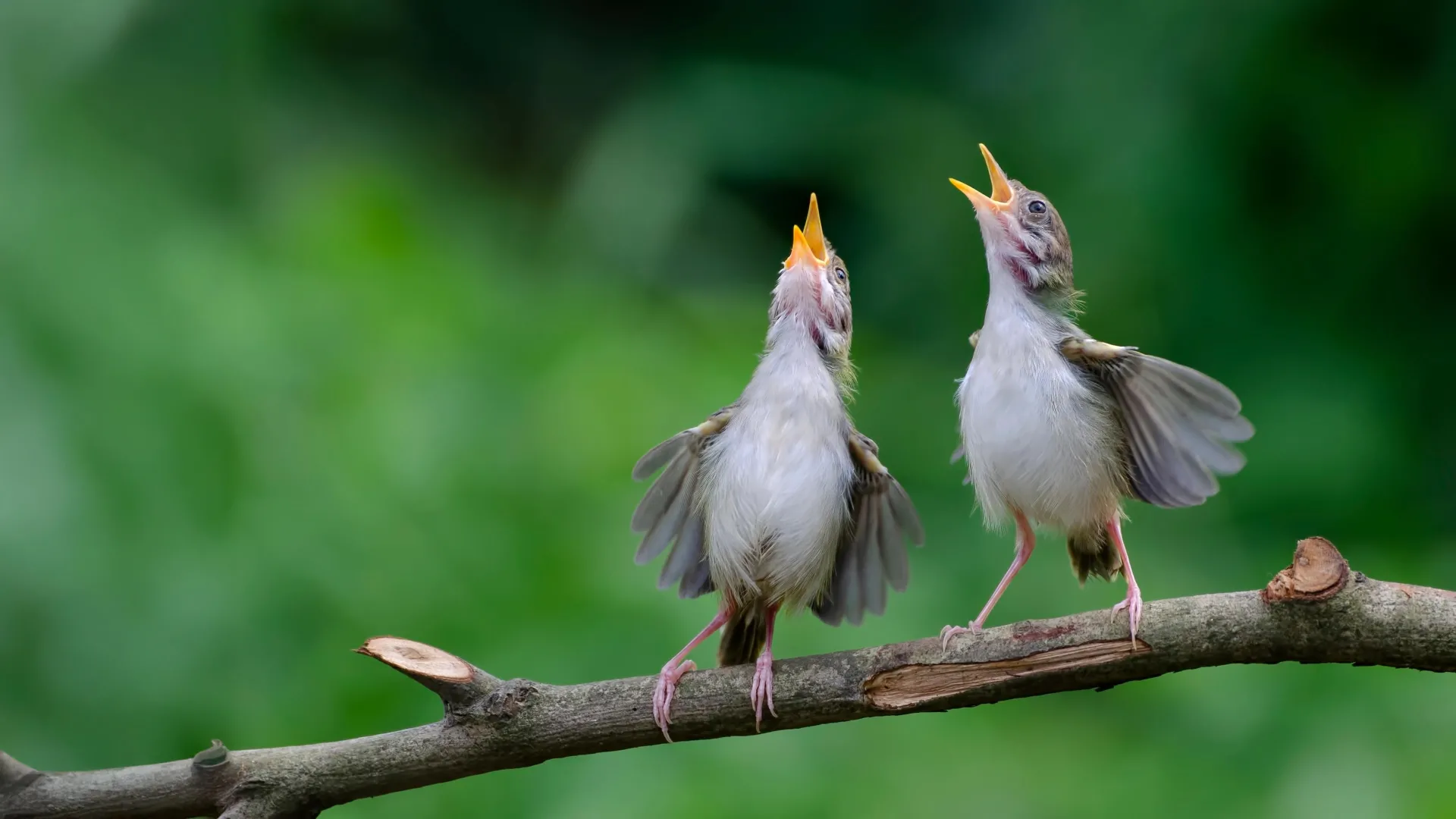
Birds separated by vast geographical distances and millions of years of evolutionary divergence have been found to produce remarkably similar warning cries when confronting parasitic threats near their nests, according to a groundbreaking international study. This discovery reveals that these alarm calls are a unique blend of learned behaviors rooted in an innate, instinctive reaction that manifests across numerous species, marking the first documented example of a vocalization encompassing both learned and innate components. The findings, published on October 3 in the prestigious journal Nature Ecology and Evolution, offer an unprecedented insight into the intricate ways natural selection shapes the development of animal communication systems. The extensive project, a collaborative effort spearheaded by scientists from Cornell University in the United States and the Doñana Biological Station in Seville, Spain, represents one of the most comprehensive investigations ever undertaken into the phenomenon of brood parasitism and its profound impact on host species.
The Evolutionary Imperative: Battling Brood Parasitism
At the heart of this remarkable evolutionary convergence lies the relentless pressure exerted by brood parasitism. This cunning reproductive strategy, employed by certain bird species such as cuckoos, cowbirds, and honeyguides, involves laying their eggs in the nests of other species, known as host birds. The unsuspecting hosts are then unwittingly coerced into raising the parasite’s chicks, often at the devastating cost of their own offspring, which may be outcompeted for food, pushed out of the nest, or even killed by the larger, more aggressive parasitic young. This costly deception places immense selective pressure on host species to develop sophisticated mechanisms for recognizing and deterring parasites before they can deposit their eggs, thereby safeguarding their reproductive success.
The researchers observed that more than 20 distinct bird species, spanning four continents—including diverse ecosystems in Australia, China, Zambia, and parts of the Americas and Europe—utilize a nearly identical, distinctive "whining" alarm call. This specific vocalization serves as an urgent signal, alerting nearby birds to the immediate presence of parasitic intruders. The sheer breadth of species exhibiting this shared call, despite their profound evolutionary separation and lack of direct intercontinental contact, presented a compelling puzzle for the scientific community.
A Shared Sound Forged in Isolation: The Mystery Unraveled
The striking uniformity of the "whining" call across geographically isolated populations was a central focus of the research. Scientists were particularly intrigued by how birds living in environments as disparate as the arid bushlands of Australia, the dense forests of China, and the sprawling savannas of Zambia could have independently evolved or acquired the same distinctive warning call. This similarity defied conventional understanding of vocal communication evolution, which typically posits either shared ancestry (phylogenetic inheritance) or direct cultural transmission as the primary drivers of vocal similarities. Given the millions of years of divergence and lack of contact, neither of these explanations fully accounted for the observed phenomenon.
The study’s meticulous methodology involved extensive field observations, detailed acoustic analysis of thousands of bird calls, and controlled playback experiments. Researchers deployed recordings of the "whining" call in various natural settings to observe the immediate behavioral responses of different bird species. What they discovered was a two-stage process: an innate, immediate reaction followed by a crucial learning phase.
When a bird first hears this specific "whining" call, its initial reaction is an instinctive investigation. It is compelled to approach the source of the sound, scanning its surroundings for the potential threat. This innate investigatory drive acts as the foundational, hardwired component of the communication system. It’s during this critical moment of instinctive inquiry, explained co-author Damián Blasi, a language scientist at Pompeu Fabra University in Spain, that the bird begins to associate the specific sound with the surrounding environmental cues—such as the sight of a cuckoo flying overhead, the shape of a parasitic egg in a neighbor’s nest, or the agitated behavior of other birds. This process is known as social transmission.
"It’s then, when birds are absorbing the clues around them, that the bird learns when to produce the sound in the future, and critically, what specific threat it signifies," clarified James Kennerley, co-lead author and postdoctoral fellow at the Cornell Lab of Ornithology. This learning phase transforms the innate investigatory trigger into a context-specific, learned warning signal, allowing the bird to effectively communicate the presence of a brood parasite to its conspecifics and other host species.
Between Instinct and Language: A New Paradigm for Communication
This hybrid nature of the "whining" call holds profound implications for our understanding of animal communication and the very origins of language. William Feeney, an evolutionary ecologist at Doñana Biological Station in Seville, Spain, and co-lead of the study, encapsulated this significance: "The fascinating thing about this call is that it represents a midpoint between the purely instinctive vocalizations we often see in animals and fully learned vocal units like human words."
Traditional scientific views have often drawn a stark distinction between animal communication, largely considered instinctive and fixed, and human language, which is highly flexible, learned, and culturally transmitted. This study challenges that dichotomy by presenting empirical evidence of a vocalization that straddles both realms. It suggests a more nuanced continuum, where innate predispositions can serve as scaffolds upon which complex learned meanings are built.
Furthermore, the study illuminated a crucial ecological link: species producing the "whining" call tend to inhabit regions where host-parasite interactions are particularly complex and intense. These are often areas where multiple brood parasite species coexist, or where host species face exceptionally high rates of parasitism, leading to a heightened evolutionary arms race.
"With birds working together to drive parasites away, communicating how and when to cooperate is really important," Kennerley elaborated. "So this call is popping up in parts of the world where species are most affected by brood parasitism, highlighting its adaptive value in facilitating cooperative defense." The collective action enabled by this shared warning call can significantly increase the chances of successfully deterring a parasite before it lays its eggs, thereby boosting the reproductive success of the entire host community.
Evolution’s Link Between Learning and Instinct: A Darwinian Revelation
Perhaps the most significant contribution of this research, according to the authors, is its profound implication for evolutionary theory. The discovery of a vocalization that seamlessly integrates an innate sound with a learned behavioral response provides a tangible link between these two previously distinct categories of communication. "For the first time, we’ve documented a vocalization that has both learned and innate components, potentially showing how learned signals may have evolved from innate calls in a way first suggested by Charles Darwin," Feeney stated. "It’s like seeing how evolution can enable species to give learned meanings to sounds."
Charles Darwin, in his seminal works, speculated about the gradual evolution of complex traits, including communication, from simpler, more instinctive precursors. This study offers compelling empirical evidence for such a transitional pathway, demonstrating how a genetically predisposed response (the instinctive investigation) can become a canvas upon which environmental learning paints context-specific meaning. It suggests that the evolution of communication is not a simple linear progression but a dynamic interplay between inherited traits and adaptive learning.
The results directly challenge long-standing assumptions that animal communication systems and human language exist as entirely separate, incomparable phenomena. Instead, the research team proposes that complex communication systems, including the intricate structure of human speech, may have evolved through the gradual blending and integration of instinctive and learned elements over vast spans of evolutionary time. This model suggests a continuum of complexity, rather than an abrupt leap from animal calls to human words.
Broader Impact and Implications for Science and Conservation
This study opens up numerous avenues for future research and has significant implications across several scientific disciplines:
- Understanding Language Evolution: By demonstrating a hybrid communication system, the research provides a crucial "missing link" in understanding how flexible, learned vocalizations might have emerged from more rigid, innate calls. This has profound implications for comparative linguistics and the study of human language origins. It suggests that the cognitive mechanisms underlying associative learning and social transmission, observed in these birds, might represent fundamental building blocks for more complex forms of communication.
- Cognitive Ecology: The findings underscore the sophisticated cognitive abilities of birds, particularly their capacity for rapid associative learning and social learning within a critical window of opportunity. It highlights how ecological pressures can drive the evolution of complex cognitive traits.
- Evolutionary Biology: The study provides a compelling example of convergent evolution in communication—where similar solutions arise independently in distantly related species facing similar environmental challenges. It also illuminates the powerful role of natural selection in shaping communication systems, especially in the context of an evolutionary arms race.
- Conservation Biology: While not explicitly detailed in the original summary, understanding these intricate communication networks is vital for conservation efforts. Brood parasitism can severely impact the reproductive success of host species, some of which may already be vulnerable. Knowledge of their defense mechanisms, including communication strategies, can inform conservation strategies aimed at protecting these birds and their habitats. For instance, protecting areas where these cooperative calls are prevalent could be crucial for maintaining host resilience against parasites.
- Neuroscience: Future research could delve into the neurobiological underpinnings of this hybrid communication. What neural circuits facilitate the rapid association between the innate call and learned context? How do these circuits differ from those involved in purely innate or purely learned vocalizations?
The extensive scope of this research, encompassing species from four continents and drawing on expertise from various scientific fields, underscores the collaborative nature of modern scientific inquiry. The project’s success in identifying and characterizing this unique communication system represents a significant milestone in our understanding of animal behavior, evolution, and the fundamental processes that govern the development of complex communication across the tree of life. The "whining" call of these birds stands as a testament to the elegant solutions evolution can devise, revealing a subtle yet profound bridge between instinct and the genesis of learned meaning.