
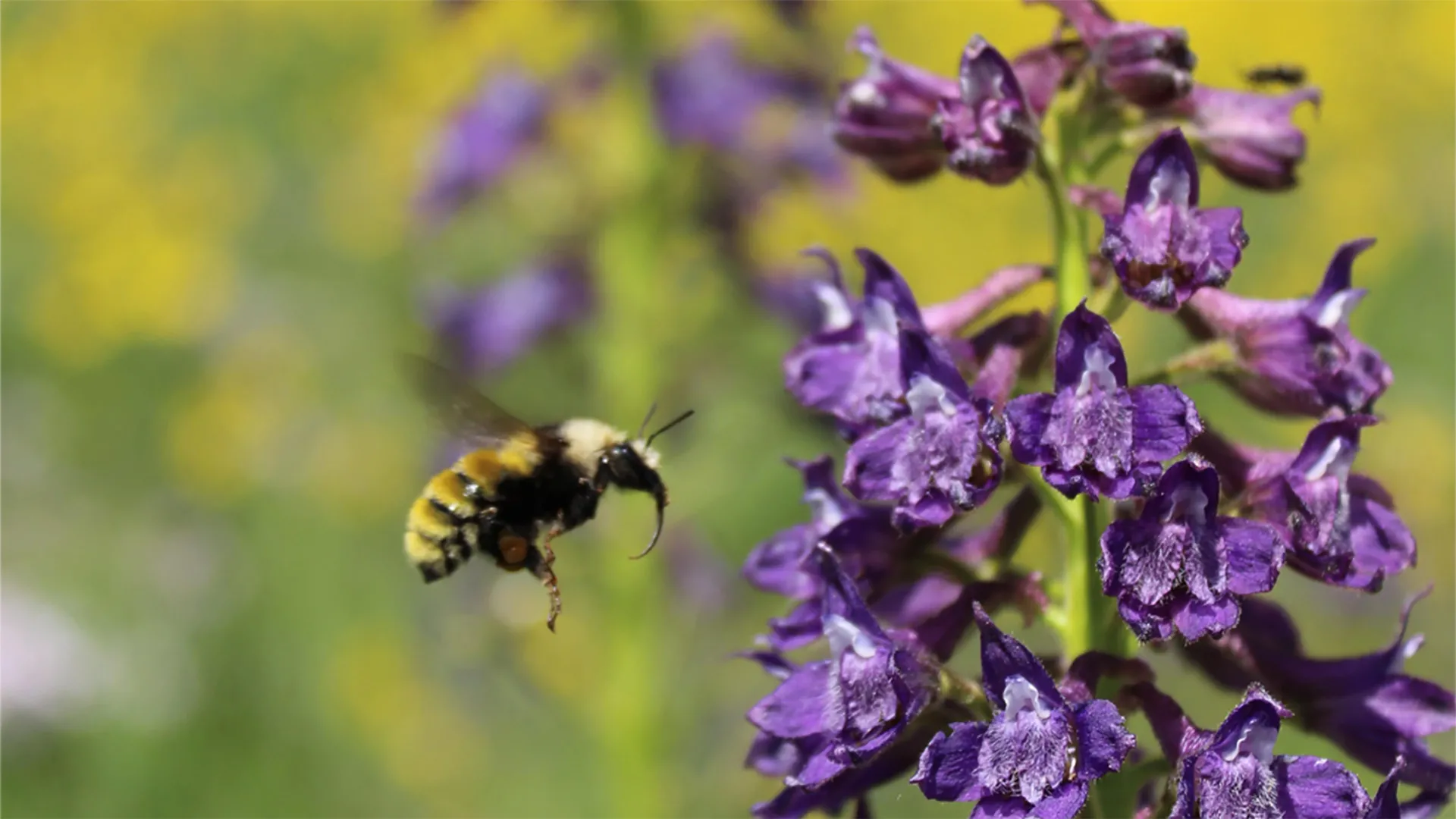
A pioneering long-term, community-level field study has unveiled that wild bumble bees are far from indiscriminate foragers; instead, they are sophisticated strategists, meticulously balancing their intake of protein, fat, and carbohydrates by targeting specific floral resources. This revelation, stemming from a collaborative effort by ecologists at Northwestern University and the Chicago Botanic Garden, fundamentally reshapes our understanding of wild pollinator nutrition and offers critical insights for conservation efforts amidst global pollinator declines. The research indicates that different coexisting bee species occupy distinct nutrient niches, primarily determined by their physical characteristics, while individual bees adapt their diets throughout the season to meet the evolving demands of their growing colonies. This strategic dietary planning allows various species to coexist, minimize competition, and maintain robust, thriving colonies throughout their active periods.
The seminal findings of this study were published on August 26 in the esteemed scientific journal, Proceedings of the Royal Society B: Biological Sciences, marking a significant milestone in entomological and ecological research. The implications extend beyond academic interest, providing a crucial framework for designing more effective pollinator habitats and addressing the complex nutritional challenges faced by these vital insects.
Unveiling the Hidden World of Bee Nutrition
For decades, the intricate nutritional needs of wild pollinators, particularly bees, have remained largely shrouded in mystery. While the general importance of bees as keystone species in ecosystems and agriculture is widely acknowledged—contributing billions annually to global food production through pollination services—the specifics of their dietary preferences in natural settings were poorly understood. This knowledge gap is particularly concerning given the well-documented global decline in pollinator populations, driven by factors such as habitat loss, pesticide use, disease, and climate change. Understanding their nutritional requirements is paramount to developing effective conservation strategies.
Wild bumble bees primarily subsist on two floral-based foods: nectar and pollen. Nectar, a sugary liquid, serves as an immediate energy source for adult bees, fueling their flight and daily activities. Pollen, on the other hand, is a more complex food source, rich in proteins, fats, and micronutrients, essential for the growth and development of bee larvae. Worker bees diligently collect pollen, packing it into specialized "baskets" on their hind legs (corbiculae) to transport back to the hive, where it is consumed by the developing young.
Prior research into bee nutrition typically involved short-term, laboratory-based experiments focusing on single bee species in controlled environments. While valuable, these studies offered a limited perspective on the dynamic and complex nutritional landscape encountered by diverse bee communities in the wild. As Paul CaraDonna, the study’s senior author and an adjunct associate professor in the Program in Plant Biology and Conservation at Northwestern’s Weinberg College of Arts and Sciences and the Chicago Botanic Garden, aptly noted, "We know that bees forage exclusively from flowers for pollen and nectar. Beyond that, we are in the dark. That is like humans shopping at a grocery store and assuming that all food items in the entire store have similar nutritional value. Clearly, that is a bad assumption." This new research represents a significant departure, providing a comprehensive, community-level nutritional map for how wild bees navigate their natural "grocery store."
An Eight-Year Expedition into Bee Diets: The Methodology
To achieve this unprecedented level of insight, the research team embarked on an ambitious, eight-year-long field study in the rugged terrain of the Colorado Rockies. This extensive timeframe allowed the scientists to observe natural seasonal variations and long-term trends in bee foraging behavior and floral availability, capturing a nuanced picture that shorter studies would inevitably miss.
The researchers meticulously observed eight distinct species of wild bumble bees, tracking their foraging activities and identifying the specific flowers from which they collected pollen. This involved countless hours of field observation, patiently documenting the intricate interactions between bees and their floral hosts. Once a bee species was observed collecting pollen from a particular plant, samples of that plant’s pollen were carefully collected. This meticulous data collection process aimed to link specific bee species to their preferred pollen sources and, crucially, to the nutritional composition of those sources.
Back in the laboratory, the collected pollen samples underwent rigorous analysis. The team precisely measured the macronutrient content of each sample, quantifying the concentrations of protein, fat, and carbohydrates. This detailed chemical analysis generated a comprehensive dataset encompassing the nutritional profiles of 35 different plant species. As Justin Bain, the study’s first author and a recent Ph.D. graduate from CaraDonna’s lab group, explained, "All pollen contains protein, fats, and carbs. But each type of pollen has a different mixture of these macronutrients. Some are very high protein like a steak. Others are more like a salad. So, the nutritional profiles are very, very different." This variation proved to be a cornerstone of the study’s groundbreaking discoveries.
Decoding Nutritional Niches and Seasonal Shifts
Upon comparing the dietary choices of each bee species with their physical traits, such as tongue length, and with the seasonal availability of flowers, clear and compelling patterns emerged. The study revealed two primary dimensions along which bumble bees optimize their nutritional intake: seasonal variation in pollen availability and interspecies differences driven by morphology.
Pollen Nutrient Dynamics: The research unequivocally demonstrated that pollen’s nutrient content varied substantially not only among different plant species but also throughout the season. Early spring flowers, for instance, were found to offer protein-rich pollen, a critical resource for queen bees emerging from hibernation. Queens, often the sole survivors of the previous season, are responsible for establishing new colonies and laying the first brood of eggs. The high protein content supports their intense reproductive effort and the rapid growth of their initial offspring.
As the season progressed into late summer, the floral landscape shifted, and late-summer flowers tended to be richer in fats and carbohydrates. Intriguingly, this seasonal shift in available nutrients directly aligned with the changing nutritional preferences and needs of the growing bee colonies. "Queen bees emerge in the spring to establish their colonies," Bain elaborated. "They forage when the snow first melts, collecting protein-rich pollen for themselves and their first brood. Later in the summer, worker bees take over foraging, and half of the species shifted toward pollen with less protein and more fats. Seeing these clear transitions between queens and workers was especially striking, and it highlighted how differently species meet their nutritional needs across the colony life cycle." This dynamic adjustment ensures that the colony’s nutritional requirements—from initial growth to maintenance and energy for foraging—are met throughout its lifecycle.
Morphology and Dietary Specialization: Beyond seasonal adjustments, the study also identified distinct dietary specializations among the eight bumble bee species, directly correlated with their physical characteristics. The species naturally segregated into two primary diet groups:
- Long-tongued species: These bees predominantly collected pollen characterized by higher protein content and lower levels of fats and sugars. Their longer tongues enable them to access nectar and pollen from deep-throated flowers, which often tend to be richer in protein.
- Shorter-tongued species: Conversely, these bees favored pollen with lower protein but higher sugar and fat content. Their shorter tongues restrict them to more open, shallower flowers, which appear to offer a different macronutrient profile.
These findings suggest that tongue length, a key morphological trait, plays a crucial role in shaping a bee species’ access to and preference for specific floral resources, thereby creating distinct "nutritional niches" within the bee community. By specializing in different nutritional profiles, coexisting species can effectively minimize direct competition for food resources, allowing a greater diversity of bees to thrive in the same ecosystem.
A particularly surprising revelation was the sheer magnitude of protein variation observed among different flowers. In some plant species, protein constituted a mere 17% of the total pollen content, akin to a low-protein salad. In stark contrast, other flowers offered pollen where protein comprised as much as 86% of the total, comparable to a protein-dense steak. This extreme variability underscores the critical importance of diverse floral landscapes for supporting a healthy and diverse bee community.
Expert Perspectives and Broader Implications for Conservation
The insights gleaned from this study carry profound implications for pollinator conservation and habitat management. As CaraDonna emphasized, "Despite the general importance of wild pollinators, especially bees, we know very little about their nutritional needs. Given widespread pollinator declines that have been observed around the globe, this knowledge gap is surprising and concerning. Our research provides some of the best information yet on the availability of nutritional resources found in wildflowers and how pollinators use these resources. We can incorporate this work into our thinking about garden design, so we can select the right flowers that best support the nutritional needs of wild pollinators."
The traditional approach to pollinator conservation has often focused on promoting floral diversity, assuming that a greater variety of flowers automatically translates to a healthier diet for bees. However, this study challenges that assumption, highlighting the necessity of focusing on nutritional diversity alongside floral diversity. Simply planting a mix of flowers might not be sufficient if those flowers do not collectively offer the full spectrum of macronutrients required by different bee species and across various life stages.
This research provides actionable intelligence for various stakeholders:
- Garden Designers and Land Managers: They can now select plant species not only for their aesthetic appeal or general nectar/pollen production but specifically for their macronutrient profiles. This allows for the creation of pollinator gardens, ecological restoration projects, and agricultural buffer zones that provide a "balanced meal" throughout the season for a wider range of bee species. For example, incorporating early-blooming, protein-rich plants for emerging queens, followed by a succession of plants offering diverse fat and carbohydrate levels for worker bees later in the season, would significantly enhance pollinator support.
- Agricultural Policy Makers: Understanding bee nutritional needs can inform policies regarding pesticide use (which can reduce floral resources or their quality) and the planting of cover crops or hedgerows that provide specific nutritional benefits. Promoting a mosaic of flowering crops and wild areas with diverse pollen types could bolster pollinator health and resilience in agricultural landscapes.
- Climate Change Researchers: The study also opens avenues for investigating how climate change, by altering floral phenology (the timing of flowering), might disrupt these finely tuned nutritional strategies. If protein-rich spring flowers bloom too early or too late relative to queen emergence, it could have detrimental effects on colony establishment and growth.
"We now have a better idea of what bees are bringing home in their ‘grocery bags,’" CaraDonna concluded. "Although this work is from one ecosystem in the Rocky Mountains, it paints a very important picture for scientists to build upon. We found that not only is there a huge amount of variation in macronutrients available in natural ecosystems to wild pollinators, but our wild bees use those nutrients in distinct ways. The nutrient needs of bees are not ‘one-size-fits-all.’ But we also see that two distinct ‘nutritional niches’ emerge, suggesting that there may be some general hot spots in terms of what the pollinators are seeking out nutritionally."
This groundbreaking study, "Nutrient niche dynamics among wild pollinators," was made possible through the generous support of the Chicago Botanic Garden, the National Science Foundation, the Rocky Mountain Biological Laboratory, the American Society of Plant Taxonomists, and the Colorado Native Plant Society. Its findings serve as a critical foundation for future research, urging scientists to delve deeper into the micronutrient requirements of bees, investigate other bee genera and ecosystems, and explore the interplay between nutrition and other stressors impacting pollinator health. By understanding and addressing the nuanced dietary needs of these essential creatures, humanity can take significant steps towards safeguarding their future and, by extension, the health of global ecosystems and food security.