
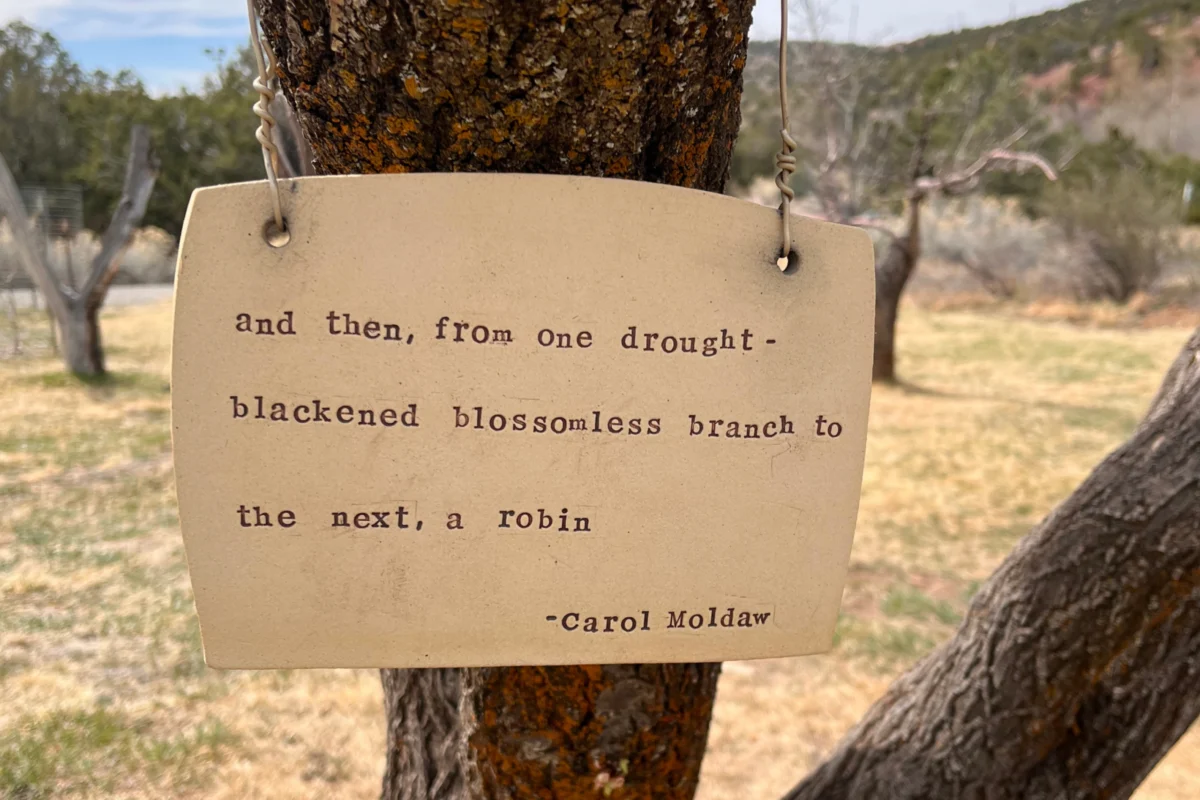
April marks the annual observance of National Poetry Month, a global literary celebration that engages tens of millions of participants worldwide, underscoring the vital role poets play in culture and reaffirming the enduring significance of poetry. This expansive commemoration, recognized as the largest literary event globally, serves as a crucial reminder that poetry is not merely an academic pursuit but a living, breathing art form integral to human expression and understanding. Amidst the myriad celebrations taking place across continents, the Randall Davey Audubon Center in Santa Fe, New Mexico, has distinguished itself with a particularly evocative and immersive initiative: a haiku trail that invites visitors to experience the profound connection between words and the natural world.
The Genesis and Global Reach of National Poetry Month
National Poetry Month was inaugurated in April 1996 by the Academy of American Poets. The organization conceived of the month-long observance as a means to increase awareness and appreciation of poetry in the United States. Its primary objectives included promoting poets and their work, encouraging the reading and writing of poetry, and celebrating poetry’s contribution to culture. Over the past nearly three decades, what began as a national initiative has burgeoned into an international phenomenon, inspiring similar celebrations and fostering a global community united by verse.
The choice of April for National Poetry Month was strategic, aiming to capitalize on the awakening of spring—a season historically associated with renewal, contemplation, and artistic inspiration. The Academy of American Poets provides extensive resources and ideas for participation, encouraging schools, libraries, literary organizations, publishers, and individuals to host events ranging from readings and workshops to poetry slams and digital campaigns. This decentralized approach has allowed the celebration to permeate diverse communities, making poetry accessible to a broad demographic that might not typically engage with literary arts. The sheer scale of participation—tens of millions—attests to a deep-seated human need for poetic expression and the universal appeal of its power to articulate complex emotions, convey beauty, and provoke thought.
Haiku: A Poetic Bridge to Nature
Central to the Randall Davey Audubon Center’s celebration is the haiku trail, a unique artistic installation that seamlessly blends literary art with ecological appreciation. Haiku, a traditional form of Japanese poetry, is renowned for its brevity and focus on natural imagery. Typically consisting of three lines with a 5, 7, 5 syllable structure, haiku often features a kigo, or seasonal word, and aims to capture a moment of profound observation, evoking a sense of wonder, transience, or harmony with nature. Its concise structure demands precision and keen observation, making it an ideal medium for reflecting on the intricacies of the natural world.
The global adoption of haiku beyond its Japanese origins speaks to its universal appeal and adaptability. Poets worldwide have embraced the form, appreciating its capacity to distil complex ideas into a minimalist framework. Its inherent connection to nature, through its traditional reliance on seasonal themes and imagery, makes it a particularly fitting choice for an Audubon Center, an organization dedicated to the conservation of birds and their habitats. The "words and birds" synergy at the Randall Davey Audubon Center’s trail creates an environment where the delicate beauty of a poetic line mirrors the delicate balance of an ecosystem, inviting visitors to pause, observe, and connect.
The Randall Davey Audubon Center’s Unique Celebration
The Randall Davey Audubon Center, nestled in the scenic landscape of Santa Fe, New Mexico, has transformed its grounds into an open-air gallery for poetry during National Poetry Month. The haiku trail offers visitors an immersive experience, inviting them to stroll through wildlife gardens and along a historic acequia, pausing at various points to read verses by local poets. These haikus are rendered on durable ceramic plaques, thoughtfully positioned to encourage reflection on both the poetry and the surrounding natural beauty.
The trail begins in the center’s vibrant wildlife gardens, a carefully cultivated space designed to attract and sustain local fauna, particularly birds. As visitors meander through these gardens, they encounter the first plaques, setting a contemplative tone. The path then gently ascends towards the acequia, an ancient irrigation ditch that symbolizes the enduring relationship between humans and the land in arid New Mexico. This journey, punctuated by poetic interventions, transforms a simple walk into a sensory and intellectual exploration. The act of sitting or strolling amidst these carefully chosen words and the vibrant birdlife fosters a deeper appreciation for both literary art and ecological stewardship, aligning perfectly with the Audubon Center’s mission to connect people with nature.
A Laureate’s Connection: Arthur Sze and Carol Moldaw
A significant highlight of the Randall Davey Audubon Center’s haiku trail is the inclusion of poems by current United States Poet Laureate, Arthur Sze, and his wife, the acclaimed poet Carol Moldaw. Arthur Sze’s presence on the trail lends national prominence to the local initiative, drawing attention to both the center and the broader significance of National Poetry Month. As the U.S. Poet Laureate Consultant in Poetry to the Library of Congress, Sze serves as the nation’s official poet, tasked with raising the national consciousness to a greater appreciation of the reading and writing of poetry. His work often explores themes of interconnectedness, the natural world, and the confluence of cultures, frequently employing vivid imagery and precise language.
Sze’s connection to the Randall Davey Audubon Center is deeply personal and profound. Several of his poems featured on the trail were directly inspired by the center’s unique beauty and serene environment. This creative resonance was further underscored by a recent visit from photographers and videographers representing the Library of Congress, who documented Sze’s work and interviewed him on site, capturing the very landscapes that have fueled his poetic imagination. This documentation not only chronicles his tenure as Poet Laureate but also highlights the center as a muse for one of America’s most distinguished literary figures.
Beyond professional inspiration, the center holds an intimate significance for Arthur Sze and Carol Moldaw: it was the setting for their wedding. They exchanged vows beneath an apricot tree in the center’s orchard, a detail that imbues their poetic contributions to the trail with an added layer of personal history and emotional depth. This personal narrative enriches the visitor’s experience, offering a glimpse into the profound ways in which places can shape lives and inspire art. The inclusion of both Arthur Sze and Carol Moldaw’s work alongside 22 other New Mexico poets creates a rich tapestry of local and national voices, celebrating the diverse poetic landscape of the region.
Broader Implications and Community Engagement
The Randall Davey Audubon Center’s haiku trail serves as a powerful example of how cultural institutions can innovatively engage with their communities and promote interdisciplinary appreciation. Such initiatives have several far-reaching implications:
Community Building and Local Artistry: By featuring 22 local New Mexico poets, the trail actively supports and showcases regional talent. This platform not only gives visibility to individual artists but also fosters a sense of community among poets and residents, strengthening the local cultural fabric. It demonstrates that literary excellence thrives outside major urban centers and encourages aspiring local writers.
Educational Outreach and Accessibility: The trail offers an accessible and engaging educational experience for visitors of all ages. Children and adults alike can learn about poetry in a non-traditional, outdoor setting, making the art form less intimidating and more approachable. It provides a unique pedagogical tool for understanding poetic structure, appreciating nature’s role in art, and encouraging literacy. The "words and birds" concept introduces ecological concepts alongside literary ones, creating a holistic learning environment.
Conservation through Art: The initiative brilliantly merges the Audubon’s conservation mission with artistic expression. By linking poetry to the natural environment, the trail subtly reinforces the importance of preserving these spaces. When visitors connect emotionally with a landscape through a poem, their appreciation for that environment deepens, potentially translating into greater support for conservation efforts. It illustrates how art can be a powerful advocate for environmental stewardship.
Cultural Preservation and Innovation: The trail contributes to the preservation of literary traditions, particularly the haiku form, while simultaneously demonstrating innovative ways to present poetry in public spaces. It moves poetry beyond books and classrooms, embedding it directly into the lived experience of visitors. This active engagement helps keep literary forms vibrant and relevant in contemporary society.
Economic and Recreational Benefits: Increased visitation to the Randall Davey Audubon Center during National Poetry Month and beyond can lead to economic benefits for the center, including sales from its gift shop, which features publications by local nature poets. Moreover, the trail offers a unique recreational activity, combining a leisurely walk with intellectual stimulation, appealing to a broad demographic seeking enriching outdoor experiences.
Official Responses and Perspectives
While direct quotes from all parties are not always available, the very existence and meticulous execution of such an event imply strong endorsements from relevant stakeholders. The Academy of American Poets, as the founder of National Poetry Month, would undoubtedly view the Randall Davey Audubon Center’s initiative as a prime example of successful community engagement. Their broader mission is to "make poetry a visible and vital part of our culture," and the haiku trail perfectly embodies this goal by making poetry tangible and accessible in a public space.
The Library of Congress’s decision to document Arthur Sze’s visit and connection to the center further validates the significance of the haiku trail. This act signals national recognition of the site as a place of poetic inspiration and a hub for literary activity, elevating its profile beyond a regional attraction.
From the perspective of the Randall Davey Audubon Center, the haiku trail likely represents a deeply held commitment to integrating art and nature. A spokesperson or director for the center would likely emphasize how the trail enhances the visitor experience, aligns with their mission to foster appreciation for the natural world, and celebrates the vibrant artistic community of New Mexico. They might express pride in hosting such a nationally recognized poet and in providing a platform for local voices.
Arthur Sze himself, having chosen the center for personal milestones and creative inspiration, would undoubtedly view the trail as a meaningful extension of his work. His inferred sentiment would likely be one of gratitude for the opportunity to share his poetry in a place that holds such significance for him, underscoring the reciprocal relationship between artist and environment.
Looking Ahead: The Enduring Appeal of Poetry and Nature
The celebration of National Poetry Month at the Randall Davey Audubon Center through its haiku trail exemplifies a growing trend in cultural programming: the fusion of art, nature, and community engagement. As societies increasingly seek meaningful experiences that connect them to both their natural surroundings and their cultural heritage, initiatives like this will continue to gain prominence. The enduring appeal of poetry lies in its capacity to articulate the ineffable, to find beauty in the mundane, and to foster empathy. When combined with the inherent solace and wonder of the natural world, as demonstrated by the haiku trail, its power is amplified.
The success of programs like the haiku trail suggests a future where cultural institutions are not just repositories of knowledge or art, but dynamic spaces that invite interaction, reflection, and inspiration. Visitors are encouraged not only to read poetry but to internalize it, to let the words guide their perception of the birds, the trees, and the flowing water. As National Poetry Month continues to expand its global reach, the Randall Davey Audubon Center stands as a testament to the creative and profound ways in which poetry can enrich lives, deepen connections to the environment, and celebrate the human spirit. The invitation to visit the center, explore the haiku trail, and browse publications by local nature poets in the gift shop extends beyond April, promising an ongoing opportunity for visitors to discover the profound harmony between words and the wild.