
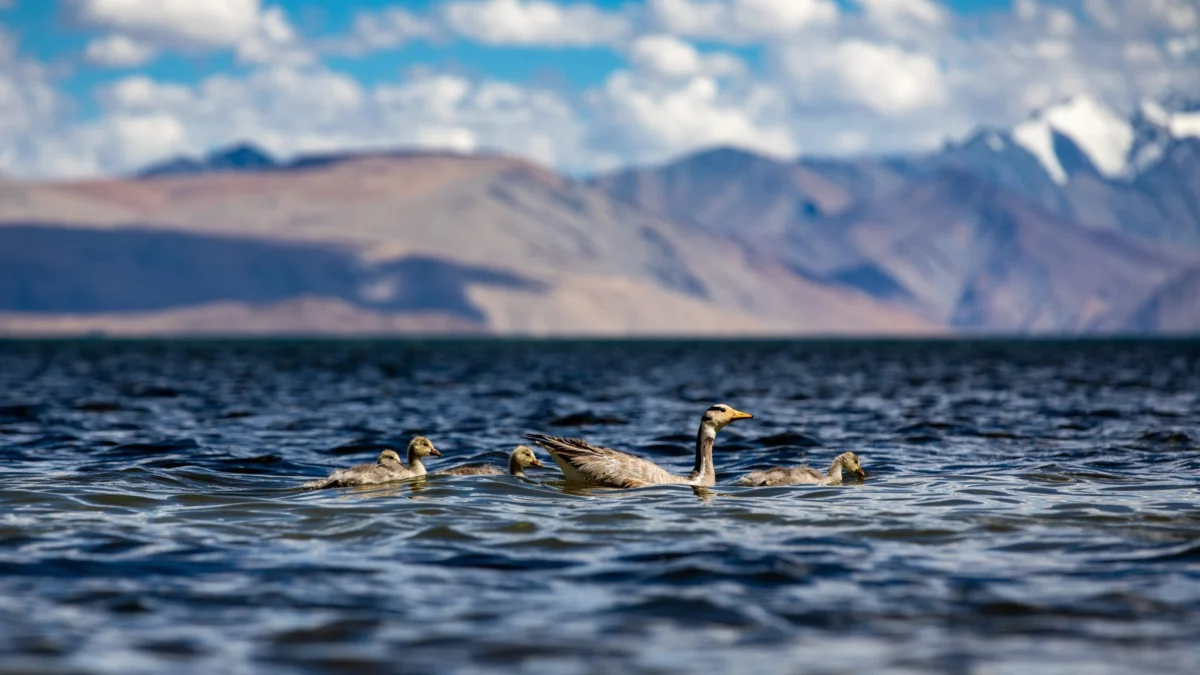
On World Water Day, the global community turns its attention to the critical importance of freshwater and the sustainable management of its resources. In the majestic embrace of the Himalayas, this focus is particularly poignant, as the region’s vast glaciers, often dubbed the "Third Pole," serve as a lifeline for billions of people and countless species, including three iconic avian inhabitants: the Brown-headed Gull, the Bar-headed Goose, and the Black-necked Crane. These birds, each a testament to evolutionary resilience, thrive on the cool, pristine glacial waters, underscoring the delicate balance of an ecosystem increasingly imperiled by the accelerating pace of climate change.
The geological saga of the Himalayas began over 60 million years ago, a colossal collision between the Indian and Eurasian tectonic plates that sculpted the world’s highest peaks. Over eons, these towering altitudes became colossal repositories of snow and ice, forming the extensive glacier systems that are the source of Asia’s largest rivers, including the Indus, Ganges, Brahmaputra, Mekong, Yangtze, and Yellow River. These arteries of life sustain agriculture, provide drinking water, and generate hydropower for an estimated 1.9 billion people across South and Southeast Asia. Beyond human sustenance, these glacial meltwaters create unique high-altitude wetland habitats, crucial for a diverse array of wildlife, especially migratory birds.
The Himalayas: Earth’s "Third Pole" and Water Tower
The immense store of ice and snow in the Himalayan-Hindu Kush region is second only to the polar caps, earning it the moniker "Third Pole." This vast cryosphere encompasses over 55,000 glaciers, covering an area of approximately 100,000 square kilometers. The annual meltwater from these glaciers feeds rivers that collectively support nearly a quarter of the global population. This hydrological importance extends far beyond direct human use, shaping entire landscapes and providing the foundational elements for unique ecosystems found nowhere else on Earth. The rhythmic ebb and flow of glacial melt dictate the availability of water in lakes, rivers, and wetlands, dictating the life cycles of flora and fauna adapted to these extreme conditions. For migratory birds, these high-altitude water bodies are not merely habitats but essential stopovers and breeding grounds, vital for their survival during epic journeys.
Iconic Avian Inhabitants: Guardians of Glacial Ecosystems
The sheer scale and altitude of the Himalayas create a unique ecological niche, allowing for the evolution of species with extraordinary adaptations. Among the most celebrated are three bird species whose lives are intrinsically linked to the health and presence of glacial waters.

The Brown-headed Gull: High-Altitude Seafarers
Contrary to the typical image of gulls inhabiting coastal areas, the Brown-headed Gull (Larus brunnicephalus) has made the high-altitude lakes of the Tibetan Plateau and the broader Himalayan region its primary domain. These freshwater lakes, fed directly by the slow, consistent melt of glaciers, are surprisingly rich in fish and invertebrate life, forming vibrant ecosystems that can sustain large congregations of these adaptable birds. Flocks numbering in the hundreds, sometimes even thousands, are not uncommon during breeding seasons.
The Brown-headed Gull is a medium-sized gull, identifiable by its dark brown head during the breeding season and its distinct white "mirror" on the primary wing feathers. Their diet primarily consists of fish, which they skillfully snatch from the water’s surface, as well as insects, crustaceans, and occasionally small rodents or carrion. Breeding colonies are established on islands or along the shores of these high-altitude lakes, providing safety from terrestrial predators. Lakes such as Pangong Tso and Tso Moriri, both straddling the India-China border in Ladakh, are renowned breeding sites, their clear, cold waters offering abundant food resources. The continued existence of these productive lake ecosystems is directly tied to the glacial meltwater that replenishes them, maintaining water levels and nutrient cycles essential for the fish populations the gulls depend upon. The IUCN currently lists the Brown-headed Gull as ‘Least Concern,’ but localized populations could face significant pressure if their specific high-altitude freshwater habitats diminish.
The Bar-headed Goose: An Aerial Marvel of Adaptation
Perhaps no other bird embodies the spirit of the Himalayas quite like the Bar-headed Goose (Anser indicus). Renowned for its unparalleled migratory feats, this species undertakes one of the most extreme migrations on Earth, flying directly over the formidable Himalayan peaks. While most migratory birds navigate through lower passes to avoid the thin air and harsh conditions, Bar-headed Geese ascend to altitudes of nearly 7,000 meters (approximately 23,000 feet), even reportedly flying over Mount Everest. This extraordinary ability to tolerate severe hypoxia and extreme cold at such heights remains a subject of intense scientific study. Researchers have uncovered unique physiological adaptations, including highly efficient lungs, larger hemoglobin molecules with a higher affinity for oxygen, and specialized muscles that allow them to extract maximum oxygen from the rarefied atmosphere.
These incredible journeys are undertaken along the Central Asian Flyway, connecting their breeding grounds in the high-altitude wetlands and lakes of Central Asia, including parts of Ladakh, Tibet, and Mongolia, with their wintering grounds in the lowlands of India, Pakistan, and Bangladesh. The glacial lakes and marshes encountered along their arduous migration serve as critical staging areas where the geese can rest and refuel. They graze on various grasses, sedges, and aquatic vegetation, building up the energy reserves necessary to continue their epic flights. Without these high-altitude freshwater oases, replenished by glacial melt, the geese’s migratory strategy, honed over millennia, would be severely compromised. The Bar-headed Goose is also classified as ‘Least Concern’ by the IUCN, but the health of their flyway, particularly the high-altitude stopovers, is paramount for their long-term survival.
The Black-necked Crane: A Sacred Sentinel of Himalayan Wetlands

With a magnificent two-meter wingspan, the Black-necked Crane (Grus nigricollis) commands attention, its stately presence gracing the high-altitude wetlands of the Tibetan Plateau, Ladakh, and Bhutan. This species holds significant cultural and spiritual importance in many of these regions, often revered as a symbol of good fortune and longevity, particularly in Tibetan Buddhism. Unlike the Bar-headed Goose, the Black-necked Crane undertakes a relatively shorter migration, primarily moving between higher and lower elevation wetlands within the Himalayan ecosystem. They breed in the colder, higher altitude wetlands during the summer and descend to warmer valleys and plateaus for the winter months.
These cranes are omnivorous, primarily feeding on roots, tubers, small fish, frogs, insects, and other small animals found in the marshy environments. Their breeding success is intimately tied to the availability of undisturbed, shallow wetlands. The Black-necked Crane is listed as ‘Near Threatened’ by the IUCN, facing pressures from habitat loss due to agricultural expansion, urbanization, human disturbance, and the direct impacts of climate change. For this species, the immediate effect of increased glacial melt has, paradoxically, offered a short-term advantage: an expansion of wetland habitats. However, this temporary boon carries a grave long-term threat. As climate change continues unchecked, the glaciers are projected to shrink dramatically, or even disappear entirely, leading to a catastrophic reduction in the very wetland ecosystems the cranes depend upon. Conservation efforts for the Black-necked Crane often involve community engagement and the establishment of protected areas, such as the Phobjikha Valley in Bhutan, to safeguard their critical wetland habitats.
The Accelerating Threat: Climate Change and Glacial Retreat
The dependence of these iconic birds on glacial waters highlights a looming ecological crisis: the rapid retreat of Himalayan glaciers. Scientific consensus, supported by extensive data from institutions like the Intergovernmental Panel on Climate Change (IPCC), indicates that Himalayan glaciers are melting at an unprecedented rate. Studies show that glaciers in the region have been losing mass at an accelerating pace since the early 21st century, with some estimates suggesting a loss of up to 0.5 meters of water equivalent per year across the entire Hindu Kush Himalayan region.
This accelerated melt is a direct consequence of rising global temperatures, driven by anthropogenic greenhouse gas emissions. The implications are multi-faceted and dire. In the short term, increased meltwater can lead to an expansion of high-altitude lakes and wetlands, potentially offering temporary benefits to species like the Black-necked Crane. However, this is a fleeting phenomenon. "While some areas might experience a temporary surge in water availability, the long-term outlook is one of severe water scarcity," stated a representative from a leading environmental research institute, emphasizing the deceptive nature of current observations. As the glacial ice reservoirs diminish, the perennial rivers they feed will eventually see reduced flows, leading to drought conditions in downstream regions.
The disappearance of glaciers would have a profound impact on both human and natural systems. For human communities, it would mean devastating water shortages for agriculture, a collapse in hydropower generation, and increased vulnerability to extreme weather events like flash floods and landslides, followed by prolonged droughts. Ecologically, the ripple effects would be catastrophic. The high-altitude lakes and wetlands, currently sustained by glacial melt, would dry up, leading to the loss of critical breeding grounds and stopovers for migratory birds. Fish populations would decline, impacting species like the Brown-headed Gull. The delicate balance of alpine ecosystems, from the smallest invertebrates to the largest mammals, would be disrupted, potentially leading to widespread biodiversity loss. "The fate of these glaciers is inextricably linked to the fate of billions of people and countless species," remarked a conservation expert, underscoring the urgency of global climate action. "We are witnessing the unraveling of an ancient natural system that has sustained life for millennia."
Conservation Imperatives: Safeguarding a Fragile Future

Recognizing the urgent threat, organizations like BirdLife International are at the forefront of conservation efforts in the Himalayas. Their strategy centers on protecting vital habitats and biodiversity, alongside advocating for renewable energy solutions that are "nature-safe." This approach aims to mitigate further carbon emissions, the primary driver of glacial melt, while simultaneously safeguarding critical ecosystems. By collaborating with local communities, governments, and other conservation bodies, BirdLife works to establish and manage protected areas, monitor key species, and raise awareness about the impacts of climate change.
International cooperation is crucial for effective conservation in the transboundary Himalayan region. Initiatives involving multiple nations sharing glacial-fed rivers are essential for coordinated water management and climate adaptation strategies. Furthermore, national climate action plans, aligned with global agreements like the Paris Agreement, must prioritize reducing emissions and investing in sustainable development that respects ecological boundaries. Efforts to promote sustainable tourism, educate local populations about the value of their natural heritage, and integrate traditional knowledge with modern conservation science are also vital components of a comprehensive strategy.
A Call to Action: Ensuring a Sustainable Future for the Himalayas
As we observe World Water Day, the story of the Brown-headed Gull, the Bar-headed Goose, and the Black-necked Crane serves as a powerful reminder of our planet’s interconnectedness. Their reliance on the cool glacial waters of the Himalayas is a stark illustration of how climate change, often perceived as a distant threat, has tangible and immediate consequences for fragile ecosystems and the species that depend on them. The choices made today regarding global carbon emissions will dictate the future of these magnificent birds, the stability of critical water resources, and the well-being of billions of people. The vision is clear: a future where the majestic glaciers of the Himalayas stand tall, streams continue to flow unimpeded, and vibrant communities of both birds and people flourish side by side, sustained by the life-giving waters of Earth’s Third Pole. This future demands immediate, concerted, and global action.