
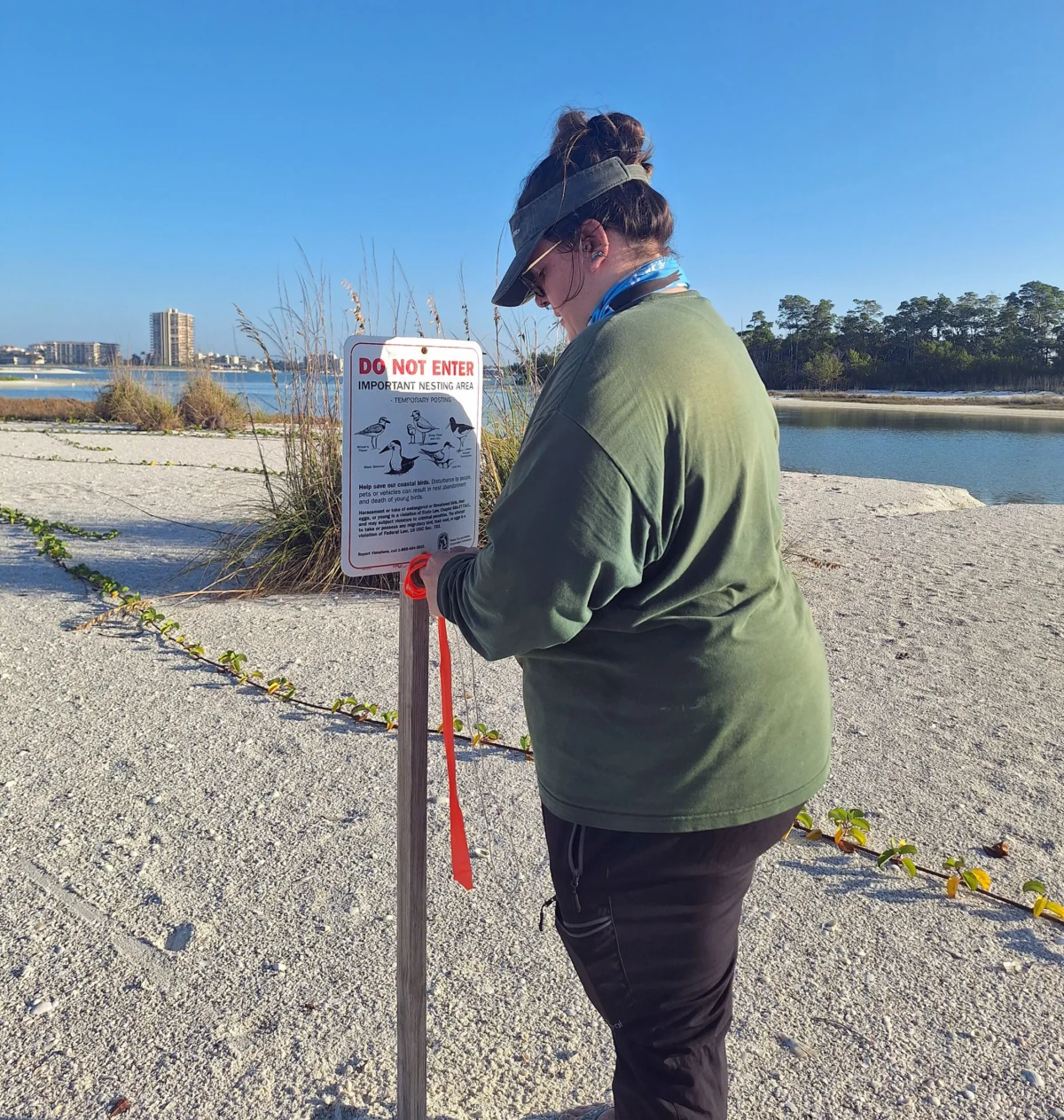
Minutes before the sun paints the eastern sky with the first hues of dawn, Megan Hatten’s day already hums with purpose. At the Ten Thousand Islands Field Research Station in Goodland, a critical hub for ecological study and conservation, Hatten, Audubon Florida’s Southwest shorebird program manager, converges with Derek Salge, her counterpart from the Florida Department of Environmental Protection. Their mission, a recurring imperative as nesting season approaches, is to fortify the fragile havens where Florida’s coastal birds lay their eggs and raise their young. The ritualized preparation is a testament to the meticulous effort required: a comprehensive first aid kit, essential for any remote fieldwork; handheld radios, ensuring vital communication in isolated stretches; life jackets, a non-negotiable safety measure on the water; and boat keys, the gateway to their island destinations. Today’s objective: establishing protective perimeters around shorebird nesting areas on Dickmans Island, a secluded patch of land nestled just south of Marco Island, within the expansive and ecologically vital Rookery Bay National Estuarine Research Reserve.
Florida’s Coastal Treasures: A Critical Habitat
Florida’s coastline, a sprawling tapestry of sandy beaches, mangrove forests, and barrier islands, serves as an indispensable sanctuary for a diverse array of shorebirds. These dynamic ecosystems provide critical foraging grounds, roosting sites, and, crucially, nesting habitats for both resident species and migratory visitors traversing the Atlantic Flyway. The Ten Thousand Islands region, a labyrinthine network of islands and waterways extending from Marco Island to Everglades City, represents one of the state’s most pristine and biologically rich coastal areas. Its relatively undisturbed nature, characterized by vast expanses of wilderness and minimal development, historically offered a safe haven. However, even these remote areas are increasingly challenged by human encroachment and recreational pressures, making proactive conservation efforts like those spearheaded by Audubon Florida and the Florida Department of Environmental Protection (DEP) more vital than ever.
Species such as the Wilson’s Plover, a small, stocky shorebird characterized by its distinctive stout bill, exemplify the vulnerability of these coastal inhabitants. Unlike many bird species that build elaborate nests in trees or shrubs, Wilson’s Plovers, along with Least Terns, Snowy Plovers, and Black Skimmers, are ground-nesters. Their nests are often little more than shallow scrapes in the sand, strategically camouflaged with shell fragments or debris, rendering them almost invisible to the untrained eye. This remarkable adaptation, while offering protection from natural predators, proves tragically ineffective against human disturbance. Eggs and newly hatched chicks, often described as "fuzzy fluffballs," blend seamlessly with their sandy surroundings, making them extraordinarily susceptible to accidental trampling by beachgoers, curious children, or unleashed pets. The state of Florida recognizes many of these species as threatened or species of special concern, underscoring the urgent need for intervention and protection to prevent further population declines.
The Day’s Chronology: From Pre-Dawn Prep to Protected Zones
The journey to Dickmans Island commences with precise logistical planning, a testament to the experience of Hatten and Salge. "We’ll take these smaller signs to put up at the front section, which is where most people are walking," Hatten instructs Salge, highlighting a critical aspect of their strategy: placing visible markers where human interaction is most likely. A utility cart is laden with an assortment of tools: two distinct types of signs, designed for different visibility needs; spools of brightly colored string and flagging, essential for creating demarcation lines; and various power tools, including a post-hole digger, which are indispensable for anchoring the signs securely in the shifting sands. With the gear meticulously loaded, Hatten and Salge navigate the boat out into the tranquil pre-dawn waters, the rhythmic thrum of the engine breaking the silence as they head towards the open expanse.
Upon their arrival at the island’s pristine beaches, the scene already buzzes with early morning activity. Several recreational boats have already anchored on the sand, their occupants engaged in the quintessential Florida pastime of beachcombing. Eager visitors stoop over mounds of shells along the breaking waves, their focus intently on collecting treasures, often oblivious to the delicate dance of life unfolding around them. Flocks of shorebirds, equally intent on their own foraging, scurry along the water’s edge, their quick movements a testament to their continuous search for food. This immediate juxtaposition of human recreation and avian life underscores the delicate balance conservationists strive to maintain, a balance that can be easily disrupted by an unwitting step or an errant pet.
Hatten and Salge, seasoned in this environment, efficiently divide their tasks. Each takes a set of signs and tools, fanning out in different directions to meticulously mark the specific stretches of beach where threatened shorebirds, particularly Wilson’s Plovers, have already begun the crucial process of establishing breeding territories. These territories are not always obvious; they are chosen for subtle advantages like proximity to feeding grounds and protection from high tides, often appearing indistinguishable from any other stretch of sand to the casual observer. "Right now, we are seeing a variety of wintering birds on this beach, staging for spring migration," Hatten observes, providing crucial context to Salge. "And, over there is where the Wilson’s Plovers typically scrape their nests," she adds, pointing over her shoulder, a testament to her intimate knowledge of the island’s avian inhabitants and their preferred nesting sites, knowledge honed over years of dedicated observation.
The physical exertion of the task is considerable. Under the rapidly ascending sun, Hatten and Salge labor to dig holes between the high tide line and the sparse coastal vegetation. This specific zone is critical because it offers a buffer from the highest tides while still being accessible to the birds. Following a brief but necessary water break, they transition to the second, equally vital step: connecting the signs with string and colorful flagging. This creates a visible, albeit permeable, protective circle around the most promising nesting spots. It’s an imperfect barrier, as birds, driven by instinct, don’t always adhere strictly to human-made boundaries. The primary function of these demarcations, therefore, extends beyond mere physical separation; they serve as unequivocal visual alerts to humans, signaling the presence of hidden nesting activity amidst the small plants and shell fragments, urging caution and respect.
The Imperative of Protection: Why Boundaries Matter
"We put up these signs and string to help protect eggs and chicks from being trampled, because they are well camouflaged and very hard to see," Hatten explains, articulating the core rationale behind their arduous work. The consequences of disturbance are far-reaching for these vulnerable species. When parent birds are repeatedly flushed from their nests by approaching threats—be it humans, unleashed dogs, or even low-flying kites—they expend valuable energy that should be dedicated to incubation or chick rearing. This energy drain can weaken the adults and leave eggs or chicks exposed to the elements or opportunistic predators. Studies by conservation organizations indicate that even a single prolonged disturbance event can reduce nesting success rates by up to 20%, with cumulative disturbances proving catastrophic, potentially leading to nest abandonment, a tragic outcome that negates weeks of effort and drastically reduces reproductive success for an entire breeding season.
Within a mere two hours of their arrival, both identified nesting areas on Dickmans Island are meticulously posted and marked. Coincidentally, as their work concludes, the tide begins its steady ascent, prompting the diligent beachcombers to gather their belongings and head back to their boats. This natural rhythm of the island offers a momentary reprieve. As Hatten prepares to depart, two women approach her. After a brief but informative conversation about the purpose of the signs and the vulnerability of the birds, they express their gratitude, voicing their appreciation for Audubon Florida’s proactive role in safeguarding the nesting birds. This direct interaction underscores the immediate impact of their visible presence and the potential for positive public engagement, transforming casual visitors into informed allies.
Beyond Installation: A Shift Towards Education and Enforcement
Hatten’s work, however, is far from complete; indeed, the installation phase merely marks the beginning of a much broader, season-long commitment. With nesting season now fully underway, her responsibilities are poised to shift from the physical act of demarcation to the crucial realm of public education and community outreach. There are still several more nesting areas across the region that require similar posting, each presenting its unique set of challenges and opportunities for engagement.
Upon returning to the dock, Hatten immediately pivots to her next task: an interview with a local newspaper. This media engagement is not merely a formality; it is a strategic effort to amplify awareness within the broader community. The core message remains consistent: even in areas where signs and flagging are prominently displayed, the nesting birds remain profoundly vulnerable to disturbance. Signs, while effective visual cues, cannot physically deter an unleashed dog bounding through a protected area, nor can they deflect an errant beach ball or a kite swooping too low overhead, each capable of causing significant chaos and stress for nesting birds and their fragile offspring. The media, therefore, serves as an invaluable conduit for disseminating this critical information to a wider audience, fostering a sense of shared responsibility that extends beyond the immediate beachgoers.
The proactive nature of Audubon Florida’s approach extends well beyond individual site visits and public interviews. In the coming weeks, Hatten will convene a pivotal meeting with regional interagency partners. This collaborative forum will bring together representatives from the Florida Fish & Wildlife Conservation Commission (FWC), the Collier County Sheriff’s Department, the City of Marco Island, and other key stakeholders. The agenda is comprehensive: to ensure that all participating agencies are "on the same page" regarding the exact locations of posted areas, the specific rules governing beach use within these sensitive zones, and important dates, particularly those coinciding with major holidays. Officials emphasize that a multi-faceted approach involving enforcement, education, and habitat management is paramount to conservation success. The objective is clear: to establish a unified front for enforcement and education, especially in anticipation of high-traffic periods like Memorial Day and Independence Day holidays, when coastal areas experience a significant surge in visitors. This "all-hands-on-deck" approach is essential to managing the increased pressure on nesting sites and ensuring consistent application of protective measures.
The Power of Community: Volunteers as Guardians
Perhaps the most crucial subsequent task for Hatten will be the recruitment and mobilization of a dedicated corps of volunteers. These community stewards are indispensable to the long-term success of shorebird conservation efforts. Once recruited, these volunteers will undergo training to staff information stations strategically placed at nesting beaches throughout the coming months. Their role is multi-faceted: to engage directly with beach visitors, providing invaluable education about the "fuzzy fluffballs wandering in their midst," and to foster an appreciation for the delicate ecosystems surrounding them. They serve as friendly, knowledgeable ambassadors, answering questions, distributing informational materials, and gently reminding visitors about responsible beach etiquette. Crucially, they also act as the eyes and ears on the ground, tasked with notifying law enforcement officials of any issues or egregious disturbances that could threaten the birds.
This network of staff and volunteers is a testament to the belief that conservation is a collective endeavor. Through the inherent charisma of Florida’s avian friends—their resilience, their beauty, and their critical role in the ecosystem—Audubon Florida and its partners aim to grow their network of conservation advocates throughout the hemisphere. By engaging local communities, educating visitors, and collaborating with diverse agencies, they inspire new constituencies—and indeed, future generations—to act on behalf of both birds and people. The interconnectedness of a healthy environment, thriving wildlife, and a responsible human population forms the cornerstone of this enduring mission. The protection of a small Wilson’s Plover nest on a remote island thus becomes a powerful symbol of a larger commitment to biodiversity and environmental stewardship.
Implications and Broader Impact
The work undertaken by Hatten and Salge, while seemingly localized to specific nesting sites, carries profound broader implications for coastal ecosystems and conservation policy. The successful protection of ground-nesting shorebirds serves as an indicator of overall beach health. Beaches that support thriving shorebird populations are often healthier, less disturbed, and more resilient to environmental stressors. Conversely, declining shorebird numbers can signal deeper ecological imbalances, including habitat degradation, increased pollution, and unsustainable recreational practices. The continued vigilance and proactive measures are essential to reverse negative trends and ensure the viability of these populations.
From a policy perspective, the interagency collaboration highlights a critical model for effective resource management. By bringing together state wildlife agencies, local law enforcement, and municipal governments, a unified and enforceable framework for coastal protection can be established. This avoids fragmented efforts and ensures that regulations are consistently applied and understood by both residents and visitors. The emphasis on education, particularly through volunteer programs, empowers citizens to become active participants in conservation, transforming passive observers into informed advocates. This grassroots engagement is vital for building long-term public support for environmental policies and funding initiatives, demonstrating that environmental protection is a shared community value.
Economically, healthy coastal ecosystems, supported by robust conservation efforts, are integral to Florida’s tourism industry. Birdwatching, ecotourism, and general beach recreation all benefit from pristine environments and abundant wildlife. The presence of diverse bird species enhances the visitor experience, contributing to the state’s appeal as a premier natural destination. Conversely, degraded habitats and dwindling wildlife populations can diminish this appeal, impacting local economies reliant on tourism and potentially reducing the overall quality of life for residents.
Looking forward, the challenges facing Florida’s shorebirds are escalating. Climate change, with its associated threats of sea-level rise and increased intensity of tropical storms, directly impacts low-lying coastal nesting habitats. Rising waters can inundate nests, while stronger storms can permanently alter or destroy critical nesting beaches, often with little chance of recovery. Coupled with continued coastal development and the ever-growing human population, the pressure on these delicate ecosystems will only intensify. This makes the proactive, community-centric model championed by Audubon Florida and DEP not just beneficial, but absolutely essential for the survival of these iconic coastal species. The small signs and strings on Dickmans Island are not just markers; they are silent sentinels in a larger battle for the future of Florida’s irreplaceable natural heritage, calling for sustained dedication and widespread community involvement.
Are you interested in volunteering? Click here!