
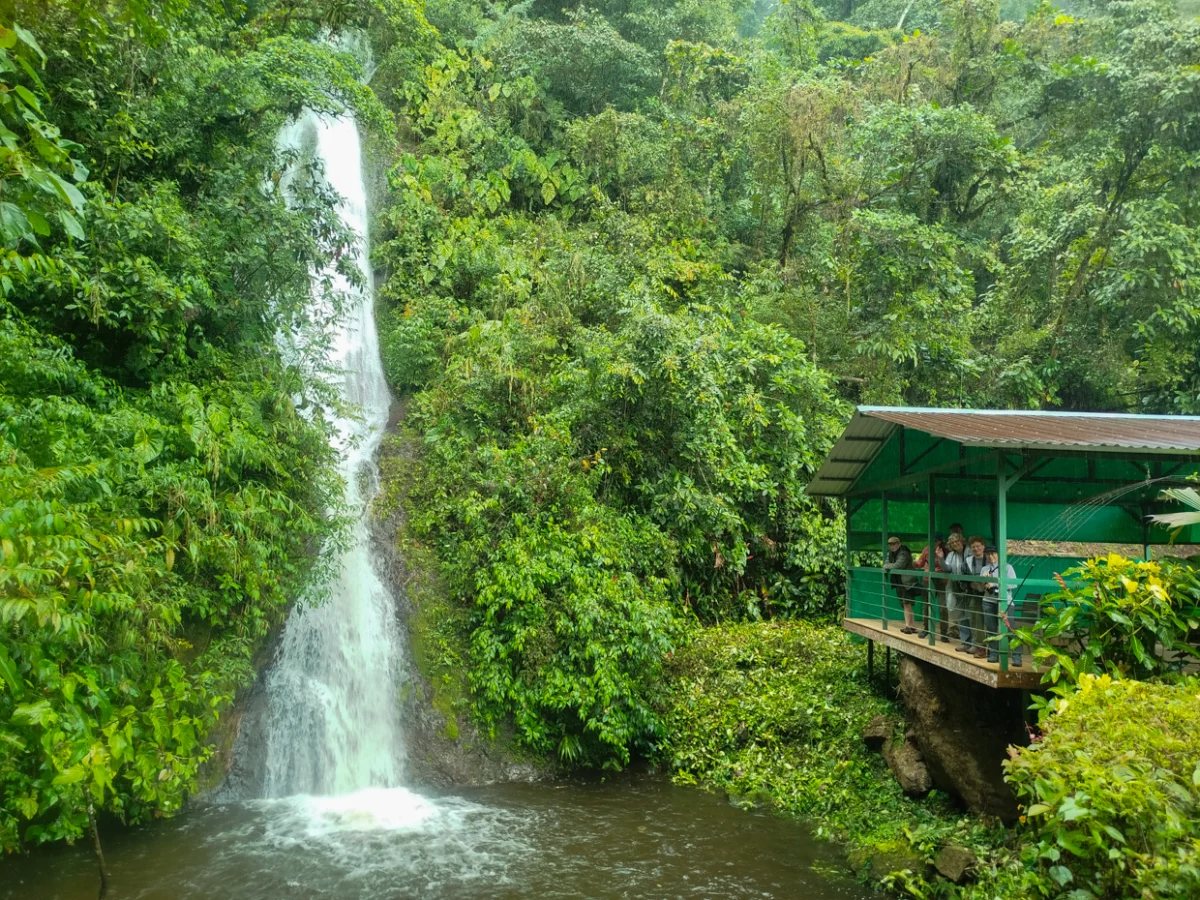
A multi-day ornithological expedition across the diverse ecosystems of Costa Rica has successfully documented a vast array of resident and migratory bird species, underscoring the country’s status as a critical global biodiversity hotspot. The 11-day "Costa Rica Sampler" trek, which concluded in late February 2026, traversed various ecological zones including the Central Valley, the Pacific mangroves, high-altitude cloud forests, and the Caribbean lowlands. Led by specialized guides and researchers, the expedition provided significant data on species distribution, nesting behaviors, and the ongoing impact of conservation efforts within the Mesoamerican Biological Corridor.

Early Observations in the Central Valley and Pacific Mangroves
The expedition commenced at the Hotel Bougainvillea, situated in the Central Valley, where the initial survey focused on common urban-adjacent species. Observations included the Crimson-fronted Parakeet (Psittacara finschi) and the resident Mottled Owl (Strix virgata), the latter of which utilizes bamboo thickets for roosting. These initial sightings set a baseline for the transition from human-impacted landscapes to more specialized habitats.
On the second day, the group moved westward to the Pacific coast, specifically targeting the Caldera mangroves. This region serves as a vital transition zone. Researchers noted the significant role of the native Chameleon Vine (Combretum farinosum) in supporting local avian populations. During its peak bloom, the nectar-rich flowers attracted a high density of Prothonotary Warblers (Protonotaria citrea) and several hummingbird species, including the Scaly-breasted and Cinnamon hummingbirds.

Of particular note was the sighting of the Mangrove Hummingbird (Amazilia boucardi), a species currently listed as endangered due to habitat loss. The documentation of this species, alongside the Northern Scrub-Flycatcher and the Mangrove Vireo, emphasizes the necessity of preserving the few remaining intact mangrove forests along the Pacific shoreline. As temperatures reached their daily peaks, the survey shifted to the Guácimo Road, where researchers identified the Double-striped Thick-knee (Burhinus bistriatus), a terrestrial bird often found in open fields and dry scrub.
Biological Intersections in Carara National Park
The third and fourth days of the expedition were dedicated to Carara National Park and the Tárcoles River basin. Carara is unique because it sits at the meeting point of the dry tropical forest of the north and the humid rainforest of the south. This convergence results in an extraordinary level of avian diversity.

In the mature tropical rainforest of the Quebrada Bonita Trail, the team recorded the Black-hooded Antshrike and the Chestnut-backed Antbird. A significant highlight was the observation of an army ant swarm. In the Neotropics, such swarms are a "jackpot" for ornithologists because several species, known as "ant-followers," track the ants to feast on the insects and arthropods flushed out by the swarm’s movement. The team documented Bicolored Antbirds and various Woodcreepers (Northern Barred, Cocoa, and Tawny-winged) participating in this ecological phenomenon.
The Tárcoles River boat tour provided a different perspective on the region’s biodiversity. The river serves as a major artery for aquatic species. Observations included the Boat-billed Heron, Roseate Spoonbill, and three distinct species of Kingfisher (Ringed, Amazon, and Green). The presence of hundreds of Magnificent Frigatebirds and Brown Pelicans, alongside the iconic Scarlet Macaws (Ara macao), demonstrates the success of long-term conservation programs in the Central Pacific region, which have helped stabilize macaw populations that were once on the brink of local extinction.

Conservation and Sustainable Agriculture in Paraíso
On the fifth day, the expedition moved east toward Paraíso and the Orosi Valley. A primary focus of this segment was the Cabanis’s Ground-Sparrow (Melozone cabanisi), an endemic species that has become a symbol of local conservation. In the town square of Paraíso, the presence of a large sculpture dedicated to the bird highlights the integration of ecological pride into the local culture.
The group visited Cafe Cristina, an organic, shade-grown coffee farm. This visit provided an opportunity to analyze the intersection of agriculture and ecology. Shade-grown coffee plantations maintain a canopy of native trees, which serve as essential corridors for migratory birds such as the Tennessee Warbler and Summer Tanager. By avoiding synthetic pesticides and maintaining forest structure, these farms prove that commercial agriculture can coexist with high-density biodiversity. This model is increasingly viewed as a viable solution for economic development that does not sacrifice environmental integrity.

High-Altitude Ecology of the Talamanca Mountains
The expedition’s sixth and seventh days focused on the high-altitude environments of the Talamanca Mountains and Cerro de la Muerte. Reaching elevations of up to 3,400 meters above sea level, the climate and flora change drastically. This region is the primary habitat for the Resplendent Quetzal (Pharomachrus mocinno), a bird of immense cultural and biological significance.
In the village of La Esperanza, the team successfully located a male Quetzal feeding on wild avocados (Lauraceae). The survival of the Quetzal is inextricably linked to the presence of these fruiting trees, making the protection of highland forest fragments a priority. Other highland specialties observed included the Volcano Junco, which is restricted to the highest peaks of Costa Rica and western Panama, and the Fiery-throated Hummingbird, known for its iridescent, multi-colored plumage.

During this period, the group was joined by researcher Paz Angulo, who shared her ongoing Master’s research on Hook-billed Kites. Her work in the chayote plantations of the Ujarrás Valley illustrates how specific land-use practices can support specialized raptors. The team observed several kites feeding, providing valuable data on their foraging habits in human-modified landscapes.
The Caribbean Slope and Migration Corridors
As the expedition moved toward the Caribbean slope on the eighth and ninth days, the focus shifted to the Reventazón River and the Arenal region. This area serves as a major corridor for raptor migration. Near the Cerúlea Nature Reserve, the team documented Broad-winged Hawks, White Hawks, and Bat Falcons.

At the Arenal Observatory Lodge, situated on the slopes of the Arenal Volcano, the team monitored bird feeders to study the "pecking order" of Neotropical species. Larger birds, such as the Great Curassow and Crested Guan, typically feed first, followed by smaller tanagers and honeycreepers. The observation of a nesting Sunbittern (Eurypyga helias) was a significant find. The Sunbittern is the only member of its family and is known for its spectacular wing patterns, which resemble large eyes when spread—a defense mechanism against predators.
Despite heavy rainfall typical of the Caribbean rainforest, the team continued to document mixed-species flocks. These flocks are an efficient survival strategy where different species move together, increasing their collective ability to spot predators and find food. Species identified in these flocks included the Sulphur-rumped Flycatcher and the White-throated Shrike-Tanager.

Scientific Research at La Selva Biological Station
The final leg of the journey took the team to the La Selva Biological Station, operated by the Organization for Tropical Studies (OTS). La Selva is one of the most important sites for tropical ecosystem research in the world. The station’s guide, Jehudi, briefed the group on the decades of data collected at the site, which informs global understanding of rainforest dynamics.
A major highlight at La Selva was the observation of the massive raptor migration. Hundreds of Turkey Vultures and Swainson’s Hawks were documented moving northward, a seasonal event that underscores Costa Rica’s role as a geographical bridge between North and South America. The station’s diverse habitats also yielded sightings of the Great Green Macaw (Ara ambiguus), a critically endangered species that relies on the Almond trees (Dipteryx oleifera) found in the lowland forests.

The expedition concluded at Hotel Robledal, where final observations included a nesting Cinnamon Hummingbird and resident Ferruginous Pygmy-Owls.
Broader Impact and Implications
The findings of this 11-day survey reinforce several key conclusions regarding the state of Costa Rican biodiversity. First, the presence of endemic and endangered species in both protected national parks and private lands suggests that a "patchwork" of conservation—combining government-managed areas with private ecological reserves and sustainable farms—is effective.

Second, the data highlights the economic importance of ecotourism. Birding tourism provides a non-extractive revenue stream for rural communities, incentivizing the protection of forests over logging or intensive monoculture. The involvement of local guides like Jorge Serrano and researchers like Paz Angulo demonstrates a growing professional class dedicated to the "orange economy" of environmental knowledge.
Finally, the expedition serves as a reminder of the fragility of these ecosystems. While species like the Scarlet Macaw are recovering, others like the Mangrove Hummingbird and the Great Green Macaw remain under severe threat from habitat fragmentation and climate change. Continued monitoring and international cooperation remain essential to ensure that Costa Rica continues to serve as a sanctuary for the world’s avian life. The "Costa Rica Sampler" 2026 report will be contributed to global databases such as eBird, providing citizen-science data that assists researchers in tracking population trends and migration timing in an era of rapid environmental transition.