
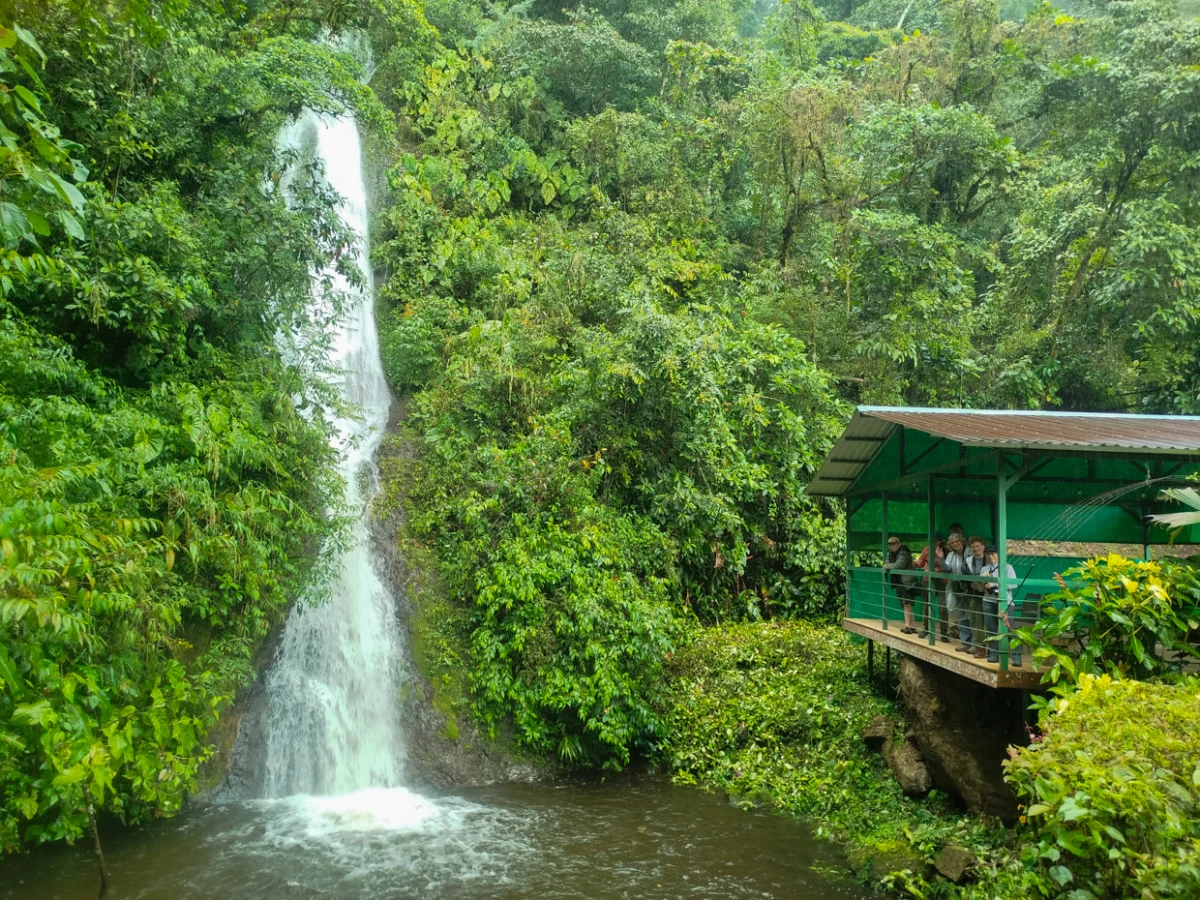
An extensive eleven-day ornithological survey across Costa Rica’s diverse microclimates has concluded, providing significant data on avian distribution and the health of critical habitats ranging from Pacific mangroves to high-altitude cloud forests. The expedition, which took place between February 16 and February 27, 2026, documented hundreds of species, including several endangered and endemic birds, while underscoring the vital link between sustainable ecotourism and regional conservation initiatives. Led by professional guides and local researchers, the tour served as both a biological assessment and an educational journey through one of the most biodiverse regions on the planet.

Strategic Launch in the Central Valley
The expedition commenced at the Hotel Bougainvillea, situated in the Central Valley’s volcanic soil highlands. This initial stage focused on the "common" yard birds of the region, which serve as indicators of urban biodiversity. Early sightings included the Crimson-fronted Parakeet (Psittacara finschi), a species that has adapted well to the suburban-agricultural mosaic of the valley. The presence of a resident Mottled Owl (Strix virgata) in the hotel’s bamboo groves provided an early highlight, demonstrating the importance of maintaining mature garden ecosystems within developed areas to support nocturnal raptors.
Following a technical briefing on the country’s varied life zones, the group transitioned from the humid Central Valley toward the Pacific coast, a move designed to capture the transition from tropical dry forest to mangrove ecosystems.

Pacific Mangroves and the Mangrove Specialty Survey
Day two focused on the Caldera mangroves and the Guácimo Road, where the group encountered a biological "jackpot" in the form of flowering Chameleon Vines (Combretum farinosum). These native vines produce high volumes of nectar, attracting a dense concentration of migratory and resident species. Observations at these flowers included the Prothonotary Warbler (Protonotaria citrea) and the Tennessee Warbler (Leidopeltaza peregrina), both of which rely on Costa Rican habitats as wintering grounds.
The survey of the mangroves was particularly significant due to the sighting of the Mangrove Hummingbird (Amazilia boucardi). This species is endemic to Costa Rica and is currently classified as endangered by the IUCN due to habitat loss. Its presence, along with the Mangrove Vireo and Mangrove Yellow Warbler, confirms the continued viability of the Caldera estuary as a critical conservation site. As temperatures rose, the team moved inland to the Guácimo Road, documenting the Double-striped Thick-knee (Burhinus bistriatus), a shorebird adapted to dry, open fields, highlighting the sharp ecological contrasts found within just a few kilometers of the coast.

Transition Zone Ecology: Carara National Park and the Tárcoles River
The third and fourth days were dedicated to Carara National Park and the Tárcoles River basin. Carara is globally recognized as a transition zone where the dry forests of the North Pacific meet the humid rainforests of the South Pacific. This unique positioning results in an extraordinary overlap of species.
In the primary rainforest sections, such as the Quebrada Bonita Trail, the group observed the Black-hooded Antshrike and the Chestnut-backed Antbird. A significant find was a roosting Lesser Nighthawk in a mature Guanacaste tree, a sighting that required precise observation skills. The team also documented a Collared Forest Falcon, a secretive predator of the forest interior.

One of the most complex biological phenomena observed was an "army ant swarm" on day four. In the Neotropics, certain bird species, such as the Bicolored Antbird and various Woodcreepers, are "obligate ant-followers." They do not eat the ants themselves but rather prey on the insects and arachnids flushed out by the advancing ant column. Observing this feeding frenzy provided the group with an up-close look at the intricate symbiotic relationships that define tropical ecology.
The Tárcoles River boat tour added an aquatic dimension to the data. The river is a critical corridor for the Scarlet Macaw (Ara macao), a species that has seen a dramatic recovery in this region thanks to intensive local protection efforts. The team recorded dozens of macaws, alongside three species of Kingfishers and various Ciconiiformes, including the Boat-billed Heron and Wood Stork.

Highland Endemism and the Search for the Resplendent Quetzal
On day five, the expedition moved east toward the Orosi Valley and the Talamanca Mountains. A stop in the town of Paraíso allowed for an examination of local conservation efforts regarding the Cabanis’s Ground-Sparrow (Melozone cabanisi). This bird is endemic to Costa Rica and has become a symbol of pride for the Paraíso community, which has erected a large sculpture of the bird to raise awareness of its threatened status.
The group also visited Cafe Cristina, an organic, shade-grown coffee plantation. This site served as a case study in how agricultural practices can support biodiversity. By maintaining a diverse canopy of native trees over the coffee shrubs, the farm provides habitat for species like the Montezuma Oropendola and various migratory warblers, proving that economic productivity and environmental stewardship are not mutually exclusive.

The quest for the Resplendent Quetzal (Pharomachrus mocinno) took the team to the village of La Esperanza on day six. Guided by local expert Jorge Serrano, the group located a male Quetzal perched near a fruiting wild avocado tree (family Lauraceae). The Quetzal is a "specialist" frugivore, and its survival is inextricably linked to the preservation of these specific mountain trees. Higher still, at the 3,400-meter summit of Cerro de la Muerte, the team successfully located the Volcano Junco, a high-altitude specialist found only in the paramo habitats of Costa Rica and western Panama.
Research Initiatives and Avian Health at Hotel Quelitales
Days seven and eight were centered around the Ujarrás Valley and Hotel Quelitales. Here, the expedition met with Paz Angulo, an Eagle-Eye guide and researcher currently conducting a Master’s study on Hook-billed Kites (Chondrohierax uncinatus). Angulo’s research into the feeding habits and population dynamics of these raptors in chayote plantations provides essential data for land-use planning in the region.

Despite persistent rain, the group utilized the hotel’s "roofed" birding areas to document a high diversity of hummingbirds, including the Green-fronted Lancebill and the Violet Sabrewing. The observation of a Sunbittern (Eurypyga helias) building its nest near a waterfall provided rare insight into the breeding biology of this ancient avian lineage, known for its spectacular "sun-burst" wing patterns used in defensive displays.
The Caribbean Slope: Arenal and La Selva Biological Station
The final leg of the journey took the group to the Caribbean slope, beginning with the Arenal Observatory Lodge. Positioned at the base of the Arenal Volcano, the lodge sits at a biological crossroads. The team documented a "pecking order" at the feeders, where larger species like Great Curassows and Crested Guans dominated before smaller tanagers and honeycreepers were allowed to feed.

The peninsula road of Arenal National Park yielded sightings of the Broad-billed Motmot and the Slaty-tailed Trogon. Another army ant swarm was encountered, this time featuring the Bare-crowned Antbird, further emphasizing the prevalence of this hunting strategy across different forest types.
The expedition’s scientific climax occurred at the La Selva Biological Station on day eleven. Managed by the Organization for Tropical Studies (OTS), La Selva is one of the world’s most important sites for tropical ecosystem research. The group was met by hundreds of migrating Turkey Vultures and Swainson’s Hawks, a reminder of Costa Rica’s role as a vital "bottleneck" in the pan-American raptor migration corridor.

Under the guidance of resident researcher Jehudi, the team explored the station’s lowland rainforest, recording Great Green Macaws—a species whose population is critically low—and the Rufescent Tiger-Heron. The presence of a Three-toed Sloth scratching itself on a suspension bridge served as a charismatic reminder of the mammalian diversity that shares these avian habitats.
Conclusion and Broader Implications
The eleven-day "Costa Rica Sampler" expedition concluded at Hotel Robledal with a farewell dinner and a final tally of species. The data collected reflects a healthy, albeit pressured, ecosystem. The sightings of "specialty" birds like the Mangrove Hummingbird and the Resplendent Quetzal suggest that current protected areas are functioning, but the reliance of these birds on specific corridors (like the Talamanca highlands or the Pacific mangroves) highlights the need for continued vigilance.

From a journalistic and environmental perspective, the expedition confirms that Costa Rica’s model of "conservation through tourism" remains a benchmark for the world. By turning biological hotspots into economic assets for local communities—as seen in Paraíso and La Esperanza—the country has created a feedback loop that incentivizes the protection of the wild. As migratory patterns shift due to global climate changes, the continued monitoring of these sites by expert-led groups remains an essential component of Neotropical conservation science.