
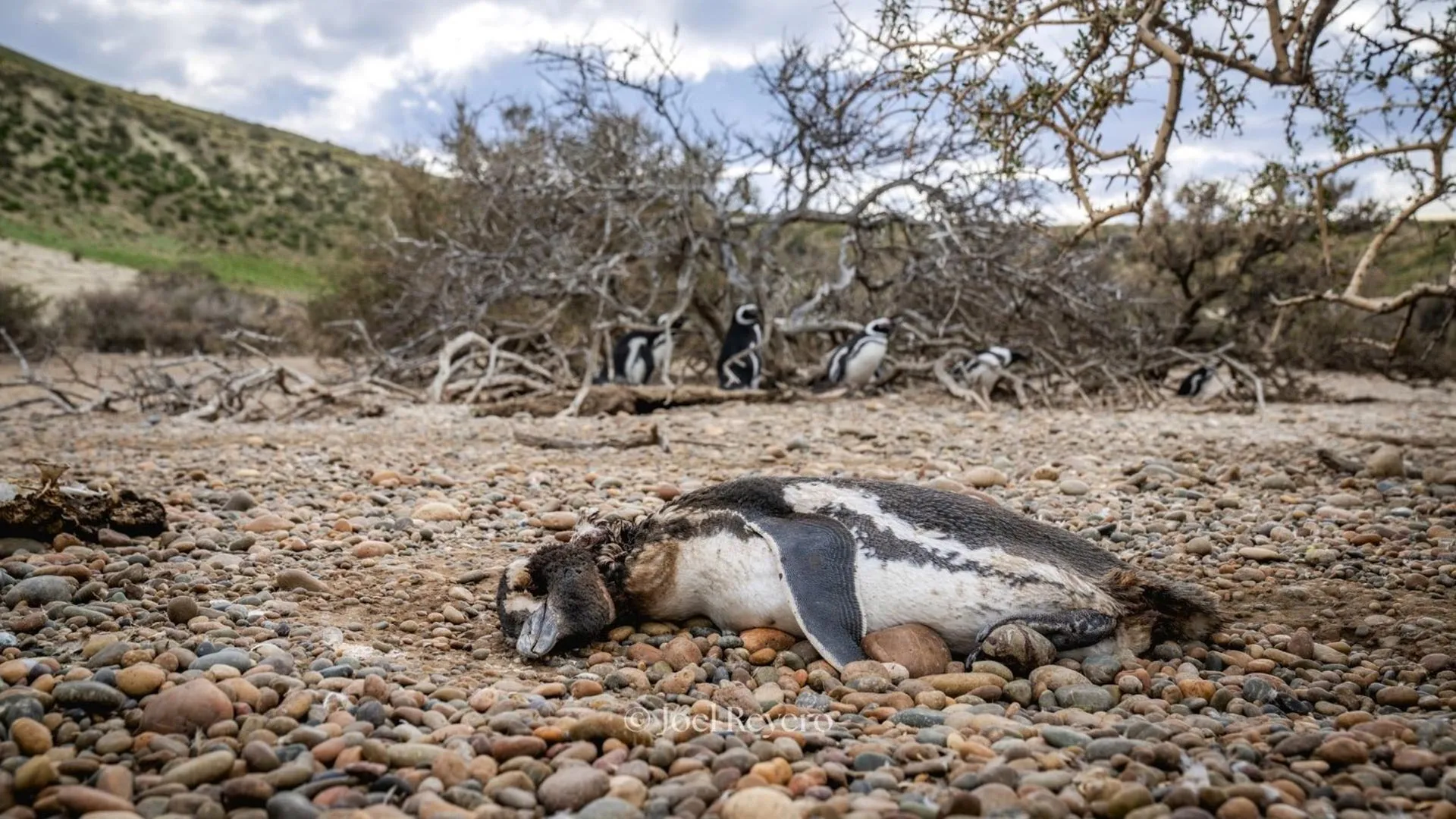
Should conservation efforts focus on protecting one iconic species if that protection may harm another, especially in landscapes still recovering from human activity? This question lies at the center of a growing conservation challenge at Monte Leon National Park on Argentina’s Patagonian coast. The intricate dynamics unfolding in this remote corner of South America underscore the profound complexities inherent in restoring ecosystems that have been altered for decades and are now undergoing rapid, often unpredictable, change. A recent study, involving researchers from Argentina and Oxford University, has shed critical light on a burgeoning conflict between recovering puma populations and established Magellanic penguin colonies, revealing both immediate threats and the deeper, systemic pressures shaping the region’s ecological future.
The Ecological Rebalance: A History of Human Intervention and Natural Recovery
The narrative of Monte Leon is one of a dramatic ecological pendulum swing, largely driven by human activity. For well over a century, large tracts of Patagonia, including the land now comprising Monte Leon National Park, were dominated by extensive sheep and cattle ranching. This agricultural model, while economically significant for the region, had profound environmental consequences. One of the most significant was the systematic persecution of native carnivores, particularly the puma ( Puma concolor ), locally known as the "leon" or mountain lion. Viewed as a threat to livestock, pumas were relentlessly hunted, leading to their extirpation from vast areas of their historical range, especially along the Patagonian coast.
The absence of these apex predators created a vacuum, altering trophic cascades and allowing certain prey species to thrive in their absence. Magellanic penguins ( Spheniscus magellanicus ) were among those species that inadvertently benefited. Historically, these penguins primarily nested on offshore islands, a natural defense against terrestrial predators. However, with the removal of pumas and other large land-based carnivores from the mainland, significant penguin colonies began to establish themselves on the Patagonian coast, taking advantage of abundant food resources and accessible nesting sites without the constant threat of predation from land. This shift, occurring gradually over decades, fundamentally altered their breeding strategies and perceived safety parameters.
The ecological landscape began to shift dramatically after 1990, when large-scale cattle ranching operations in southern Argentina started to decline and eventually ceased in many areas. This cessation, driven by changing economic conditions and conservation initiatives, marked a pivotal moment. With human pressure on them diminishing, pumas, highly adaptable and resilient predators, gradually began reclaiming their historic territories. Their return was a testament to the success of conservation efforts aimed at allowing natural processes to reassert themselves. However, this rewilding process also brought pumas into contact with Magellanic penguins on the mainland for the first time in modern history, setting the stage for an unprecedented ecological interaction.
Monte Leon: A Unique Laboratory for Conservation Science
Monte Leon National Park, established in 2004, stands as a crucial sentinel for observing these complex ecological transformations. Covering over 62,000 hectares of Patagonian steppe and coastline, it is Argentina’s first coastal-marine national park, dedicated to protecting a rich biodiversity that includes significant seabird colonies, marine mammals, and the unique Patagonian terrestrial fauna. The park’s creation was a landmark achievement, ensuring the preservation of an ecosystem previously fragmented by human development. Its establishment created an ideal, protected environment for both the recovering puma population and the thriving Magellanic penguin colonies, inadvertently setting up a natural experiment in predator-prey re-engagement.
The park’s unique status has made it a vital site for long-term ecological research. Since its inception, penguin colonies within Monte Leon have been under continuous observation by dedicated researchers. The Centro de Investigaciones de Puerto Deseado of the Universidad Nacional de la Patagonia Austral, in close collaboration with park rangers from Monte Leon National Park, initiated comprehensive monitoring programs. These programs were designed to track population dynamics, breeding success, and, crucially, any signs of predation. This foresight proved invaluable as puma sightings became more frequent, and the tell-tale signs of their presence near penguin colonies began to emerge.
Unveiling the Numbers: The Study’s Findings on Predation
The initial phase of systematic data collection on puma-penguin interactions occurred between 2007 and 2010. During this four-year period, researchers meticulously recorded penguin carcasses exhibiting clear evidence of puma attacks. This data provided the first quantitative glimpse into the scale of the emerging predation. However, to fully understand the long-term implications for the penguin colony, a more sophisticated analysis was required. For their latest study, the Argentine team partnered with researchers from Oxford University’s Wildlife Conservation Research Unit (WildCRU), renowned globally for its expertise in carnivore ecology and conservation. This collaboration brought together local knowledge and international scientific rigor to decipher the complex data.
The findings were stark. Using the comprehensive carcass counts from the four-year period, the researchers estimated that more than 7,000 adult Magellanic penguins were killed by pumas. This figure represents a significant portion—approximately 7.6%—of the total adult population in the Monte Leon colony, which was estimated at around 93,000 individuals at the time. What was particularly striking was the nature of these killings: many of the birds were only partially eaten or, in numerous cases, not eaten at all. This observation provided a crucial clue into the predatory behavior, indicating that the killings were not solely driven by hunger.
Lead author Melisa Lera, a postgraduate student at WildCRU, Oxford University, articulated the gravity of these findings: "The number of carcasses showing signs of predation we found in the colony is overwhelming, and the fact that they were left uneaten means pumas were killing more penguins than they required for food." She elaborated, "This is consistent with what ecologists describe as ‘surplus killing’ or ‘superfluous killing.’ It is comparable to what is seen in domestic cats when prey are abundant and/or vulnerable: ease of capture can lead to cats hunting more birds, even when they do not end up actually eating them. We needed to understand if the penguin colony’s persistence could be threatened due to this behavior."
Surplus killing is a well-documented phenomenon in the animal kingdom, often observed when predators encounter an abundance of easily accessible prey that lack effective anti-predator defenses. Examples range from foxes in chicken coops to wolves in deer yards. In the case of Monte Leon, the penguins, having evolved for generations with minimal exposure to large terrestrial predators on the mainland, exhibited few effective defenses against the powerful and agile pumas. This made them exceptionally vulnerable, creating an opportunistic hunting scenario for the recovering carnivores.
Deciphering the Threat: Population Models and Their Insights
While the sheer number of penguin deaths was alarming, the ultimate question for conservationists was whether this level of predation posed an existential threat to the Monte Leon colony. To answer this, the research team employed sophisticated population models. These models are crucial tools in conservation biology, allowing scientists to simulate future population trends based on current data and various hypothetical scenarios, thereby assessing the impact of different factors.
The results from the population models offered a nuanced perspective. Despite the significant number of penguins killed by pumas, the models indicated that puma predation alone was unlikely to drive the Monte Leon penguin colony to extinction. Instead, the models consistently pointed to other demographic factors as far more influential in determining the colony’s long-term viability, particularly breeding success and the survival rates of juvenile penguins.
Extinction was projected only in highly hypothetical and extreme scenarios. These included situations where very low juvenile survival occurred, specifically with around 20% failing to reach adulthood, combined with extremely poor reproductive output limited to a maximum of one chick per pair. In such dire circumstances, the models showed that high levels of puma predation did indeed exacerbate the situation, accelerating decline, but they were not the primary, initiating cause of the projected extinction. This finding fundamentally shifted the focus from solely managing puma predation to understanding the broader ecological pressures impacting penguin demographics.
Study co-author Dr. Jorgelina Marino (WildCRU, Oxford University) underscored the broader implications of these findings: "This study captures an emerging conservation challenge, where recovering carnivores are encountering novel prey. Understanding how these dietary shifts affect both predators and prey is essential to inform conservation." Her statement highlights a critical aspect of rewilding efforts: the re-establishment of historical ecological relationships does not always unfold smoothly, especially when prey species have adapted to a predator-free environment for extended periods.
Beyond Predation: The Shadow of Climate Change and Broader Pressures
The findings from Monte Leon strongly suggest that while puma predation is a significant and visible threat, the underlying vulnerabilities of the Magellanic penguin colony are more deeply rooted in environmental conditions. Because breeding success and juvenile mortality play such a critical role in population stability, the researchers emphasized the urgent need to better understand how broader environmental factors affect penguin reproduction and survival.
The most significant of these factors is climate change. Magellanic penguins are highly sensitive to shifts in marine ecosystems, which are directly impacted by global climate patterns. Factors such as nutrient availability, the distribution and abundance of their primary food sources (small fish like anchovies and sardines), and ocean temperatures are all known to be profoundly influenced by climate change. Changes in ocean currents, increased frequency of extreme weather events, and sea-level rise can disrupt feeding grounds, reduce prey availability, and even inundate nesting sites, directly impacting breeding success and the survival of vulnerable chicks and juveniles. For instance, warmer ocean temperatures can push prey species further offshore or to greater depths, forcing adult penguins to travel longer distances to forage, leading to lower food delivery rates for chicks and increased energy expenditure for parents.
A decline in prey availability or an increase in foraging effort due to climate change could easily lead to the "very low juvenile survival" and "extremely poor reproduction" scenarios identified by the population models as the true drivers of potential extinction. In this context, puma predation acts as an additional stressor, pushing an already vulnerable population closer to the brink, rather than being the sole instigator of decline.
A Wider Lens: Global Parallels and Emerging Conflicts
The challenges unfolding at Monte Leon are not isolated. Similar scenarios are emerging elsewhere around the globe as terrestrial predators, whether native or invasive, move into or expand their presence in coastal environments, often encountering seabird colonies and other coastal species that are ill-equipped to defend themselves. This phenomenon is a growing concern for coastal conservationists worldwide.
For example, in the southeastern United States, non-native feral hogs ( Sus scrofa ) have become major predators of loggerhead sea turtle ( Caretta caretta ) eggs along the Georgia coast. These highly destructive omnivores can decimate entire nests, posing a severe threat to a species already endangered by other human-related pressures. Similarly, coyotes ( Canis latrans ) in eastern North America, having dramatically expanded their range, are now increasingly colonizing coastal barrier islands. Their presence alters delicate island ecosystems, preying on nesting shorebirds and other vulnerable species that have long enjoyed a relative absence of mammalian predators.
These examples underscore a critical point: as ecosystems recover, or as species ranges shift due to climate change or human intervention, novel predator-prey interactions are becoming more common. Understanding these interactions and developing proactive management strategies is essential to prevent unintended consequences and to ensure that conservation successes in one area do not inadvertently create crises in another.
Charting a Course Forward: The Imperative of Monitoring and Adaptive Management
The authors of the Monte Leon study stress that ongoing, robust monitoring is absolutely essential. Detecting early signs of population decline, whether in penguin numbers or puma activity, is critical to guiding management decisions before serious ecological damage occurs. This requires sustained investment in fieldwork, data analysis, and scientific collaboration.
At Monte Leon National Park, authorities, in partnership with research institutions, continue to closely track both puma and Magellanic penguin populations. This long-term commitment allows for the collection of continuous data, which is vital for understanding trends, assessing the effectiveness of any interventions, and adapting management strategies as new information emerges. Adaptive management—a systematic approach for improving resource management by learning from management outcomes—is particularly crucial in dynamic, recovering ecosystems like Monte Leon.
Such strategies might include, but are not limited to, continued research into puma diet and foraging behavior, assessment of penguin nesting site vulnerability, and comprehensive studies on the impacts of climate change on local marine productivity. While direct intervention to reduce puma predation is not currently indicated given the study’s findings, understanding the thresholds at which predation becomes a critical factor, especially when combined with other stressors, remains a priority.
The Monte Leon case serves as a powerful reminder that conservation is rarely simple. The return of an apex predator, while a sign of ecological health and successful rewilding, can create new challenges for species that have adapted to its absence. Balancing these complex interactions, particularly in the face of accelerating global environmental change, requires a deep scientific understanding, continuous vigilance, and a flexible, adaptive approach to management. The future of Patagonia’s iconic penguins and its recovering pumas hinges on this delicate balance.