
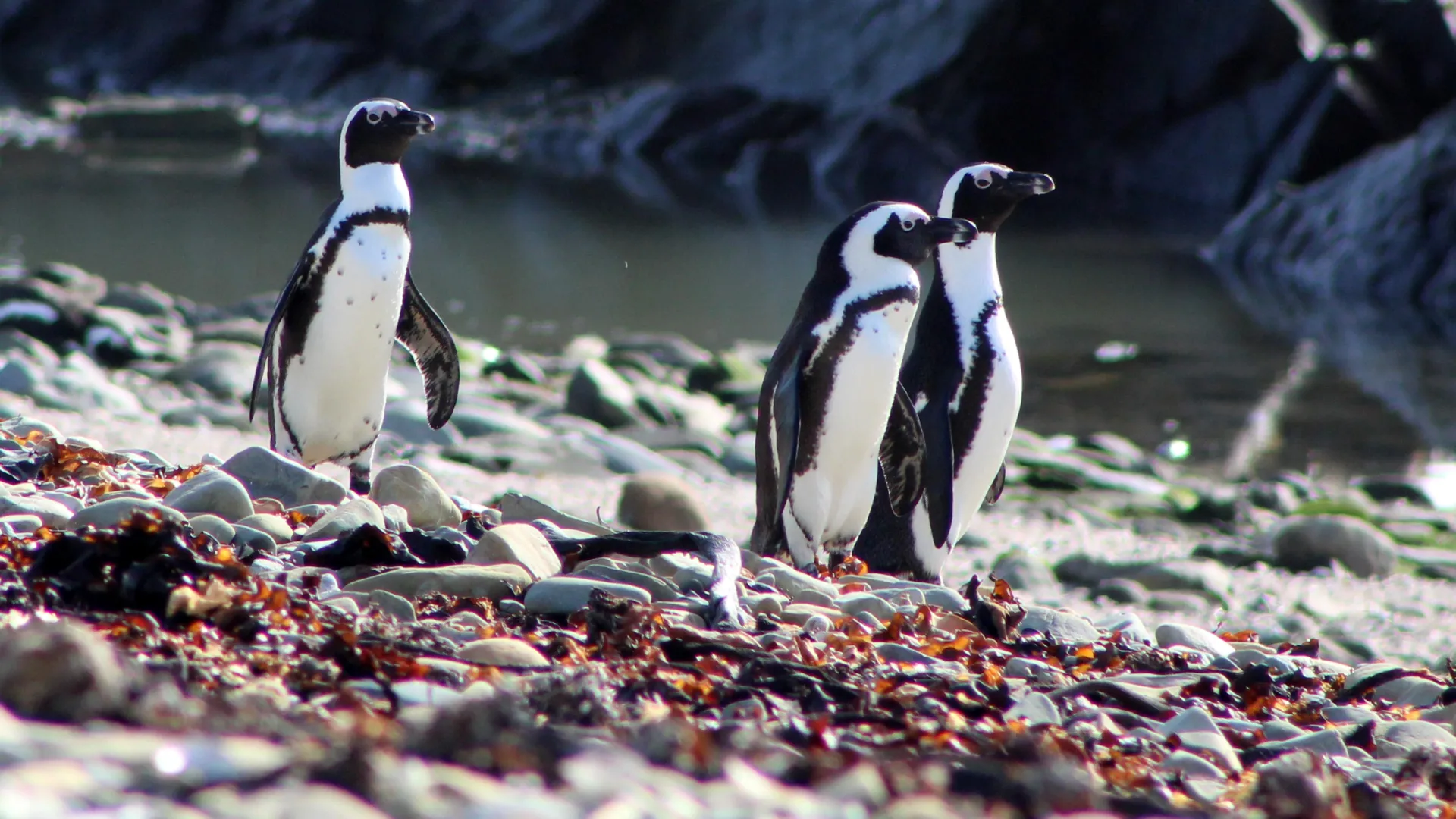
A groundbreaking new study led by the University of St Andrews has uncovered a critical dynamic threatening the survival of Critically Endangered African penguins (Spheniscus demersus): these iconic seabirds are significantly more likely to forage in the same marine areas as commercial fishing vessels during periods of fish scarcity. This heightened spatial and temporal overlap intensifies competition for vital food resources, placing immense additional pressure on a species already grappling with severe population decline across its range. The research, published on November 17 in the Journal of Applied Ecology, introduces a novel metric called "overlap intensity," which moves beyond simply identifying shared spaces to quantify the number of individual penguins affected by these interactions, offering a more nuanced understanding of ecological risk.
A Looming Crisis for African Penguins
The African penguin population has plummeted by an alarming nearly 80% over the past three decades, a catastrophic decline that has pushed the species to the brink of extinction. Once numbering in the millions at the turn of the 20th century, their current breeding population stands at a mere fraction of that, estimated to be around 10,000 breeding pairs. A primary driver of this precipitous fall is intense competition with local commercial fisheries, which target small pelagic fish species such as sardines (Sardinops sagax) and anchovies (Engraulis encrasicolus) – the very foundation of the African penguin’s diet. These fisheries predominantly employ purse-seine nets, an efficient method that encircles and captures entire schools of fish, often in areas critical for penguin foraging.
Dr. Jacqueline Glencross, the lead author of the study from the Scottish Oceans Institute at the University of St Andrews, underscored the imperative behind the research. "Our motivation was to develop a more robust methodology for assessing the potential impact on penguins when fishing operations occur in their vicinity," Dr. Glencross stated. "It’s not enough to simply identify where overlap happens; we need to understand how many individual birds are potentially compromised by these interactions." This new "overlap intensity" metric provides that crucial dimension, offering a clearer picture of the scale of impact on the penguin population.
Decades of Decline: The Plight of Spheniscus demersus
The African penguin, endemic to the coasts and islands of Southern Africa, holds significant ecological and cultural value. Its journey to Critically Endangered status is a complex narrative shaped by a confluence of historical and contemporary pressures. In the early 20th century, millions of these birds thrived, but early human exploitation, including guano harvesting (which destroyed nesting burrows) and intensive egg collection, began to take its toll. The mid-20th century saw the onset of industrial fishing for sardines and anchovies, coinciding with a marked acceleration in penguin population decline.
While fishing competition is a significant and often manageable threat, it is not the sole factor. Other pressures include habitat degradation, predation by seals and gulls, and the ever-present danger of oil spills, which can decimate populations and compromise breeding success. Climate change further exacerbates the situation by altering oceanographic conditions and the distribution and abundance of prey fish, pushing these fish into areas less accessible to foraging penguins. However, the direct competition with fisheries for food resources represents a substantial and acute pressure, especially as prey availability fluctuates.
The Critical Role of Sardines and Anchovies
Sardines and anchovies are keystone species within the Benguela Current Large Marine Ecosystem, one of the world’s most productive upwelling systems, stretching along the southwestern coast of Africa. These small, schooling pelagic fish form the energetic backbone for a vast array of marine predators, including seabirds, seals, and larger fish. For African penguins, these fish are not just food; they are a critical source of high-energy sustenance necessary for breeding, moulting, and survival. Natural fluctuations in the abundance of these fish stocks are normal, with "boom-and-bust" cycles occurring due to environmental variability. However, when these natural lows coincide with intensive fishing pressure, the impact on dependent predators like penguins becomes catastrophic. The inability to secure sufficient food directly translates to reduced breeding success, increased adult mortality, and overall population decline.
Tracking the Overlap: Evidence from Robben and Dassen Islands
To quantify this critical interaction, the research team utilized an extensive dataset derived from tracking information of penguins nesting on two of South Africa’s most important breeding colonies: Robben Island and Dassen Island. These islands, situated off the coast of Cape Town, represent vital strongholds for the species. Collaborators included scientists from the University of Exeter, the South African Department of Forestry, Fisheries and the Environment (DFFE), and BirdLife South Africa, ensuring a robust, multi-institutional approach to data collection and analysis.
The methodology involved deploying GPS trackers on adult penguins to record their foraging movements, which were then overlaid with vessel monitoring system (VMS) data from commercial fishing fleets. This sophisticated spatial analysis allowed researchers to precisely map areas where penguins and fishing vessels co-occurred. The analysis revealed a dramatic and concerning pattern: a sharp increase in overlap intensity during years characterized by low fish biomass.
A stark illustration of this trend emerged from the data collected in 2016. That year, marked by exceptionally low fish abundance across the Benguela ecosystem, approximately 20% of the tracked penguin population was found to be actively feeding in the same regions as commercial fishing vessels. This figure represents a significant proportion of the foraging population directly competing with human fisheries. In stark contrast, during years with stronger, healthier fish stocks, this overlap figure plummeted to around 4%. This four-fold increase in overlap intensity during lean years unequivocally demonstrates that competition between penguins and fisheries becomes significantly more acute precisely when prey is most limited, exacerbating the birds’ vulnerability.
The Perilous Period of Chick-Rearing
The implications of this intensified competition are particularly dire during the crucial chick-rearing period. African penguins are central place foragers, meaning they must repeatedly return to their nests to feed their offspring. During this energetically demanding phase, adult penguins require consistent access to abundant and easily accessible food sources to provision their chicks. When prey is scarce, and foraging trips become longer or less successful due to competition, the consequences are severe. Chicks face starvation, grow slower, and have a reduced chance of fledging successfully. This directly impacts the reproductive output of the population, hindering recovery efforts. Dr. Glencross emphasized this point, stating, "Such conditions are especially risky during chick-rearing, when adults must find food quickly and efficiently to support their young. Our findings highlight how this competition directly undermines breeding success."
A Legal Landmark: South Africa’s Court Case and Fishing Closures
The precarious state of the African penguin and the scientific evidence highlighting fishing competition have recently culminated in significant legal and policy shifts in South Africa. The issue of fishing closures around penguin breeding colonies has been a contentious and long-standing debate, pitting conservation imperatives against the economic interests of the fishing industry.
Earlier this year, the African penguin became the focal point of a landmark South African high court case. Conservation organizations, including BirdLife South Africa and the Southern African Foundation for the Conservation of Coastal Birds (SANCCOB), launched legal action challenging the perceived inadequacy of fishing restrictions near critical breeding sites. They argued that the government’s previous measures were insufficient to protect the species from ongoing declines. This legal challenge underscored the urgency of implementing more robust, scientifically informed conservation strategies.
The court case eventually led to a high court agreement reached between conservation organizations, representatives from the fishing industry, and the South African government. This agreement marked a pivotal moment, as it formally acknowledged the pressing need for more effective fishery closures around penguin colonies. Following this significant legal precedent, the South African Department of Forestry, Fisheries and the Environment (DFFE) moved to reinstate and implement more biologically meaningful no-fishing zones. These updated closures were specifically enacted around key penguin colonies, including Robben Island, Dassen Island, Stony Point, and Boulders Beach, areas identified as critical foraging grounds for breeding penguins. This decision was a direct response to mounting scientific evidence, including the kind of data presented in the St Andrews study, and persistent advocacy from the conservation community.
Dr. Glencross affirmed the relevance of the study to these policy changes: "This research clearly highlights why those closures are necessary. Previously unprotected areas with high overlap intensity are precisely where the penguins were most at risk, and these new measures offer a crucial lifeline." The closures aim to provide safe foraging havens for penguins, particularly during sensitive periods like chick-rearing, by reducing direct competition with commercial vessels.
Paving the Way for Ecosystem-Based Management
The findings of the St Andrews study offer more than just a stark warning; they provide a powerful new tool for conservation and fishery management. By precisely measuring "overlap intensity" across the population, the researchers have created a metric that can directly inform ecological risk assessments and guide the implementation of ecosystem-based fishery management (EBFM). EBFM represents a paradigm shift from traditional single-species management, advocating for a holistic approach that considers the entire ecosystem, including predator-prey dynamics, habitat, and environmental variability. This study provides concrete data to integrate predator needs into fishery management decisions, moving towards a more sustainable coexistence.
Furthermore, the research strongly supports the development of dynamic marine protected areas (D-MPAs). Unlike static MPAs with fixed boundaries, dynamic MPAs can adapt their spatial extent or timing based on real-time shifts in predator and prey behavior, as well as environmental conditions. For instance, if fish stocks are found to be particularly low in a certain area, or if penguin foraging patterns indicate increased stress, a D-MPA could temporarily expand its no-fishing zone to protect vulnerable populations. This adaptive management approach offers greater flexibility and responsiveness to the highly variable marine environment, providing more effective protection when and where it is most needed.
The Promise of Dynamic Marine Protected Areas
The concept of dynamic marine protected areas is gaining traction globally as a sophisticated tool for marine conservation. For African penguins, which are highly mobile foragers responding to patchy and shifting prey distributions, static closures may not always be optimal. The "overlap intensity" metric provides the scientific basis for establishing triggers and boundaries for D-MPAs, allowing management to react swiftly to changes in fish biomass or penguin foraging pressure. This could involve seasonal closures, or closures that shift geographically based on real-time data from fish stock assessments and penguin tracking. Such an approach could minimize economic impact on the fishing industry while maximizing conservation benefits for the penguins, fostering a more collaborative and effective management framework.
Stakeholder Reactions and Future Outlook
The publication of this study and the recent legal developments have elicited varied but largely positive reactions from key stakeholders. Conservation organizations have hailed the research as a critical validation of their long-standing concerns and efforts. Dr. Alistair McInnes, a representative from BirdLife South Africa, stated, "This research provides undeniable scientific evidence supporting the urgent need for robust fishing closures. It strengthens our call for integrated management that prioritizes the health of the ecosystem and the survival of species like the African penguin."
Fishing industry representatives, while acknowledging the need for sustainable practices, also face the challenge of balancing conservation measures with the livelihoods of thousands of people dependent on the sardine and anchovy fisheries. The high court agreement indicates a willingness to engage, with industry bodies committing to explore ways to minimize their impact on penguins while maintaining economic viability. A spokesperson for the South African Pelagic Fishing Association noted, "We recognize our responsibility towards the marine environment and are committed to working with scientists and government to find solutions that ensure the long-term health of fish stocks and the ecosystem, while safeguarding the future of our industry."
The South African DFFE has emphasized its commitment to an evidence-based approach to marine resource management. An official from the DFFE remarked, "The findings from the University of St Andrews reinforce our strategy to implement biologically meaningful closures and to move towards a more ecosystem-based management framework. We are dedicated to ongoing monitoring and adaptive management to ensure the resilience of both our marine ecosystems and our fishing communities."
A Call for Integrated Conservation Efforts
Looking ahead, the study underscores the imperative for continued scientific research, collaborative stakeholder engagement, and adaptive management strategies. While addressing fishing competition is a crucial step, the long-term survival of the African penguin will require a comprehensive approach that also tackles other significant threats, including the impacts of climate change, pollution, and habitat degradation. The "overlap intensity" metric can be further refined and potentially applied to other predator-prey systems globally, providing a valuable template for assessing human-wildlife conflict in marine environments. The journey to recovery for the African penguin will be arduous, but with robust scientific insights driving policy and management, there is renewed hope for safeguarding this iconic species for future generations.