
The intricate tapestry of global ecosystems is profoundly woven by the epic journeys of migratory birds, creatures that defy political boundaries as they traverse continents along ancient aerial routes known as flyways. A pivotal conservation initiative, backed by the Ecological Restoration Fund (ERF) and spearheaded by BirdLife International in partnership with the UK’s Royal Society for the Protection of Birds (RSPB), is diligently working to secure the future of these magnificent travelers along one of the world’s most critical pathways: the African-Eurasian Flyway. This immense corridor stretches from the Arctic’s icy expanses to the sun-drenched southern tip of Africa, linking diverse habitats and cultures in a shared ecological destiny. At the heart of these efforts in a particularly vital region, the Royal Society for The Conservation of Nature (RSCN), BirdLife’s Partner in Jordan, is undertaking crucial work, exemplified by the dedication of conservationists like Tareq Qaneer, Head of Birds’ Projects Management Unit. His work in the Jordan Rift Valley highlights both the immense challenges and the inspiring successes in protecting these globally significant avian populations.
The Epic Journeys: Understanding Migratory Flyways
Migratory birds undertake some of the most extraordinary feats in the natural world, traveling thousands of kilometers annually between their breeding and non-breeding grounds. These movements are driven by the seasonal availability of food, suitable nesting sites, and favorable climates. Their routes, or flyways, are not random but are typically well-defined corridors that exploit geographical features and resource-rich stopover sites. Globally, there are nine major flyways, each a lifeline for billions of birds representing thousands of species. The African-Eurasian Flyway, one of the most significant, supports an astonishing diversity of species, including iconic raptors, waterfowl, waders, and passerines. It connects over 100 countries, making international collaboration not just beneficial, but absolutely essential for the survival of these species.

However, these incredible journeys are fraught with peril. Migratory bird populations worldwide are facing unprecedented declines, with estimates suggesting a global decline of over 25% in migratory bird populations since 1970. Key threats include habitat loss and degradation at breeding, stopover, and wintering sites, often driven by agricultural expansion, urbanization, and unsustainable land use. Climate change is altering migration timings and resource availability, forcing birds to adapt or perish. Furthermore, human infrastructure, such as power lines and wind turbines, poses direct collision and electrocution risks, while illegal hunting and trapping remain significant issues in many regions along the flyways. The cumulative impact of these threats underscores the urgency of comprehensive, cross-border conservation strategies.
Jordan: A Crucial Junction on the Global Highway
Within the vast expanse of the African-Eurasian Flyway, the Jordan Rift Valley stands out as a geographical bottleneck of unparalleled importance for migratory birds. This geological depression, formed by the Dead Sea Transform fault line, funnels millions of birds annually through a relatively narrow corridor between the arid landscapes of the Arabian Desert and the Mediterranean coast. Its strategic location makes it a critical stopover and refueling site for birds traveling between Europe, Asia, and Africa. Among its most precious jewels is the Azraq Wetland Reserve, an oasis of life in an otherwise parched landscape, and a designated Important Bird and Biodiversity Area (IBA).
Tareq Qaneer elaborates on the unique ecological significance of Azraq: "Azraq is a critical stopover site where migratory birds rest and refuel during their long journeys. Some species stay for the winter, while others breed within the wetland. Around 350 bird species have been recorded in the area. What makes Azraq truly unique is that it is the only oasis in the Arabian Desert with a self-replenishing system, which has allowed it to persist despite extremely harsh surrounding conditions." This remarkable biodiversity includes significant populations of globally threatened species and acts as a vital sanctuary for waterfowl, raptors, and passerines. Historically, Azraq was a vast marshland, covering hundreds of square kilometers. However, decades of unsustainable water extraction for agricultural and municipal use, particularly to supply the burgeoning capital Amman, led to a dramatic reduction in its water levels. By the late 1980s and early 1990s, much of the wetland had dried up, leading to a catastrophic loss of habitat and a severe decline in bird populations. The RSCN has been at the forefront of efforts to restore and manage this precious ecosystem, implementing projects to bring water back to the wetland and rehabilitate its unique flora and fauna.

Targeted Conservation: The ERF-Backed Initiatives
The conservation work undertaken by RSCN in Jordan is a testament to the power of international partnerships. Supported by the Ecological Restoration Fund (ERF) and collaborating with RSPB, RSCN has been able to implement ambitious projects vital for migratory bird protection. One key aspect of their work under the ERF project involves strategic site identification and profiling. Tareq Qaneer highlights this: "RSCN identified 11 Priority sites in Jordan and then went on to develop site profiles for the Yarmouk-Al Shuleh Area and the Highlands of Sakib and Dibeen Key Biodiversity Areas. Having accurate and up-to-date information in standardised site profiles is a powerful tool for prospective donors, allowing us to respond rapidly to funding opportunities and attract new finance for conservation action." Key Biodiversity Areas (KBAs) are sites contributing significantly to the global persistence of biodiversity, and their identification and meticulous profiling are crucial for attracting the necessary financial investment to protect them. This proactive approach ensures that potential conservation efforts are well-researched, strategically planned, and ready for immediate implementation when funding becomes available, effectively bridging the gap between scientific understanding and actionable conservation.
A spokesperson for the Ecological Restoration Fund emphasized the importance of this type of foundational work: "Our mission is to support initiatives that protect biodiverse hotspots and rejuvenate degraded landscapes. The detailed site profiling conducted by RSCN is precisely the kind of strategic action that enables effective, long-term conservation, ensuring that resources are channeled where they can have the greatest impact for both nature and local communities." This statement underscores the ERF’s commitment not only to ecological restoration but also to fostering sustainable practices that benefit both the environment and the people who depend on it.
Battling Key Threats: Water Scarcity and Electrocution

Despite these dedicated efforts, conservationists in Jordan face formidable challenges. Tareq Qaneer identifies water scarcity as the most pressing issue: "Jordan is one of the most water-scarce countries in the world, and water management is one of the biggest challenges affecting wetland conservation. Azraq Wetland, in particular, has suffered severe environmental degradation due to the unsustainable taking of groundwater from the Azraq Basin." This challenge is exacerbated by Jordan’s rapid population growth, regional instability leading to an influx of refugees, and the increasing demands of agriculture in an arid climate. The "dramatic decline in water levels, leading to habitat loss and ecosystem collapse" at Azraq serves as a stark warning of the consequences of unchecked resource exploitation. Addressing water governance, balancing human needs with ecological imperatives, and promoting efficient water use across all sectors are complex, long-term endeavors requiring sustained political will and community engagement.
Beyond water management, another significant threat to migratory birds in Jordan comes from human infrastructure: power lines. Jordan’s position along a major migration corridor means that millions of birds, particularly large-bodied species like storks and raptors, are vulnerable to collision and electrocution during their biannual migrations. "Electrocution is a big issue for migratory birds and one that RSCN has been working on for the past few years," Tareq Qaneer explains. "RSCN has led the implementation of pilot environmental protection measures at both the national and regional levels to reduce the risk of bird electrocution along power lines. As an urgent conservation action, RSCN insulated more than 750 of the most dangerous electricity poles across Jordan to protect migratory birds."
This initiative is a critical example of how targeted interventions can mitigate specific threats. Power poles with uninsulated wires and closely spaced conductors create lethal perching and nesting sites for birds. By identifying and retrofitting these dangerous poles with insulation and bird-friendly designs, RSCN has significantly reduced bird mortality. This not only safeguards endangered species but also demonstrates a pragmatic approach to "reconcile nature conservation with economic development that supports local communities, while also safeguarding Jordan’s strategic location along one of the world’s key migratory bird routes." Such measures are essential, as global estimates suggest that millions of birds die annually from electrocution and collision with power lines, making these infrastructure hazards a leading cause of avian mortality in many regions.
The Philosophy of Flyway Conservation: Beyond Borders

Tareq Qaneer’s profound understanding of flyway conservation extends beyond the local specifics of Jordan. He emphasizes the inherent interconnectedness of these global phenomena: "I wish people understood that migratory birds don’t belong to one country. A bird you see in Jordan today may have flown from Siberia or Africa and will continue its journey across many borders. If one key site along the flyway is lost, the impact can be felt across continents. Protecting flyways means countries must work together; nature doesn’t recognise political boundaries." This statement encapsulates the core philosophy driving flyway conservation: a recognition that the survival of migratory species hinges on a chain of healthy habitats spanning multiple nations. A breakdown in any link of this chain – be it a breeding ground in Scandinavia, a stopover site in Jordan, or a wintering area in East Africa – can have devastating ripple effects across the entire population. This necessitates unprecedented levels of international cooperation, data sharing, and synchronized conservation policies.
For Tareq, this global perspective is also a source of deep personal satisfaction. "My favourite part is knowing that the work we do locally contributes to something much bigger. Protecting a migratory bird and their habitats in Jordan helps birds survive journeys that span thousands of kilometres. Seeing migratory birds return year after year reminds me that conservation efforts really do make a difference." This sentiment reflects the profound impact that dedicated conservation work, even at a local scale, can have on a global phenomenon, fostering a sense of purpose and hope. The work, however, also brings its lighter moments, reminding conservationists to remain humble. Tareq recounts one such instance: "During a field survey at Azraq, we once spent a long time carefully tracking what we thought was a very rare and unusual bird call – only to realise it was coming from a goat with a bell, perfectly hidden in the reeds. It was a good reminder that fieldwork always keeps you humble, and that nature can surprise you in unexpected ways."
The White Stork: An Enduring Symbol
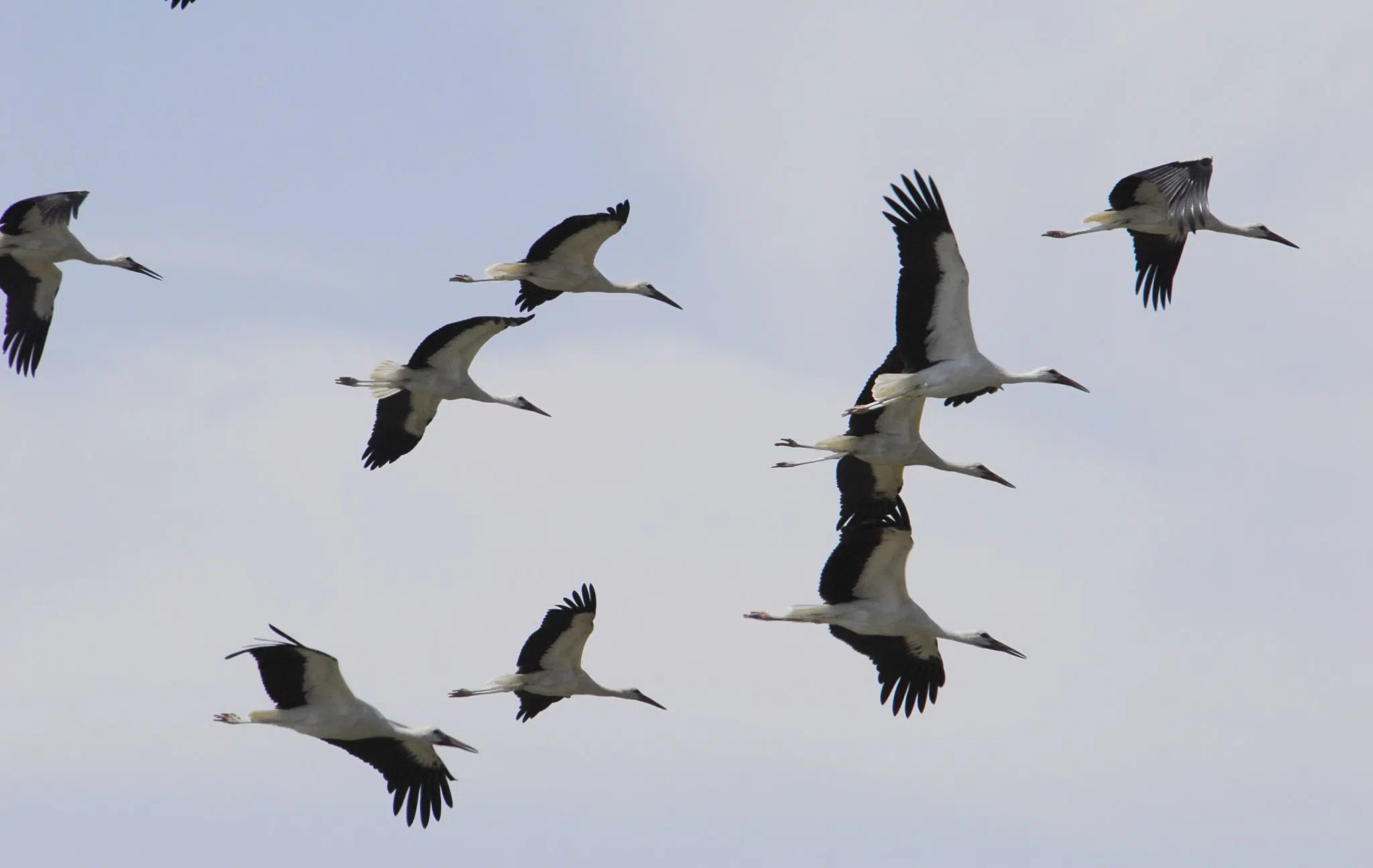
When asked to choose a single species to represent the African-Eurasian Flyway, Tareq Qaneer unequivocally selects the White Stork (Ciconia ciconia). "I would choose the White Stork. It is one of the most iconic species of the Jordan Rift Valley and is well known to local communities. Large flocks pass through Jordan every year, making it a powerful symbol of migration, connectivity, and the shared responsibility we have to protect birds across their entire journey." The White Stork is not merely a bird; it is a cultural icon across much of its range, often associated with good luck and spring. Its large size, striking black and white plumage, and visible migratory patterns make it an unmistakable and charismatic ambassador for the flyway. The sight of thousands of White Storks soaring overhead during migration is a breathtaking spectacle, connecting people to the natural world and underscoring the wonder of these long-distance travelers. Its presence serves as a constant reminder of the incredible feats of nature and the urgent need for conservation.

A Glimmer of Hope: Optimism in the Face of Challenges
Despite the daunting scale of the challenges facing migratory birds and their habitats, Tareq Qaneer expresses a profound sense of optimism. "What gives me hope is the growing collaboration between conservation organisations, governments, and local communities. Despite all the challenges, we are seeing increased awareness of the importance of wetlands and flyways. The resilience of nature (when given a chance) and the passion of people working along the flyway make me optimistic about the future." This optimism is grounded in tangible progress: the insulation of power poles, the strategic profiling of KBAs, and the ongoing efforts to restore Azraq. It also reflects a broader global trend of increased environmental awareness and the recognition that biodiversity conservation is intrinsically linked to human well-being.
The journey of migratory birds is a powerful metaphor for the interconnectedness of life on Earth. Protecting these aerial nomads requires a global effort, transcending national borders and fostering a shared sense of responsibility. The work of Tareq Qaneer and the RSCN in Jordan, supported by partners like RSPB and the Ecological Restoration Fund, provides a beacon of hope. It demonstrates that with dedication, scientific insight, and collaborative action, it is possible to safeguard these magnificent travelers and the vital habitats they depend upon, ensuring that future generations can continue to witness the awe-inspiring spectacle of migration. The continued success of these efforts will rely on sustained funding, innovative solutions to complex challenges like water scarcity, and an unwavering commitment to the principle that nature’s boundaries are far more expansive and important than any lines drawn on a map.
Acknowledgements: The Ecological Restoration Fund supports work that protects biodiverse hotspots, rejuvenates degraded landscapes and promotes local environmental activism. It is committed to re-establishing nature’s essential interconnections while fostering cultural, social and economic opportunities for the communities inhabiting those landscapes.