
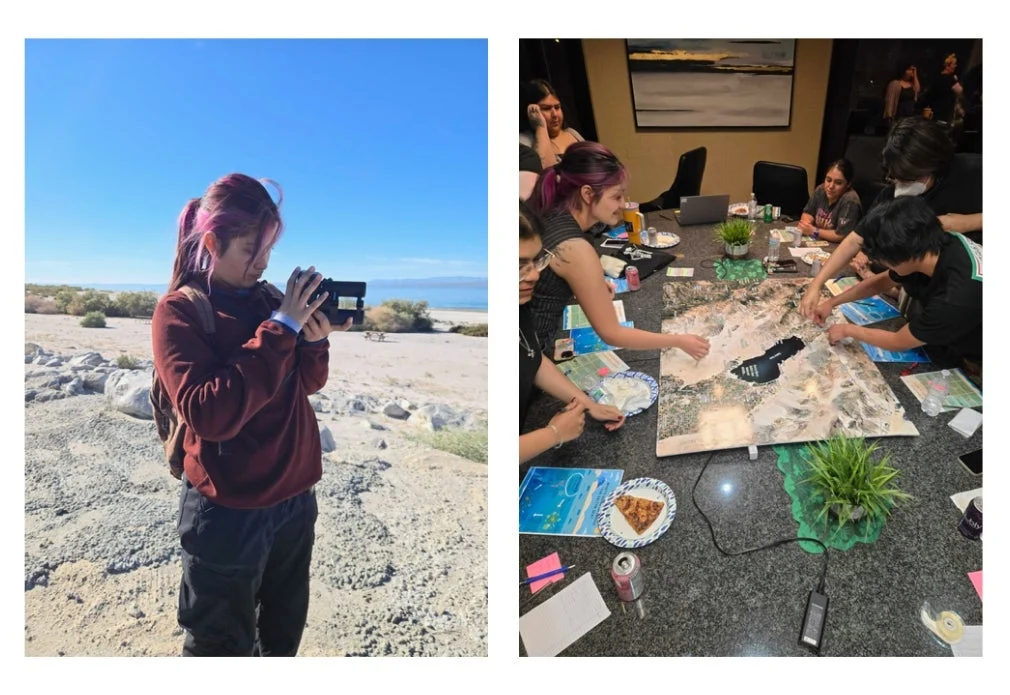
The Salton Sea Leadership Program has proudly announced its 2026 cohort, a diverse group of passionate conservationists dedicated to understanding and addressing the complex ecological challenges facing California’s largest inland body of water. This initiative is designed to foster community and leadership, empowering individuals from the Coachella Valley and surrounding regions to become effective stewards of the Salton Sea and its unique desert ecosystem. Running from January through March, the program immerses participants in a rigorous curriculum combining classroom education, hands-on field experiences, and practical capstone projects aimed at tackling local environmental issues. The unveiling of this year’s cohort underscores a critical commitment to local capacity building amidst ongoing environmental remediation efforts.
The Urgency of Conservation: A Salton Sea Overview
The Salton Sea, an accidental lake formed in 1905-1907 when the Colorado River breached an irrigation canal, has for decades been a vital, albeit increasingly threatened, ecological resource. Located in the heart of the Sonoran Desert, it serves as a critical stopover on the Pacific Flyway, supporting an estimated 90% of California’s entire population of American White Pelicans and numerous other migratory and resident bird species. Historically, it boasted a thriving fishery, though its ecological balance has been profoundly disrupted over the last half-century.
The Sea’s primary water sources are agricultural runoff from the Imperial and Coachella Valleys via the New and Alamo Rivers, which carry high levels of nutrients and pesticides. Without a natural outflow, the Salton Sea has experienced a steady increase in salinity, surpassing that of the Pacific Ocean, rendering it inhospitable for most fish species and accelerating habitat degradation. Compounding this issue, a series of water transfer agreements, notably the 2003 Quantification Settlement Agreement (QSA), significantly reduced the inflow of fresh water, leading to a dramatic shrinking of the Sea’s surface area. By 2017, the QSA’s mitigation measures expired, resulting in an even more accelerated recession of the shoreline.
This recession exposes vast tracts of playa, the dry lakebed, which is laden with decades of agricultural and industrial pollutants. When disturbed by winds, this fine dust becomes airborne, contributing to severe particulate matter (PM10) pollution in nearby communities like Mecca, North Shore, and Oasis. These communities, predominantly low-income and Latino, bear a disproportionate burden of respiratory illnesses and other health problems linked to poor air quality. According to data from the California Air Resources Board and local air districts, these areas frequently exceed federal air quality standards for PM10, making the environmental crisis at the Salton Sea a pressing environmental justice issue.
Efforts to address the Salton Sea’s myriad problems are spearheaded by the Salton Sea Management Program (SSMP), a multi-agency state initiative with a 10-year plan (2018-2028) to construct approximately 30,000 acres of habitat and dust suppression projects. While the SSMP has secured hundreds of millions in funding and made some progress, the scale of the challenge remains immense, requiring sustained investment, innovative solutions, and, crucially, engaged local leadership. This is precisely where programs like the Salton Sea Leadership Program play a vital role.
The Salton Sea Leadership Program: Cultivating Local Stewards
The Salton Sea Leadership Program, often in partnership with organizations like Audubon California, is meticulously designed to equip local residents with the knowledge, skills, and networks necessary to advocate for and implement conservation solutions. The program structure, spanning three months, is multi-faceted:
- Immersive Classroom Presentations: Experts from various fields—ecology, hydrology, public health, policy, and community organizing—deliver comprehensive sessions covering the Salton Sea’s history, current ecological status, socio-economic impacts, and potential remediation strategies. Participants gain a deep understanding of scientific principles, policy frameworks, and community engagement techniques.
- Hands-on Field Trips: These excursions provide invaluable direct experience, taking participants to critical areas around the Salton Sea. They might involve visiting active restoration sites, observing bird populations, studying exposed playa, or engaging with community members directly affected by the Sea’s conditions. Such experiences connect theoretical knowledge with real-world observations and challenges.
- Capstone Projects: The cornerstone of the program, these projects require participants to identify a local ecological challenge related to the Salton Sea and develop a practical, actionable plan to address it. These projects often involve community outreach, data collection, proposal writing, and collaboration with local stakeholders, providing tangible experience in conservation leadership.
A spokesperson for Audubon California, a key partner in various Salton Sea initiatives, underscored the importance of such programs: "The environmental challenges at the Salton Sea are complex and deeply intertwined with the well-being of local communities. Sustainable solutions can only emerge when local voices are amplified and equipped with the tools to lead. The Salton Sea Leadership Program is an investment in these communities, fostering a generation of leaders who will champion the Sea’s restoration and ensure environmental justice for all residents."
Meet the 2026 Cohort: Diverse Voices for a Shared Future
The 2026 cohort represents a vibrant cross-section of the Coachella Valley, each bringing unique perspectives, skills, and an unwavering commitment to the environment. Their diverse backgrounds and shared passion for the Salton Sea exemplify the program’s vision of community-driven conservation.
Tara, an undergraduate student pursuing a BS in Environmental Science, embodies the program’s scientific ethos. Her aspiration to contribute to habitat conservation and restoration in the Coachella Valley directly aligns with the urgent needs of the region. Tara’s diverse interests—from hiking and off-roading to the chemistry of clay and glazes—demonstrate a holistic appreciation for natural processes and an adventurous spirit. Her admiration for vultures, often misunderstood birds, highlights her understanding of their critical role in ecosystem balance, disease control, and nutrient cycling. Her chosen sanctuary, the Orocopia Mountains Wilderness Area, where she observes wildlife and geology from a remote vantage point, speaks to a deep, contemplative connection with the desert landscape, a perspective vital for nuanced conservation efforts.
Sierra Alvarez, a born-and-raised Coachella Valley community member, is driven by a powerful desire to express and embody love through advocacy for social causes. Her engagement in dance, outdoor exploration, continuous learning, and crafting indicates a dynamic individual committed to personal growth and community well-being. Sierra’s vision connects directly to the environmental justice aspects of the Salton Sea crisis, where ecological degradation disproportionately impacts vulnerable populations. Her appreciation for the vibrant Mandarin Patkin and the natural beauty of Tahquitz Canyon Trail reflects a profound connection to nature’s diverse forms.
Alejandra Escobar, another Coachella Valley native, shares a profound passion for conservation and inspiring others to appreciate nature. Her roots in the region provide an authentic voice for local concerns. Alejandra’s favorite bird, the Black Phoebe, common in riparian zones and near human settlements, suggests an appreciation for the subtle beauty of local wildlife. Her preference for shaded areas or riverbanks speaks to an intuitive understanding of the importance of microhabitats and water resources in an arid environment, an insight crucial for Salton Sea restoration planning.
Larissa Olenicoff Sinclair brings a truly global perspective to the cohort. As a travel writer and digital storyteller with extensive international experience, having lived in multiple countries and visited over 75, she possesses a unique ability to communicate complex issues and engage diverse audiences. Now based near the Salton Sea in North Shore, her global lens is applied to local challenges. Her hobbies of seeking adventures, asking questions, and karaoke underscore an inquisitive and engaging personality. Her deep affection for the shores of the Salton Sea at sunset, coupled with her admiration for owls, highlights her personal connection to the region’s unique aesthetic and nocturnal wildlife, vital for fostering emotional ties to conservation.
Bernardo Lino, also from North Shore, exemplifies the local community’s connection to the outdoors. His enjoyment of camping, adventurous hikes, and traveling positions him as someone who values experiential learning and broad natural beauty. While Yosemite might be his favorite place, this appreciation for iconic natural spaces often translates into a deeper commitment to protecting local environments, understanding that all ecosystems are interconnected. His favorite bird, the hummingbird, symbolizes resilience and vibrant life, qualities much needed in Salton Sea efforts.
Edeli Reyes, hailing from Mecca, an unincorporated community directly impacted by the Salton Sea, brings a crucial local perspective and academic grounding with a degree in Environmental Studies from UC Santa Cruz. Edeli’s explicit goal of building stronger relationships with the local community and environment is central to the program’s mission. Their favorite bird, the Loggerhead Shrike, a predatory songbird, and favorite place, Carrizo Canyon, point to an interest in the specific ecological dynamics of the desert, demonstrating a keen eye for the intricacies of local ecosystems.
Gisselle Lockley showcases a blend of personal interests and academic curiosity. Her love for pets, friends, and biology reflects a nurturing spirit and a scientific mind. Her favorite bird, the hummingbird, holds cultural significance for her, underscoring how environmental conservation can intertwine with heritage and personal identity. Her cherished memory of the UC Berkeley camp in the National Pluma Forest indicates an early exposure to and appreciation for forest ecosystems, bringing a broader understanding of biodiversity to the desert-focused program.
Kevin Manajero combines contemporary interests with a deep appreciation for nature. His hobbies of hiking, listening to music, and playing video games illustrate a balanced approach to life. His favorite bird, the Great Blue Heron, a majestic wading bird, and favorite place, Yosemite National Park, reveal an affinity for large, iconic wildlife and grand landscapes. This appreciation for the sublime in nature is a powerful motivator for conservation, driving efforts to protect even the most challenging environments like the Salton Sea.
Monse Zamora, a recent CSUSB graduate in Communications, brings invaluable skills in public outreach and advocacy. Her focus on personal and career growth post-college positions her to translate her academic knowledge into tangible community impact. Her favorite bird, the Atlantic Puffin, an iconic marine bird, and her favorite place, the beach, indicate a broad interest in diverse aquatic ecosystems, suggesting she can draw parallels and bring innovative thinking to the Salton Sea’s unique aquatic challenges.
Carlos Garcia demonstrates a robust connection to local outdoor activities and wildlife. His enjoyment of hiking, running, and thrifting speaks to an active lifestyle and an interest in sustainable practices. His specific choices for favorite birds—the Red-tailed Hawk and Western Burrowing Owl—show a detailed appreciation for raptors and the unique, often hidden, wildlife of the desert. His favorite place, Mt. San Jacinto State Park, further solidifies his connection to the diverse natural beauty of the Coachella Valley’s immediate surroundings.
The Program’s Impact: Fostering Local Leadership and Advocacy
The Salton Sea Leadership Program serves as a vital conduit for transforming individual passions into collective action. By equipping these local residents with comprehensive knowledge and practical skills, the program empowers them to:
- Become Informed Advocates: Understand the scientific, policy, and social complexities of the Salton Sea crisis, enabling them to articulate challenges and solutions effectively to policymakers and the public.
- Drive Community Engagement: Leverage their local roots and insights to mobilize communities, fostering greater participation in conservation efforts and ensuring that solutions are culturally relevant and socially equitable.
- Implement Practical Solutions: Develop and execute capstone projects that address tangible local environmental issues, from habitat restoration initiatives to public awareness campaigns, contributing directly to the Salton Sea’s remediation.
- Build a Network of Peers: Connect with fellow conservationists, creating a supportive network for collaboration, shared learning, and sustained impact beyond the program’s duration.
The investment in local leaders like those in the 2026 cohort is not merely about individual development; it is a strategic approach to long-term environmental sustainability. These individuals, deeply embedded in the communities most affected by the Salton Sea’s decline, are uniquely positioned to bridge the gap between scientific expertise, governmental initiatives, and grassroots action.
Challenges and Future Outlook for the Salton Sea
Despite the dedicated efforts of programs like the Salton Sea Leadership Program and initiatives like the SSMP, the Salton Sea faces monumental challenges. Climate change continues to exacerbate aridification in the Southwest, putting further strain on water resources. Funding for large-scale restoration projects remains a constant concern, often requiring complex inter-agency and interstate collaborations. The sheer scale of environmental degradation means that full restoration to its historical ecological state is likely unattainable, necessitating adaptive management strategies focused on creating sustainable habitats and mitigating public health impacts.
However, the future is not without hope. The commitment to developing local leaders is a testament to a belief in community resilience and the power of grassroots movements. As these cohorts graduate, they join a growing force of informed and passionate individuals who will continue to push for progress, hold decision-makers accountable, and innovate solutions for one of California’s most critical environmental dilemmas. Their work will contribute to shaping not only the ecological future of the Salton Sea but also the health and prosperity of the communities that surround it.
For those in the Coachella Valley and beyond who are drawn to the Salton Sea’s diverse ecology and its urgent conservation needs, there are multiple avenues for engagement. Following the Audubon Salton Sea Instagram channel offers highlights from the 2026 Salton Sea Leadership Program cohort’s journey, providing insights into their learning and project work. Additionally, the Audubon California website for the Salton Sea Leadership Program serves as a resource for information on future events, opportunities to join upcoming cohorts, and other ways for concerned citizens to get involved and contribute to the vital mission of saving California’s Salton Sea.