
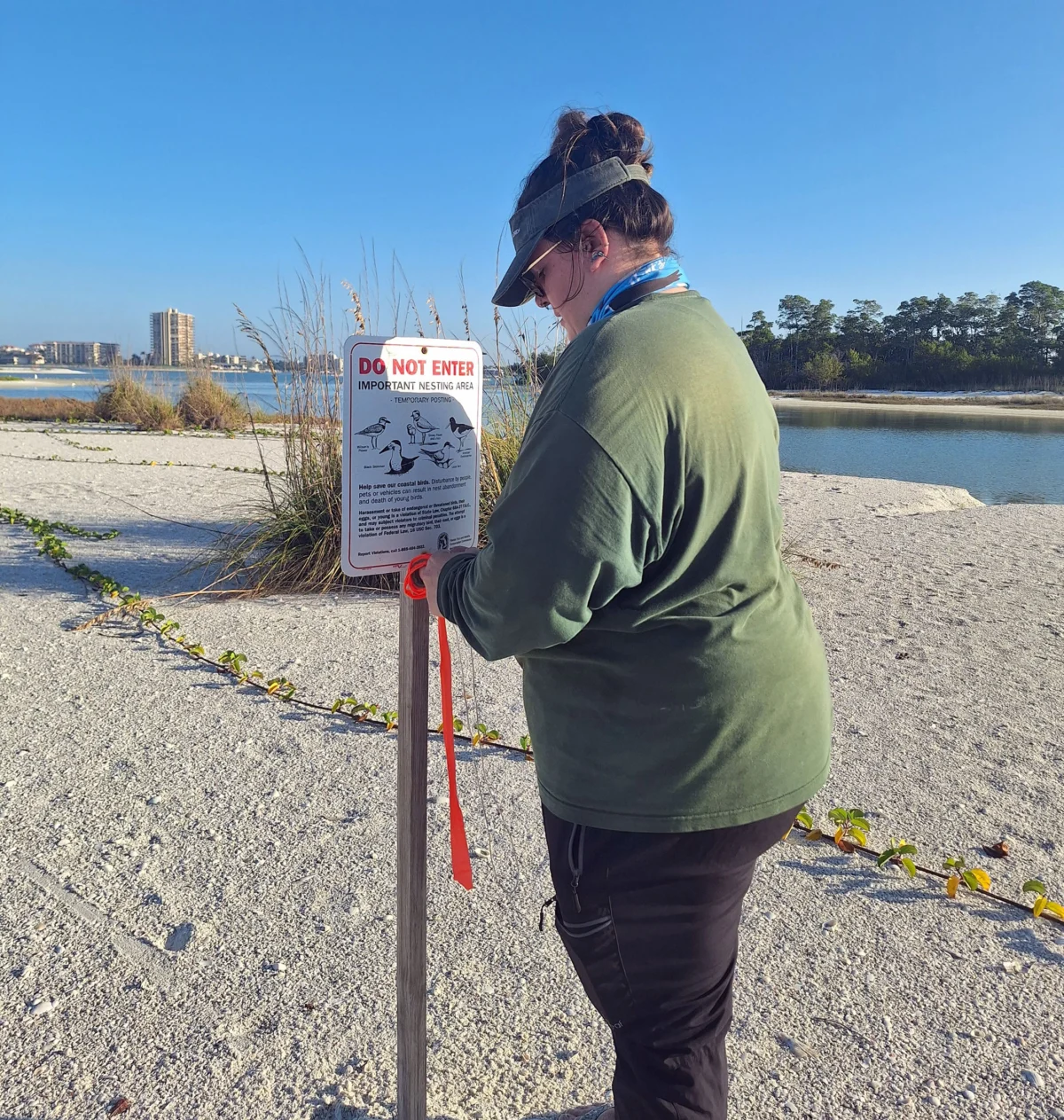
In the pre-dawn stillness of Southwest Florida, just as the sky began to blush with the first hints of sunrise, Megan Hatten, Southwest shorebird program manager for Audubon Florida, arrived at the Ten Thousand Islands Field Research Station in Goodland. Her mission: to embark on a critical annual endeavor to safeguard the region’s vulnerable shorebird populations. Joining her was Derek Salge, her dedicated counterpart from the Florida Department of Environmental Protection (DEP), highlighting the collaborative spirit essential for effective conservation. Their morning ritual commenced with the methodical assembly of the day’s indispensable tools: a comprehensive first aid kit, a reliable handheld radio for communication in remote areas, personal flotation devices, and the keys to their marine transport. Today’s objective was clear – to meticulously mark and protect shorebird nesting territories on Dickmans Island, a small, ecologically vital landmass situated just south of Marco Island, deeply embedded within the boundaries of the Rookery Bay National Estuarine Research Reserve.
The Critical Mission: Protecting Coastal Nesting Grounds
The work ahead was not merely an administrative task but a proactive measure to create sanctuaries for species teetering on the edge of local extirpation due to increasing human encroachment and habitat degradation. "We’ll take these smaller signs to put up at the front section, which is where most people are walking," Hatten explained to Salge, underscoring the strategic necessity of their efforts. With practiced efficiency, she loaded two distinct types of informational signs, a box brimming with spools of durable string and vibrant flagging tape, and an assortment of power tools onto a utility cart. The cart rattled gently down the dock, its contents destined to delineate crucial nesting zones. Both conservationists then climbed aboard their vessel; Hatten expertly started the engine, pointing the boat’s bow towards the vast, open expanse of water, leaving the tranquil station behind for the urgent demands of the barrier island.
Upon their arrival at Dickmans Island, the scene was a familiar juxtaposition of natural splendor and human activity. Several recreational boats had already anchored, their occupants eagerly combing the shoreline. Eager beachcombers, their eyes fixed on the mounds of shells deposited by the receding tide, sifted through nature’s bounty, often oblivious to the delicate drama unfolding around them. Flocks of shorebirds, equally intent on foraging, mirrored the humans’ activity, probing the sand for sustenance. The inherent conflict between human recreation and avian survival became immediately apparent. Hatten and Salge, understanding the urgency, split up. Each took a set of signs and various tools, heading in different directions to commence the arduous task of marking the specific areas of the beach where threatened shorebirds, such as the elusive Wilson’s Plovers, had already begun establishing their breeding territories. This early spring period is a crucial window for these ground-nesting birds, whose success hinges significantly on undisturbed environments.
A Fragile Ecosystem: The Plight of Florida’s Shorebirds
Florida’s extensive coastline, a mosaic of sandy beaches, mangrove forests, and salt marshes, serves as a critical stopover and breeding ground for an impressive array of avian species, including numerous shorebirds. However, this ecological richness comes with a profound challenge: Florida is also one of the fastest-growing states in the U.S., leading to escalating pressures on its natural habitats. Shorebirds, particularly those like the Wilson’s Plover ( Charadrius wilsonia ), are acutely vulnerable. These birds construct shallow "scrapes" directly on the open sand, often just above the high tide line, making their eggs and chicks incredibly susceptible to being trampled by unsuspecting beachgoers, off-leash pets, or even vehicles in unauthorized areas. Their superb camouflage, a natural defense mechanism against predators, inadvertently renders them nearly invisible to humans, exacerbating the risk.
"Right now, we are seeing a variety of wintering birds on this beach, staging for spring migration," Hatten observed, providing context to the dynamic avian population present. "And, over there is where the Wilson’s Plovers typically scrape their nests," she added, gesturing over her shoulder towards a subtly elevated section of the beach. The Wilson’s Plover, designated as a Threatened species by the Florida Fish and Wildlife Conservation Commission (FWC), faces significant conservation challenges. Their population has seen declines due to habitat loss, disturbance, and predation. Other species, such as Least Terns, Black Skimmers, and American Oystercatchers, which also utilize these coastal areas for nesting, face similar threats. The cumulative impact of these pressures underscores the urgency of proactive conservation measures like those being undertaken by Audubon Florida and DEP. Without such interventions, the long-term viability of these species in Florida remains precarious.
Strategic Demarcation: A Race Against Disturbance
After a brief but necessary water break, Hatten and Salge resumed their demanding physical labor. The first step involved digging holes and firmly planting the wooden posts for the signs between the high tide line and the sparse vegetation. This area, often perceived by humans as barren and unoccupied, is precisely where these birds choose to lay their eggs. Following the installation of the signs, they embarked on the second, equally critical phase: connecting the posts with taut string and bright flagging tape, creating a visible, albeit permeable, barrier. This protective perimeter serves as a stark visual cue, alerting humans to the presence of sensitive nesting areas and establishing a buffer zone around the most probable nesting spots.
Hatten explained the profound importance of these seemingly simple barriers: "We put up these signs and string to help protect eggs and chicks from being trampled, because they are well camouflaged and very hard to see." The stakes are incredibly high. A single careless step can obliterate an entire brood. Beyond the immediate physical threat, constant disturbance also takes a severe toll on the parent birds. Their primary defense mechanism against approaching threats is often a strenuous dive-bombing display, feigning injury to draw attention away from the nest. This behavior, while instinctive, expends a tremendous amount of energy. If parents are repeatedly disturbed, their energy reserves can become depleted, leading to stress, reduced foraging time, and, in severe cases, the abandonment of their nests, leaving eggs or chicks vulnerable to predators or environmental exposure. This cycle of disturbance is a major impediment to successful breeding and population recovery.
Rookery Bay: A Sanctuary Under Pressure
The location of today’s efforts, Dickmans Island, falls within the Rookery Bay National Estuarine Research Reserve. Established in 1978, Rookery Bay is one of 29 National Estuarine Research Reserves across the country, managed through a state-federal partnership between the Florida Department of Environmental Protection’s Florida Coastal Office and the National Oceanic and Atmospheric Administration (NOAA). Encompassing approximately 110,000 acres of pristine mangrove forests, uplands, and the open waters of Rookery Bay, the reserve is a crucial component of the Ten Thousand Islands ecosystem. It serves as a vital nursery for countless marine species, filters pollutants, and provides essential habitat for a vast array of wildlife, including many imperiled bird species.
The reserve’s designation underscores its ecological significance, yet even within its protected boundaries, human recreational activities pose a continuous challenge. Balancing public access with conservation mandates is a delicate act. Derek Salge, representing the DEP, emphasized this point. "Our partnership with Audubon Florida is a testament to our commitment to preserving Florida’s natural heritage. Rookery Bay is a jewel, and protecting its nesting shorebirds is fundamental to maintaining the health and biodiversity of this entire estuarine system. These marked areas are not just lines in the sand; they are crucial zones for the survival of species vital to our coastal ecology." The DEP’s role extends beyond collaboration to include active management of state lands, enforcement of environmental regulations, and fostering public understanding of sensitive ecosystems.
Beyond the Ropes: The Imperative of Education
Within two intense hours of arrival, both designated nesting areas on Dickmans Island were successfully posted, the tide had noticeably risen, and the majority of beachcombers began to head back to their boats. As Hatten prepared to depart, two women approached her. After a brief conversation, they expressed their gratitude, affirming their relief and appreciation that Audubon Florida was actively working to protect the birds nesting there. This interaction, though small, highlighted a critical aspect of conservation: public engagement.
Hatten’s work, however, was far from complete; in many ways, it had only just begun. She still had several more nesting areas across the region to mark. More significantly, with the nesting season now fully underway, her primary focus was rapidly shifting from physical installation to widespread education. As she later explained, signs alone, while essential, are not infallible. "Signs don’t stop unleashed dogs, errant beach balls, or kites flying overhead from causing chaos for nesting birds," Hatten stated, underscoring the limitations of passive warnings. These human-generated disturbances can cause immense stress, leading to nest abandonment or exposing chicks to predation. The inherent curiosity of pets, combined with the often-unintended consequences of recreational activities, necessitates a more direct and engaging approach to public awareness.
Upon returning to the dock, Hatten immediately fielded an interview with a local newspaper. This proactive outreach was designed to amplify awareness, reinforcing the message that even in posted areas, birds remain highly vulnerable to disturbance. The media serves as a vital conduit to disseminate information to a broader audience, educating residents and tourists alike about their shared responsibility in protecting these fragile ecosystems.
A United Front: Interagency Collaboration for Conservation
The scope of shorebird protection extends far beyond individual efforts; it demands a unified, interagency approach. In a few weeks, Hatten will host a pivotal meeting with regional interagency partners. This collaborative forum will bring together key stakeholders including the Florida Fish & Wildlife Conservation Commission (FWC), the Collier County Sheriff’s Department, the City of Marco Island, and other local and state entities. The objective of this meeting is to ensure that all parties are operating from the same informed baseline regarding the locations of posted areas, the specific rules governing beach conduct, and crucial dates relevant to the nesting season. This coordinated effort is particularly critical in anticipation of high-traffic holidays like Memorial Day and Independence Day, periods when coastal areas experience a significant surge in visitors, inevitably increasing the potential for human-wildlife conflicts.
The FWC, as the primary state agency responsible for managing Florida’s fish and wildlife resources, plays a critical role in providing scientific expertise and regulatory oversight. Their involvement ensures that conservation strategies are aligned with state mandates and ecological best practices. The Collier County Sheriff’s Department and the City of Marco Island are equally crucial, providing the necessary enforcement arm to ensure compliance with established regulations. Their presence on the beaches and waterways acts as a deterrent against intentional or accidental disturbance, and they are vital in responding to incidents that threaten nesting birds. This "all-hands-on-deck" approach reflects a deep understanding that effective conservation requires a multi-faceted strategy encompassing scientific management, public education, and robust enforcement.
Community Engagement: The Power of Volunteerism
Hatten’s next immediate task following the interagency meeting is a concerted effort to recruit a dedicated crew of volunteers. These community stewards are indispensable to the success of Audubon Florida’s Coastal Stewardship Program. Over the coming months, these volunteers will staff information stations at nesting beaches like Dickmans Island. Their role is multifaceted: they serve as approachable educators, engaging beach visitors in conversations about the "fuzzy fluffballs wandering in their midst"—the nearly invisible chicks and eggs. They provide crucial information about responsible beach etiquette, the importance of keeping dogs leashed, and the severe penalties for disturbing threatened wildlife. Beyond education, volunteers also serve as vigilant eyes and ears on the ground, notifying law enforcement officials of any issues or violations that threaten the birds.
This volunteer network is a cornerstone of Audubon Florida’s broader mission. Through the inherent charisma of Florida’s avian friends, Audubon aims to grow its network throughout the hemisphere, inspiring new constituencies and future generations to actively participate in conservation. These efforts not only protect birds but also foster a deeper connection between people and the natural world, cultivating a sense of shared responsibility for environmental stewardship. The dedication of these volunteers transforms passive awareness into active protection, creating a tangible impact on the survival rates of these vulnerable species. Their presence on the beaches helps bridge the gap between human recreation and wildlife preservation, ensuring that Florida’s coastal treasures endure for generations to come.
The Long View: Sustaining Florida’s Coastal Legacy
The work undertaken by Megan Hatten, Derek Salge, and their network of partners and volunteers represents more than just a seasonal effort; it is a continuous commitment to sustaining Florida’s invaluable coastal legacy. The implications of their efforts are far-reaching, touching upon ecological health, responsible tourism, and community well-being. Ecologically, successful nesting seasons contribute directly to the recovery and stability of threatened species, maintaining the intricate balance of coastal ecosystems. Economically, healthy bird populations support a vibrant ecotourism industry, attracting birdwatchers and nature enthusiasts who contribute significantly to local economies. Socially, the program fosters a sense of collective responsibility, educating the public on how to coexist harmoniously with wildlife and inspiring future generations of conservationists.
However, the challenges persist. Rapid coastal development, increasing human population, the ongoing threat of climate change-induced sea-level rise, and more frequent intense storms all place immense pressure on these fragile habitats. The continuous adaptation of conservation strategies, informed by scientific research and public engagement, is paramount. The marking of nesting areas, the educational outreach, and the robust interagency collaborations are not merely reactive measures but proactive investments in Florida’s natural capital. The silent vigilance of a marked nesting site, the gentle guidance of a volunteer, and the informed actions of beachgoers collectively weave a protective net around these vulnerable creatures, ensuring that the distinctive calls and delicate presence of Florida’s shorebirds will continue to grace its magnificent coastlines for years to come.