
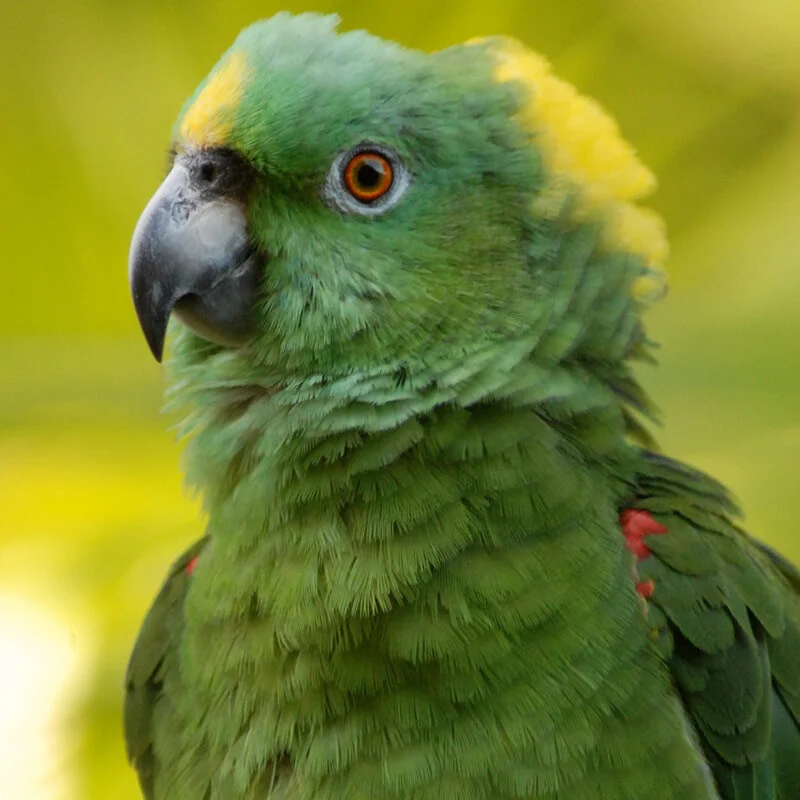
Parrots have long captivated human fascination with their remarkable ability to mimic sounds, particularly human speech. This ingrained curiosity has now been amplified by groundbreaking research revealing that the vocalizations of yellow-naped Amazon parrots are far more sophisticated than previously understood. A recent comprehensive study has unveiled that mated pairs of these intelligent birds engage in intricate duets, termed "warbles," which are not random assemblages of sounds but rather precisely structured sequences composed of 36 distinct call types. This finding significantly bolsters the growing body of evidence suggesting that parrots possess highly organized communication systems that bear striking resemblances to human language.
The pioneering research, spearheaded by Dr. Christine R. Dahlin, a distinguished professor of biology at the University of Pittsburgh, in collaboration with five esteemed colleagues, presents a compelling argument for the existence of a learned vocalization system among yellow-naped Amazon parrots. This system, the study posits, may function in ways analogous to human language, challenging long-held assumptions about animal communication. The implications of this research extend beyond avian linguistics, offering profound insights into the evolution of complex communication and the potential for sophisticated cognitive abilities in non-human species.
Unraveling the Structure of Parrot Vocalizations
The foundation of Dr. Dahlin’s team’s assertion lies in the meticulous analysis of the parrots’ duets. The researchers identified clear structural patterns within these vocal exchanges, demonstrating that they adhere to recognizable "rules." This adherence to patterned sequences is a hallmark of complex human speech, suggesting a level of cognitive processing in parrots that mirrors our own. The study further revealed a significant sex bias in many of the calls, with an overwhelming majority – ranging from 75% to 99% – being primarily used by either males or females. Even more remarkably, a subset of these calls were found to be entirely sex-specific, meaning they were produced exclusively by one sex, indicating a nuanced and potentially gendered communicative repertoire.
This discovery of sex-specific vocalizations adds another layer of complexity to the understanding of parrot communication. It suggests that these birds may use distinct calls to convey different information depending on the sex of the caller, potentially relating to mating rituals, territorial defense, or social bonding. The degree of specificity observed hints at a sophisticated system for conveying targeted messages within their social structures.
The Anatomy of a Parrot Duet: Primary and Warble Calls
The study meticulously categorized the identified vocalizations into two primary groups: "primary calls" and "warble calls." Primary calls, as their name suggests, represent the most frequently uttered sounds within the parrots’ repertoire. Warble calls, conversely, appear to serve a distinct purpose, primarily employed by mated pairs for alerting and warning their counterparts or perhaps their flock. These warble calls are characterized by their accelerated delivery and a more diverse range of sonic expressions compared to primary calls, suggesting a heightened urgency or importance associated with their use.
Across the extensive data collected, a total of 36 distinct call types were definitively identified. In addition to these, an additional 11 calls were documented, though each was heard only once, leaving their precise function and significance open to further investigation. The sheer number and diversity of these identified calls underscore the richness and complexity of the yellow-naped Amazon’s vocal communication. This extensive lexicon, coupled with the observed rule-governed sequencing, paints a picture of a species that engages in a form of communication far exceeding simple instinctual responses.
A Deeper Dive into Social Complexity and Regional Dialects
The findings align with established biological principles that link social behavior with communication complexity. Highly social animals, such as the yellow-naped Amazon parrots, often develop more elaborate communication systems to navigate their intricate social environments. This study provides compelling evidence for this phenomenon, revealing that these parrots not only possess a complex vocal repertoire but also exhibit regional dialects that extend across their entire range of calls. This implies that geographical location can influence the specific nuances and even the composition of their vocalizations, a phenomenon akin to human accents and linguistic variations.
The existence of regional dialects in parrots is a significant finding. It suggests that learned vocalizations are passed down through generations within specific populations, leading to distinct communication patterns in different geographical areas. This social learning of vocalizations is a crucial aspect of how complex communication systems evolve and are maintained. It also raises questions about inter-group communication and the potential for misunderstandings or distinct social bonds formed between parrots from different regions.
Implications for Conservation and Understanding Animal Cognition
This extensive study holds profound implications not only for our understanding of animal cognition but also for the urgent conservation efforts required for the yellow-naped Amazon parrot. The species is currently listed as critically endangered in the wild, facing severe threats from habitat loss and the illegal pet trade. By highlighting the sophisticated communication system of these birds, the research underscores their inherent value and the vital importance of preserving their natural habitats. The loss of these parrots would represent the irreversible silencing of a unique and complex communication system, a loss to both biodiversity and our understanding of the natural world.
Dr. Dahlin and her colleagues emphasize the critical need for continued research and conservation efforts. They state, "If we hope to eventually break the code of their vocal communication system, it will likely take a sustained mix of conservation efforts, field observations, and playback experimentation. Ultimately, our work demonstrates the value of research into vocal complexity and syntactic organization in wild animal populations, as natural pressures shape communication in ways that cannot be replicated in captivity." This statement underscores a dual imperative: to protect the species in its natural environment and to continue to study its complex behaviors, recognizing that their true communicative prowess is best observed and understood in the wild.
The Road Ahead: Decoding and Preserving
The published study, "Decoding Parrot Duets," which appeared on February 12, 2026, in the Journal of Avian Vocalizations (J. Avian. Voc.), provides a detailed account of the methodology and findings. The research team employed advanced audio recording techniques and sophisticated spectrographic analysis to dissect the intricate layers of the parrots’ vocalizations. Future research will likely focus on playback experiments, where recorded calls are played back to wild parrots to observe their responses. This will help researchers understand the specific meanings and functions of different call types and sequences.
The implications of this research are far-reaching. It challenges anthropocentric views of language and communication, suggesting that complex, rule-governed systems may be more widespread in the animal kingdom than previously thought. Understanding these systems not only enriches our appreciation for the diversity of life on Earth but also provides a unique lens through which to examine the evolution of our own cognitive and communicative abilities. The critically endangered status of the yellow-naped Amazon parrot serves as a stark reminder that such invaluable scientific insights are at risk of being lost forever if conservation efforts are not intensified. The ongoing study represents a race against time, not only to save a species but also to fully comprehend the complex language of its existence.