
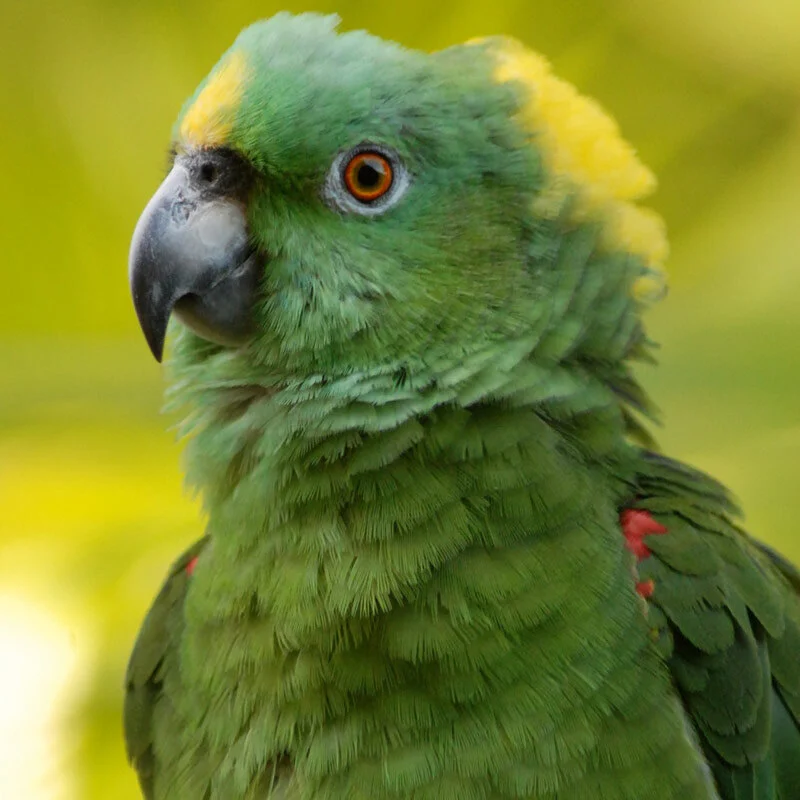
New scientific research has unveiled a remarkable level of complexity in the vocalizations of yellow-naped Amazon parrots, suggesting their communication systems may share striking similarities with human language. A recent study, published on February 12, 2026, in the Journal of Avian Biology, by Dr. Christine R. Dahlin and her colleagues at the University of Pittsburgh, reveals that mated pairs of these highly intelligent birds engage in intricate "warble" duets composed of at least 36 distinct call types. These calls are not random; they are arranged in patterned, rule-governed sequences, offering compelling evidence for sophisticated communication strategies in the avian world.
The study, titled "Decoding Parrot Duets," delves into the intricate vocal exchanges between yellow-naped Amazon parrots, a species known for its intelligence and its striking yellow nape. Dr. Dahlin and her team meticulously analyzed hundreds of hours of audio recordings, identifying and categorizing a vast repertoire of calls. Their findings indicate that these parrots possess a learned system of vocalizations, one that exhibits structural patterns analogous to those observed in complex human speech. This groundbreaking research challenges previous understandings of animal communication and underscores the potential for highly structured systems beyond the human domain.
Background: The Allure of Avian Articulation
Parrots have long captivated human imagination with their uncanny ability to mimic human speech, often with remarkable accuracy in tone and accent. This mimicry has fueled a persistent fascination with their cognitive abilities and the nature of their communication. However, the current study moves beyond simple mimicry to explore the parrots’ innate vocal repertoire and its organizational principles. The yellow-naped Amazon parrot (Amazona auropalliata), a species native to Central America, is particularly noted for its intelligence and social complexity, making it an ideal subject for such research. Their ability to form strong pair bonds and their highly social nature likely contribute to the development of their intricate communication systems.
Historically, research into animal vocalizations has often focused on identifying individual calls and their associated meanings, such as alarm calls or mating signals. While valuable, these studies often missed the larger picture of how these calls are integrated into complex sequences. The work by Dr. Dahlin and her team represents a significant advancement by focusing on the syntactic structure – the rules governing how calls are combined – within these vocal exchanges. This approach allows for a deeper understanding of the communicative intent and the potential for information transfer.
The Study: Unraveling the Warble Duets
The research team’s analysis revealed that the duets performed by mated yellow-naped Amazon parrots are far from haphazard. They are characterized by clear structural patterns that adhere to recognizable "rules," mirroring the principles of syntax found in human language. This suggests that the parrots are not simply stringing together sounds but are actively constructing meaningful vocal sequences.
A particularly striking discovery was the sex-biased nature of many calls. The study found that between 75% and 99% of identified calls were used primarily by either males or females. Even more astonishing, some calls were entirely sex-specific, produced exclusively by one sex and never by the other. This level of sexual dimorphism in vocalization suggests that these calls may play crucial roles in mate recognition, courtship, or maintaining pair bonds.
The identified calls were broadly categorized into two groups: primary and warble calls. Primary calls were found to be the most prevalent, serving a range of communicative functions. The warble call, however, appears to be specifically employed by mated pairs, potentially as a mechanism for alerting and warning their partners or their territory. Warble calls were observed to be expressed at a faster tempo and with a more diverse range of notes compared to primary calls, indicating a distinct function and complexity.
In total, the researchers identified 36 distinct call types within these duets. An additional 11 calls were noted but were heard only once, suggesting they might be rare or context-specific. The consistent and patterned use of these 36 call types forms the basis of the intricate "warble" duets, highlighting the sophisticated communication capabilities of these birds.
Supporting Data and Context
The concept of regional dialects in animal communication is not new, and parrots are known to exhibit this phenomenon. Studies on other parrot species have indicated variations in their vocalizations based on geographical location. The yellow-naped Amazon parrot is believed to have distinct regional dialects across its range, further supporting the idea that their vocalizations are learned and culturally transmitted, much like human languages.
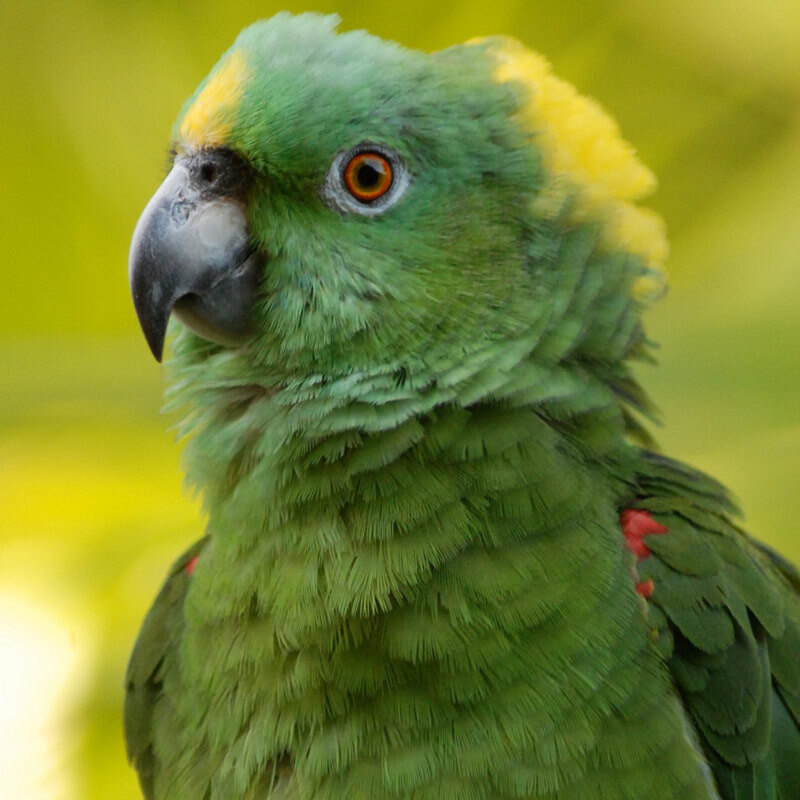
The researchers drew parallels between the parrots’ communication and human linguistic patterns. While acknowledging that "language" is a complex term with various definitions, the study’s findings strongly suggest that parrots utilize a system that exhibits many of the hallmarks of complex communication, including learned components, structured sequences, and context-dependent usage.
This research also arrives at a critical time for the yellow-naped Amazon parrot. The species is currently listed as critically endangered by the International Union for Conservation of Nature (IUCN). Habitat loss, fragmentation, and illegal pet trade are significant threats to their survival. Understanding their complex communication systems is not just an academic pursuit; it is vital for informing conservation strategies. The ability of these parrots to thrive in their natural environment is intricately linked to their social structures and communication networks. Disrupting these networks through habitat destruction can have profound and potentially irreversible consequences for their populations.
Timeline and Chronology of Research
While the study was published on February 12, 2026, the research leading to these findings would have been conducted over an extended period. This typically involves:
- Initial Field Observations (Years prior): Researchers would have begun by observing yellow-naped Amazon parrots in their natural habitats, noting their social interactions and vocalizations.
- Audio Recording and Data Collection (Ongoing): Extensive audio recording sessions would have been conducted across various locations and times of day to capture a wide range of vocalizations, especially duets between mated pairs.
- Analysis and Transcription (Months to Years): The collected audio data would then be meticulously analyzed. This involves identifying individual call types, transcribing their acoustic properties, and noting the context in which they occur. Sophisticated software is often used to aid in this process.
- Pattern Recognition and Rule Identification (Months to Years): Researchers would look for recurring patterns, sequences, and statistical regularities in the call usage. This is where the identification of "rules" and sex-biased calls would occur.
- Manuscript Preparation and Peer Review (Months): The findings would be compiled into a scientific manuscript, which is then submitted to a peer-reviewed journal. This process involves rigorous evaluation by other experts in the field before publication.
The publication date of February 12, 2026, signifies the culmination of this extensive scientific endeavor.
Statements and Inferred Reactions
Dr. Christine R. Dahlin, the lead author of the study, emphasized the significance of their findings in a statement that accompanied the publication: "If we hope to eventually break the code of their vocal communication system, it will likely take a sustained mix of conservation efforts, field observations, and playback experimentation. Ultimately, our work demonstrates the value of research into vocal complexity and syntactic organization in wild animal populations, as natural pressures shape communication in ways that cannot be replicated in captivity."
This statement suggests a collaborative approach to future research, integrating ecological concerns with detailed acoustic analysis. It also highlights a critical point: understanding these complex communication systems in their natural context is paramount.
While not explicitly stated, one can infer that ornithologists, animal behaviorists, and conservationists would view these findings with considerable interest. The confirmation of highly structured communication in a critically endangered species could galvanize further support for conservation initiatives. It may also prompt a re-evaluation of how we approach wildlife rehabilitation and captive breeding programs, emphasizing the need to preserve and even replicate the complex social and communicative environments these birds require.
Broader Impact and Implications
The implications of this research extend far beyond the yellow-naped Amazon parrot. It contributes to a growing body of evidence suggesting that complex, rule-governed communication systems are more widespread in the animal kingdom than previously assumed. This has profound implications for our understanding of:
- Evolution of Language: Studying the syntactic structures in parrot communication could offer insights into the evolutionary precursors of human language. By understanding how non-human animals develop and utilize complex vocal sequences, scientists may gain a clearer picture of the cognitive and biological foundations of language.
- Animal Cognition: The ability to learn, remember, and apply complex vocal rules points to advanced cognitive abilities in these birds. This challenges anthropocentric views of intelligence and highlights the diverse forms it can take in nature.
- Conservation Strategies: As mentioned, the findings underscore the urgency of conserving the natural habitats of the yellow-naped Amazon parrot. Their complex social and communicative lives are intrinsically tied to their environment. Effective conservation must consider not only physical space but also the preservation of their social and communicative integrity. This could involve protecting critical breeding grounds, minimizing noise pollution that interferes with vocal exchanges, and combating the illegal pet trade that disrupts established social units.
- Bioacoustics and Artificial Intelligence: The detailed analysis of parrot vocalizations could also inform advancements in bioacoustics and the development of AI systems capable of understanding and interpreting complex sound patterns.
The study’s conclusion that "natural pressures shape communication in ways that cannot be replicated in captivity" is a stark reminder of the irreplaceable value of wild populations. The intricate "warble" duets, with their distinct call types and rule-governed sequences, are not merely a biological curiosity but a testament to the sophisticated cognitive and social lives of these endangered birds. Further research, combining field observations with playback experiments and genetic analyses, will be crucial in fully deciphering the meaning and function of these fascinating avian conversations, ultimately aiding in their protection and survival.