
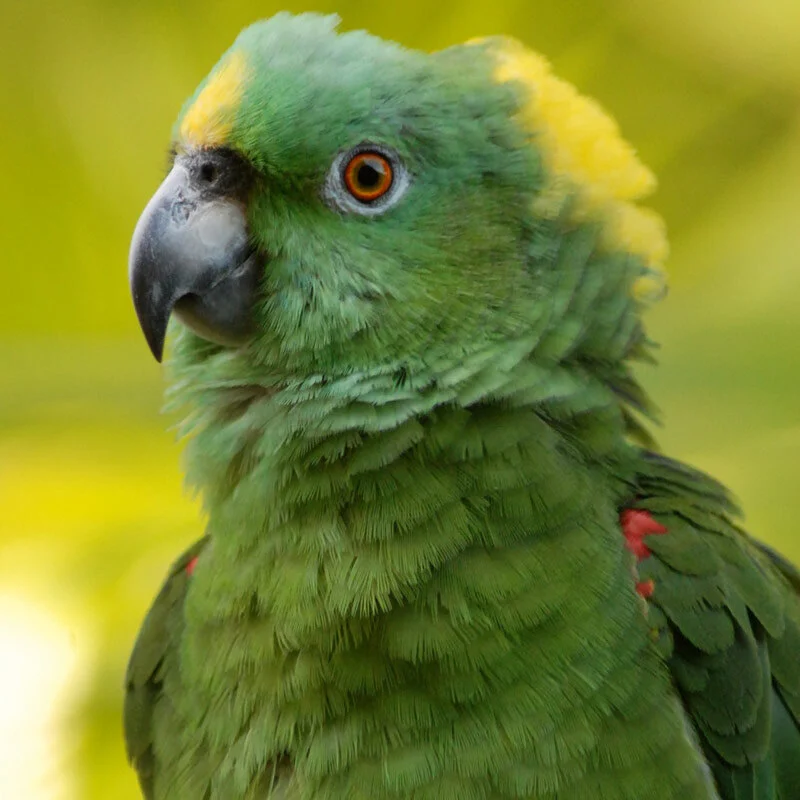
A groundbreaking study published on February 12, 2026, in the Journal of Avian Biology, has unveiled the intricate vocal communication systems of yellow-naped Amazon parrots, suggesting a level of linguistic sophistication previously unappreciated in non-human animals. Researchers from the University of Pittsburgh, led by Dr. Christine R. Dahlin, have meticulously analyzed the duets of mated pairs, revealing a structured and rule-governed repertoire of 36 distinct call types. This discovery significantly bolsters the growing body of evidence indicating that parrots, particularly species with complex social behaviors, may possess communication systems that function in ways analogous to human language.
The research highlights that these avian duets are not merely random sounds but are carefully orchestrated sequences, exhibiting patterns that suggest a learned and shared understanding within these parrot pairs. This complexity extends to the differentiation of calls, with a striking sex bias observed in many vocalizations. Between 75% and 99% of identified calls are primarily used by either males or females, and in some instances, calls are entirely sex-specific, produced exclusively by one sex. This nuanced vocalization strategy hints at sophisticated social signaling and information exchange within these highly social birds.
Unraveling the Complexity of Parrot Communication
Yellow-naped Amazon parrots (Amazona auropalliata) have long been admired for their remarkable ability to mimic human speech, a trait that has captivated scientists and the public alike. However, this new research shifts the focus from their imitative prowess to their intrinsic vocal communication. Dr. Dahlin and her team meticulously documented and analyzed the vocalizations of these parrots in their natural habitat, employing advanced audio recording and spectrographic analysis techniques.
The study identified two primary categories of calls: "primary calls" and "warble calls." Primary calls are the more frequently observed vocalizations, forming the foundational elements of their communication. The warble call, on the other hand, appears to serve a distinct purpose, potentially acting as an alert or warning signal between mated pairs. These warble calls are characterized by their faster tempo and a wider array of tonal variations compared to primary calls. The identification of 36 distinct call types within these duets, with an additional 11 calls noted only once, underscores the depth and diversity of their vocal repertoire. The sheer number of identifiable units and their patterned arrangement strongly suggest a sophisticated system for conveying information.
A Foundation for Understanding Avian "Language"
The implications of this research extend far beyond understanding parrot behavior. It challenges conventional notions about the exclusivity of complex language to humans. The structured nature of these parrot duets, with their discernible patterns and "rules," mirrors aspects of human syntax and grammar. This suggests that the evolutionary pressures driving the development of complex communication may have produced convergent solutions in vastly different species.
Dr. Dahlin’s work is a significant contribution to the field of animal communication, building upon decades of research into avian vocal learning. Previous studies have already established that many parrot species, including the yellow-naped Amazon, exhibit regional dialects, further supporting the idea of learned and culturally transmitted vocal behaviors. This new research provides a deeper insight into the functional organization of these dialects, particularly within the context of social bonding and pair coordination.
Conservation Imperatives and Future Research
Beyond the scientific intrigue, the study carries a critical message for conservation. Yellow-naped Amazon parrots are currently listed as critically endangered by the International Union for Conservation of Nature (IUCN). Habitat loss, fragmentation, and illegal pet trade have severely depleted their wild populations. Understanding their complex communication systems is not only vital for appreciating their biological significance but also for developing effective conservation strategies.
As Dr. Dahlin and her colleagues aptly stated, "If we hope to eventually break the code of their vocal communication system, it will likely take a sustained mix of conservation efforts, field observations, and playback experimentation." This sentiment underscores the interconnectedness of scientific research and conservation action. The pressures faced by these parrots in the wild are likely shaping their communication in ways that cannot be fully replicated or understood in captive environments. Therefore, preserving their natural habitats and studying them in situ are paramount.
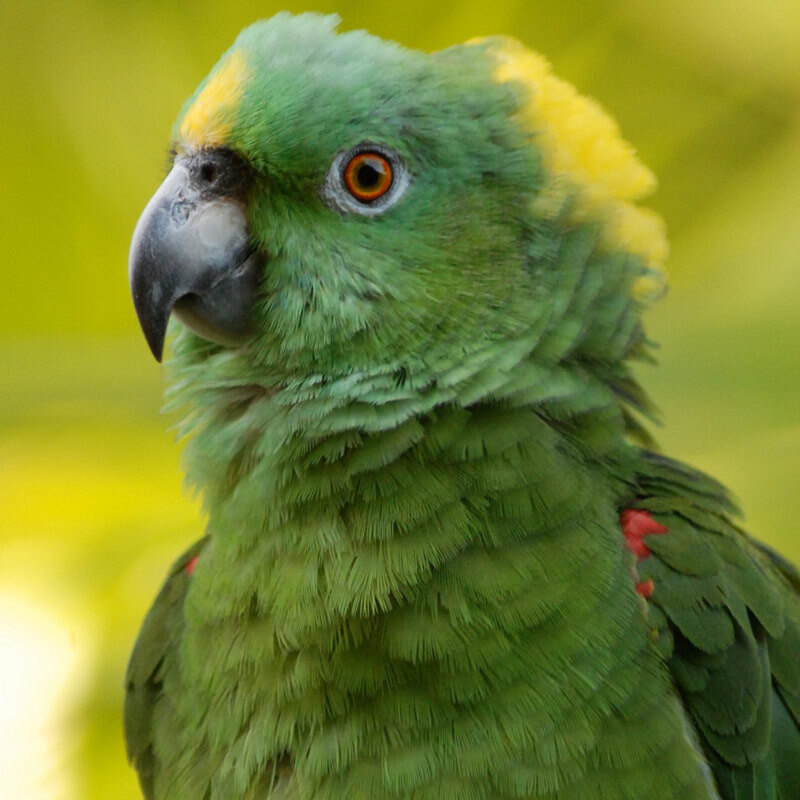
The researchers emphasize that their work highlights the importance of investigating vocal complexity and syntactic organization in wild animal populations. Natural pressures can drive the evolution of communication systems in unique and often unpredictable ways. Replicating these conditions in captivity, while valuable for certain aspects of study, may not fully capture the nuances and functional significance of these evolved vocalizations.
Chronology of Discovery and Publication
The research leading to the February 12, 2026, publication represents a culmination of years of dedicated fieldwork and analysis. While the exact timeline of data collection is not detailed in the initial report, such studies typically involve extensive periods of observation, recording, and data processing. The process would have likely begun with identifying suitable study populations of yellow-naped Amazon parrots, followed by the deployment of audio recording equipment to capture natural duets over extended periods.
Subsequent stages would have involved the meticulous transcription and spectrographic analysis of these recordings. This process requires specialized software and expertise to identify individual call types, their acoustic properties, and their sequential arrangement. Statistical analysis would then be employed to determine patterns, frequency of use, and any significant differences, such as sex biases. The peer-review process itself, where the findings are scrutinized by other experts in the field, adds another layer of validation and refinement before publication. The publication date signifies the formal release of these findings to the scientific community and the public.
Supporting Data and Inferred Responses
The study’s core finding of 36 distinct call types within yellow-naped Amazon parrot duets is a significant quantitative leap in understanding their vocal complexity. The observation that 75-99% of calls are sex-biased, with some being entirely sex-specific, provides concrete data supporting the hypothesis of sophisticated social signaling. This level of specificity in vocalization suggests potential roles in mate recognition, territorial defense, alarm calls, or even the coordination of foraging activities, all of which are crucial for survival and reproductive success in a social species.
While direct statements from other researchers or conservation organizations specifically reacting to this February 2026 paper are not immediately available, the scientific community’s general response to such findings is typically one of excitement and a call for further investigation. Experts in avian behavior and bioacoustics would likely view this research as a pivotal step in understanding the evolution of complex communication. Conservation groups focused on Amazon parrots would likely see this as further evidence of the critical need to protect these endangered species and their habitats, highlighting the richness of their natural behaviors that are at risk of being lost.
Broader Implications for Science and Society
The implications of the yellow-naped Amazon parrot study are far-reaching. Firstly, it contributes significantly to the field of comparative linguistics and the study of animal cognition. By demonstrating rule-governed vocalizations in a non-human species, it pushes the boundaries of what we consider "language" and opens new avenues for exploring the cognitive abilities of birds. This research could inspire further investigations into the vocalizations of other highly social and intelligent animals, potentially revealing similar levels of complexity.
Secondly, the findings have direct relevance to conservation efforts. A deeper understanding of how these parrots communicate can inform strategies for habitat management, species reintroduction programs, and anti-poaching initiatives. For instance, if certain calls are critical for pair bonding or raising young, then preserving the acoustic environment where these calls can be effectively transmitted becomes crucial.
Finally, this research serves as a powerful reminder of the incredible biodiversity on our planet and the urgent need to protect it. The "Decoding Parrot Duets" study underscores that even in species we think we know well, there remain profound mysteries waiting to be uncovered. As Dr. Dahlin’s team aptly concludes, the value of research into vocal complexity in wild populations is immense, as natural pressures shape communication in ways that cannot be replicated in captivity. The critical endangerment status of the yellow-naped Amazon parrot adds a poignant urgency to these scientific discoveries, emphasizing that time is of the essence in both understanding and preserving these remarkable creatures and their intricate vocal world.