
The Superorganism Concept: A Foundation for Extreme Cooperation
The concept of a "superorganism" is central to understanding the extraordinary level of integration observed in ant societies. Coined by entomologist William Morton Wheeler in 1911 and later popularized by E.O. Wilson and Bert Hölldobler, this term describes a colony of social insects where individuals function more like the cells of a single body than independent entities. Each ant, whether a queen, worker, or brood, plays a specialized role, contributing to the collective survival and reproduction of the entire group. Much like the cells in a human body, which differentiate into tissues and organs with specific functions, ant colony members exhibit a division of labor that optimizes the efficiency and resilience of the whole. Queens are dedicated to reproduction, akin to germline cells, while the vast majority of workers perform all other vital tasks: foraging, nest construction, defense, and crucially, healthcare. This intricate coordination extends to behaviors that benefit the colony even at a significant cost to individual members, such as the sacrifice of fatally infected brood, highlighting the profound interdependence within these complex systems.
Unveiling the Altruistic Alarm: A Chemical Call to Action
In stark contrast to many social animals, where individuals often conceal signs of illness to avoid ostracization, ant pupae facing an insurmountable infection adopt a drastically different strategy. When confronted with a pathogen that their individual immune system cannot overcome, these developing ants actively produce a specific chemical alarm. This unique blend of non-volatile compounds, deposited on their body surface, serves as an unequivocal warning to their nestmates about the imminent danger they represent to the colony’s health.
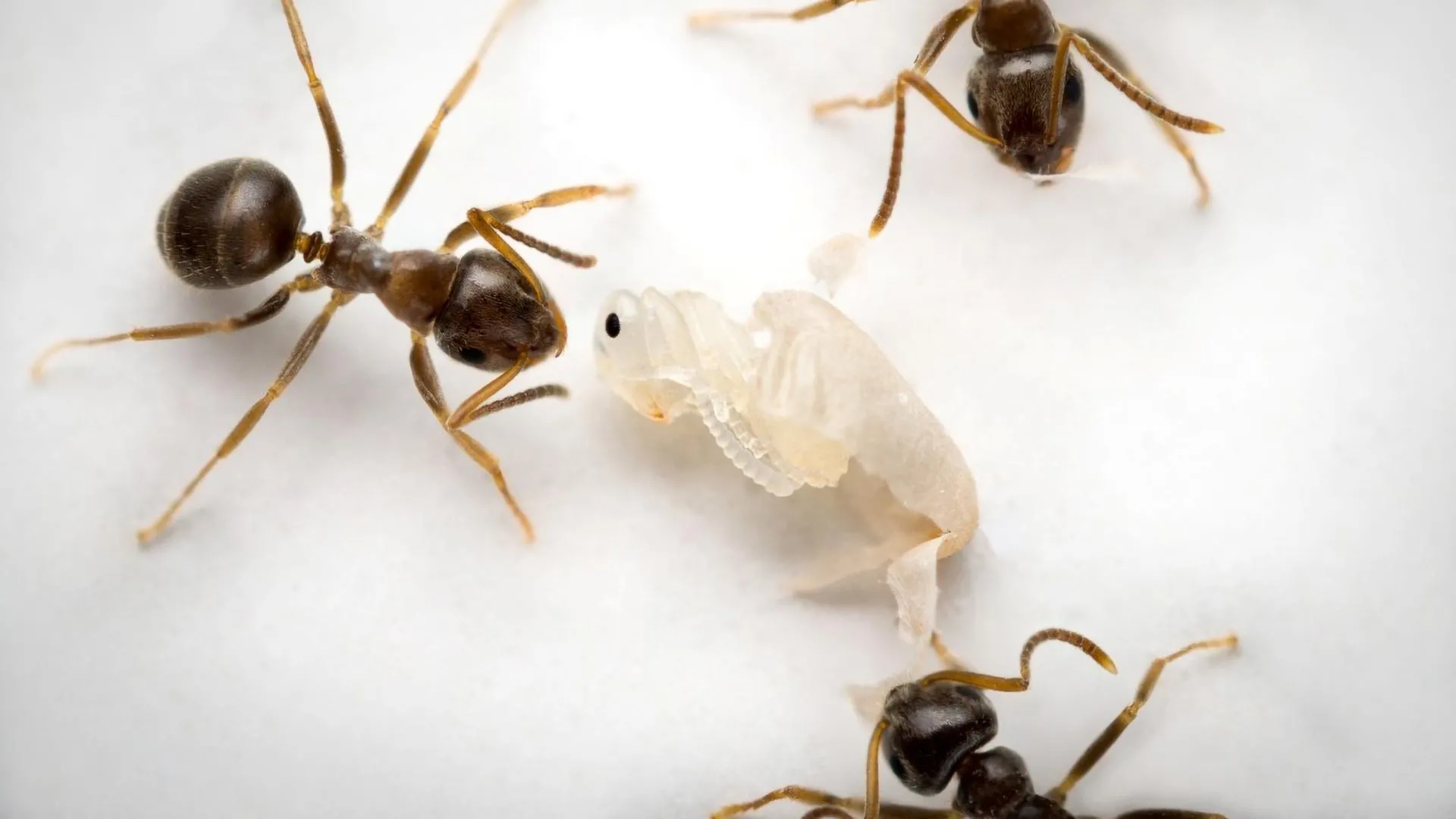
Upon detecting this urgent chemical signal, worker ants initiate a rapid and precise response. They meticulously open the infected pupa’s cocoon, create small, deliberate cuts in its outer surface, and then apply formic acid. This potent antimicrobial compound is naturally produced by the workers themselves and is highly effective at eradicating the pathogens multiplying within the pupa. However, this life-saving intervention for the colony invariably results in the death of the infected pupa. This seemingly brutal act is, in fact, an extraordinary display of altruism and a cornerstone of the colony’s collective immunity.
Dr. Erika Dawson, the first author of the study and a former postdoc in the Social Immunity research group headed by Professor Sylvia Cremer at ISTA, explains the paradox: "What appears to be self-sacrifice at first glance is, in fact, also beneficial to the signaler: it safeguards its nestmates, with whom it shares many genes. By warning the colony of their deadly infection, terminally ill ants help the colony remain healthy and produce daughter colonies, which indirectly pass on the signaler’s genes to the next generation." This explanation aligns perfectly with the principles of kin selection and inclusive fitness, where an individual’s evolutionary success is measured by the propagation of its genes, either directly or indirectly through the survival of genetically related individuals.
This pioneering research, conducted in collaboration with chemical ecologist Professor Thomas Schmitt from the University of Würzburg in Germany, marks the first documented instance of such altruistic disease signaling in social insects. Without such an sophisticated early warning system, a dying ant, particularly a developing pupa, could become a highly infectious reservoir, posing an existential threat to the entire colony. By signaling their dire condition early, the incurably ill make it possible for the colony to neutralize the threat proactively, preventing a localized infection from escalating into a full-blown epidemic.
The Crucial Need for an Early-Warning System: Brood Vulnerability
A pertinent question arising from these findings is why ants have evolved such an intricate and seemingly extreme alarm system when other mechanisms for disease control exist. Professor Cremer elucidates that adult ants, upon sensing their own impending death or exposure to pathogens like fungal spores, often engage in "social distancing" or self-removal, leaving the nest to die outside the colony. This prevents the spread of infection within the enclosed nest environment.
However, this option is unavailable to the ant brood, which are immobile and entirely dependent on worker care. Like infected cells within a multicellular body, they cannot autonomously remove themselves from the system. They require external intervention. This parallels the situation in complex organisms, where infected or cancerous cells must send out chemical cues to recruit immune cells (e.g., macrophages, phagocytes) to engulf and remove them. Immunologists refer to these chemical invitations as "find-me and eat-me signals," and the ant pupae’s distress call operates on a remarkably similar principle.
The efficacy of such a signal hinges on two critical attributes: sensitivity and specificity. "The signal must be both sensitive and specific," Cremer emphasizes. "It should help to identify all terminally-sick ant pupae but be precise enough to avoid triggering the unpacking of healthy pupae or those capable of overcoming the infection with their own immune system." This precision is paramount, as an overly broad or inaccurate signal could lead to the unnecessary culling of healthy brood, a significant cost to the colony’s reproductive potential and future workforce.
Decoding the Chemical Language of Distress
Professor Schmitt, whose expertise lies in the nuanced world of chemical communication in social insects, provided critical insights into how worker ants manage to pinpoint a single sick pupa amidst a multitude of healthy ones. He noted, "This means the scent cannot simply diffuse through the nest chamber but must be directly associated with the diseased pupa. Accordingly, the signal does not consist of volatile compounds but instead is made up of non-volatile compounds on the pupal body surface." These cuticular hydrocarbons and other non-volatile chemicals are the "fingerprints" of insect identity and health, allowing for precise, direct detection rather than a generalized atmospheric warning.
The research meticulously identified that when a pupa becomes fatally infected, two specific components of its natural scent profile become significantly more pronounced. To unequivocally confirm that this alteration in odor alone was the trigger for the disinfection response, the researchers conducted a sophisticated scent transfer experiment. They extracted the unique, altered scent from signaling pupae and carefully applied it to healthy brood.
Professor Cremer recounts the compelling results: "We extracted the smell from the signaling pupae and applied it to healthy brood. The results showed that the scent alone was enough to make workers unpack the treated pupae, demonstrating that the altered odor of terminally infected brood functions in the same way as the ‘find-me and eat-me’ signal seen in infected body cells." This elegant experiment provided robust evidence that the chemical signal is both necessary and sufficient to elicit the workers’ drastic, yet essential, response.
Strategic Signaling: Why Only Certain Pupae Send the Warning
The study also revealed a crucial layer of sophistication in this altruistic signaling system: not all brood emit this alarm signal. Dr. Dawson explains, "Queen pupae, which have stronger immune defenses than worker pupae and can limit the infection on their own, were not observed to emit this warning signal to the colony." Queen pupae, being the future reproductive backbone of the colony, represent an immensely valuable asset. Their enhanced immune capabilities allow them to combat infections more effectively, making a pre-emptive sacrifice unnecessary and potentially counterproductive. Worker pupae, however, lacking this robust individual immunity, consistently signaled for help when terminally ill.
This selective signaling mechanism underscores the finely tuned balance between individual survival and colony welfare. By signaling only when an infection is truly beyond their individual control, brood ensure that the colony’s drastic response is reserved for genuine, unavoidable threats. This prevents the unnecessary loss of individuals who possess the capacity for recovery, thereby conserving the colony’s resources and maximizing its overall fitness. Professor Cremer concludes, "This precise coordination between the individual and colony level is what makes this altruistic disease signaling so effective." It is a testament to the evolutionary pressures that have shaped these complex societies, favoring strategies that ensure the long-term health and reproductive success of the superorganism, even at the cost of its individual components.
Broader Implications and Future Directions
The discovery of altruistic disease signaling in ant superorganisms has profound implications across several scientific disciplines. In evolutionary biology, it provides a compelling, real-world example of kin selection and inclusive fitness in action, demonstrating how genetic relatedness can drive extreme forms of cooperation and self-sacrifice for the greater good of the collective genome. It enriches our understanding of the evolutionary pathways that lead to the emergence of complex social structures and their associated adaptations for survival.
For disease ecology, this research highlights a critical, previously uncharacterized mechanism of "social immunity" – the collective behaviors and physiological adaptations that social groups employ to resist and control pathogen spread. Understanding these sophisticated strategies could offer new insights into preventing and managing disease outbreaks in other social populations, including agricultural settings or even human communities, by inspiring novel approaches to early detection and intervention.
The findings also hold promise for biomimetics and biotechnology. The precise, non-volatile chemical signaling system used by the ants could inspire the development of novel biosensors or diagnostic tools for early detection of diseases in various contexts. Imagine systems that could detect subtle chemical changes indicative of infection in crops, livestock, or even human environments, triggering early interventions before widespread outbreaks occur. While still in its nascent stages, the elegance and effectiveness of the ant system present a compelling model for innovation.
Looking ahead, the research team at ISTA and the University of Würzburg anticipates several avenues for future investigation. Identifying the exact chemical structures of the non-volatile compounds responsible for the distress signal is a key priority, which could lead to a deeper understanding of their biosynthesis and perception. Exploring whether similar altruistic signaling mechanisms exist in other social insect species or even in other forms of colonial life would broaden the comparative context. Furthermore, delving into the developmental and physiological pathways within the pupae that trigger the production of these specific chemical cues, particularly how the pupa "knows" it is terminally ill, promises to unravel further layers of biological complexity.
Ethical Considerations in Animal Studies
It is important to note that all research involving animals, including the ant studies conducted by ISTA and collaborators, adheres to strict ethical guidelines and legal regulations. Such studies are deemed essential for advancing fundamental biological processes in fields like behavioral biology, immunology, and genetics. At present, no alternative methods, including in silico (computer simulation) or in vitro (laboratory dish) approaches, can fully replicate the intricate complexities of living systems and their interactions, making carefully controlled animal studies indispensable for scientific progress. The insights gained from these studies not only deepen our knowledge of the natural world but can also pave the way for applications that benefit both ecological health and human well-being.