
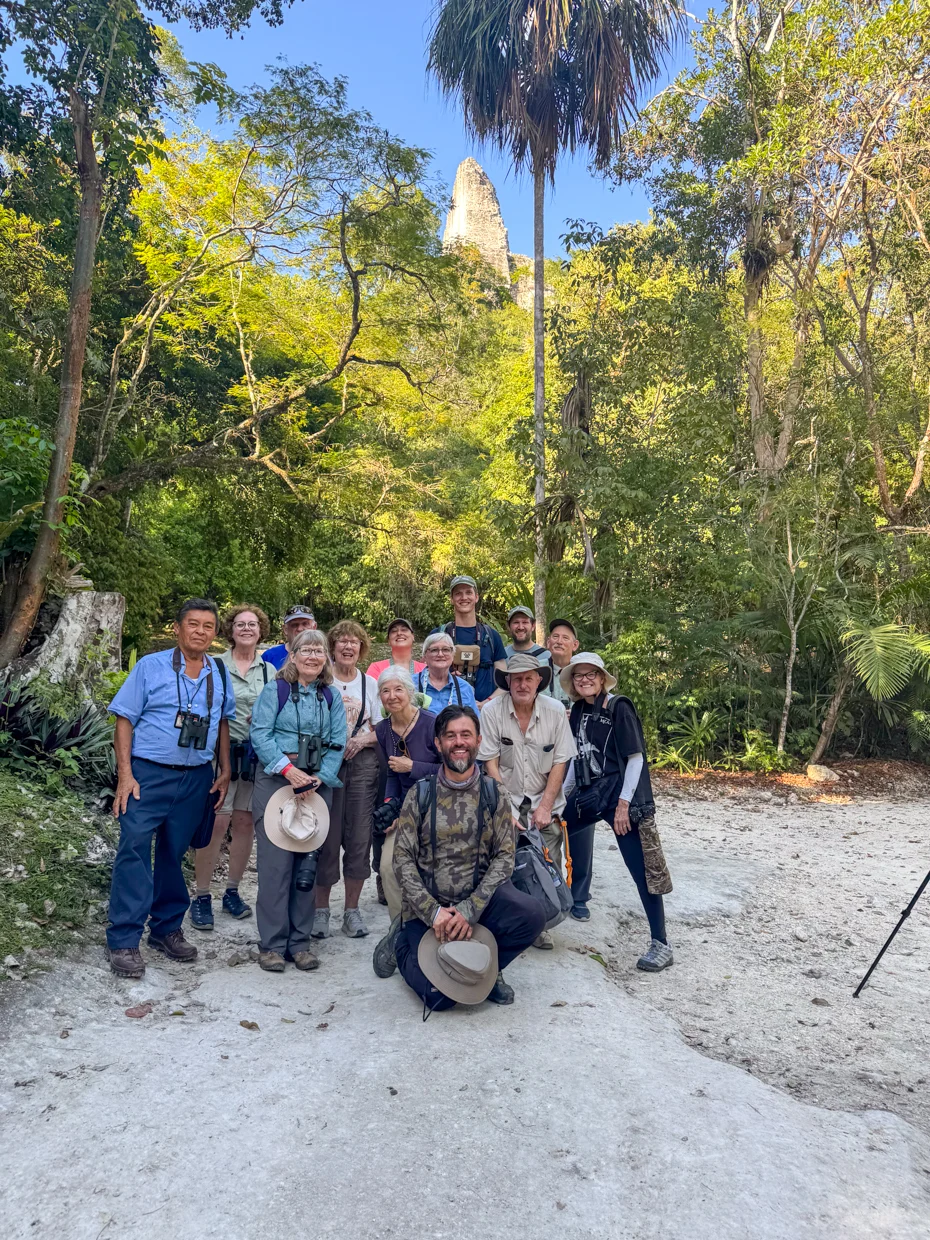
The final Belize and Tikal expedition of the 2026 season, organized by Eagle-Eye Tours, concluded on March 13, marking a significant milestone for regional avian documentation and cross-border eco-tourism. Led by veteran ornithologists Matthew Fuirst and Oscar Zúñiga Meza, a delegation of 14 international birders completed an intensive 11-day survey of the Mesoamerican Biological Corridor. The journey, which spanned from the Caribbean coast of Belize to the dense jungles of the Petén Basin in Guatemala, resulted in the identification of 271 bird species, including several rare and range-restricted endemics that highlight the ecological vitality of the region.
Expedition Framework and Ecological Context
The expedition, running from March 3 to March 13, was designed to sample a transect of diverse habitats, including coastal mangroves, pine savannas, broadleaf tropical forests, and inland wetlands. Belize, a country where over 40% of the land is under some form of legal protection, serves as a critical wintering ground for migratory species from North America and a year-round home for Neotropical residents. By pairing these sites with the UNESCO World Heritage ruins of Tikal in Guatemala, the tour provided a comprehensive look at how ancient human landscapes and modern conservation efforts intersect.

The group’s arrival in Belize City served as the baseline for the trip, providing immediate access to littoral and urban-adapted species. Despite the proximity to human infrastructure, the initial surveys underscored the high density of avian life in Belize, with early sightings of the Ruddy Crake and Cinnamon Hummingbird setting a high bar for the subsequent ten days of field observation.
Chronology of Observations: From the Coast to the Interior
Initial Coastal and Riparian Surveys (March 3–4)
The expedition commenced with a strategic survey of the neighborhoods surrounding Belize City. This urban-fringe birding yielded high-quality views of the Golden-fronted Woodpecker and Morelet’s Seedeater. A brief but productive stop at the Belize Welcome Sign allowed the team to document maritime species, including the Magnificent Frigatebird and Sandwich Tern, before transitioning inland.
The move toward the Monkey Bay Wildlife Sanctuary represented the first major habitat shift. Following recent rainstorms, the group observed a surge in insectivore activity. The "wash-out" effect of the rain brought species like the Red-legged Honeycreeper and the Lesser Swallow-tailed Swift into lower strata, allowing for detailed documentation. The presence of the Rufous-breasted Spinetail and Great Antshrike at Monkey Bay provided evidence of a healthy understory ecosystem within the sanctuary’s secondary growth forests.

The Maya Mountain Foothills and Jade Jungle (March 4–7)
The second phase of the expedition centered on the Jade Jungle Resort, formerly known as Pook’s Hill. Situated on a 300-acre private reserve in the foothills of the Maya Mountains, this location offered a corridor between the mountain highlands and the lowland plains.
Morning surveys at Jade Jungle were characterized by high-volume mixed-species flocks. Observers noted a significant presence of Keel-billed Toucans—the national bird of Belize—alongside Collared Aracaris and White-necked Puffbirds. The resort’s feeder stations provided data on hummingbird competition, with White-necked Jacobins and Long-billed Hermits dominating the nectar sources.
A critical highlight of this segment was the discovery of a roosting Spectacled Owl. Nocturnal surveys further enriched the expedition’s biodiversity data, recording non-avian species such as the Red-rumped Tarantula and the Northern Cat-eyed Snake, alongside the vocalizations of the Common Pauraque.

High-Altitude Rarities in the Mountain Pine Ridge
On a day excursion to the Mountain Pine Ridge Forest Reserve, the team encountered a starkly different ecosystem: a granite-based upland characterized by Caribbean Pine (Pinus caribaea). This habitat is essential for specialized raptors and altitudinal migrants. The group documented King Vultures and Plumbeous Kites, but the standout observation was a male Lovely Cotinga.
The Lovely Cotinga is a turquoise-blue passerine that is notoriously difficult to locate due to its preference for the high canopy. The sighting was so rare that it constituted a "lifer"—a first-ever sighting—for the local professional guides, a fact that underscores the unpredictable and rewarding nature of the 2026 season. The day concluded at the Green Hills Butterfly Ranch, where nine species of hummingbirds, including the Wedge-tailed Sabrewing, were recorded, providing a snapshot of the high pollinator diversity in the Cayo District.
Transboundary Conservation: Tikal National Park (March 7–10)
The expedition crossed into Guatemala on March 7, shifting focus to Tikal National Park. Tikal is one of the few sites in the world recognized by UNESCO for both its cultural and biological significance. The park protects 575 square kilometers of primary rainforest, which has remained largely undisturbed since the abandonment of the Mayan city around 900 AD.

Archaeological Symbiosis and Raptor Monitoring
The birding at Tikal is unique because the ancient Mayan temples act as artificial cliffs in an otherwise flat forest canopy. This was most evident during the group’s observation of the Orange-breasted Falcon at Temple IV. These rare falcons utilize the heights of the temples for nesting and hunting, providing a rare opportunity for ground-level observers to witness high-altitude raptor behavior.
The expedition also utilized the "Army Ant" phenomenon to observe specialized forest birds. When swarms of army ants move across the forest floor, they flush out insects, creating a mobile feast for birds. The Eagle-Eye group documented Gray-throated Chats and multiple species of woodcreepers (Ruddy, Northern Barred, and Ivory-billed) following these swarms. This behavior is a key indicator of a complex, intact food web.
Regional Endemics and Mammalian Biodiversity
Tikal also provided sightings of the Ocellated Turkey, a regional endemic known for its iridescent plumage and "bizarre" eye-spots. Beyond birds, the park served as a sanctuary for Central American Spider Monkeys and Black Howler Monkeys, whose vocalizations provided a constant acoustic backdrop to the avian surveys. The presence of White-nosed Coatis and Gray Foxes further illustrated the park’s role as a refugium for Mesoamerican megafauna.

Wetland Dynamics: Crooked Tree Wildlife Sanctuary (March 10–13)
The final leg of the tour returned to Belize to visit the Crooked Tree Wildlife Sanctuary. This RAMSAR-designated wetland of international importance is a mosaic of lagoons, creeks, and marshes. During the dry season, receding water levels concentrate fish and invertebrate prey, drawing in massive numbers of wading birds.
Boat-Based Surveys and Kingfisher Diversity
Utilizing small watercraft, the group navigated the lagoon channels to observe species that are difficult to reach by land. A significant finding was the presence of four distinct kingfisher species in a single morning: the Ringed, Belted, Green, and the diminutive American Pygmy Kingfisher. This diversity indicates high water quality and a robust small-fish population.
The sanctuary also produced sightings of the Agami Heron—often called the most beautiful heron in the world—and the elusive Sungrebe. The latter is a secretive bird that inhabits overhanging vegetation along riverbanks, and its presence at Crooked Tree is a testament to the site’s habitat preservation.

The Jabiru Stork: A Conservation Success
The expedition reached a crescendo with the sighting of the Jabiru. Standing up to five feet tall with a wingspan of nine feet, the Jabiru is the largest flying bird in Central and South America. Belize hosts the highest nesting density of Jabirus in the region. The group observed an individual foraging in the wetlands and later performed a flyby, a sight that Matthew Fuirst described as an "iconic moment" for the 2026 tour.
Statistical Summary and Scientific Implications
The final tally of 271 species represents a high-performing year for the Belize & Tikal circuit. According to data uploaded to eBird, a global citizen-science database, the 2026 expedition contributed significantly to the seasonal records for several under-reported areas in the Cayo and Petén districts.
Expedition Highlights by the Numbers:

- Total Bird Species: 271
- Raptor Species: 14 (including the rare Orange-breasted Falcon and Black-and-white Hawk-eagle)
- Hummingbird Species: 15+
- Endemics/Regional Specialties: Ocellated Turkey, Yucatan Jay, Yucatan Woodpecker, Gray-throated Chat.
Broader Impact and Conclusion
The success of the Eagle-Eye Tours 2026 expedition reinforces the growing importance of high-end birding tourism as a driver for conservation. By employing local guides like Oscar Zúñiga Meza and Miguel in Tikal, the tour ensures that economic benefits flow directly into the communities responsible for land stewardship.
The observation of rare species like the Lovely Cotinga and the Orange-breasted Falcon provides essential data points for conservationists monitoring the health of the Mesoamerican Biological Corridor. As climate change and habitat fragmentation continue to pressure Neotropical migrants, documented expeditions like this one serve as both a biological census and a call to action for the preservation of these critical habitats. The 11-day journey concluded not just with a list of sightings, but with a deeper understanding of the fragile link between the ancient Mayan past and the ecological future of Central America.