
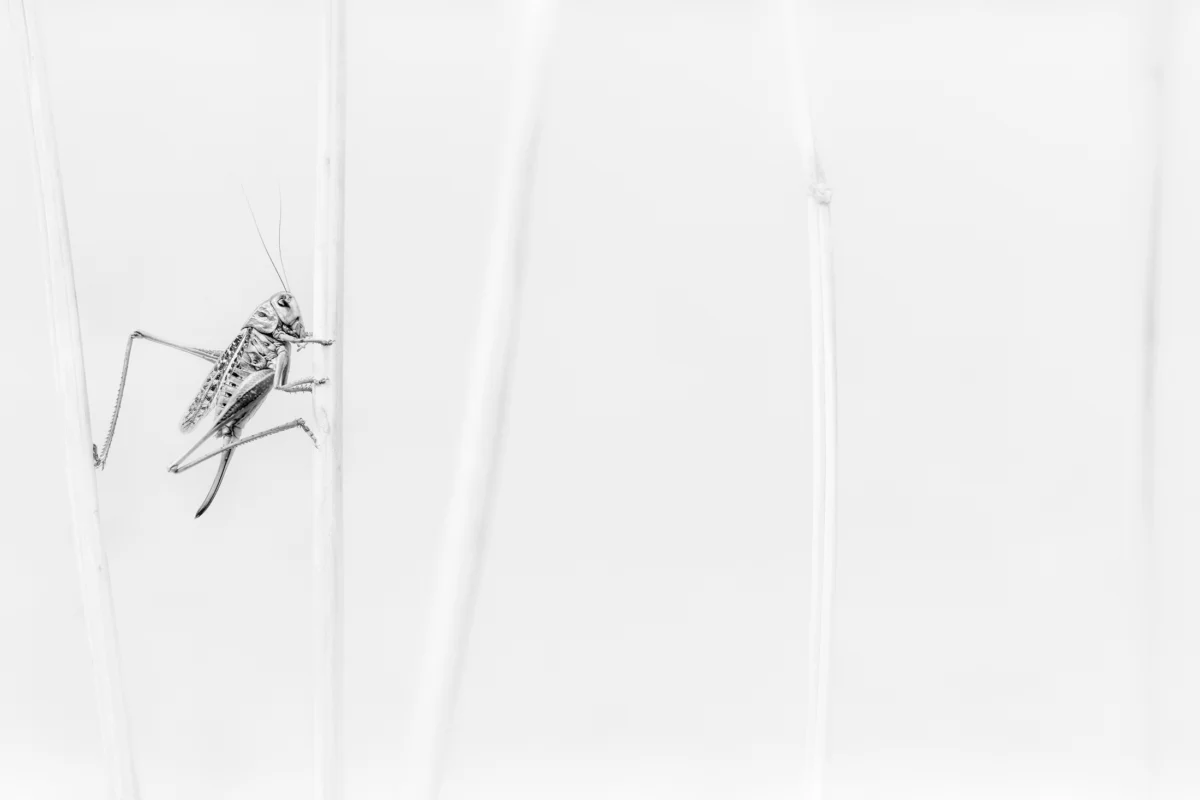
The intricate and often overlooked world of arthropods takes center stage in the captivating work of photographer Elisa Confortini, who has carved a unique niche in nature photography by combining the detailed focus of macro imagery with the profound emotional depth of black and white. Confortini’s journey began with a burgeoning passion for nature photography, which swiftly gravitated towards macro techniques, particularly for arthropods. These miniature creatures, ubiquitous even in proximity to urban environments, proved to be endlessly fascinating subjects, offering both observational insights and profound photographic opportunities. Through her lens, Confortini aims not merely to document, but to interpret, conveying the essence, characteristics, and subtle habits of these creatures in a manner designed to deeply captivate the viewer, often through the timeless medium of monochrome.
The Ubiquitous and Underestimated World of Arthropods

Arthropods, a phylum that includes insects, arachnids, myriapods, and crustaceans, represent over 80% of all known animal species on Earth, making them the most diverse group in the animal kingdom. Their presence is interwoven into virtually every ecosystem, playing critical roles as pollinators, decomposers, predators, and prey. Despite their ecological significance and sheer numbers, they often exist at the periphery of human perception, frequently overlooked or, at times, met with disdain. Confortini’s initial attraction to arthropods as photographic subjects stemmed from their accessibility and the sheer complexity revealed upon close inspection. "They were the easiest subjects to find, even close to home," she notes, highlighting the rich biodiversity that thrives unnoticed in our immediate surroundings. This accessibility fosters consistent engagement, allowing for sustained observation, which in turn facilitates the capture of behaviors that typically escape the casual observer.
The relationship between humans and insects is indeed ancient and multifaceted, spanning sentiments of love, hate, veneration, and fear across cultures and historical epochs. From the sacred scarabs of ancient Egypt to the symbolic butterflies in various mythologies, insects have consistently inspired artists, poets, and thinkers globally. Their astonishing diversity in form, color, and behavior continues to serve as an inexhaustible source of wonder, prompting a deeper reflection on our place within the natural world. Confortini’s work taps into this inherent human fascination, transforming the often-unseen into compelling visual narratives.
The Enduring Allure of Monochrome in a Technicolor World

In an era saturated with vibrant digital imagery, where technological advancements enable effortless manipulation of color, black and white photography stands as a testament to the enduring power of classic aesthetics. For many photographers, including Confortini, working in monochrome today is a deliberate aesthetic and stylistic choice, a conscious decision to express and convey emotion beyond the immediate impact of color. The visual landscape is dominated by bright hues, often artificially enhanced, yet black and white continues to thrive, offering a distinct path for artistic expression.
There are several compelling reasons for a photographer to opt for monochrome, particularly when delving into the intricate world of macro subjects:
- Undivided Focus on the Subject: Color, while beautiful, can sometimes act as a distraction, drawing the viewer’s eye away from the primary subject. By removing color, the photographer ensures that the viewer’s attention is anchored solely on the intricate details, form, and character of the arthropod.
- Highlighting Texture, Contrast, and Form: The absence of color inherently emphasizes the tactile qualities of subjects. In macro photography, this allows the viewer to appreciate the delicate hairs, segmented bodies, and complex exoskeletons of arthropods with heightened clarity. Contrasts between light and shadow become more pronounced, defining shapes and lending a sculptural quality to the image.
- Evoking Drama and Mystery: The tonal nuances inherent in black and white—from deep blacks to luminous whites and a spectrum of grays—are exceptionally potent in conjuring feelings of drama, mystery, and timelessness. This dramatic potential can imbue a tiny insect with monumental presence.
- Emphasis on Core Photographic Elements: Monochrome photography demands a greater focus on fundamental elements such as composition, light, shadow, and contrast. Without the immediate appeal of color, the photographer is compelled to master these foundational aspects, which are crucial for creating any truly effective image, regardless of its palette.
- Revealing the True Essence: Black and white photography challenges both the photographer and the viewer to look beyond superficial chromatic appeal and to discover the underlying structure, emotion, and narrative within an image. It strips away the decorative to reveal the essential.
- Enhanced Post-Processing Control: Digital tools offer unparalleled control over tonal nuances in black and white conversion. This allows for precise manipulation of light and shadow, enabling artistic possibilities that would be difficult or impossible to achieve with color images, creating a finely tuned visual experience.
Monochrome, therefore, is not merely a filter; it is an entirely different mode of artistic operation, fostering a unique creative dialogue between the photographer, the subject, and the viewer.

Approaches to Seeing in Shades of Gray
For photographers embarking on the monochrome path, there are typically two main approaches. The first involves continuing to photograph as usual but maintaining an acute awareness of scenes that might translate particularly well into black and white. This opportunistic method allows for flexibility and the discovery of unexpected monochromatic potential.
The second, more immersive approach, is to commit to working exclusively in black and white. For this, setting the camera’s display to monochrome can be an invaluable training tool. This forces the photographer to "see" and "think" in terms of tones, contrasts, and light patterns rather than colors. This rigorous discipline helps to develop a new visual sensitivity, refining one’s ability to conceptualize and create impactful monochrome images directly in the field.

However, perceiving the world solely in shades of gray is a significant challenge, especially when surrounded by the vibrant greens of grasses, the kaleidoscopic hues of flowers, and the often-brilliant colors of insects. For a photographer, understanding how specific colors translate into corresponding gray tones is crucial. This cognitive shift, convincing the brain to interpret a red flower as a certain shade of gray, requires practice and patience. Experimenting by photographing brightly colored subjects and then converting them helps to demystify this transformation, revealing how subjects are re-contextualized in monochrome.
Confortini, personally, favors converting images to black and white during post-processing. This allows her to retain the original color information, providing maximum flexibility and precise control over tonal nuances and intricate details. As monochrome is not her exclusive mode of expression, this approach enables her to calmly evaluate each image, deciding whether its narrative is best served by color or by the evocative power of black and white. While some images instantly resonate as monochromatic visions, others require careful experimentation and refinement in post-processing before their full black and white potential is realized.
Revisiting Archives and Strategic Monochrome Application

An insightful exercise for any photographer exploring monochrome is to revisit older images in their archive. Converting these past works to black and white can offer fresh perspectives, revealing previously unnoticed strengths or emotions, and often sparking new ideas for future projects. This process encourages a critical eye, as not every image is inherently suited for monochrome conversion.
Confortini maintains a clear principle: if color contributes significantly to the story or emotion she intends to convey, she preserves it. However, when the atmosphere, graphic qualities, or the interplay of light and shadow are paramount, monochrome can profoundly enhance the final result. This discerning approach ensures that the choice of black and white is always a purposeful artistic decision, not merely a default setting.
When Monochrome Elevates Macro Photography

The application of black and white in macro photography proves particularly advantageous in several specific scenarios:
- Focusing on the Subject and Reducing Distractions: The natural environments of arthropods are often visually chaotic, filled with competing elements. By eliminating color, monochrome effectively isolates the subject, emphasizing its form and presence without the visual noise of a busy background. This chromatic reduction allows the intricate details of the arthropod to stand out dramatically.
- Working with Harsh Light and Shadow: Strong, directional light, which can be problematic in color photography, becomes an asset in black and white. Monochrome accentuates dramatic shadows and bright highlights, allowing for a more effective utilization of negative space and the creation of high-contrast, impactful compositions.
- Managing High-ISO Images: Images captured at high ISO settings often exhibit significant chromatic noise, which can be detrimental to color fidelity. In black and white, this noise can often be transformed into an atmospheric grain, adding character and mood rather than detracting from the image’s quality. This turns a technical limitation into a creative opportunity.
- Correcting Unwanted Color Casts: Environmental factors, such as the color of water in ponds or reflections from surrounding foliage, can introduce undesirable color casts that are difficult to correct satisfactorily in color photography. Monochrome bypasses this issue entirely, allowing the photographer to focus on the subject’s form and texture without the distraction of unnatural hues.
- Enhancing Experimental Techniques: When employing techniques like double exposures or intentional camera movement (ICM), where colors might appear unnatural or jarring, black and white can unify the abstract elements. It allows the viewer to focus on the fluidity of motion or the layering of forms without being distracted by potentially chaotic color combinations.
It might seem that monochrome serves as a remedial tool for technically imperfect images, but Confortini’s experience suggests the opposite. She converts only a select few images—those that already possess inherent strength, graphic clarity, or a potent expressive potential that transcends the need for color. Monochrome, in these instances, acts as an amplifier, revealing depths that color might obscure.
Minimalism and Abstraction in the Microcosm

In macro photography, black and white is a powerful conduit for exploring minimalism. By stripping away chromatic complexity, the photographer can reduce clutter and distraction, allowing for simple yet profoundly compelling compositions. The enhancement of an arthropod’s silhouette, for example, becomes an intuitive and impactful use of black and white, transforming the subject into an iconic graphic element.
Beyond silhouettes, exploring shapes is central to creating engaging monochrome compositions. Geometric forms within the arthropod’s structure or its environment can offer order and stability, while irregular shapes introduce dynamism and unpredictability. Without the interference of color, the subtle differences in light and shadow become more pronounced, allowing for a clear articulation of contrast and form. Composition, in Confortini’s view, is often the key to unlocking creativity. Even in macro photography, the subject does not always need to fill the frame; negative space becomes a crucial compositional element. In close-up work, abstraction—focusing on patterns, textures, or isolated features—can become an exceptionally powerful tool, inviting viewers to engage with the subject on a more conceptual level.
Limited depth of field, a hallmark of macro photography, can be utilized even more creatively in black and white. By rendering only a single, sharp element in focus, everything else dissolves into an elegant blur, effectively guiding the viewer’s eye and offering unexpected, dreamlike perspectives. Similarly, photographic grain, whether naturally occurring from high ISO or intentionally added in post-processing, can evoke strong emotional responses. In black and white macro, grain can significantly enhance atmosphere, particularly when the environment and mood take precedence over absolute detail. Confortini prefers to keep her original captures as clean as possible, carefully adding and experimenting with grain intensity during editing to achieve the desired effect.

Monochrome: A Personal Creative Evolution
While black and white photography is often recommended as a learning tool for beginners to grasp fundamental photographic principles, Confortini posits that in macro photography, the conscious choice for monochrome often comes later in a photographer’s journey, once a distinct personal visual language has already begun to develop. For her, it became a profound path worth exploring more deeply, revealing situations where color, rather than enhancing, actually limits creative interpretation, distracting from the very atmosphere, emotion, and sensations experienced during the act of photographing.
The decision to portray a world of vibrant insects in black and white is a deliberate artistic statement. While photographers can create stunning, colorful, and highly detailed close-ups of insects, Confortini chooses to express their beauty by evoking their environment, behavior, or character in a more interpretive, emotionally resonant way. This personal creative choice ultimately reveals a small yet immense universe: rich, unfamiliar, fascinating, and at times, unsettling, but always seen from a uniquely evocative perspective. Through her monochrome macro work, Elisa Confortini invites viewers to transcend the ordinary, to pause and ponder the intricate wonders of the miniature world, and to appreciate the profound artistic potential that lies in the interplay of light, shadow, and form. Her work serves as a powerful reminder of the artistic diversity within nature photography and its ability to foster a deeper connection to biodiversity.