
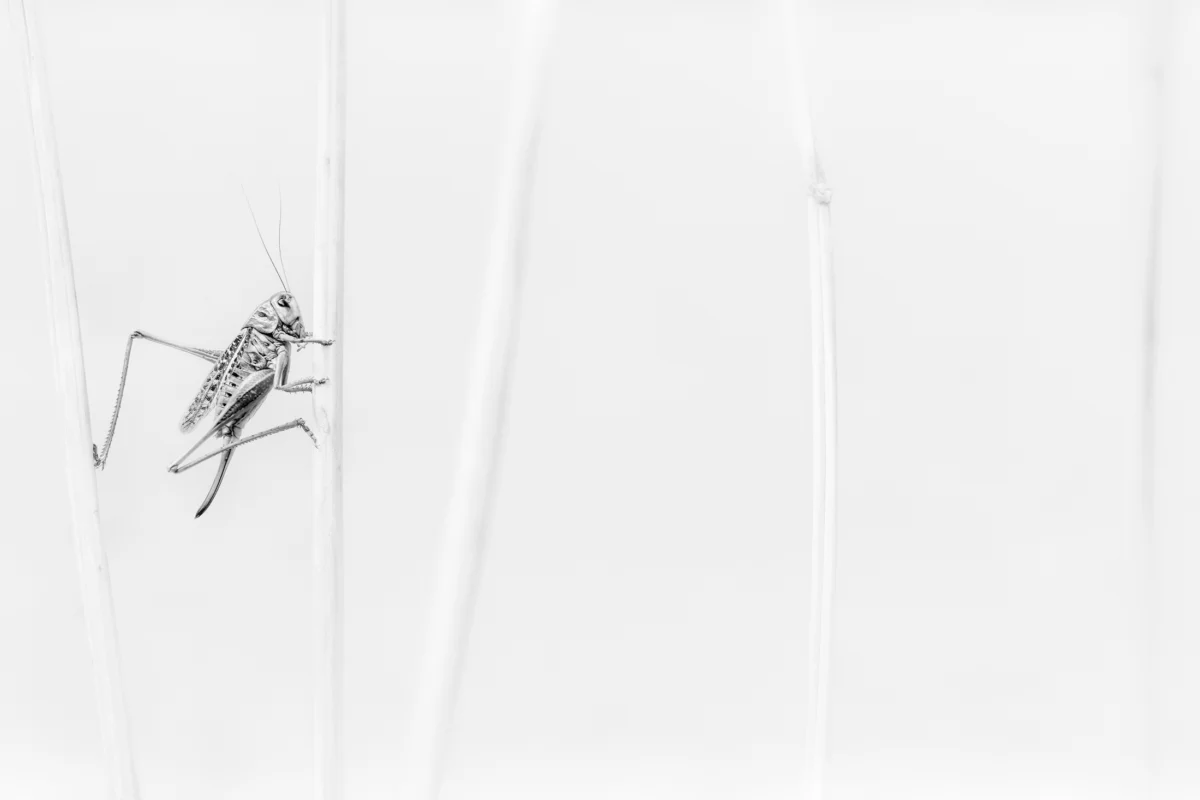
In an era saturated with vibrant digital imagery, Italian photographer Elisa Confortini distinguishes herself by delving into the intricate world of arthropods, employing the profound expressive power of black and white macro photography. Her work transcends mere documentation, offering viewers a unique, often minimalist, perspective on creatures frequently overlooked or misunderstood. Confortini’s journey into nature photography began with a deep fascination for the miniature, specifically focusing on arthropods—a ubiquitous yet endlessly complex group of organisms that populate even the most immediate surroundings.
The Art of the Unseen: A Macro Lens on Arthropods

Elisa Confortini’s passion for nature photography ignited through the lens of macro, a specialized technique that reveals the astonishing details of small subjects. For Confortini, arthropods — insects, arachnids, and myriapods — became her primary muse. "They were the easiest subjects to find, even close to home," she notes, highlighting their accessibility, which is often a significant barrier for aspiring nature photographers seeking exotic wildlife. This proximity allowed for extensive, long-term observation, a critical element in her photographic process. By repeatedly visiting the same subjects and locations, Confortini captures behaviors that typically elude casual observers, transforming fleeting moments into compelling visual narratives. Her goal is not just to photograph but to "portray them in different ways, aiming to convey their characteristics and habits in a manner that captivates the viewer." This dedication to revealing the character and complexity of these tiny beings sets her work apart.
Arthropods, comprising over 80% of all known animal species, play indispensable roles in ecosystems worldwide, from pollination and decomposition to serving as food sources for larger animals. Their incredible diversity in form, function, and habitat makes them ideal subjects for macro photography, offering an inexhaustible wellspring of visual discovery. For photographers like Confortini, the ability to observe these creatures up close provides not only artistic inspiration but also an instructive lesson in natural history, fostering a deeper appreciation for biodiversity right in our backyards.
Arthropods in Human Imagination: A Historical Perspective

Throughout human history, insects and other arthropods have occupied a curious, often contradictory, space in our collective consciousness. They are simultaneously "admired or despised," evoking "a long and complex relationship of love, hate, veneration, and fear." From the sacred scarab beetles of ancient Egypt, symbolizing rebirth and the sun god Ra, to the locust plagues detailed in biblical texts, these creatures have shaped human cultures, mythologies, and fears across millennia. In various indigenous cultures, insects are revered as powerful totems or spirits, embodying qualities like perseverance (ants), transformation (butterflies), or cunning (spiders). Conversely, they are often associated with disease, destruction, or the unsettling unknown, leading to widespread entomophobia.
This profound and varied relationship continues to inspire artists globally. Contemporary art, literature, and film frequently feature insects as metaphors for environmental fragility, societal structures, or the uncanny beauty of the natural world. Confortini’s work taps into this rich cultural vein, presenting arthropods not merely as biological specimens but as subjects capable of eliciting a spectrum of human emotions. Her artistic representation, therefore, becomes a mirror reflecting our evolving relationship with the natural world – a world that, despite rapid urbanization and technological advancement, "remains an inexhaustible source of wonder." In an age of escalating biodiversity loss, such artistic endeavors serve as crucial reminders of the intricate beauty and ecological importance of these often-maligned creatures.
Beyond Color: The Enduring Power of Monochrome Photography

The modern photographic landscape is dominated by an explosion of color, often enhanced or even artificially engineered through advanced digital technology. Yet, within this vivid spectrum, black and white photography persists as a "powerful and timeless medium that continues to thrive." Its enduring appeal lies in its ability to strip away the superficial, compelling both photographer and viewer to engage with an image on a more fundamental level. Historically, monochrome photography was the only option, but with the advent of color film in the mid-20th century, black and white transitioned from a technical necessity to a deliberate artistic choice.
Today, opting for black and white is a conscious "aesthetic and stylistic choice, a way to express and convey emotion." It forces a different way of seeing, one that prioritizes form, texture, light, and shadow over chromatic information. This shift can transform the ordinary into the extraordinary, endowing images with a gravitas and emotional depth that color sometimes dilutes. Iconic photographers from Ansel Adams to Henri Cartier-Bresson demonstrated the unparalleled expressive potential of monochrome, proving that the absence of color can, paradoxically, reveal more.
Elisa Confortini’s Monochrome Manifesto: Why Black and White?

Confortini articulates several compelling reasons for her embrace of monochrome, particularly in the context of macro photography:
- Undivided Focus: "Color can attract attention and distract from the main focus: the subject." In macro, where intricate details are paramount, color can sometimes overwhelm, drawing the eye away from the essential form or texture of the arthropod. Black and white ensures the viewer’s gaze is directed precisely where the artist intends.
- Highlighting Intrinsic Qualities: "The absence of color highlights textures, contrasts, and shapes, conveying emotions that can be overlooked in color images." The minute hairs on an insect’s leg, the delicate venation of a butterfly’s wing, or the rough exoskeleton of a beetle gain heightened prominence and tactile quality in monochrome, revealing a hidden world of surface and structure.
- Evoking Drama and Mystery: "The tonal nuances of black and white can more easily evoke feelings of drama and mystery." The interplay of light and shadow, rendered in a spectrum of grays, can create a sense of mood, suspense, or solemnity that might be harder to achieve with the literal representation of color.
- Compositional Purity: "Monochrome encourages greater focus on composition, light, shadow, and contrast, all crucial elements in creating an effective image." Without the vibrant hues to lean on, the photographer must rely solely on the strength of their compositional choices, refining their eye for lines, patterns, and negative space.
- Unveiling Essence: "It forces both photographer and viewer to look beyond color and discover the true essence of the image." This stripping away of chromatic information encourages a deeper, more meditative engagement with the subject, prompting reflection on its fundamental form and presence.
- Enhanced Post-Processing Control: "During post-processing, black and white allows greater control over light and shadow, possibilities that would be impossible or less effective in color, especially with digital tools." Digital editing suites offer sophisticated tools for manipulating tones, contrast, and local adjustments in monochrome, enabling precise artistic expression that can dramatically alter the emotional impact of an image.
Ultimately, for Confortini, "Monochrome allows you to work in a different way," opening avenues for creative interpretation that color photography, for all its beauty, sometimes constrains.
Approaching the Monochrome Frame: Techniques and Philosophy

There are two primary approaches to black and white photography, each with its own merits. The first is a flexible method: "photograph as usual, remaining aware of scenes that may also work well in monochrome." This approach allows photographers to capture subjects in their natural color, with the option to convert later if the image demonstrates strong monochromatic potential. This is particularly useful in diverse shooting environments where a definitive decision on color vs. monochrome isn’t made upfront.
The second approach is a more deliberate commitment: "to decide to work exclusively in black and white." In this scenario, setting the camera to monochrome mode can be "extremely helpful in training yourself to see and think in tones and contrasts rather than colors." This immersive technique helps develop a unique visual sensitivity, refining the photographer’s ability to pre-visualize how colors will translate into shades of gray. This training is crucial because, as Confortini notes, "Seeing the world without color—reduced to a continuous scale of grays—is not easy, especially among grasses, flowers, and insects rich in color." Learning "how colors translate into shades of gray" is a skill that takes time and practice, often involving experimentation with brightly colored subjects to observe their monochromatic transformation.
Confortini personally favors the flexibility of post-processing conversion. "This allows for more precise control over tonal nuances and details," she explains. Given that monochrome is not her sole mode of expression, it also provides the freedom to "calmly decide which images benefit from color and which are enhanced by black and white." Some images instantly resonate as monochrome, while others require careful conversion and meticulous adjustments before their full impact is realized. This hybrid approach leverages the best of both worlds, ensuring that the artistic intent drives the final presentation.

Unearthing New Narratives: Reimagining Photographic Archives
An often-overlooked aspect of creative photography is the re-evaluation of past work. Confortini suggests that "it can also be interesting to revisit older images in your archive and convert them to black and white to observe how they change and what emotions they evoke." This process is not merely an exercise in technical conversion but a journey of re-discovery. Photographers often evolve their artistic vision, and applying a new lens, such as monochrome, to archived images can reveal previously unseen strengths, hidden compositions, or untapped emotional resonance. This "can generate new ideas and inspire future photographic work."
However, this critical re-assessment demands discernment. "It is important to be critical, however, as not all images lend themselves to monochrome conversion." The success of a black and white conversion hinges on the inherent graphic qualities of the original image—its light, shadow, texture, and form. If "color contributes meaningfully to the story I want to tell, I never convert to black and white." But when "atmosphere or graphic qualities prevail," monochrome can profoundly "enhance the result," transforming a good image into a powerful one. This selective approach underscores that monochrome is an artistic tool, not a universal solution for every photograph.

Strategic Application: When Monochrome Elevates Macro Subjects
Confortini pinpoints several specific scenarios in macro photography where the monochrome aesthetic proves particularly advantageous:
- Subject Isolation: "When I want to focus exclusively on the subject, reducing distractions. The environment of arthropods is often chaotic, and isolating the subject—even chromatically—helps emphasize it." In the dense foliage where many arthropods reside, color can create visual clutter. Removing color simplifies the scene, allowing the viewer’s eye to lock onto the intricate details of the insect or spider.
- Mastering Harsh Light: "When working with harsh light and shadow, monochrome accentuates shadows and allows more effective use of negative space." Strong midday sun, often avoided in color photography, can be leveraged in black and white to create dramatic contrasts, stark silhouettes, and compelling graphic shapes. Negative space, the empty areas around the subject, becomes a powerful compositional element, enhancing the main subject’s presence.
- Transforming Noise into Atmosphere: "With high-ISO images that contain significant chromatic noise, monochrome can turn noise into atmosphere." High ISO settings, necessary in low light, often introduce digital noise that manifests as distracting color speckles. Converting to black and white removes the chromatic aspect of this noise, often rendering it as a pleasing, film-like grain that can add character and mood to an image.
- Correcting Color Casts: "When color casts cannot be corrected to my satisfaction, such as the color of water in certain ponds." Unwanted color tints, whether from artificial lighting, environmental factors, or complex reflections, can be challenging to neutralize in color photography. Monochrome eliminates this problem entirely, allowing the photographer to focus on the underlying tonal structure.
- Enhancing Experimental Techniques: "When using double exposures or intentional camera movement, where color may appear unnatural and distract from composition." Experimental techniques often produce abstract or ethereal results. In these instances, vibrant colors can sometimes clash or appear jarring. Black and white, by simplifying the visual information, can lend a cohesive and artistic quality to such images, allowing the underlying compositional and textural elements to shine.
Confortini is keen to clarify a common misconception: "It might seem that monochrome serves as a way to rescue technically imperfect images, but in my experience, the opposite is true." She emphasizes that her conversions are highly selective, applied only to images that "already possess strength, graphic clarity, or expressive potential beyond color." Monochrome, in her practice, is not a crutch for poor technique but an amplifier for powerful imagery.

Minimalism and Abstraction: Redefining Macro Composition
One of the most profound impacts of monochrome in macro photography, as practiced by Confortini, is its capacity to foster minimalism and abstraction. "In macro photography, monochrome allows me to explore minimalism by reducing clutter, complexity, and distraction, focusing instead on simple compositions." This minimalist approach distills the image to its essential components, creating a sense of clarity and focus that can be incredibly impactful.
- Emphasizing Silhouettes: "Enhancing the silhouette of an arthropod is perhaps the most intuitive use of black and white, but many other possibilities exist." A strong silhouette against a light background or vice-versa can create a powerful, graphic representation of the subject, highlighting its unique form without the distraction of color or intricate detail.
- Exploring Shapes and Forms: "Exploring shapes to create compelling compositions is particularly effective. Geometric forms offer order and structure, while irregular shapes introduce movement and unpredictability." Without color, the eye is drawn to the interplay of positive and negative space, the curves, angles, and textures that define the subject and its environment. "Without color, differences in light and shadow become more pronounced, allowing contrast to emerge clearly."
- Composition as the Core: "Composition is often the key to creativity. Even in macro photography, the subject does not always need to fill the frame. In close-up work, abstraction can become a powerful tool." This challenges the traditional macro emphasis on filling the frame with detail, encouraging photographers to consider broader compositional elements, leading to more artistic and less literal interpretations.
- Creative Depth of Field: "Limited depth of field can also be used creatively. By isolating a single sharp element, everything else dissolves into an elegant blur, guiding the viewer’s eye and offering unexpected perspectives." The selective focus, or bokeh, in black and white macro can create dreamy, painterly effects, turning the background into a soft, ethereal wash of tones that further emphasizes the crispness of the subject.
- The Emotional Resonance of Grain: "Grain, too, can evoke strong emotional responses. In black and white macro photography, it can enhance atmosphere when environment and mood take precedence over detail." While historically a byproduct of film, digital grain can be intentionally added in post-processing to impart a classic, tactile feel or to enhance a moody, atmospheric quality. Confortini prefers to keep her originals clean and "add grain later during editing, experimenting carefully with its intensity," allowing for precise control over its effect.
The Deeper Vision: Art, Science, and Personal Expression

While black and white photography is often recommended as a fundamental learning tool for beginners, Confortini posits that "in macro photography, however, I believe this choice comes later, once a personal visual language has already developed." It is an evolution, a refinement of one’s artistic voice, rather than an initial step. For her, it became "a path worth exploring more deeply" precisely because "in certain situations, color limits creative interpretation, distracting from atmosphere, emotion, and the sensations experienced while photographing."
This perspective underscores the profound difference between merely documenting a subject and interpreting it artistically. "We can create colorful, detailed close-ups of insects," she acknowledges, recognizing the scientific and aesthetic value of such images. However, the alternative is to "choose to express their beauty by evoking environment, behavior, or character in a more interpretive way." This interpretive approach allows the artist to infuse the image with their subjective experience, creating a dialogue between the viewer and the often-overlooked wonders of the natural world.
Ultimately, Confortini’s journey into monochrome macro photography is a deeply "personal creative choice." It is a testament to the power of artistic vision to "reveal a small yet immense universe: rich, unfamiliar, fascinating, and sometimes unsettling, seen from another perspective." Her work serves as a powerful reminder that true artistic expression lies not just in what is seen, but in how it is perceived and presented.

Implications for Nature Photography and Conservation
Elisa Confortini’s innovative use of black and white macro photography carries significant implications for the broader fields of nature photography and conservation. By demonstrating the artistic depth and emotional impact achievable without color, her work encourages photographers to explore new avenues of visual storytelling. This artistic freedom can lead to more diverse and engaging representations of nature, moving beyond purely documentary styles to evoke deeper emotional connections with viewers.
In the context of conservation, Confortini’s images offer a fresh perspective on arthropods, creatures vital to ecosystem health but often perceived with indifference or aversion. By presenting them in a manner that highlights their inherent beauty, intricate forms, and dramatic presence, her photographs can foster greater public awareness and empathy for these small inhabitants of our planet. This subtle shift in perception, facilitated by compelling art, can be a powerful tool in advocating for biodiversity protection, reminding us of the wonder that exists in even the smallest corners of the natural world. Her approach exemplifies how artistic interpretation can amplify the message of ecological importance, making the unseen seen, and the unappreciated, appreciated.