
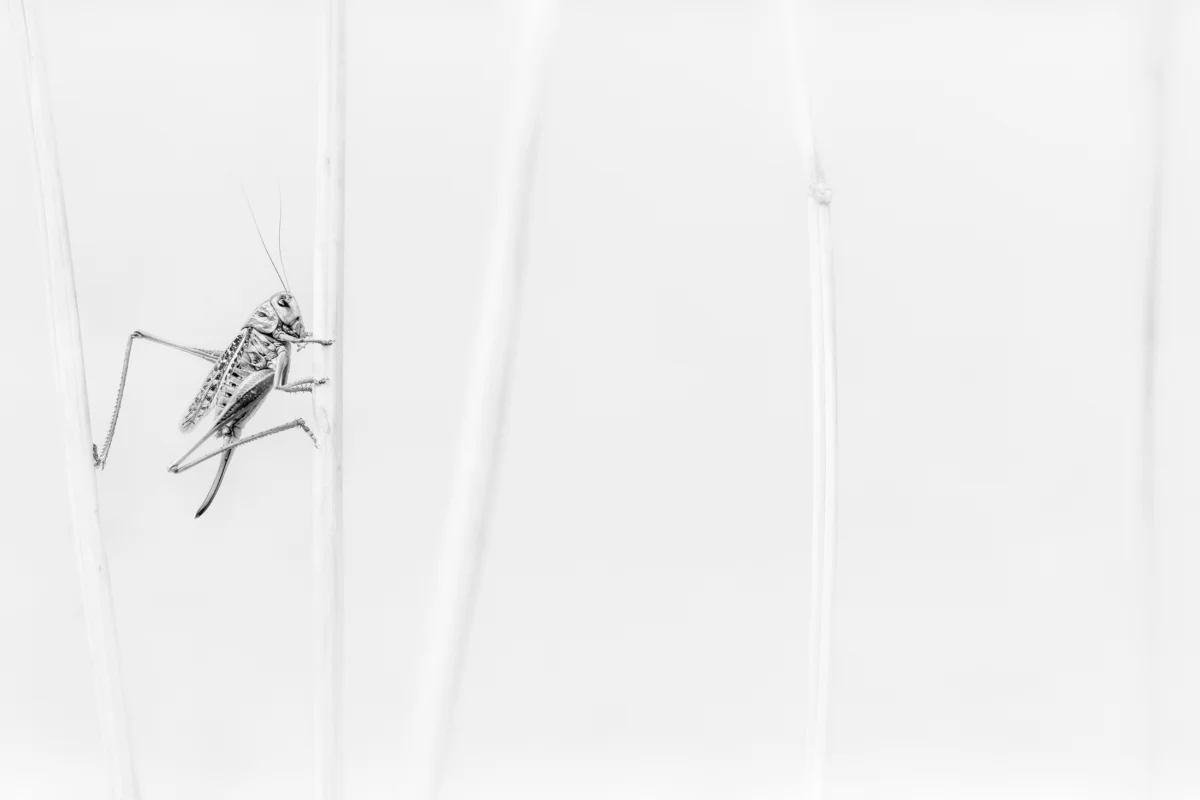
Elisa Confortini, a renowned nature photographer, has cultivated a profound passion for documenting the natural world, particularly through the intricate lens of macro photography focused on arthropods. Her work transcends mere documentation, aiming to reveal the complex behaviors and intrinsic beauty of these often-overlooked creatures, frequently employing the timeless medium of black and white to achieve striking artistic and emotional depth. Confortini’s journey into nature photography began with macro, drawn by the accessibility and endless fascination of arthropods. These subjects, readily found even in her immediate surroundings, offer a microcosm of life that is both instructive and endlessly captivating upon close observation.
The Allure of the Miniature: A Deep Dive into Arthropod Macro Photography

Confortini’s dedication to her craft involves an annual quest to revisit cherished subjects and unearth new ones, a practice that underpins her ability to capture nuanced behaviors that typically escape the casual observer. This long-term engagement allows her to delve into the lives of her subjects, portraying their characteristics and habits in a manner designed to captivate and inform. Arthropods, a vast and diverse phylum, encompass over 80% of all known animal species, including insects, arachnids, and crustaceans. Their ubiquity and ecological significance, from pollination to nutrient cycling, make them ideal subjects for photographers seeking to highlight the intricate web of life, even in urban or suburban environments. Macro photography, by magnifying these small wonders, offers a unique perspective, transforming the mundane into the extraordinary and revealing anatomical marvels and complex interactions invisible to the naked eye. This genre not only serves artistic expression but also contributes valuable insights to entomology and ecology, fostering a deeper appreciation for biodiversity.
Insects in Human Culture: A Timeless Source of Inspiration
The relationship between humanity and insects is a tapestry woven with admiration and aversion, veneration and fear. Throughout history, insects have held significant roles in mythology, art, and folklore across diverse cultures. From the sacred scarab beetles of ancient Egypt symbolizing rebirth and protection to the intricate butterfly motifs in Japanese art representing transformation and beauty, their presence is deeply embedded in the human psyche. Simultaneously, insects like locusts have been harbingers of famine, and venomous spiders evoke primal fears. This duality of perception underscores their profound impact on our daily lives, a relationship Confortini’s photography subtly explores. Their sheer diversity and intricate forms continue to inspire artists globally, reflecting our evolving connection with the natural world – an inexhaustible wellspring of wonder and artistic inspiration. In an era increasingly disconnected from nature, art forms like Confortini’s macro photography serve as crucial bridges, inviting viewers to pause and observe the often-unseen complexity thriving just beyond our immediate gaze.

The Enduring Power of Monochrome: A Deliberate Artistic Choice
In a contemporary visual landscape saturated with vibrant, often artificially enhanced colors, black and white photography maintains its status as a potent and timeless medium. Its enduring appeal is not merely nostalgic but rooted in its unique capacity to convey emotion and aesthetic purity. While digital technology has democratized color manipulation, allowing for instant chromatic alterations, the deliberate choice to work in monochrome today is a conscious artistic and stylistic statement. It is a commitment to a different visual language, one that prioritizes form, texture, and light over hue. Historically, black and white photography was a technological necessity, the only option available for capturing images. Pioneers like Ansel Adams elevated it to an art form, demonstrating its potential for dramatic landscapes and profound emotional resonance. In the digital age, its resurgence is driven by artists who recognize its power to strip away distractions, revealing the core essence of a subject and fostering a deeper, more contemplative engagement with the image.
Unveiling Essence: Why Black and White Transforms the View

Confortini articulates several compelling reasons for her selective embrace of monochrome, each highlighting its distinct advantages in conveying artistic intent:
- Undistracted Focus: Color, while appealing, can often distract from the primary subject. By removing chromatic information, black and white directs the viewer’s eye precisely where the artist intends, emphasizing the form and presence of the arthropod.
- Highlighting Textures and Contrasts: The absence of color inherently magnifies textures, tonal contrasts, and intricate shapes. This allows the subtle details of an insect’s exoskeleton, the delicate veins of a wing, or the rough bark it rests upon to emerge with striking clarity, often evoking emotions that might be overlooked in a color rendition.
- Evoking Drama and Mystery: The nuanced tonal scale of black and white, from deep shadows to brilliant highlights, lends itself naturally to creating atmospheric and dramatic effects. This can imbue a simple image with a sense of mystery or gravitas, inviting deeper contemplation.
- Enhancing Composition and Light: Monochrome photography demands a heightened awareness of compositional elements, light, shadow, and contrast. These foundational components, often overshadowed by color in other photographic styles, become paramount in black and white, forcing both photographer and viewer to engage with the structural integrity of the image.
- Discovering True Essence: By compelling one to look beyond superficial color, black and white photography facilitates a discovery of the subject’s true essence. It encourages an appreciation for the intrinsic qualities of light, form, and texture that define an object or scene.
- Post-Processing Control: In the digital darkroom, converting an image to black and white offers unparalleled control over tonal values, highlights, and shadows. Modern software provides sophisticated tools to manipulate the grayscale spectrum, allowing for creative possibilities that are often impossible or less effective with color images, enabling a photographer to sculpt light and form with precision.
Ultimately, monochrome photography fundamentally alters the creative process, offering a distinct path for artistic exploration and expression.
Methodological Approaches: Capturing the World in Grayscale

There are broadly two primary methodologies for approaching black and white photography. The first involves photographing subjects as usual, maintaining an awareness of scenes that might translate effectively into monochrome during post-processing. This flexible approach allows the photographer to capture the full spectrum of information in a color image, reserving the decision for conversion until later. The second, more disciplined approach, entails committing to black and white from the outset. This often involves setting the camera to monochrome mode, which trains the photographer’s eye to perceive and compose in terms of tones, contrasts, and light rather than colors. This practice is instrumental in developing a specialized visual sensitivity, honing the ability to envision and create impactful monochromatic images directly in the field.
Confronting the world without the aid of color, reducing it to a continuous scale of grays, presents a unique challenge, especially when photographing subjects as vibrantly colored as flowers, grasses, and insects. For a photographer, understanding how specific colors translate into varying shades of gray is a critical skill that requires time and practice to master. Experimenting with capturing brightly colored subjects in monochrome is an effective way to observe this transformation and understand the visual impact of such conversion.
Personally, Confortini favors the post-processing conversion method. This preference stems from the greater precision it affords in controlling tonal nuances and minute details. Furthermore, as monochrome is not her exclusive mode of operation, this approach grants her the flexibility to judiciously decide which images are best served by retaining their original colors and which are profoundly enhanced by the transformative power of black and white. Some images, she notes, immediately present themselves as ideal candidates for monochrome, while others necessitate careful conversion and extensive work before their full monochromatic potential is realized.

Reimagining the Archive: New Perspectives from Old Images
An insightful aspect of Confortini’s creative process involves revisiting her extensive archive of older images and converting them to black and white. This retrospective practice offers a fresh perspective, allowing her to observe how these images transform, what new emotions they evoke, and what previously unnoticed elements come to the fore. Such an exercise is not merely an act of re-editing; it is a profound act of reinterpretation, often generating novel ideas and inspiring future photographic endeavors. This approach mirrors practices in other artistic disciplines, where artists re-engage with past works to find new meanings or techniques.
However, a critical eye is paramount in this process, as not every image lends itself effectively to monochrome conversion. Confortini emphasizes that if color plays a meaningful and integral role in the narrative she intends to convey, she will never convert the image to black and white. Conversely, when the atmosphere of a scene or its inherent graphic qualities take precedence over chromatic information, monochrome can significantly elevate the final result, stripping away potential distractions and focusing on the core visual elements.

Strategic Monochrome: When Black and White Elevates the Narrative
Confortini identifies several specific scenarios where the application of monochrome photography proves particularly advantageous in her macro work:
- Subject Isolation: In the often chaotic and visually busy environments inhabited by arthropods, monochrome serves as an invaluable tool for reducing clutter and distractions. By chromatically isolating the subject, its form and presence are profoundly emphasized, allowing it to stand out against a simplified background.
- Harnessing Harsh Light and Shadow: Conditions characterized by strong, harsh light and deep shadows, which can be challenging in color photography, often become opportunities in monochrome. Black and white accentuates these dramatic contrasts, allowing for creative use of negative space and the interplay of light and dark to create powerful compositions.
- Transforming Noise into Atmosphere: High-ISO images, which inevitably contain significant chromatic noise, can often be salvaged and even enhanced through monochrome conversion. The color noise, typically distracting, transforms into a more aesthetically pleasing grain, contributing to the image’s overall atmosphere and evocative quality.
- Correcting Intractable Color Casts: There are instances where undesirable color casts, such as those caused by polluted water in certain ponds or unusual lighting conditions, prove impossible to correct satisfactorily in color. In such cases, converting to black and white offers a pragmatic and often superior solution, removing the distracting tint entirely.
- Enhancing Experimental Techniques: For avant-garde techniques like double exposures or intentional camera movement (ICM), where colors might appear unnatural or distracting due to the technique’s inherent distortions, monochrome can unify the image. It allows the viewer to focus on the abstract forms, textures, and movements rather than being confused by distorted chromatic information.
It might superficially appear that monochrome serves as a remedial tool for technically imperfect images. However, Confortini’s experience suggests the opposite. She asserts that only a select few images are chosen for monochrome conversion—those that already possess inherent strength, graphic clarity, or a potent expressive potential that transcends their original color. This highlights a nuanced understanding: black and white is not a crutch for poor photography but a powerful enhancer for compelling compositions.

Minimalism and Abstraction: The Art of Seeing Small
In the realm of macro photography, monochrome facilitates a profound exploration of minimalism. By stripping away chromatic complexity, it allows the photographer to reduce visual clutter and distractions, focusing instead on simple, impactful compositions. The enhancement of an arthropod’s silhouette against a stark background is perhaps the most intuitive application, creating graphic power with elegant simplicity. However, the possibilities extend far beyond this.
Monochrome encourages a meticulous examination of shapes, both geometric and irregular, to construct compelling compositions. Geometric forms, such as the segmented body of an insect or the structured pattern of a spiderweb, offer order and a sense of stability. Conversely, irregular shapes, like the contours of a leaf or the fluid lines of a moving creature, introduce dynamism and unpredictability. Without the interference of color, the subtle differences in light and shadow become more pronounced, allowing these structural contrasts to emerge with exceptional clarity.

Composition, Confortini underscores, is often the linchpin of creativity. Even in macro photography, the subject does not always need to fill the frame. In close-up work, abstraction emerges as a powerful artistic tool. By isolating specific elements or focusing on intricate patterns, the image can move beyond literal representation into a more interpretive realm.
Furthermore, the judicious use of limited depth of field can be employed creatively in monochrome macro. By isolating a single, sharply focused element, the remainder of the image gracefully dissolves into an elegant blur. This technique effectively guides the viewer’s eye to the intended focal point, offering unexpected perspectives and enhancing the sense of intimacy and discovery inherent in macro work.
The inclusion of grain, too, can evoke strong emotional responses. In black and white macro photography, intentionally introduced grain can significantly enhance atmosphere, particularly when the environment and mood are prioritized over absolute detail. While grain can result from underexposure or high ISO settings, Confortini prefers to maintain the cleanest possible initial image and then carefully add grain during the editing phase, allowing for precise control over its intensity and character. This approach ensures that grain is an artistic choice, not a technical compromise.

Beyond the Technical: A Philosophical Stance
It is frequently suggested that black and white photography serves as an excellent learning tool, particularly for beginners, due to its emphasis on foundational photographic principles. However, in the specialized context of macro photography, Confortini posits that the choice to embrace monochrome often emerges later in a photographer’s journey, once a distinct personal visual language has already been developed. For her, it has evolved into a deeply rewarding path worthy of extensive exploration. She finds that in certain situations, the presence of color can paradoxically limit creative interpretation, inadvertently distracting from the profound atmosphere, raw emotion, and intrinsic sensations experienced during the act of photography.
While the creation of vibrant, meticulously detailed color close-ups of insects undeniably holds its own artistic merit, Confortini champions an alternative approach: expressing the inherent beauty of these creatures by evoking their environment, behavior, or character in a more interpretive, less literal manner. This artistic stance allows for a deeper emotional connection between the image and the viewer, fostering a more profound appreciation for the subject.

Ultimately, Confortini’s adoption of monochrome in macro photography is a deeply personal creative choice. It is a decision that, when executed with skill and intent, has the power to unveil a small yet immense universe: a world of intricate life that is rich, often unfamiliar, perpetually fascinating, and at times, unsettling in its raw authenticity—all seen through an entirely fresh and compelling perspective. Her work not only highlights the artistic versatility of black and white but also serves as a poignant reminder of the hidden wonders that surround us, urging us to look closer and feel more.