
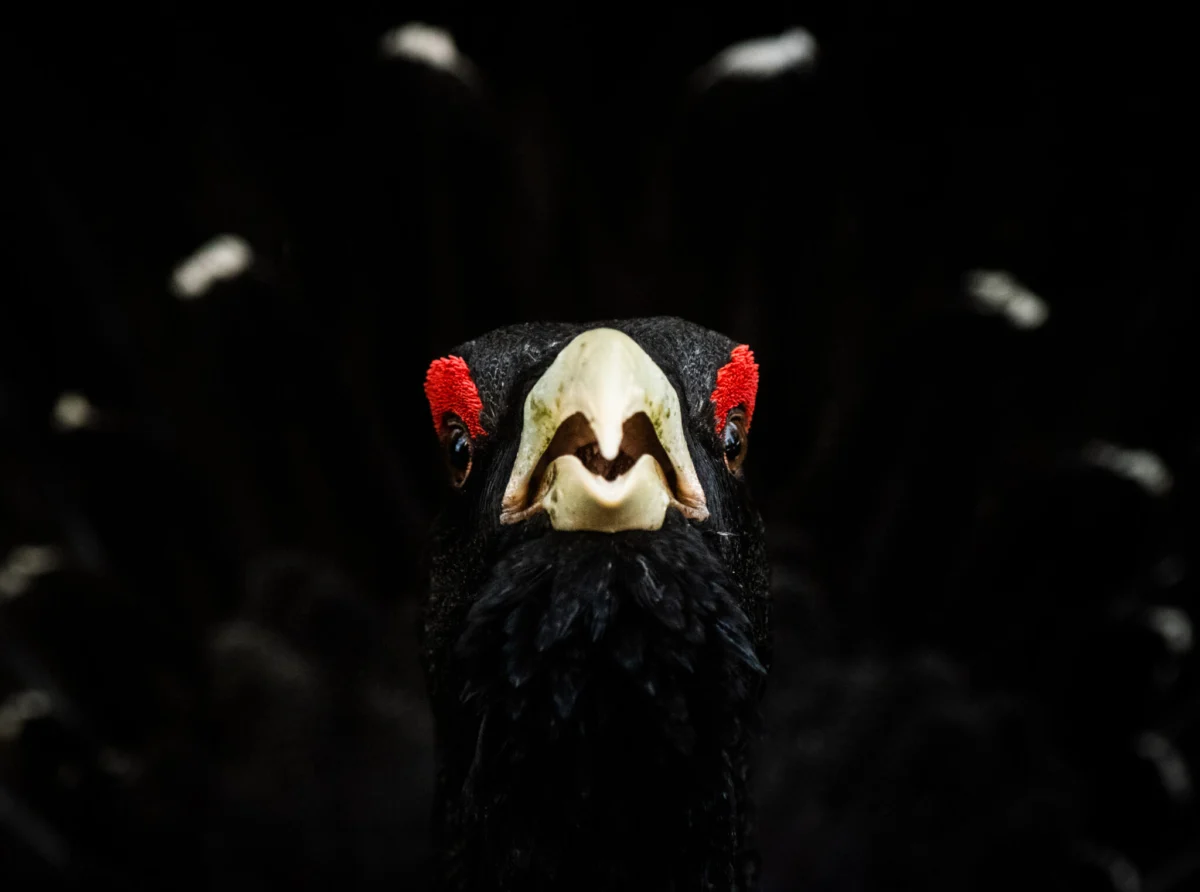
The practice of nature photography, for one dedicated practitioner, is fundamentally about translating the ephemeral impressions and profound emotions experienced in the natural world into compelling visual narratives. This artistic endeavor often leads photographers to explore the furthest reaches of technical possibility, embracing ultra-wide or super-telephoto lenses, delving into the stark contrasts of blackout or whiteout exposures, experimenting with extended shutter speeds, and challenging conventional compositional norms. At these stylistic and technical extremities, extraneous distractions are minimized, critical elements are accentuated, and the inherent story within each image gains significant potency and clarity.

The Philosophical Imperative: Imposing Order on Nature’s Chaos
Photography, at its heart, is a quest to discern and articulate order within a world that frequently presents itself as an overwhelming and seemingly chaotic collection of elements. Whether observing the dense canopy of a forest, the synchronized movements of animal herds, or the intricate arrangement of a bird’s plumage, nature often appears as a tapestry of boundless complexity. The role of the discerning photographer, then, becomes that of an interpreter – one who uncovers the hidden structures, rhythms, and patterns embedded within this apparent disarray and translates them into a cohesive visual form. While this objective might sound straightforward, its masterful execution is profoundly challenging. The pursuit of rendering nature’s inherent complexity into a visually resonant image has propelled many photographers, including this practitioner, toward the extreme ends of available photographic techniques. This deliberate choice enables the creation of a stronger, more impactful narrative, one that effectively conveys the photographer’s deeply felt emotions and experiences directly to the viewer. This artistic philosophy aligns with a broader trend in contemporary nature photography, where the emphasis has shifted from mere documentation to subjective interpretation, seeking to evoke a deeper, more personal connection with the wild.

Atmosphere as the Primary Language: The Expressive Power of Exposure
The human experience and perception of nature are intricately shaped by a confluence of sensory inputs. Sight, sound, smell, and touch coalesce to form a comprehensive, immersive impression of any given scene. For still photographers, the inherent challenge lies in capturing this multifaceted experience through the singular medium of vision. It is a common sentiment among photographers to feel a sense of inadequacy when reviewing images captured after a particularly moving encounter in nature; the pictures often fail to evoke the intense emotional resonance felt during the actual event, deprived as they are of the full spectrum of sensory information. This gap between lived experience and photographic output drives the exploration of alternative techniques.

To effectively recreate and immortalize the unique atmospheres and profound emotions encountered in nature, a photographer often employs the extreme ends of exposure: intentionally dark, moody images achieved through significant underexposure, or bright, ethereal images crafted via deliberate overexposure. These techniques, widely recognized as blackout and whiteout photography, respectively, are not merely technical adjustments but potent artistic tools designed to enhance and emphasize the core experience.
Blackout images, characterized by their heavy underexposure, are often imbued with a dramatic, mysterious quality. They can evoke feelings of solitude, introspection, or even a sense of the sublime, drawing the viewer into a world of deep shadows and subdued tones. Conversely, whiteout images, achieved through overexposure, typically convey purity, elegance, and a sense of lightness. This technique is particularly effective for highlighting delicate features of a species or emphasizing the vast, unblemished nature of its surroundings, such as snow-covered landscapes or misty horizons. The deliberate manipulation of exposure transforms a technical decision into an expressive language. By consciously deciding on the luminosity of a scene, the photographer actively guides the viewer toward the specific emotional landscape experienced in the field, moving beyond literal representation to subjective interpretation. This artistic choice often involves a keen understanding of light physics and how different levels of light saturation affect human perception and mood. Modern camera sensors, with their increasingly broad dynamic range, facilitate these extreme exposures, allowing for nuanced detail retention even in heavily underexerexposed or overexposed areas, which was a significant challenge in earlier photographic eras.

Dynamic Perspectives: The Narrative Potential of Focal Lengths
Beyond light and shadow, perspective plays a crucial role in defining the viewer’s relationship with the photographic subject. Within a photographer’s technical arsenal, focal length stands out as one of the most effective means to alter the perceived appearance of a subject in relation to its environment. Each extreme end of the focal length spectrum, from ultra-wide-angle to super-telephoto, tells a distinctly different story, with the impact intensifying proportionally to the deviation from standard focal lengths. This deliberate choice of perspective becomes a powerful tool to reinforce the specific narrative the photographer wishes to convey.

Ultra-wide-angle lenses (e.g., 14-24mm) are masters of context. They draw the viewer into the expansive environment, making a subject appear small and emphasizing its place within a grander landscape. This can evoke feelings of awe, vulnerability, or the sheer scale of nature. Conversely, super-telephoto lenses (e.g., 400mm, 600mm, or even 1200mm with teleconverters) excel at isolation and intimacy. They compress perspective, bringing distant backgrounds closer and blurring them into an artistic abstraction, thereby placing intense focus on the subject itself. This technique reveals intricate details, expressions, and behaviors that would otherwise be lost, creating a sense of close connection with the animal or feature.
Recent technological advancements, particularly in mirrorless camera systems, have dramatically expanded the possibilities for photographers, especially concerning extra-long focal lengths. Mirrorless technology has led to the development of telephoto lenses that are not only optically superior but also often lighter, more compact, and more affordable. Crucially, even mid-range telezoom lenses can now be effectively paired with teleconverters (which extend focal length) while maintaining robust autofocus performance and excellent image quality. This accessibility to extreme focal lengths has opened entirely new worlds of perspective for many practitioners, allowing for unprecedented visual storytelling.

A compelling example of this versatility is seen in the photographic exploration of the seabird island of Hornøya in Norway. Situated above the Arctic Circle, this remote outpost hosts a thriving population of European shags that return for the breeding season even as the island remains blanketed in snow. The harsh, yet beautifully lit, conditions provide a dramatic backdrop as the shags establish territories, engage in courtship displays, and endure fierce snowstorms. By employing a wide range of focal lengths, from 24mm to an astonishing 1200mm, the photographer meticulously crafted a comprehensive visual narrative of their lives. Wide-angle shots captured the shags within their dramatic, snowy habitat, conveying the environmental challenges they face. Medium telephoto lenses allowed for detailed behavioral studies and interactions, while super-telephoto lenses isolated individual birds, revealing the subtle textures of their plumage and the intensity of their gaze, offering intimate portraits that transcend mere biological documentation. This comprehensive approach, leveraging the full spectrum of focal lengths, provides a holistic understanding of the species and its environment, far beyond what any single focal length could achieve.
The Magic of Movement: Manipulating Time and Perception

At its core, photography is the art of capturing moments and preserving movements to tell a story. A particularly captivating aspect for many photographers is the ability to work with shutter speeds that create images our own eyes are inherently incapable of perceiving, thus offering unique insights into the passage of time.
Long exposures, especially when combined with Intentional Camera Movement (ICM), unlock a vast new realm of photographic possibilities. This technique transcends the conventional limits of merely capturing the landscape’s colors, shapes, and the subject itself. Instead, the photographer actively "paints" the image, drawing structures and textures from the entire scene into a single, extended exposure. ICM images, with their unique camera movements applied to each shot, become one-of-a-kind, impossible-to-replicate artworks. While this technique demands considerable patience and a steep learning curve due to a high rate of "failed" images, the potential for extraordinary, painterly results makes the effort worthwhile. Each blurred stroke and ethereal blend contributes to a feeling, an atmosphere, rather than a sharp, literal depiction, challenging the viewer’s perception of reality.

Conversely, advancements in mirrorless camera technology have also enabled the use of incredibly fast shutter speeds, far beyond the previous limitations of DSLR cameras. In the DSLR era, mechanical shutters typically capped out around 1/8000th of a second, making it challenging to photograph extremely bright scenes without overexposing highlights. Modern mirrorless cameras, however, can achieve shutter speeds of several tens of thousands of a second (e.g., 1/32,000s or even 1/64,000s) through their electronic shutters. This capability is invaluable in extremely bright conditions, such as shooting directly into the midday sun. While the human eye struggles to discern detail in such intense light, the camera can capture an intriguing image, revealing intricate details in both the solar disk and backlit clouds, freezing moments of light and motion that are imperceptible to the naked eye. This allows for a creative exploration of light that was once technically impossible, opening new avenues for abstract and high-contrast imagery.
Challenging the Canon: Unconventional Compositions for Deeper Impact

Composition in photography is traditionally governed by a set of clear, well-established rules, and for good reason. Principles such as the Rule of Thirds, the Golden Ratio, leading lines, and the effective use of negative space often result in balanced, aesthetically pleasing, and easily digestible images. However, no artistic rule is absolute. Adhering too rigidly to these guidelines, while ensuring consistent results, can inadvertently stifle creative expression and prevent the discovery of truly unique visual perspectives.
Composition, at its core, is fundamentally about balance and visual harmony. A classic tenet, for instance, suggests leaving ample space in the direction a subject is facing to imply movement or future action. Yet, consistently following such a rule might lead photographers to overlook more compelling images where an unconventional element creates balance even when the primary subject is deliberately positioned off-center or against traditional expectations. For this photographer, the understanding of composition has evolved beyond strict prescriptive rules to a more intuitive appreciation of how all elements within the frame interact dynamically. In certain instances, an intentionally unconventional composition can imbue an image with far greater power and emotional resonance. It can create tension, surprise, or force the viewer to engage more deeply with the narrative. The continuous training of the eye to perceive and interpret these intricate interactions between elements within a scene is, in this artistic philosophy, one of the most crucial ways to elevate one’s photography from merely good to truly exceptional. This involves not just seeing the subject, but understanding its relationship to every other visual component—light, shadow, line, shape, and texture—and how these relationships can be deliberately manipulated for artistic effect.

The Spirit of Exploration: Creativity for Creativity’s Sake
A prevalent norm in photographic education and practice advocates for intentionality in every creative decision. Every choice, from framing and composition to shutter speed and aperture, is often advised to be made with a clear purpose and pre-visualization. In many scenarios, this systematic approach is highly beneficial, leading to consistent results, balanced exposures, and predictable, high-quality outcomes. Such rules are instrumental in bringing order to the inherent chaos of the natural world. However, this rigorous adherence can also, paradoxically, constrain genuine creativity and spontaneous discovery.

The act of being creative purely for the sake of creativity, devoid of a predefined purpose or a specific visual outcome, is, in this view, equally vital. It serves as a necessary counterbalance to the systematic, rule-bound approach, which can inadvertently discourage playfulness and experimental curiosity. Not every impactful photograph can be meticulously pre-visualized; the human eye and mind are simply incapable of predicting the serendipitous coincidences and random occurrences that often add a magical, unreplicable quality to an image – be it an unexpected reflection, a sudden gust of wind, or an unusual light phenomenon.
For this photographer, nature photography is an ongoing journey of exploration and experimentation. The process involves constantly questioning established norms: "Perhaps a photograph of this static subject could be enhanced if I intentionally move the camera?" or "Why not underexpose this scene when conventional wisdom would suggest overexposure?" This experimental mindset, while leading to a significant number of "bad shots," is viewed not as failure but as an essential part of the discovery process. Among the many discarded images, moments of "gold" occasionally emerge – sometimes in the form of a spectacular, instantly recognizable image, but more frequently as the discovery of a new effect, a unique texture, or a novel way of seeing that can be further developed and integrated into the photographic practice. This iterative process of trial and error is fundamental to artistic growth and innovation in a field that constantly pushes technical and creative boundaries.

Final Reflections: Curiosity as the Ultimate Creative Tool
Observing the work of fellow photographers, it is often the images that defy immediate explanation, prompting questions about their creation, that prove most captivating. These are typically the photographs produced by individuals who possess the courage to challenge conventional rules, to employ techniques that others might not have considered, and to deeply explore the intricate interactions between the natural world and the capabilities of their cameras. Whether achieved through the deliberate blurring of long shutter speeds, the isolating power of extreme focal lengths, or the arresting impact of unconventional compositions, the wellspring for capturing truly unique and creatively resonant images lies in a blend of playfulness, relentless experimentation, and an unwavering interest in the natural world. In this artistic philosophy, curiosity is not merely a trait but the most formidable and essential creative tool available to the nature photographer, driving innovation and fostering a profound connection between the artist, the subject, and the viewer. This constant questioning and seeking of new perspectives ensures that nature photography remains a dynamic and evolving art form, continuously offering fresh insights into our planet’s beauty and complexity.