
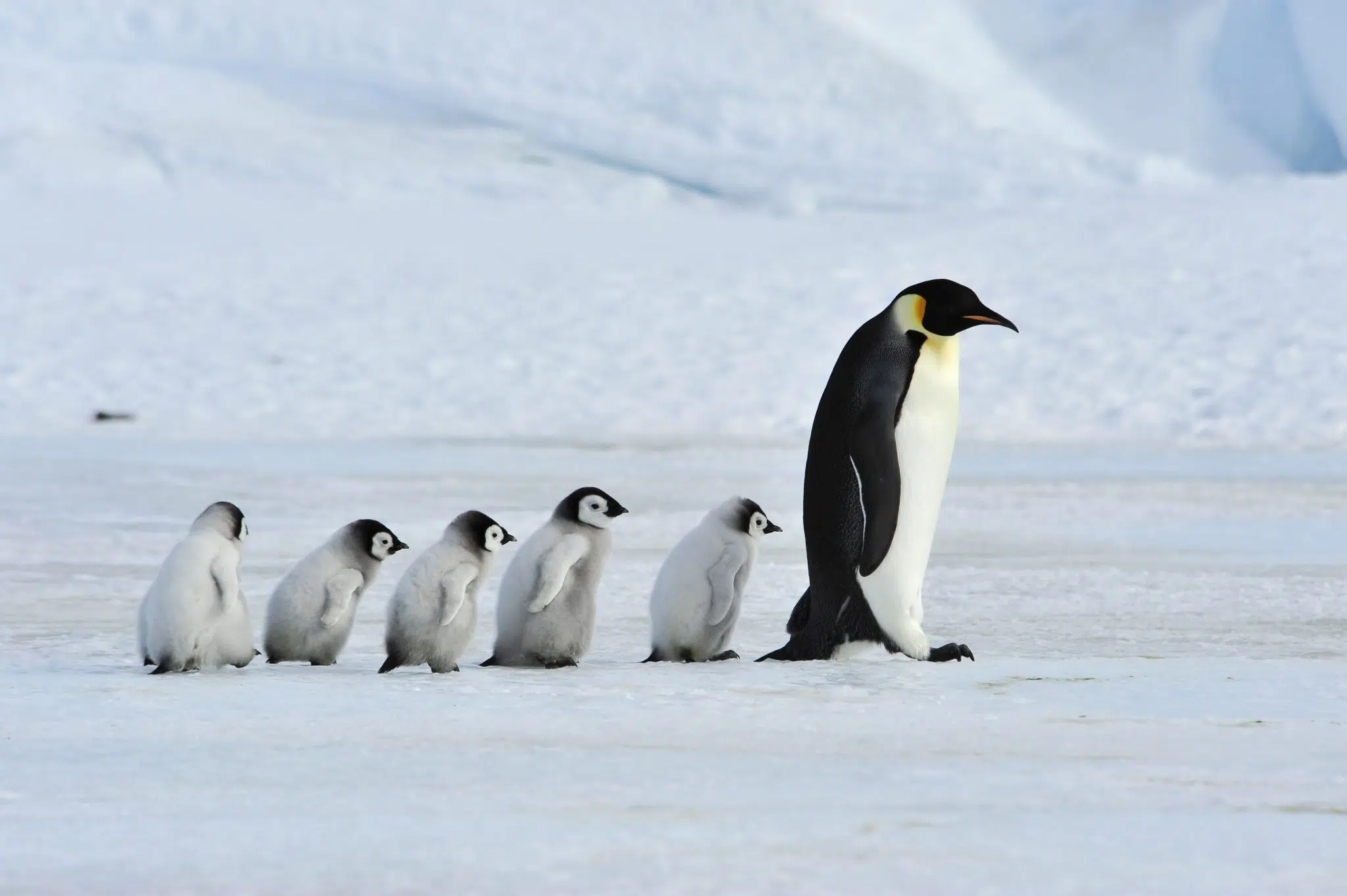
BirdLife International’s latest assessment for the IUCN Red List of Threatened Species has delivered a sobering verdict on the future of Emperor Penguins, uplisting the iconic Antarctic species from "Near Threatened" to "Endangered." This critical reclassification, revealed today, underscores the devastating and accelerating impact of climate change on the planet’s most remote ecosystems and demands immediate, decisive action from global governments. BirdLife International is spearheading a call for the international community to designate the Emperor Penguin as an Antarctic Specially Protected Species at the upcoming 48th Antarctic Treaty Consultative Meeting (ATCM) in May.
The Perilous Shift: From Near Threatened to Endangered
As the official Red List Authority for birds, BirdLife International, in collaboration with the IUCN SSC Penguin Specialist Group, meticulously evaluates the global extinction risk for avian species worldwide. These regular reassessments are crucial for identifying species in urgent need of conservation and for monitoring the effectiveness of existing efforts. The Emperor Penguin (Aptenodytes forsteri), a beloved and charismatic symbol of the Antarctic wilderness, has now been thrust into a higher category of threat, reflecting a rapidly deteriorating outlook for its survival.
The primary driver behind this alarming downward trend is unequivocally climate change. Scientists point to a drastic decline and increasing erraticism in the persistence of sea ice across the Antarctic region. Projections indicate that without significant intervention, the global Emperor Penguin population could be halved by the 2080s, a stark warning of an impending ecological catastrophe. This reclassification serves as a potent reminder of how far-reaching the consequences of global warming truly are, extending to even the most isolated corners of our planet.
The Critical Role of Sea Ice: A Fragile Habitat Under Siege

Emperor Penguins are uniquely adapted to the extreme Antarctic environment, yet their survival is inextricably linked to the stability of sea ice. They rely on "fast ice"—sea ice that is securely fastened to the coastline, ocean floor, or grounded icebergs—for their entire life cycle. This frozen platform serves as their breeding grounds, nursery for their chicks, and a safe haven during their annual moulting season. During moulting, penguins shed their old feathers and grow new ones, losing their waterproof protection and becoming highly vulnerable to the frigid waters.
The early break-up and loss of this crucial sea ice habitat, which has reached record lows since 2016, is directly imperiling penguin colonies. If the ice disintegrates prematurely, particularly before chicks are old enough to swim and regulate their body temperature, the consequences are often deadly. Chicks can drown, freeze, or become separated from their parents, leading to widespread colony collapse. Satellite imagery has already provided chilling evidence of this phenomenon, indicating a loss of approximately 10% of the Emperor Penguin population between 2009 and 2018 alone, a devastating figure equating to over 20,000 adult birds.
Rob Martin, Red List Team Manager at BirdLife International, who coordinated this comprehensive reassessment, emphasized the gravity of the situation: "The Emperor Penguin’s shift from Near Threatened to Endangered is a worrying signal of the reach of climate change impacts into the most remote parts of the globe. Future projections for the species robustly point to severe reductions over the rest of this century. Emperor Penguins are completely dependent on the Antarctic habitat for breeding, moulting and feeding, but it will become harder for them to survive as ice patterns become less predictable and this crucial habitat keeps decreasing."
Scientific Data and Observed Tragedies
While the vastness and harshness of the Antarctic make precise population monitoring challenging, sophisticated population modelling techniques, incorporating a wide range of future climate scenarios, consistently project rapid declines for Emperor Penguin populations throughout this century. These models reinforce the direct observations of colony failures, such as those seen in the Weddell Sea region, where entire breeding seasons have been lost due to insufficient or unstable sea ice.
One notable example that has garnered international attention is the collapse of several colonies in the Bellingshausen Sea. In 2022, satellite imagery revealed the complete failure of four out of five known Emperor Penguin colonies in the region due to the early break-up of sea ice. Thousands of chicks are believed to have drowned. Such events, once considered rare, are becoming increasingly frequent, painting a grim picture for the species’ future if greenhouse gas emissions are not drastically and abruptly curtailed. The data confirms that these are not isolated incidents but symptoms of a systemic environmental shift.

A Call to Action: The Antarctic Treaty Consultative Meeting in May
The urgency of the Emperor Penguin’s plight presents a critical opportunity for global leaders to demonstrate their commitment to biodiversity conservation and climate action. The upcoming 48th Antarctic Treaty Consultative Meeting (ATCM) in Hiroshima in May will bring together governments responsible for overseeing and shaping environmental protection policy for the Antarctic. BirdLife International is actively contributing to this crucial forum by providing its robust Red List assessment for the Emperor Penguin, aiming to inform and influence decision-making.
A key proposal BirdLife International is advocating for is the designation of the Emperor Penguin as an "Antarctic Specially Protected Species (ASPS)." Such a designation would carry significant weight, creating legally binding obligations for signatory governments to prevent actions that directly harm or disturb Emperor Penguins and their vital habitat. This would include stricter regulations on tourism, research activities, and any potential human presence that could inadvertently impact colonies. While an ASPS designation primarily addresses direct human disturbance, its symbolic and practical importance lies in recognizing the species’ extreme vulnerability and mandating a higher level of protective stewardship from the international community.
Martin Harper, CEO of BirdLife International, issued a powerful statement reinforcing this call: "Penguins are already among the most threatened birds on Earth. The Emperor Penguin’s move to Endangered is a stark warning: climate change is accelerating the extinction crisis before our eyes. Governments must act now – starting by designating the Emperor Penguin as an Antarctic Specially Protected Species this May."
Broader Implications and the Global Climate Crisis
The Emperor Penguin’s struggle is not merely the story of a single species; it is a stark indicator of the broader ecological crisis unfolding in the Antarctic and, by extension, across the globe. As BirdLife International aptly states, "Birds are our compass. Their health reveals the health of our world." The escalating threat to Emperor Penguins serves as a vivid illustration of how deeply climate change is penetrating and destabilizing even the most resilient ecosystems.

The implications extend beyond the penguins themselves. Emperor Penguins are apex predators in their food web, feeding primarily on krill, squid, and fish. A significant decline in their population could have cascading effects throughout the Antarctic marine ecosystem, impacting prey populations and other predators that share the same food sources. The loss of such an iconic species would also represent an immeasurable blow to global biodiversity and the intrinsic value of natural heritage.
The underlying cause—anthropogenic climate change—demands a global, concerted effort to decarbonize economies and transition away from fossil fuels. The fate of the Emperor Penguin underscores the direct link between global emissions and localized ecological collapse. While the Antarctic Treaty provides a framework for protecting the continent, the ultimate solution lies in addressing the root cause of warming oceans and melting ice sheets.
The decision made at the ATCM in May will be a litmus test for international cooperation and environmental commitment. Designating the Emperor Penguin as an ASPS would be a tangible step, sending a clear message that the international community recognizes the urgency of the situation and is prepared to take concrete measures. However, this protective status must be complemented by ambitious, legally binding commitments to reduce greenhouse gas emissions on a global scale. Without such fundamental changes, the future of the Emperor Penguin, and countless other species, will remain precarious. The time for urgent, transformative action is now.