
Brussels, Belgium – February 25, 2026 – In a move that has drawn sharp criticism from environmental organizations and public health advocates, the European Union’s REACH Committee today deliberated on a revised proposal concerning lead ammunition, opting to significantly weaken the initially drafted restriction. The new text, put forth by the European Commission, controversially removes lead bullets from the scope of the proposed measure, effectively sidelining the clear demands of over 60,000 concerned citizens and a broad scientific consensus advocating for a comprehensive ban. This decision marks a significant setback for efforts to curb lead pollution across Europe, raising questions about the EU’s commitment to environmental protection and public health.
The Weakened Proposal: A Step Backwards
The meeting of the EU REACH Committee, responsible for the Registration, Evaluation, Authorisation and Restriction of Chemicals, was anticipated by many as a crucial step towards mitigating the widespread environmental and health impacts of lead ammunition. However, the revised proposal introduced by the European Commission has been widely condemned for its perceived capitulation to industrial pressures rather than adherence to scientific evidence and public will. By specifically exempting lead bullets from the restriction, the Commission’s proposal leaves a substantial source of lead contamination unaddressed, despite overwhelming data on its harmful effects.
Environmental and conservation groups, including BirdLife Europe, RSPB, and WWT, who spearheaded the #BanLeadNow petition, expressed profound disappointment. The petition, which closed concurrently with today’s committee meeting, garnered more than 60,000 signatures from citizens across Europe, all calling for an immediate and complete ban on lead in all ammunition and fishing weights. This initiative underscored the deep public concern over the thousands of tonnes of toxic lead that continue to be dispersed into Europe’s environment annually. Adding to this chorus of public demand, a recent survey conducted by EuroGroup for Animals revealed that a striking seven out of ten EU citizens support a comprehensive ban on lead ammunition and fishing tackle, demonstrating a clear public mandate for stronger regulatory action.

Marion Bessol, Nature Conservation Policy Officer at BirdLife Europe and Central Asia, articulated the widespread dismay: “Removing bullets from the proposal is not just shortsighted; it is a dangerous decision that turns a blind eye to the proven risks to human health and wildlife. The claim that a civilian ban would affect the military is cynical fearmongering, as the original proposal already gave ample flexibility to ensure defence preparedness and avoid economic disruption. We now urge Member States to adopt a robust restriction that will truly protect citizens and the environment.” Her statement highlights a key point of contention: the perceived justification for the weakening of the proposal, which critics argue is based on exaggerated concerns about military readiness rather than genuine necessity. The initial proposal, it is noted, included permanent derogations for the use of lead bullets at outdoor shooting ranges, meaning the primary impact of the restriction would have been on hunting ammunition. Given that hunting bullets account for a mere 134 tonnes annually compared to 42,000 tonnes for sports shooting, the argument of significant economic disruption or impact on military supply chains appears unsubstantiated by data from the European Chemicals Agency (ECHA).
The Unfolding Health and Environmental Crisis of Lead
Lead, a highly toxic heavy metal, poses severe risks to both human health and biodiversity. When lead ammunition is used in hunting, fragments often remain in game meat, which can then be consumed by humans. Scientific evidence unequivocally demonstrates that even small quantities of lead exposure can have serious neurological and developmental consequences, particularly for vulnerable populations such such as children and pregnant women. Lead exposure in children has been linked to reduced cognitive function, behavioural problems, and learning disabilities. For adults, lead can cause cardiovascular disease, kidney damage, and reproductive problems. The continued dispersal of lead bullets ensures that these health risks persist across the continent.
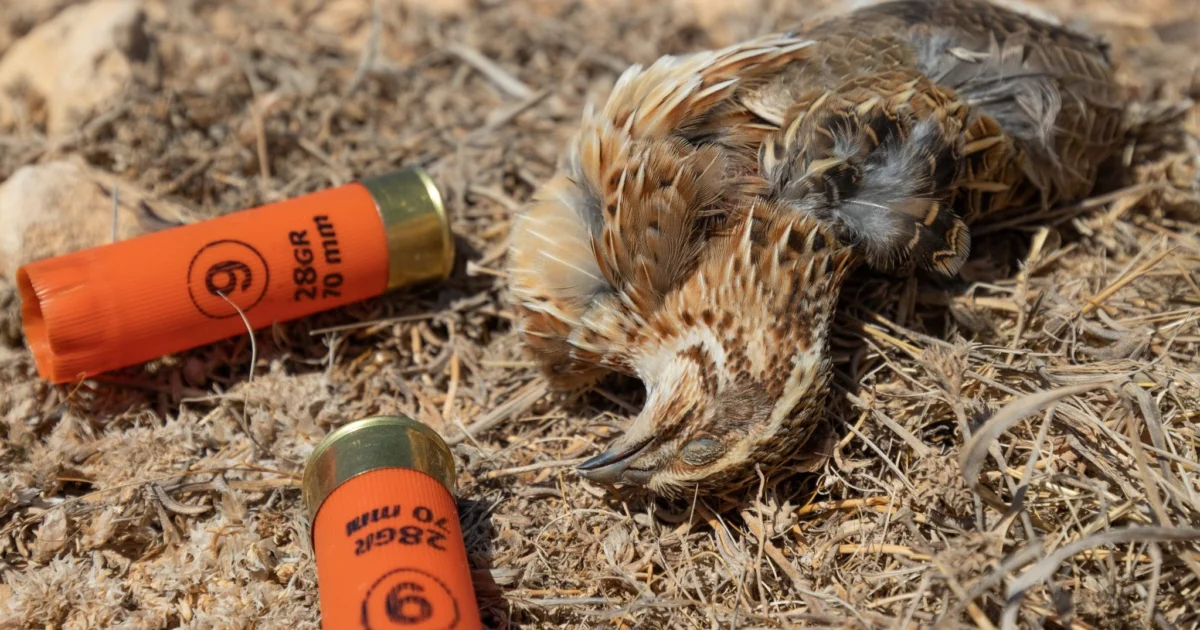
Beyond human health, the environmental toll of lead ammunition is catastrophic. Lead fragments and pellets left in the environment from hunting activities contaminate soil, water, and vegetation, entering the food chain and poisoning wildlife. Birds, especially scavengers and waterfowl, are particularly susceptible. Species like eagles, vultures, and condors frequently ingest lead fragments from the carcasses of animals shot with lead ammunition. Waterfowl, mistaking lead shot for grit, ingest it directly from wetlands. The devastating consequence is lead poisoning, a slow and agonizing death characterized by neurological impairment, paralysis, and organ failure. Estimates suggest that over one million birds die annually in Europe due to lead poisoning, including some of the continent’s most iconic and threatened species. The image of a dead bird, perhaps like the one captured by Ben Porter, serves as a stark reminder of this ongoing ecological tragedy.
The Broader Context: REACH and EU Environmental Policy

The EU’s REACH regulation is one of the world’s most comprehensive and advanced chemical legislations, designed to improve the protection of human health and the environment from the risks that can be posed by chemicals. Its core principle is to make industry responsible for managing the risks from chemicals and for providing safety information. Restrictions under REACH are typically implemented when a substance poses an unacceptable risk that needs to be addressed at a Union-wide level.
The current debate is not the first instance where lead ammunition has come under scrutiny within the EU. A partial ban on lead shot in wetlands across all EU Member States was adopted in 2021, following years of advocacy and scientific reports highlighting the devastating impact on waterfowl. This earlier ban, however, was seen as a partial measure, with environmental groups consistently pushing for a full prohibition across all environments and for all types of ammunition, including bullets. The ECHA, in its extensive assessment reports, has consistently highlighted the widespread risks posed by lead ammunition and fishing weights, providing a robust scientific basis for a comprehensive restriction. This background underscores the perplexing nature of the Commission’s decision to now backtrack on a more holistic approach.
Viable Alternatives and Growing Momentum for Change
Crucially, the argument that a complete ban on lead ammunition is impractical due to a lack of alternatives has been widely refuted. Momentum for a transition to non-toxic alternatives is growing across various sectors. Public health professionals, scientists, and conservation organizations have long called for this shift, and they are increasingly being joined by a significant number of responsible hunters and fishers who recognize the ethical and environmental imperatives.
An open letter signed by leading European scientists unequivocally stated that viable alternatives, such as steel, bismuth, and copper ammunition, are widely available and perform effectively. These alternatives eliminate the lead contamination problem without compromising hunting efficacy or safety. The letter underscores that the continued use of lead ammunition poses unnecessary risks that can be easily avoided with existing technologies.

Several countries have already acknowledged these threats and taken decisive action, demonstrating the feasibility of a comprehensive ban. Denmark, for instance, has been a pioneer in this regard, implementing restrictions on both lead shot and bullets years ago, proving that such measures are not only possible but also successful in reducing environmental lead loads. More recently, the United Kingdom also achieved a significant win for conservation, with a commitment to ban lead ammunition in outdoor shooting, further illustrating a growing international trend towards phasing out this toxic material. These examples serve as powerful precedents, challenging the EU’s hesitation and demonstrating that a full transition is both achievable and beneficial.
Political Implications and the Path Forward
The European Commission’s revised proposal, by disregarding a substantial public petition and the consensus of the scientific community, risks undermining public trust in EU decision-making processes and its commitment to environmental protection. It also creates a potential disconnect between the aspirations of its citizens and the legislative outcomes.
The responsibility now squarely rests with the EU Member States. The current proposal will proceed through further stages of negotiation and approval, offering a critical window for Member States to intervene and champion a stronger, more effective restriction. Conservation organizations are intensifying their lobbying efforts, urging national governments to uphold scientific evidence and public desire by delivering a robust and comprehensive ban on lead ammunition without further delay. This includes advocating for the re-inclusion of lead bullets within the scope of the restriction and ensuring a clear, ambitious timeline for phasing out all lead ammunition.
The decision on lead ammunition is not merely a technical regulatory matter; it is a test of the EU’s resolve to protect its natural heritage and the health of its citizens against preventable harm. A failure to act decisively could have long-lasting environmental consequences, perpetuating the cycle of lead poisoning for generations to come, and further erode confidence in the Union’s ability to deliver on its ambitious Green Deal objectives. The eyes of over 60,000 citizens, countless scientists, and a multitude of conservationists across Europe will remain fixed on the upcoming deliberations, hoping that the call for a #BanLeadNow will ultimately prevail.