
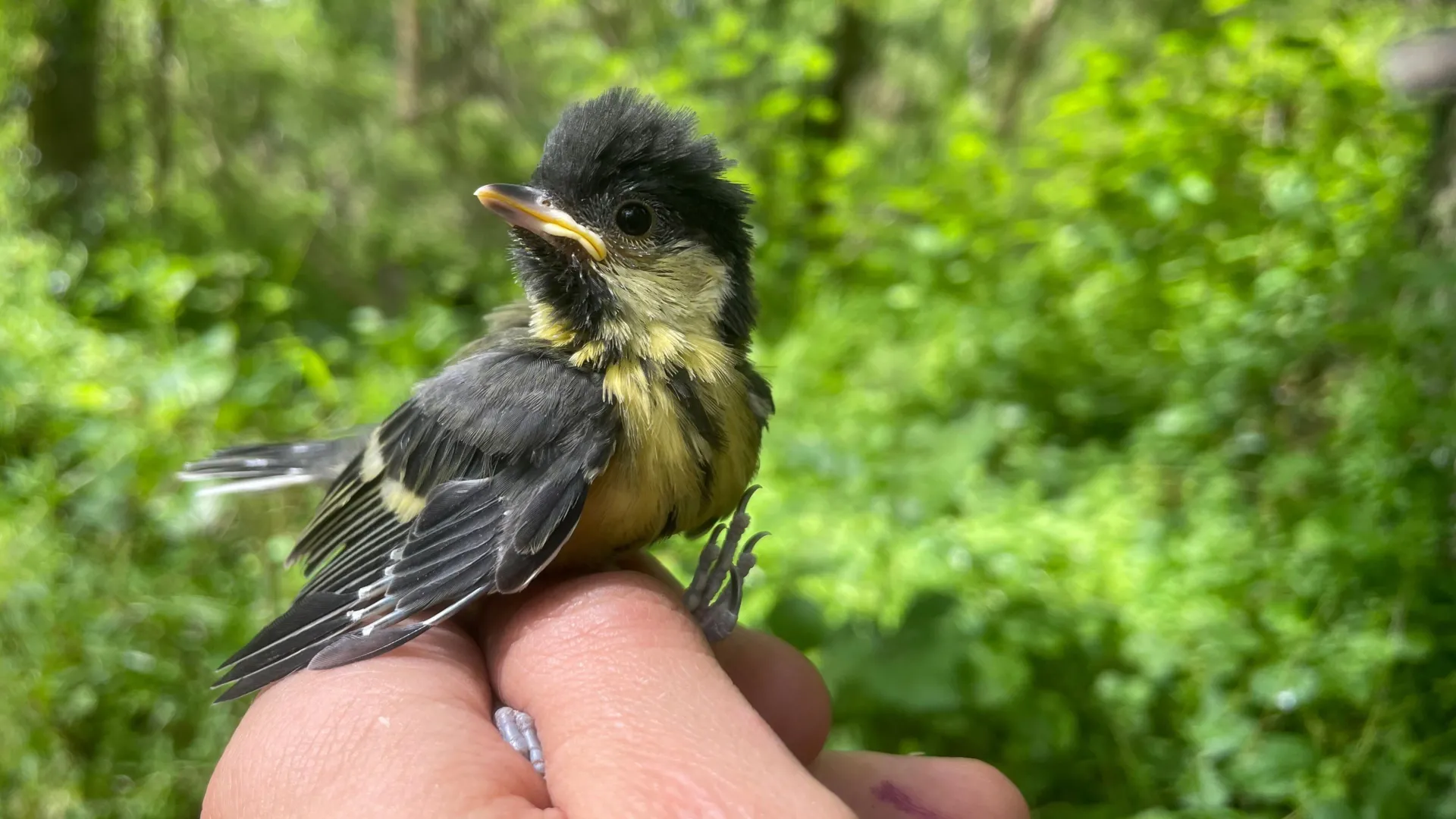
A new study from the University of Oxford, published on March 11 in a prominent scientific journal, has unveiled critical insights into how climate change-driven weather extremes are impacting one of the UK’s most familiar woodland birds. The research, which draws on an unprecedented six decades of ecological data, firmly establishes a direct link between sudden cold spells and heavy rainfall and a significant reduction in growth rates and survival probabilities for young great tits (Parus major). Crucially, the investigation also suggests that those birds that commence their breeding cycle earlier in the season appear to possess a protective advantage, enabling them to mitigate many of the detrimental effects associated with these increasingly frequent weather anomalies. This discovery not only sheds light on the adaptive capacities of wildlife in a changing climate but also underscores the complex challenges faced by species reliant on finely tuned environmental cues.
Unearthing Decades of Ecological Data: The Wytham Woods Legacy
The foundation of these compelling findings rests upon an exceptionally long-term and meticulously maintained dataset, a testament to sustained scientific endeavour. Scientists meticulously analysed 60 years of continuous records, encompassing the life histories of more than 80,000 individual wild great tits inhabiting the renowned Wytham Woods, a research site of global ecological significance located just west of Oxford. This unparalleled biological information was then precisely cross-referenced with equally detailed daily weather records stretching back through the decades. By identifying and quantifying the frequency and intensity of the coldest, wettest, and hottest days occurring within each breeding season, researchers were able to establish a granular understanding of how often these extreme conditions manifested during the most critical stages of chick development. The core metric for assessing impact was the body mass of nestlings at the point of fledging – the moment they leave the nest – a well-established and powerful predictor of their subsequent survival into adulthood.
Wytham Woods itself is not merely a woodland but a living laboratory. Managed by the University of Oxford since 1942, it is one of the most thoroughly studied pieces of woodland in the world. Its designation as a Site of Special Scientific Interest (SSSI) reflects its ecological value and the wealth of research it has facilitated across various disciplines, from entomology and botany to ornithology. The long-term great tit study, initiated in the 1940s by pioneering ornithologist David Lack, has become a cornerstone of avian ecology, providing invaluable insights into population dynamics, behavioural ecology, and, increasingly, the impacts of environmental change. Such extensive temporal datasets are exceedingly rare in ecological research, providing a unique window into long-term trends and subtle shifts that shorter studies might completely miss.
The Perilous Effects of Cold and Rain on Nestling Development
The study’s revelations paint a clear picture of vulnerability, particularly for the youngest great tits. It was found that severe cold weather occurring within the first week after hatching represents a particularly acute threat. This early stage of life is when chicks are most vulnerable, lacking the developed plumage and physiological mechanisms necessary for effective thermoregulation. As the chicks mature, their susceptibility shifts, with heavy rainfall emerging as the more dominant threat during later nestling stages. Both categories of adverse weather were shown to significantly impede growth, leading to a reduction in body mass at fledging by as much as 3%. While this percentage might seem modest, even small early-life deficits can have profound and cascading implications for a bird’s ability to survive its first crucial year, find mates, and successfully reproduce in subsequent seasons.
The research further highlighted a compounding effect when multiple extreme conditions converge. When periods of intense heat coincided with heavy rainfall – a scenario that climate models suggest will become more common – the detrimental impact became substantially more severe. In these specific circumstances, fledging mass was observed to plummet by up to 27%. This drastic reduction was particularly pronounced among broods that hatched later in the breeding season, suggesting that the timing of breeding acts as a critical determinant of resilience against these combined environmental stressors.
Devi Satarkar, the lead researcher from the Department of Biology at the University of Oxford, articulated the implications of these findings. "In the Wytham population, great tits have demonstrably adjusted to warmer springs by initiating their breeding earlier," Satarkar explained. "This adaptive shift allows them to better track the peak abundance of their primary prey, caterpillars. This overall earlier laying strategy is proving beneficial, acting as a buffer that shields them against many of the impacts of extreme weather. However, this adaptation simultaneously exposes them to cold spells that can still occur early in the season. Even small early-life deficits, as we’ve observed, can have large implications for long-term survival. It is an alarming reality that it will only get tougher for these birds, and indeed many other species, to keep pace with these environmental shifts as extreme weather events increase in both frequency and intensity due to ongoing climate change."
Unpacking the Biological Mechanisms: Why Weather Matters
Understanding the precise biological and ecological mechanisms behind these observed impacts is crucial for developing effective conservation strategies. For newly hatched great tit chicks, the immediate challenge posed by cold weather is primarily thermoregulatory. Lacking the insulating layer of feathers that adults possess, and with a high surface area to volume ratio, they are highly susceptible to heat loss. During cold spells, their developing bodies must divert a significant proportion of their metabolic energy simply to maintain a stable internal body temperature, rather than allocating that vital energy towards growth and development. This diversion of resources creates an energy deficit that can stunt growth and compromise overall health.
Beyond the direct physiological stress, adverse weather conditions profoundly impact the food supply available to the rapidly growing chicks. Extreme cold and heavy rain can severely limit the ability of parent birds to forage effectively. Reduced visibility, the physical discomfort of cold and wet conditions, and the increased energy expenditure required to brave such elements can all decrease the frequency and duration of foraging trips. This translates directly into less food being brought back to the hungry nestlings.
Simultaneously, heavy rainfall has a direct and detrimental effect on the main food source: caterpillars. Rain can physically dislodge caterpillars from their host plants, washing them onto the ground where they become less accessible or even drown. Furthermore, cold, wet weather can reduce caterpillar activity, making them harder for parent birds to spot and catch. Great tit chicks, particularly during their rapid growth phase, have exceptionally high energy demands, primarily met by a diet rich in protein and fat from caterpillars. Any disruption to this critical food supply, whether due to parental foraging limitations or reduced prey availability, can have immediate and severe consequences for their development.
The Nuance of Heat: When Warmer Extremes Can Be Beneficial
One of the more unexpected and intriguing findings of the Oxford study was the observation that certain warmer extremes were actually correlated with heavier fledging weights during the nestling stage. This finding introduces an important nuance to the understanding of climate impacts, as high temperatures are typically associated with heat stress and negative outcomes for birds. However, the study posits that the warmer periods experienced in Oxfordshire, during the timeframe of the research, appear to be relatively mild when compared to the scorching, life-threatening extreme heat events recorded in regions such as southern Europe.
Devi Satarkar elaborated on this fascinating dichotomy. "Extreme weather events are affecting wild bird populations in complex and sometimes counterintuitive ways," she noted. "The specific level of warmth we observe in these ‘heat extremes’ within Oxfordshire’s temperate climate might actually boost chick growth. This could be due to several factors: increased insect activity and visibility, which makes caterpillars easier for parent birds to find and capture; an extended window for parents to forage more efficiently; and a reduction in the nestlings’ own thermoregulatory costs, freeing up energy for growth. Additionally, the relatively high water content in caterpillars can also help protect chicks against dehydration during these warmer periods. This contrasts sharply with hotter regions, such as the Mediterranean basin, where similar events can routinely exceed 35°C, creating conditions that are unequivocally harmful and often fatal for nestlings."
This distinction highlights the importance of geographical context and the specific thresholds of temperature. What constitutes a beneficial "warm spell" in a temperate climate like the UK could be a devastating "heatwave" in a warmer biome. This complexity underscores the need for localized, detailed ecological studies to accurately predict and manage the impacts of global climate change.
Early Breeding: A Critical Adaptive Strategy
The research strongly supports the hypothesis that the timing of breeding is a pivotal factor in how great tit broods cope with environmental variability. Broods that hatch earlier in the spring season tend to reap significant benefits from occasional warm spells. These periods often coincide with the peak abundance of caterpillars – a crucial food source – and typically occur before temperatures climb to potentially harmful levels. Birds that delay their breeding and hatch later in the season, however, face considerably tougher conditions. Their fledglings were found to be approximately one-third lighter, despite experiencing similar peak temperatures of around 16-17°C during their development. This suggests that the later broods are either struggling with reduced food availability, increased competition, or a combination of environmental stressors that are exacerbated by their delayed emergence.
Over the long term, the cumulative effects of extreme cold and heavy rainfall were shown to subtly but significantly reduce the overall odds that young great tits would survive to adulthood. Conversely, the more moderate warm extremes, as experienced in Oxfordshire, sometimes conferred small positive effects on survival rates. The overarching conclusion is that initiating breeding earlier within a given season appears to be a robust and increasingly vital adaptive strategy, shielding a substantial portion of the great tit population from the most severe consequences of an increasingly unpredictable and extreme weather landscape.
This phenomenon is a classic example of "phenological mismatch," where the timing of a species’ biological events (like breeding) becomes out of sync with the timing of other crucial ecological events (like the availability of its food source). As springs arrive earlier due to climate change, great tits have attempted to adapt by laying eggs sooner. However, if this earlier breeding then exposes them to early-season cold snaps, or if the peak caterpillar availability shifts even further, the benefits of this adaptation could be negated, or even reversed.
Broader Implications for Wildlife and Conservation Strategies
As climate change continues its trajectory, intensifying the frequency and severity of weather extremes globally, scientists emphasize the growing imperative to monitor small-scale environmental conditions with greater precision. Factors such as microclimates – the localized atmospheric conditions differing from the general climate – and subtle habitat differences within a woodland can play a disproportionately significant role in buffering or exacerbating the impacts of extreme weather. For instance, north-facing slopes, dense undergrowth, or specific tree species might offer cooler, more sheltered conditions during a heatwave, or drier, warmer spots during a cold snap.
This type of detailed, micro-scale research is paramount for informing and guiding future conservation strategies. Practical applications could include highly targeted nestbox placement, ensuring that artificial nesting sites are located in areas that offer optimal protection against prevailing extreme weather conditions. Furthermore, woodland management practices could be adapted to enhance resilience, for example, by promoting a diverse forest structure with varying canopy heights and understory vegetation to create a wider range of microclimates. Managing specific tree species that support abundant caterpillar populations or provide better shelter could also be prioritized to better protect vulnerable chicks during their critical developmental stages.
The great tit, a common and widespread species across Europe, serves as an excellent indicator species for broader ecological health. The challenges it faces due to climate change are likely mirrored, often in more severe forms, by other, less resilient species. Organizations like the Royal Society for the Protection of Birds (RSPB) and the British Trust for Ornithology (BTO) frequently utilize data from long-term studies like that at Wytham Woods to inform their conservation advocacy and practical initiatives. The findings of this Oxford study provide concrete evidence that can strengthen calls for both localized habitat management and broader climate change mitigation policies.
Researchers involved in the Wytham Woods project plan to continue their meticulous monitoring of the great tit population. A key area of future inquiry will be to investigate how these observed weather effects may shift and evolve as global temperatures continue to rise. A critical question, for instance, is whether the heatwaves that are currently considered moderate and even beneficial in Oxfordshire’s temperate climate could eventually cross a detrimental threshold, becoming harmful to nestlings as average temperatures increase and extreme heat events become more intense. The ongoing, long-term nature of this research is essential, as it provides the only means to track these dynamic interactions and understand the long-term adaptive capacity, or limits thereof, of wildlife in the face of an accelerating climate crisis. The fate of the great tit in Wytham Woods offers a poignant microcosm of the broader challenges confronting biodiversity worldwide.