
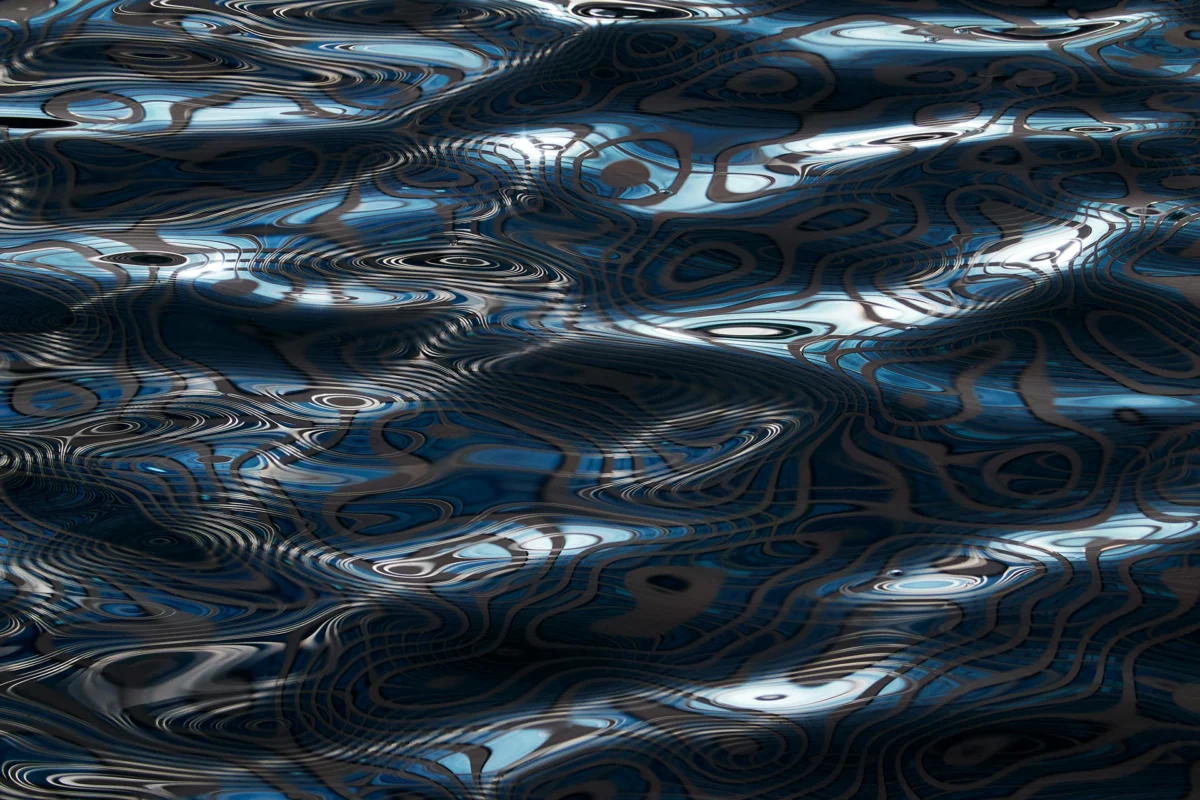
The photographic series Fleeting Reflections, a decade-long exploration of light, glass, steel, and water within the urban landscape of London’s Canary Wharf, stands as a profound testament to the power of sustained observation and in-camera artistry. Far from being digital fabrications, these captivating abstract images are direct captures of light interacting with the built and natural environment, often employing single frames or meticulously layered in-camera multiple exposures. The creator of Fleeting Reflections emphasizes that the authenticity of the work lies in "attention, repetition, and time," asserting a philosophical commitment to revealing what exists rather than digitally constructing it. This approach challenges prevailing notions in contemporary photography, where post-processing often dominates the visual narrative.
Central to the enduring success and critical acclaim of Fleeting Reflections is the artist’s adherence to three foundational pillars for meaningful creative work in both nature and abstract photography: accessibility, repeatability, and patience. These principles, meticulously applied over more than ten years, have transformed a seemingly mundane urban financial district into an inexhaustible source of visual wonder, culminating in acclaimed books and exhibitions that have garnered international attention.
The Genesis of a Decade-Long Pursuit: Canary Wharf as Canvas

The journey of Fleeting Reflections began with a deliberate choice to defy the conventional wisdom prevalent in nature photography, which often dictates a pursuit of dramatic, remote, or exotic locales for worthwhile imagery. Instead, the artist turned to the immediate and accessible surroundings of Canary Wharf. This square mile of docks, encircled by towering steel and glass structures, became an unexpected muse. Far from viewing it merely as a bustling financial hub, the artist perceived Canary Wharf as a dynamic array of light sources, where the towering edifices cast vibrant colours and sharp lines onto the water’s surface. The interplay of wind, water, and light then sculpts these reflections into an ever-changing tableau of waves, ribbons, and fractured patterns.
This initial reinterpretation of an urban environment laid the groundwork for a project that would span over a decade. The artist’s early experiences in photography likely involved grappling with the logistical demands and inherent limitations of pursuing far-flung subjects. The shift to a highly accessible location was not merely a matter of convenience but a strategic artistic decision, allowing for an unprecedented level of engagement and intimacy with the chosen subject. This decision directly addressed the first pillar: accessibility.
Pillar One: Accessibility – Redefining the "Exotic" in Urban Landscapes
The concept of accessibility, often overlooked in the grand narratives of photographic achievement, forms the bedrock of Fleeting Reflections. The artist posits that true creative depth is cultivated through consistent engagement with a subject, a level of familiarity that is practically impossible without ease of access. For the artist, Canary Wharf is a location that can be reached and walked within a mere 40 minutes, requiring no flights, special permits, extended time off, or arduous early morning hikes. This practicality means the artist can visit regardless of conventional photographic conditions—be it harsh sunlight, flat light, drizzle, or heavy rain that transforms the water’s surface into a "hammered metal."

This constant availability allows for an iterative process of observation and capture, moving beyond superficial impressions to a profound understanding of the environment’s nuances. In an era where photographic expeditions to remote wilderness areas or exotic cultures are often glorified, Fleeting Reflections offers a compelling counter-narrative. It demonstrates that a photographer’s most fertile ground might be found in their immediate vicinity, encouraging a deeper appreciation for the overlooked beauty in everyday settings. This accessibility facilitates the transition from simply taking pictures to truly studying a subject, allowing the artist to "listen" to the environment rather than just imposing a preconceived vision upon it. This sustained presence fosters a unique visual vocabulary that differentiates a profound body of work from transient, postcard-like snapshots.
Pillar Two: Repeatability – The Dynamic Canvas of the Docks
The second pillar, repeatability, underscores the necessity of choosing a subject that possesses an inherent capacity for continuous transformation, surprise, and the offering of new possibilities with each encounter. The docks of Canary Wharf exemplify this dynamism, presenting an environment where no two moments are ever truly identical. The water’s surface, acting as a mutable canvas, constantly reconfigures the reflected cityscape.
A tranquil morning might yield long, smooth bands of colour, mirroring the serene grandeur of the towers. In contrast, a gusty afternoon can fragment these reflections into sharp, serrated lines, evoking the graphic intensity found in album art like Joy Division’s Unknown Pleasures waveform. The passage of a boat can momentarily blur the reflections into painterly smears, while transient iridescent interference patterns caused by diesel on the water’s surface may appear and vanish within minutes, never to be seen again. This perpetual state of flux ensures that the artist can return to the "same" scene hundreds or even thousands of times and still discover fresh visual narratives. This consistent engagement transcends mere architectural photography, evolving into a study of "behaviour"—the ever-changing temperament of light and water.

The intrinsic repeatability of the Canary Wharf environment is crucial for the deployment of specific in-camera techniques. Fast burst rates become essential for freezing micro-moments of intricate detail on the water’s surface before they dissipate, capturing ephemeral gestures. Multiple exposure modes are employed to layer these fleeting elements, extending the inherent abstraction and complexity already present. These techniques are not ends in themselves but rather sophisticated tools that enable the artist to respond effectively to the subject’s ceaseless offerings. The palette of colours shifts with the weather, the geometric forms bend with the wind, and the overall mood changes with the tide, providing an endless supply of raw material for creative interpretation. Without such a repeatable and dynamic subject, the artist notes, one is left with mere postcards; with it, one cultivates a substantial body of work.
Pillar Three: Patience – The Unseen Foundation of Mastery
The final and arguably most underestimated pillar is patience, which permeates every stage of the Fleeting Reflections project. It begins long before the shutter is pressed, demanding a meticulous waiting game for the convergence of suitable weather conditions and the artist’s availability. Different lighting conditions—hard sun on still water versus flat light in a drizzle—yield vastly different results, and not every combination is creatively viable. This often entails walking for miles, systematically checking various angles and patches of water, only to find that the day’s conditions offer nothing suitable.
During the act of shooting, patience transforms into a rigorous physical and mental exercise. The artist might remain at a single location for up to four hours, capturing as many as 3,000 frames of what a casual observer might dismiss as "the same scene." This intense focus is driven by the search for that precise, elusive instant when colour, rhythm, structure, and tension coalesce into a perfect harmony. Such moments cannot be rushed; they demand sustained presence and acute recognition.

The demanding nature of patience extends into the post-capture phase. The artist faces the daunting task of downloading thousands of nearly identical-looking images, embarking on a slow, deliberate sifting process. This is where discipline becomes paramount, as the artist purposefully navigates through the vast archive, seeking the exact frame where all elements align, and ruthlessly rejecting the rest. The resulting "keep rate" is notably low, a testament to the artist’s unwavering commitment to quality and precision.
In terms of processing, the artist maintains a philosophy of restraint and authenticity. Work is confined to global adjustments within software like Capture One, focusing on fundamental elements such as levels, clarity, sharpness, and contrast. Crucially, there is no manipulation of shapes in Photoshop. This decision is as philosophical as it is aesthetic, reflecting a desire to reveal the inherent forms already present in the water rather than creating them artificially. This commitment allows the artist to declare, with absolute conviction, "this happened," upholding the honesty and integrity of the work.
Perhaps the longest form of patience is the commitment to allowing the work to mature over an extended period before public presentation. The Fleeting Reflections project was not shown publicly in any significant way for years, during which time the artist continuously returned to Canary Wharf, refining techniques, learning to discern essential visual information from mere noise. It took approximately seven years of dedicated effort before the artist felt the body of work was sufficiently coherent for publication. This culminated in the release of the first book, Fleeting Reflections, in 2017 by Triplekite, an independent publisher known for its fine art photography titles. The series subsequently gained broader recognition through exhibitions at the Greenwich Gallery in 2017 and the Anise Gallery in London in 2019, leading to the publication of a second volume, Fleeting Reflections II, in 2023.
These milestones, while appearing as markers of rapid success, are the visible culmination of thousands of unseen hours dedicated to walking, watching, waiting, shooting, editing, rejecting, and persistently returning to the subject. This unseen labour underscores the depth and intensity of the artist’s engagement, forming the true foundation of the project’s success.

Broader Implications and Impact for the Photography Community
The Fleeting Reflections series offers significant implications for the wider photography community, challenging several entrenched conventions. Firstly, it effectively dismantles the myth that compelling abstract or nature photography requires access to dramatic or exotic landscapes. By demonstrating profound artistry from a single square mile of urban docks, the work encourages photographers to explore the rich visual potential within their immediate environments, fostering creativity through resourcefulness rather than extensive travel. This resonates particularly in a global context where travel is often restricted or economically challenging.
Secondly, the philosophical stance on in-camera capture and minimal post-processing provides a powerful counter-narrative to the prevalent culture of digital manipulation. In an age where digital tools can radically alter photographic realities, the artist’s commitment to "revealing what was already there" speaks to a desire for authenticity and a deeper connection to the physical world. This approach has been lauded by art critics and gallerists, who often seek out works that possess a clear and honest artistic methodology. The success of the books and exhibitions attests to the market’s appreciation for such integrity, positioning Fleeting Reflections as a benchmark for authentic abstract photography.
Furthermore, the emphasis on accessibility, repeatability, and patience serves as an invaluable pedagogical framework for aspiring photographers. It shifts the focus from an obsession with technical gear and exotic locations to the more fundamental aspects of artistic discipline, sustained engagement, and critical self-evaluation. This methodology suggests that mastery is not found in fleeting moments of inspiration but in the quiet, persistent work of deep observation and refinement over time. Art critics, such as those who reviewed the Greenwich and Anise Gallery exhibitions, often remarked on the palpable sense of "attention" evident in the photographs, highlighting how the artist’s dedication translates directly into the visual impact of the work.

Conclusion: The Visible Attention
Ultimately, the enduring message of Fleeting Reflections is that exceptional, personal, and distinctive photographic work is not contingent on grand landscapes or exotic locations. Instead, it flourishes through a dedicated engagement with an accessible subject, characterized by repeatability and unwavering patience. The artist’s journey with the Canary Wharf docks serves as a compelling model: find a place that can be easily and frequently visited, whether it be a local canal, a harbour wall, an urban marsh, or even rainwater pooling in a car park. Return to it consistently, in all its moods and under all weather conditions, until its responses become intimately familiar.
Then, commit to the arduous, slow work: the endless walking, the patient waiting, the continuous refinement of vision, and the brutal honesty required in the editing process. Patience, as Fleeting Reflections so vividly illustrates, is far from a passive virtue. It is an intensely active decision—a deliberate investment of oneself into a subject for as long as it takes to achieve profound understanding. Over time, this profound patience becomes intrinsically visible within the photographs themselves. While viewers may initially perceive captivating colours, intricate shapes, and dynamic forms, what they are truly encountering is the distilled essence of the artist’s unwavering attention and deep engagement.