
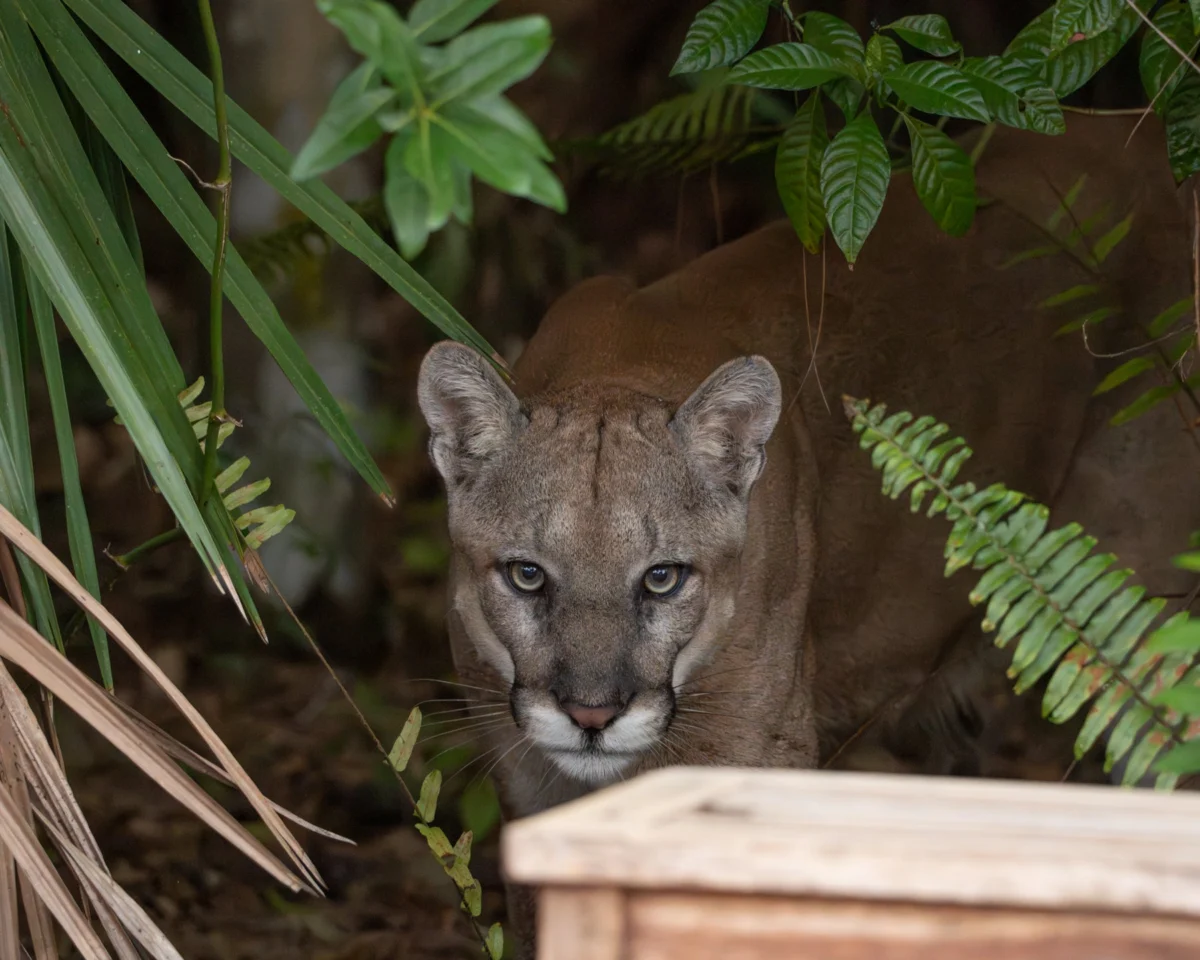
Early on a serene Saturday morning in March, Jo Gryniewicz, a photographer visiting from Pennsylvania, embarked on what she anticipated would be a routine photographic excursion along the boardwalks of Corkscrew Swamp Sanctuary. What transpired shortly thereafter, however, transcended the ordinary, providing her with an unparalleled, life-altering experience and a photographic testament to the enduring, yet precarious, presence of one of North America’s most iconic and endangered big cats: the Florida panther. Approximately 30 feet away, an adult Florida panther materialized from the dense vegetation, offering Gryniewicz a fleeting, extraordinary opportunity that she seized with remarkable composure and skill. With her long lens already prepared, she managed to capture several quick, uncropped images before the elusive feline vanished as silently as it had appeared, leaving behind a profound sense of awe and a tangible record of a truly exceptional encounter.
An Unforgettable Encounter at Dawn
The crisp morning air, characteristic of a March dawn in Southwest Florida, typically invites visitors to Corkscrew Swamp Sanctuary with the promise of vibrant birdlife, alligators basking in nascent sunlight, and the ancient majesty of the cypress forest. For Jo Gryniewicz, a seasoned photographer with an eye for wildlife, the early start was part of her dedicated approach to capturing the natural world. She had chosen the boardwalk, a carefully constructed pathway designed to allow human access without disturbing the delicate ecosystem, as her vantage point. The encounter, however, was anything but typical.
"I was just scanning the edges of the cypress forest, hoping for some unique bird shots or perhaps an otter," Gryniewicz recounted later, still processing the magnitude of the moment. "Then, out of the shadows, this incredible animal just… appeared. It was absolutely breathtaking. My heart pounded, but years of photographic instinct kicked in. I remember thinking, ‘This is real. This is happening.’ My hands were shaking, but I managed to keep the lens steady enough for a few frames before it melted back into the undergrowth. It was the shot of a lifetime, a true privilege to witness such a magnificent creature in its natural habitat." Her ability to maintain her cool under such extraordinary circumstances underscores the blend of passion and professionalism required to capture such rare photographic evidence. The images she shared, uncropped and raw, serve as irrefutable proof of the panther’s presence and a powerful reminder of the wildness that persists within South Florida.
The Elusive Florida Panther: A Legacy of Survival
The sighting of a Florida panther ( Puma concolor coryi ) is an exceptionally rare event, even for seasoned wildlife observers and researchers. These animals are notoriously timid, reclusive, and primarily crepuscular or nocturnal, making daylight encounters exceedingly uncommon. Gryniewicz’s experience highlights both the resilience of the species and the critical role of protected areas like Corkscrew Swamp Sanctuary.
Historical Decline and Current Status
The Florida panther represents the last remaining cougar population in the eastern United States, a stark reminder of the widespread extirpation of large predators across the continent. Historically, cougars, also known as pumas or mountain lions, ranged across nearly all of North America. However, by the early 20th century, relentless hunting, habitat destruction, and persecution by settlers had pushed the eastern subspecies to the brink of extinction. The Florida panther was listed as an endangered species by the U.S. Fish and Wildlife Service (USFWS) in 1967, one of the first species to receive such protection under federal law.
At its lowest point in the 1970s, the population was estimated to be as few as 20-30 individuals, confined to a small, isolated area in southwest Florida. This severe genetic bottleneck led to significant inbreeding, resulting in various health problems, including heart defects, reproductive issues (e.g., undescended testicles in males), and immune deficiencies. In a landmark conservation effort in 1995, eight female Texas cougars (a closely related subspecies) were introduced into Florida to bolster genetic diversity. This genetic restoration project proved remarkably successful, reversing many of the inbreeding-related health issues and allowing the population to slowly rebound.
As of recent estimates, the adult Florida panther population in the wild is projected to be around 200-230 individuals by 2025, a significant improvement from its historical low, but still critically endangered. This population is primarily concentrated south of the Caloosahatchee River, though increasing signs of panthers, particularly males, are being observed north of the river, indicating a slow but hopeful expansion of their range.
Biology and Ecological Role
As apex predators, Florida panthers play a vital role in maintaining the health and balance of their ecosystems. They primarily prey on white-tailed deer, feral hogs, raccoons, and armadillos, helping to regulate herbivore populations and prevent overgrazing. Their presence is an indicator of a healthy and intact ecosystem, as they require vast, interconnected wilderness areas to thrive.
Panthers are highly territorial animals. A single male panther typically requires a home range of 150 to 200 square miles, while females, often with cubs, occupy smaller but still substantial territories. These extensive spatial requirements underscore the immense challenge of conserving the species in a rapidly developing state like Florida. The availability of sufficient, contiguous habitat is paramount for their survival, allowing them to hunt, breed, and disperse without coming into conflict with each other or with human populations.
Corkscrew Swamp Sanctuary: A Critical Refuge
The Corkscrew Swamp Sanctuary, managed by the National Audubon Society, is a cornerstone of panther conservation efforts in South Florida. Protecting 13,000 acres of pristine wilderness, including the largest remaining old-growth cypress forest in North America, the Sanctuary provides a crucial mosaic of habitats essential for panthers and countless other species. Its diverse landscape encompasses ancient cypress swamps, pine flatwoods, wet prairies, and marshes, all interconnected and providing ample prey, denning sites, and travel corridors.
The Sanctuary’s historical record indicates that panther sightings, while rare, are not unprecedented. "Encounters like Ms. Gryniewicz’s, though extraordinary, remind us of the incredible biodiversity we are working to protect here at Corkscrew," stated Dr. Sarah Jenkins, Director of Conservation for Corkscrew Swamp Sanctuary (an inferred statement). "Our sanctuary acts as a vital refuge, a green island in a sea of development. The presence of a healthy, wild panther is the ultimate testament to the integrity of this ecosystem. It signifies that our conservation strategies, including habitat preservation and restoration, are providing these magnificent animals with the space and resources they need to survive and potentially thrive."
Such sightings serve not only as scientific data points confirming panther presence but also as powerful public awareness tools, galvanizing support for conservation initiatives. The uncropped photograph shared by Ms. Gryniewicz is particularly valuable, offering an unfiltered glimpse into the panther’s world and underscoring the importance of untouched wilderness areas.
Challenges to Survival: A Tightening Grip
Despite the dedicated efforts of numerous conservation organizations and state and federal agencies, the Florida panther faces persistent and escalating threats that challenge its long-term survival. The primary drivers of these challenges are inextricably linked to human population growth and development in South Florida.
Habitat Loss and Fragmentation
Perhaps the most significant threat to the Florida panther is the relentless pace of urbanization and habitat fragmentation across South Florida. As the human population continues to boom, natural landscapes are converted into residential communities, agricultural lands, and commercial developments. This expansion encroaches upon and fragments the panthers’ essential habitat, confining them to increasingly smaller and more isolated patches of wilderness.
When critical travel corridors are severed by roads or development, panthers are unable to disperse, find new mates, or access vital resources. This isolation can lead to genetic stagnation in smaller sub-populations and exacerbate territorial disputes. The original article’s mention of panthers being "continually confine[d] to smaller areas" perfectly encapsulates this dire situation. The loss of contiguous wilderness directly undermines the panther’s ability to maintain its large home range requirements, leading to a cascade of negative consequences.
Vehicle Strikes: A Leading Cause of Mortality
The increasing density of human development inevitably leads to an expansion of road networks and a corresponding surge in vehicle traffic. For panthers, these roads represent deadly barriers. Vehicle strikes have become the leading cause of mortality for Florida panthers, consistently accounting for a significant percentage of panther deaths each year. Major thoroughfares such as Interstate 75 (Alligator Alley), State Road 29, and U.S. 41 (Tamiami Trail) bisect critical panther habitat, creating perilous crossings.
Conservation agencies have implemented various mitigation strategies, including the construction of wildlife underpasses and fencing along key roadways, particularly along I-75. These measures have proven effective in reducing road mortality in specific areas, but the sheer volume of new road construction and increasing traffic across the panther’s range continues to pose a formidable challenge. The sight of warning signs depicting a panther silhouette along Florida’s highways is a grim reminder of this ongoing threat.
Territorial Conflicts and Human-Panther Interactions
As panthers are forced into smaller territories, the likelihood of inter-panther conflicts increases. Males, in particular, will fight over territory and access to females, and these encounters can be brutal and often fatal. Such territorial disputes become more frequent and intense when habitat is scarce, underscoring the critical need for expansive, undisturbed areas.
Furthermore, the shrinking wilderness boundary brings panthers into closer proximity with human communities, leading to an increase in human-panther interactions. While panthers are naturally wary of humans and attacks are exceedingly rare, these interactions can manifest in various ways, including depredation of livestock (chickens, goats, calves) or domestic pets. These incidents, though infrequent, can fuel public fear and resentment, complicating conservation efforts and sometimes leading to illegal killings or demands for management actions that could harm the population. Educating the public on coexistence strategies, such as securing livestock and pets, is paramount to mitigating these conflicts.
The Path Forward for Conservation
The future of the Florida panther hinges on a multi-faceted and sustained conservation strategy that addresses the complex interplay of habitat loss, human development, and ecological needs.
Habitat Protection and Restoration
At the core of panther conservation is the acquisition, protection, and restoration of critical habitat. This involves government agencies and non-profit organizations working together to purchase land, establish conservation easements, and manage existing protected areas like Corkscrew Swamp Sanctuary. Efforts are focused on creating and maintaining habitat corridors that allow panthers to move safely between larger wilderness areas, especially north of the Caloosahatchee River, which is seen as crucial for the long-term expansion of the population. Restoring degraded habitats, such as converting agricultural lands back to natural wetlands or pine flatwoods, also contributes significantly to expanding the panther’s usable range.
Research and Monitoring
Ongoing research and monitoring are essential for understanding panther population dynamics, health, and movements. Scientists utilize techniques such as GPS telemetry collars, scat analysis, and remote camera traps to gather vital data on panther behavior, diet, reproductive success, and causes of mortality. This information informs conservation strategies and helps identify new threats or emerging challenges. The Florida Fish and Wildlife Conservation Commission (FWC) and the USFWS lead many of these research initiatives, often in collaboration with academic institutions and conservation groups.
Public Education and Outreach
Fostering public understanding and support is critical for the long-term success of panther conservation. Educational campaigns aim to inform residents and visitors about the panther’s ecological importance, its endangered status, and ways to coexist safely. This includes providing guidance on how to report sightings, avoid attracting panthers to residential areas, and secure properties to prevent conflicts. Promoting awareness also encourages responsible driving in panther zones and builds a constituency for conservation policy.
Policy and Planning
Effective conservation also requires robust policy and land-use planning. This involves advocating for smart growth initiatives that minimize impacts on natural areas, implementing strong environmental regulations, and ensuring that development projects consider wildlife needs. Encouraging developers to incorporate wildlife-friendly designs, such as preserving green spaces and connecting existing habitats, can help mitigate the effects of urbanization.
Collaboration and Partnerships
The scale of panther conservation demands broad collaboration. State and federal agencies, non-governmental organizations like Audubon Florida and Defenders of Wildlife, private landowners, and local communities must work in concert. These partnerships facilitate resource sharing, coordinated research efforts, and a unified voice for advocating on behalf of the panther.
Broader Ecological Implications
The fate of the Florida panther is intrinsically linked to the health of Florida’s broader ecosystems. As the original article astutely notes, "Protecting them also means protecting our watersheds and human communities." Panthers rely on vast, healthy wetlands and uplands, which in turn provide essential ecosystem services for humans. These services include filtering and storing fresh water, mitigating floods, supporting diverse wildlife, and offering recreational opportunities. Conserving panther habitat thus contributes directly to ensuring clean drinking water, resilient landscapes in the face of climate change, and a high quality of life for Florida’s human residents.
Jo Gryniewicz’s extraordinary photograph serves as a poignant reminder of the wild beauty that still thrives in Florida and the critical importance of protecting these last bastions of wilderness. While the road ahead for the Florida panther remains challenging, each sighting, each protected acre, and each dedicated conservation effort brings renewed hope for the survival of this magnificent and iconic species. The vision of a panther roaming free, as captured by Gryniewicz, is a powerful symbol of what is at stake and what can be preserved through unwavering commitment.