
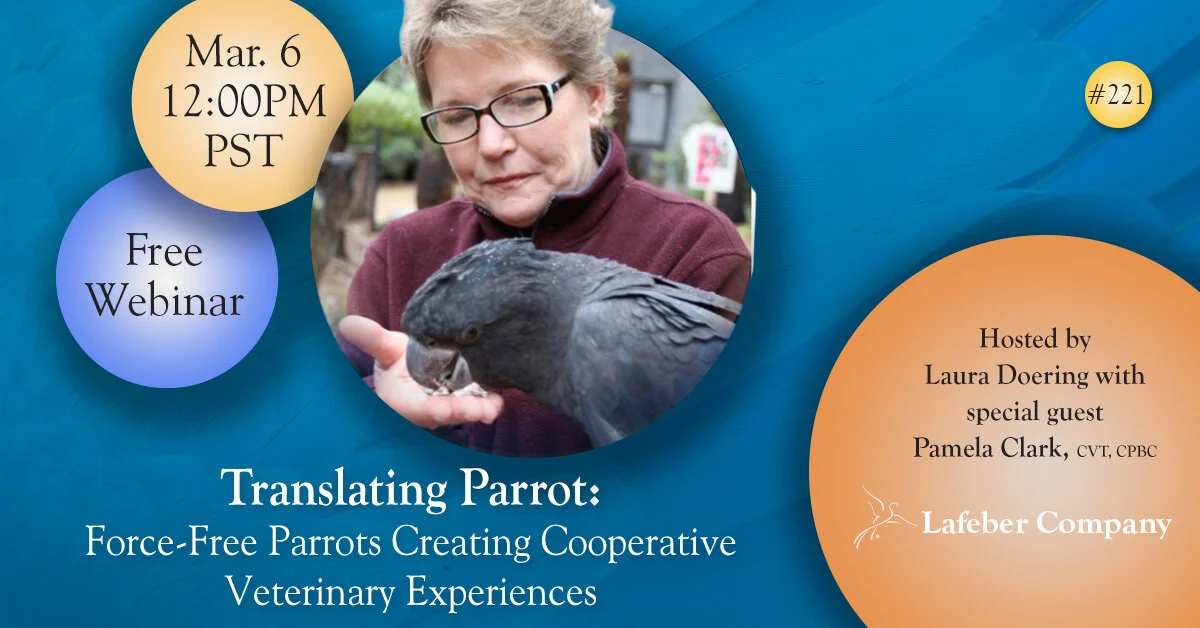
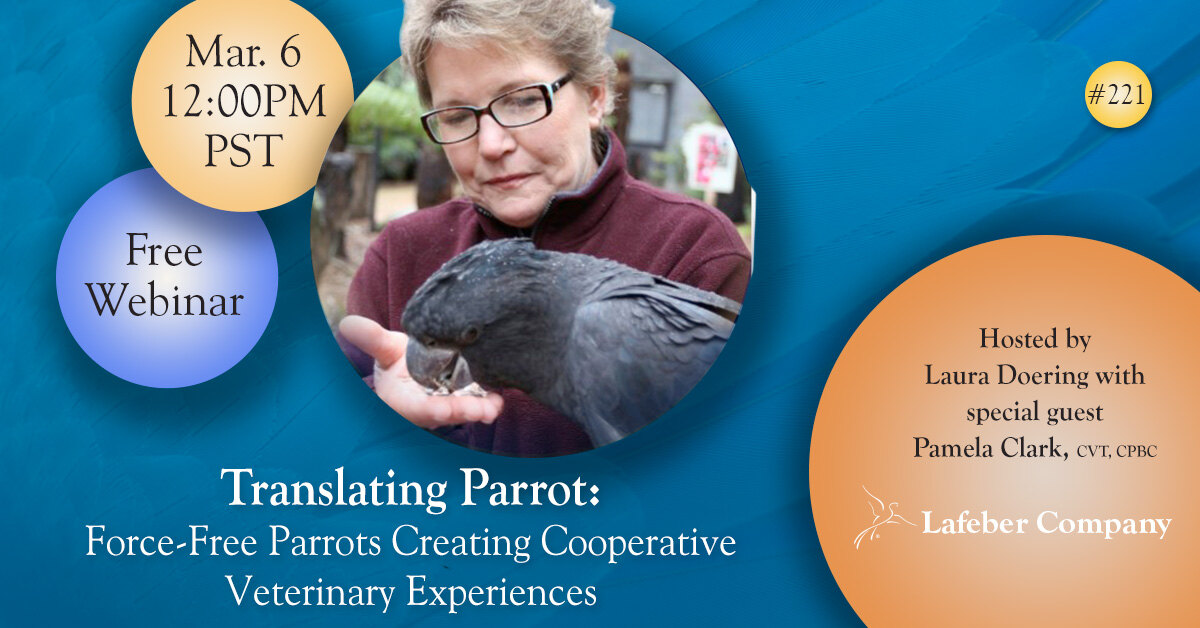
On Friday, March 6, 2026, at 12:00 p.m. PST, a pivotal webinar titled "Force-Free Parrots: Creating Cooperative Veterinary Experiences" will be presented, aiming to revolutionize how avian companions interact with veterinary care. The session, led by Pamela Clark, CPBC (Certified Parrot Behavior Consultant), promises to equip both pet owners and veterinary professionals with advanced techniques for stress-free and cooperative avian veterinary visits. This initiative addresses a long-standing challenge in avian medicine: the often-traumatic nature of traditional restraint methods, which can foster fear and resistance in parrots, thereby hindering essential healthcare.
The webinar’s core objective is to introduce and advocate for force-free handling and cooperative care principles specifically tailored for parrots. By moving away from coercive techniques, the program aims to foster an environment of trust and mutual understanding between parrots and their caregivers, including veterinarians. Participants will gain practical strategies to minimize anxiety, build robust trust, and encourage parrots to actively and willingly participate in procedures such as examinations, sample collection, and medication administration. This approach is not merely about improving the efficiency of veterinary visits; it is fundamentally about enhancing the welfare of parrots by ensuring their treatment is compassionate, considerate, and reduces the psychological burden often associated with medical interventions.
The Evolution of Avian Veterinary Care: Addressing a Critical Need
For decades, veterinary care for many animal species, including birds, has relied on manual restraint to ensure safety and facilitate examinations. While this method has been effective in enabling veterinarians to perform necessary procedures, its impact on the animal’s emotional state is increasingly being recognized as detrimental. Parrots, known for their intelligence, sensitivity, and complex social structures, are particularly susceptible to the stress and fear induced by forceful handling. This can manifest as behavioral changes, including increased aggression, anxiety, and a reluctance to engage with humans, which can significantly complicate future veterinary interactions and even impact the human-animal bond.
The emergence of force-free methods and cooperative care represents a paradigm shift in animal handling. Originating from disciplines such as animal training and welfare science, these approaches prioritize the animal’s consent and comfort. Instead of forcing compliance, force-free techniques utilize positive reinforcement, desensitization, and counter-conditioning to teach animals to willingly participate in procedures. Cooperative care, a direct application of these principles in a veterinary context, involves training animals to voluntarily present body parts for examination, tolerate medical equipment, and even assist in their own diagnostic procedures. This not only reduces stress but also empowers the animal, fostering a sense of agency and control.
Pamela Clark, the featured presenter, is a recognized authority in parrot behavior and welfare. Her extensive experience as a Certified Parrot Behavior Consultant has provided her with deep insights into the unique behavioral needs and sensitivities of parrots. Her work consistently emphasizes building positive relationships and utilizing humane training methods. This webinar is a direct extension of her commitment to promoting best practices in avian care, aiming to disseminate knowledge that can lead to more humane and effective veterinary experiences for these beloved pets.
Key Takeaways: Practical Strategies for Force-Free Parrots
The "Force-Free Parrots" webinar is designed to be highly practical, offering actionable insights for a diverse audience. Attendees can expect to learn about:
- Principles of Force-Free Handling: Understanding the ethical and scientific underpinnings of avoiding coercion and relying on positive reinforcement. This includes recognizing subtle cues of stress and discomfort in parrots and learning to respond appropriately.
- Cooperative Care Training: Detailed methodologies for training parrots to voluntarily engage in veterinary procedures. This can range from simple tasks like presenting a foot for examination to more complex behaviors like allowing blood draws or administering oral medications.
- Building Trust and Reducing Fear: Strategies for creating a positive association with veterinary visits. This involves gradual introductions to veterinary environments, equipment, and personnel, ensuring that each interaction is a learning experience rather than a source of trauma.
- Practical Application in Veterinary Settings: Guidance for veterinary professionals on integrating force-free techniques into their daily practice. This includes adapting examination rooms, modifying procedural protocols, and communicating effectively with parrot owners about these methods.
- Caregiver Empowerment: Equipping pet owners with the tools and knowledge to prepare their parrots for veterinary visits at home, thereby reducing stress for both the bird and the owner when seeking professional care.
The webinar will feature a visual component, likely including demonstrations and case studies, to illustrate the practical application of these techniques. The inclusion of a YouTube embed (https://www.youtube.com/embed/3xf00uvt9AU?feature=oembed) suggests that supplementary video content demonstrating these principles in action will be a key feature of the presentation, offering viewers tangible examples of force-free interactions.
Supporting Data and the Growing Field of Avian Welfare
The growing emphasis on force-free methods in animal care is supported by a burgeoning body of scientific research. Studies in animal behavior and welfare consistently demonstrate that positive reinforcement-based training leads to reduced stress hormones, improved cognitive function, and enhanced overall well-being in animals. For parrots, this can translate to a more robust immune system, reduced susceptibility to stress-related illnesses, and a higher quality of life.
The veterinary field itself is witnessing a significant shift. Organizations like the American Veterinary Medical Association (AVMA) and the Veterinary Behavior Society have increasingly endorsed and promoted the use of force-free and low-stress handling techniques across various species. The veterinary curriculum is gradually incorporating these modern approaches, recognizing that animal welfare is paramount and that patient cooperation significantly enhances diagnostic accuracy and treatment efficacy.
While specific statistics on the prevalence of stress-related issues during parrot veterinary visits are not readily available in public domain research, anecdotal evidence from avian veterinarians and behaviorists suggests it is a widespread concern. Many parrot owners report significant anxiety and difficulty in getting their birds to cooperate during routine check-ups, leading to delayed or avoided veterinary care. This webinar aims to directly address this gap by providing accessible, evidence-based solutions.
Background and Context: Lafeber Company’s Commitment to Avian Health
The webinar is being hosted by Lafeber Company, a renowned organization dedicated to avian health and nutrition. For over 50 years, Lafeber Company has been a leading provider of research-based avian diets and educational resources for pet bird owners and veterinarians worldwide. Their commitment extends beyond product development to actively promoting advancements in avian welfare and veterinary medicine.
Lafeber Company’s consistent support for educational initiatives like this webinar underscores their dedication to advancing the field of avian care. By facilitating access to expert knowledge from professionals like Pamela Clark, they aim to empower the avian community with the latest information and techniques that can positively impact the lives of pet birds. This particular webinar aligns with their mission to foster proactive and humane approaches to bird health, ensuring that veterinary care is a positive and constructive experience.
The timing of the webinar, March 6, 2026, is significant as it falls within a period when awareness of animal welfare is at an all-time high. The increasing humanization of pets means that owners are seeking the highest standards of care for their avian companions, mirroring the advancements seen in human healthcare. This webinar is a timely response to that evolving demand.
Potential Implications and Future Outlook
The widespread adoption of force-free handling and cooperative care for parrots has far-reaching implications. For pet owners, it promises a less stressful and more rewarding relationship with their avian companions, knowing that their beloved pets are receiving veterinary care without undue fear or distress. This can lead to earlier detection of health issues, improved treatment adherence, and a stronger human-animal bond.
For veterinary professionals, mastering these techniques can enhance their practice’s reputation, attract clients seeking humane care, and improve their own job satisfaction by reducing the physical and emotional toll of dealing with resistant animals. It also opens avenues for more advanced diagnostic procedures and treatments that might otherwise be challenging to perform.
Looking ahead, the principles discussed in this webinar are likely to become the standard of care for avian veterinary medicine. As research continues to validate the benefits of force-free methods, and as more professionals and owners embrace these humane approaches, the future of parrot veterinary care will be characterized by cooperation, trust, and a profound respect for the animal’s well-being. This webinar serves as a crucial step in that ongoing evolution, equipping the avian community with the knowledge and skills to create a more positive and effective veterinary experience for every parrot. The time zone converter link provided (https://www.timeanddate.com/worldclock/converter.html) is a practical tool that highlights the global reach and accessibility of this important educational event, ensuring participants from various regions can accurately plan their attendance.