
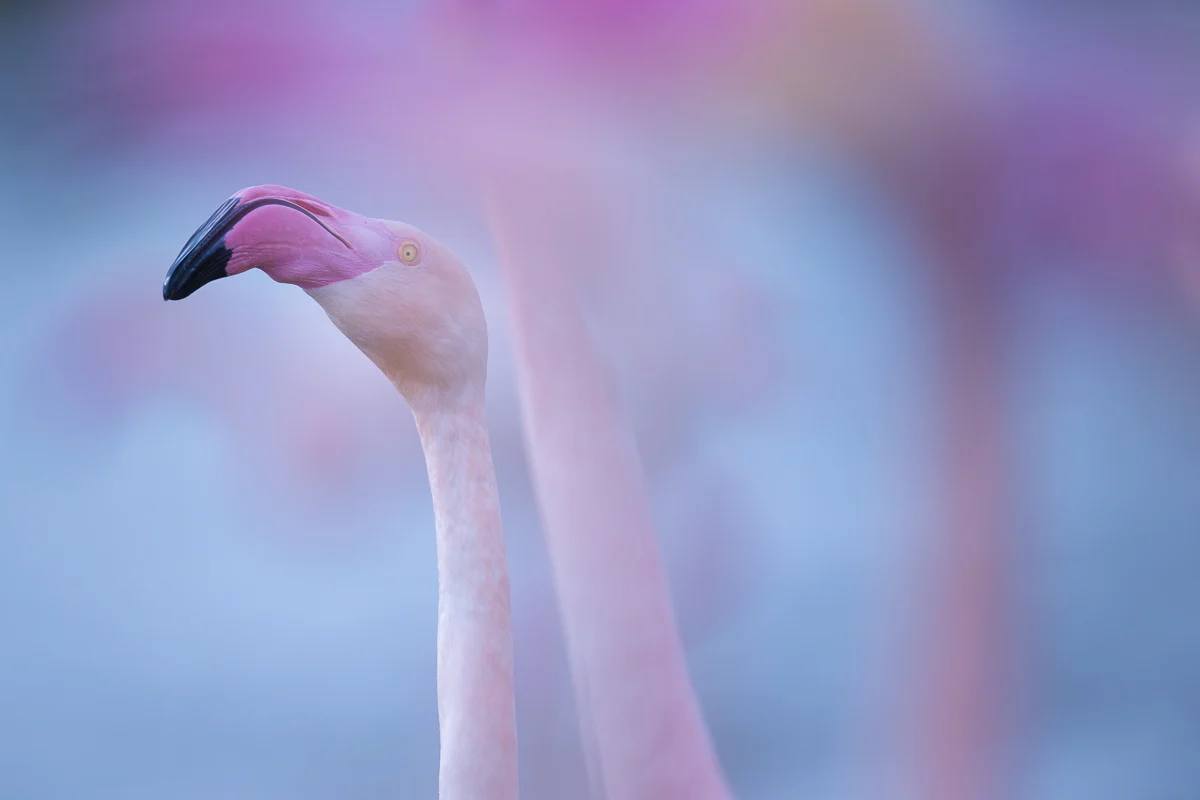
In contemporary wildlife photography, the elements that lie just outside the sharp focus of the main subject are being increasingly recognized for their subtle yet profound ability to sculpt an image’s atmosphere. Rather than serving as mere background noise, a strategically blurred foreground can become a powerful compositional tool, guiding the viewer’s gaze, evoking a particular mood, or adding layers of emotional resonance that a purely sharp image might struggle to convey. This artistic approach underscores a fundamental shift in the discipline: the pursuit of transforming fleeting moments into images that not only depict but truly express and suggest, where soft blurs are integral to this evocative storytelling.

The Evolution of Artistic Vision in Wildlife Photography
The journey of wildlife photography has evolved significantly since its early days, transitioning from a primarily scientific and documentary pursuit to a celebrated art form. Historically, the emphasis was on clarity, detail, and the precise capture of animal behavior for biological study. Early pioneers like George Shiras III, whose work in the late 19th and early 20th centuries often involved flash photography at night to capture elusive species, focused on bringing unseen wildlife into public view with stark realism.
However, as photographic technology advanced and the medium gained wider artistic acceptance, a new generation of photographers began to explore the expressive potential of their craft. Influenced by art movements such as Impressionism and Pictorialism, which valued mood and atmosphere over stark realism, these photographers started to experiment with techniques that softened the edges of reality. The intentional use of selective focus and shallow depth of field, initially employed to isolate subjects, gradually expanded to incorporate blurred foregrounds as a deliberate artistic choice. This development marked a pivotal moment, shifting the focus from simply recording presence to crafting an immersive visual experience that invites deeper contemplation and emotional connection. The current embrace of soft atmospheres and foreground blurs represents a culmination of this artistic trajectory, where technical mastery converges with creative vision to produce images that are as much about feeling as they are about seeing.

Mystery and Revelation Through Foreground Blurs
Foreground blurs are a sophisticated photographic technique that involves deliberately positioning an object or element between the camera lens and the primary subject, rendering this intermediate element out of focus. This creates soft, ethereal blurs that may partially veil the subject without diminishing its visual prominence. Far from being a distraction, these intentional blurs are designed to enrich the image, introducing layers of depth, spatial context, mystery, and nuanced emotion.
When employed effectively, foreground blurs meticulously direct the viewer’s eye along a carefully composed visual journey. The main subject remains the focal point, yet the presence of these blurs offers subtle cues about the surrounding environment, the prevailing mood, or even the underlying narrative of the scene. This technique elevates the image beyond a simple compositional trick, transforming it into a potent storytelling device that encourages closer inspection and a more intimate engagement with the overall photograph. An added dimension is the painterly quality that foreground blurs can impart, evoking a sense of authenticity and meticulous craftsmanship, as if each image were painstakingly composed on a blank canvas. Research in visual perception suggests that introducing soft, out-of-focus elements can enhance the viewer’s sense of three-dimensionality and immersion, making the scene feel more tangible and immediate, even as it maintains an artistic distance.

Working with Natural Elements: The Photographer’s Palette
Successful application of foreground blurs often necessitates a keen eye for the immediate environment and a willingness to experiment with available elements. Nature provides an inexhaustible palette for this technique, offering a diverse array of potential foreground elements such as plant-based textures like branches, leaves, flowers, or grasses. Beyond flora, elements like shimmering water, pristine snow, rugged geological features, other animals, or even the interplay of light and shadow can be utilized to either highlight the subject or, conversely, to artfully obscure distractions.
For instance, at a vulture feeding site in the Pyrenees, a photographer might discover that the only available foreground elements are the birds themselves. Capturing a precise overlap where the blurred forms of some vultures frame a sharply focused individual is a rare but impactful achievement, demonstrating the versatility of using living elements. Similarly, scenes featuring multiple animals, such as a flock of flamingos, offer abundant opportunities to experiment with this approach, where the blurred forms of distant birds add texture and context to the sharply rendered subject.

Consider the powerful example of a Pyrenean capercaillie captured at its forest lek. Here, the soft blurs were organically created by local shrubs and underbrush, forming a natural filter between the subject and the lens. This vegetative layer not only softened the overall composition but also introduced palpable depth and atmosphere, delicately framing the bird without overwhelming its presence. The scene was further enhanced by the low, crepuscular light of early morning, which cast long shadows and imbued the forest with an air of quiet mystery. Such moments, where light, subject, and environment converge, elevate photography from mere documentation to profound storytelling, inviting viewers into the secret world of the wild.
In contrast, other compositions might rely on the elemental interplay of light and shadow. Through careful exposure adjustments and a warm white balance, the atmosphere becomes rich and almost tactile. The dynamic contrast between illuminated and shaded areas sculpts the subject within its environment, reinforcing a sense of three-dimensionality. Beyond its aesthetic appeal, this technique serves a crucial compositional function, naturally guiding the viewer’s eye toward the focal point, allowing the image to communicate with both clarity and evocative depth. These photographs, often leaning towards minimalism, effectively convey a sense of the surrounding environment and hint at the subject’s relationship with it, or even the specific moment of capture, thereby revealing aspects of the animal’s behavior and habits. This subtle layering of visual cues allows the viewer to intuit more than what is explicitly shown, fostering a more immersive and interpretive experience of the scene.

Ethical Considerations and the Art of Waiting
A critical dimension when employing foreground blurs in wildlife photography is the setting and the degree of control the photographer can ethically exert. While some environments naturally offer elements—plants, light, snow, or even other animals—that can be creatively incorporated, the photographer’s interaction with the scene must always prioritize the welfare of the wildlife. In situations involving less skittish species photographed from a hide, there might be limited opportunities to subtly arrange elements within the frame, aligning with an artistic vision and pre-visualized shot. However, in the vast majority of cases, such control is absent. Photographers must approach subjects with utmost caution, adhering strictly to ethical guidelines to prevent disturbance. Often, the most effective strategy is profound patience, waiting for the perfect moment to unfold naturally. This "art of waiting" becomes an essential component of the creative process, a testament to the photographer’s respect for the wild.
Renowned wildlife photographers and conservationists frequently emphasize that no photograph is worth compromising an animal’s well-being. Organizations like the National Audubon Society and the North American Nature Photography Association (NANPA) provide comprehensive ethical guidelines, which stress maintaining a respectful distance, avoiding baiting, and minimizing impact on habitats. Achieving foreground blurs responsibly means working with what nature presents, rather than manipulating the environment or the animal. This "photographic hunt," characterized by few preconceived ideas and a serendipitous interaction with the wild, defines the appeal for many practitioners. It necessitates a high tolerance for failure and an embrace of the unpredictable, yet it often yields images of unparalleled authenticity and emotional depth, deeply tied to the observation of wildlife itself.

Genre Suitability and Technical Nuances
The technique of foreground blurring finds its most harmonious application in portrait photography, where the soft, ethereal atmosphere aligns perfectly with the intended emotional and artistic meaning of the image. The deliberate softening of the periphery directs attention to the subject’s expression and presence, creating a sense of intimacy and contemplation. In contrast, dynamic scenes such as birds in flight, mammals in pursuit, or other high-speed action sequences present significant challenges. The rapid unfolding of events often renders deliberate compositional intervention with foreground blurs nearly impossible, or at best, highly serendipitous. In such cases, the opportunities for meticulous artistic placement are severely curtailed, if not entirely absent, demanding a different set of photographic skills focused on capturing peak action.
Regarding the types of blur, objects chosen to create foreground elements can be positioned closer to the camera for increased abstraction, transforming them into indistinct washes of color and light. Alternatively, they can be placed closer to the subject, allowing some form or texture to remain discernible, particularly if it adds valuable context or content to the photograph. Photographers can also craft "veils" that softly overlay the entire image, or strategically use blur to partially obscure different parts of the animal, often meticulously preserving the subject’s gaze to maintain connection. A further distinction involves seeking "look-throughs," where the camera frames the subject through a small opening in the foreground elements, or, when that’s not feasible, employing "look-overs," which involve filling the bottom of the frame with a blurred foreground to create a sense of immersion.

Technically, when working with these varied blur types, photographers must be prepared to switch to manual focus. Autofocus systems, designed for sharp subjects, can often struggle to lock onto the intended focal point when significant blurred elements are present in the foreground. While this might occasionally result in a slight loss of absolute sharpness or detail, it is a deliberate artistic trade-off, compensated by embracing a more painterly and expressive aesthetic in the final image. This willingness to prioritize artistic vision over clinical sharpness is a hallmark of mastering the foreground blur technique.
Broader Implications and Artistic Legacy
Foreground blurs represent a creative technique with broad applicability, offering considerable appeal to photographers seeking to infuse their work with greater artistic depth. Its versatility allows for deployment in a wide range of situations, provided the photographer can exert some degree of control over their position relative to the subject, or the subject’s position within the frame.

Creativity, particularly in dynamic fields like wildlife photography, often blossoms through trial and error, fostered by the opportunity to work within familiar surroundings. Foreground blurs encourage improvisation and allow inspiration to emerge in diverse contexts. Furthermore, this technique offers a fresh and original perspective on "recurring" or familiar species, preventing photographic stagnation and continually challenging the artist’s vision. By presenting wildlife in a new, evocative light, it encourages viewers to see common subjects with renewed wonder.
The impact of this artistic approach extends beyond individual images. By moving beyond purely documentary capture, wildlife photographers using foreground blurs contribute to a broader conversation about conservation. Images that evoke emotion and mystery can forge a deeper connection between the viewer and the natural world, fostering empathy and a desire to protect these fragile ecosystems. This technique is fully compatible with other creative photographic approaches, including intentional over- or underexposure, motion blur through varying shutter speeds, dramatic backlighting, double exposures, and abstraction. It serves as a testament to the expansive possibilities within the genre.

The technique of foreground blurring has been embraced and refined by masters and influential photographers across various disciplines, each bringing a unique aesthetic to their work. Its capacity to transform a scene into a profound visual narrative has solidified its place as a powerful tool for artistic expression. As the landscape of photography continues to evolve, techniques that prioritize emotional depth and artistic interpretation will remain vital. Therefore, aspiring and established photographers alike are strongly encouraged to explore and experiment with foreground blurs, unlocking new dimensions of storytelling and enriching their visual dialogue with the wild.