
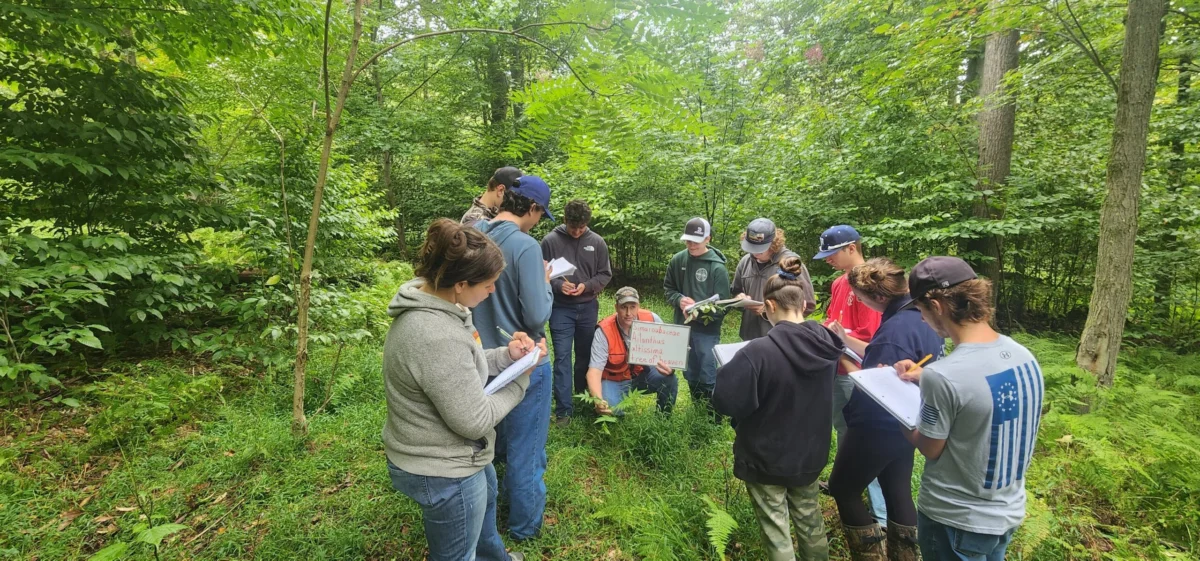
Mike Eckley’s journey into the intricate world of forestry and land stewardship began not in a classroom, but knee-deep in the cold, clear trout streams of Pennsylvania. Weekends spent fishing with his father in the "Big Woods" of Central Pennsylvania ignited an early, profound curiosity about the natural world, a connection that would ultimately evolve from an interest in aquatic ecosystems to a dedicated career focused on terrestrial ones. This foundational experience, coupled with a deep-seated commitment to ecological health, now positions Eckley as a leading voice in bird-friendly forestry, a specialized approach he advocates for and implements across private forestlands in the region. His work is further amplified by his engagement with the Penn State DuBois Wildlife Technology Program and his sharpened expertise through Audubon Mid-Atlantic’s Forester Training and Endorsement Program, both instrumental in his mission to integrate wildlife conservation with sustainable land management.
From Stream Banks to Forest Canopies: An Evolving Passion
Eckley’s initial fascination with nature, rooted in the riparian zones of his youth, gradually shifted focus. "Slowly but surely, my interest in the water transitioned to the land and surrounding trees," he recounts, describing a natural progression that laid the groundwork for his professional calling. This evolution culminated in a career dedicated to understanding and managing forest ecosystems. After years of honing his skills, a significant turning point arrived in 2008 when he returned to his home state of Pennsylvania, joining The Nature Conservancy as its first Outreach Forester. It was within this role that he discovered a powerful new lens through which to engage with the public: bird conservation.
Surrounded by a passionate community of birders—staff, donors, and volunteers alike—Eckley quickly recognized the profound resonance that avian species held for many conservation enthusiasts. "Over time I learned that bird-friendly forestry was my ticket to engaging with many different people and speaking their preferred ‘love’ language," he explains. This realization underscored the potential for birds to serve as a charismatic flagship for broader ecological management goals, providing a tangible and emotionally compelling reason for landowners to invest in specific forestry practices. This marked the genesis of his specialized interest in avian habitat management, understanding that healthy bird populations are a strong indicator of overall forest health.
Audubon’s Endorsement: Enhancing Expertise and Credibility
To deepen his knowledge and enhance his practical application of bird-friendly principles, Eckley enrolled in Audubon Mid-Atlantic’s Forester Training and Endorsement Program. This initiative is designed to equip forestry professionals with advanced ecological insights and practical strategies for integrating bird conservation into forest management plans. The program emphasizes understanding the habitat requirements of various bird species, particularly those in decline, and provides a framework for implementing best management practices. For Eckley, who now operates a private practice serving a diverse array of forest landowners, the endorsement proved invaluable.
"In private practice, I now work with a diverse cross-section of forest landowner types, and the endorsement process has helped improve my visibility and credibility with certain audiences, especially those who are passionate about birds," Eckley states. This increased credibility allows him to forge stronger, trust-based relationships with clients, positioning him as an expert capable of translating complex ecological needs into actionable, beneficial management strategies. The program not only broadened his scientific understanding but also provided a "playbook of best management practices" to help species in decline. This includes a comprehensive "toolkit of practices" to introduce to landowners interested in managing their forests specifically for avian benefits.
The Audubon program’s significance extends beyond individual professional development. It addresses a critical need within the conservation landscape: bridging the gap between scientific research on bird habitat requirements and the practical application of this knowledge on private lands. With a substantial portion of forestland in Pennsylvania owned by private individuals, engaging these landowners through knowledgeable, endorsed foresters like Eckley is paramount for large-scale conservation success. The program’s rigorous curriculum typically covers topics such as forest ecology, avian identification, habitat assessment, silvicultural techniques for bird conservation, and effective communication strategies for landowners. This holistic approach ensures that endorsed foresters are not only technically proficient but also skilled communicators and trusted advisors.
The Distinctive Approach of Bird-Friendly Forestry
Bird-friendly forestry distinguishes itself from more conventional forestry practices by placing a heightened emphasis on maintaining and enhancing the structural complexity and biodiversity of forest ecosystems, specifically with avian needs in mind. While traditional forestry often focuses on timber production or general forest health, the bird-friendly approach incorporates targeted "finesse factors" to retain and support the specific food and shelter sources vital for bird populations.
"Bird-friendly forestry has deepened my focus on how forests are managed, especially in terms of maintaining structural complexity with greater intention," Eckley explains. This means moving beyond broad-stroke management to implement nuanced interventions. For instance, instead of merely clearing undergrowth, bird-friendly forestry might involve selectively thinning mid-story vegetation to allow more sunlight to reach the forest floor, thereby strengthening the growth of specific "champion trees." These champion trees are often chosen for their ecological value, such as vigorously growing oak trees that develop broad crowns and produce abundant acorns.
White oak, in particular, holds a special place in Eckley’s perspective, not only due to his personal ownership of these majestic trees but also because of their significant ecological role. "My favorite tree species is white oak because I own quite a few on my personal property," he shares, highlighting their "aesthetic beauty, characterized by their large, sweeping, quarter-acre sized crowns and ashy gray, flaky bark." Beyond aesthetics, white oaks are crucial for warblers and a multitude of other wildlife, serving as a keystone species that provides both critical food resources (acorns) and structural habitat. By prioritizing these species and ensuring their optimal growth and health, foresters can directly support the insect populations, like caterpillars, that form the base of many bird diets, as well as the acorns that sustain a wide array of wildlife.
Another practical example cited by Eckley involves managing overgrown fields adjacent to forests. Rather than allowing these areas to revert fully to dense woodland, a bird-friendly approach might involve strategic cutting and clearing to maintain "scrubby habitat." This specific type of habitat is crucial for species like the Prairie Warbler and Golden-winged Warbler, which rely on early successional forests and shrublands for nesting and foraging. These areas, often overlooked in traditional management, are vital for biodiversity, supporting species that would otherwise struggle in mature, closed-canopy forests. The program has enabled Eckley to "connect-the-dots" between specific bird species and their precise habitat requirements, providing a detailed "playbook" for effective intervention.
Engaging Landowners and Fostering Conservation Ethic
A significant portion of Eckley’s career revolves around engaging private landowners in dialogue about forest management. He recognizes that for many, wildlife serves as the primary driver behind management decisions. Bird-friendly forestry, in this context, acts as a powerful "engine additive" that further captivates and builds essential, trustworthy relationships with his clients. By framing management decisions through the lens of bird conservation, Eckley taps into a deep well of public interest and concern.
"Much of my career is centered on engaging people in dialogue on managing forests. For many landowners, wildlife has and continues to serve as the primary vehicle that drives management decisions," Eckley notes. This approach acknowledges the emotional and personal connection landowners often have with the wildlife on their property. By demonstrating how specific forestry practices can directly benefit beloved bird species, Eckley helps landowners visualize the positive impact of their stewardship, fostering a sense of pride and responsibility. This not only leads to better ecological outcomes but also strengthens the bond between the forester and the landowner, facilitating long-term commitment to sustainable practices.
The economic implications for landowners are also considered. While the primary driver might be conservation, healthy, well-managed forests that support diverse wildlife populations can also retain or increase property value, particularly as demand for ecologically rich properties grows. Furthermore, some conservation practices may qualify for various state or federal incentive programs, providing financial support for landowners to implement bird-friendly strategies.
Pennsylvania’s Role as a High-Responsibility State for Avian Conservation
Eckley finds immense gratification in knowing his work contributes to a larger, scientifically identified priority area: the PA Wilds region. This vast, largely forested expanse in north-central Pennsylvania is recognized for its critical importance in conservation, particularly for migratory and resident bird species. "I find it exciting and rewarding to know that I am working within a landscape—the PA Wilds region—identified through science as a priority area for so many important values, including conservation of birds," he states.
Pennsylvania’s geographical position makes it a "high-responsibility state" for the viability of both game and non-game species. The state lies within a major migratory flyway, serving as a crucial breeding ground, stopover point, and wintering habitat for countless bird species. Declines in North American bird populations, estimated at nearly 3 billion birds since 1970, underscore the urgency of conservation efforts. Forest birds, in particular, have suffered significant losses due making the work of foresters like Eckley vital. Efforts in the PA Wilds are strategically channeled to focal areas identified as critical migratory pathways, ensuring that conservation actions have the greatest possible impact. This targeted approach is essential for supporting the resilience of bird populations facing myriad threats, from habitat loss and climate change to pesticide use and predation.
Organizations like Audubon Mid-Atlantic collaborate with state agencies, universities, and private landowners to implement regional conservation plans. The data-driven identification of priority areas and migratory corridors ensures that resources and efforts are concentrated where they can yield the most significant benefits for bird populations. Eckley’s work, informed by the Audubon training, directly contributes to these broader regional objectives, translating scientific knowledge into on-the-ground action that supports the ecological integrity of Pennsylvania’s forests.
A Personal Connection: Fostering the Next Generation of Stewards
Beyond the professional sphere, birds have also provided Eckley with a unique avenue for personal connection, particularly with his teenage son. In an age where digital distractions often compete with outdoor pursuits, Eckley finds moments of shared discovery through avian encounters. He recounts a recent outing where he abruptly stopped, asking his son if he heard a particular bird. Initially met with a dismissive eye-roll and a "No," Eckley persisted, using the Merlin app on his iPhone to identify the obscure sound. The app revealed a Rose-breasted Grosbeak, which soon perched nearby, allowing both to observe it. "My son’s facial expression transitioned from a sign of annoyance to showing curiosity," Eckley fondly remembers. This anecdote beautifully illustrates the power of birds to spark wonder and curiosity, potentially fostering a nascent interest in nature in the next generation.
Eckley humbly refers to himself as a "birder in training," acknowledging that while his skills are continually honing, memorable encounters, such as one with a couple of Pine Warblers, leave lasting impressions. These personal experiences reinforce the intrinsic value of his work and the universal appeal of birds as ambassadors for the natural world. They underscore that effective conservation often begins with personal moments of connection and a shared appreciation for the intricate beauty of wildlife.
Conclusion: A Holistic Approach to Forest Stewardship
Mike Eckley’s journey exemplifies a holistic approach to forest stewardship, one that acknowledges the interconnectedness of land, wildlife, and people. His work, deeply rooted in personal passion and augmented by specialized training, demonstrates that ecologically responsible forestry practices are as much about careful observation and understanding as they are about active management. It involves "listening to the land, wildlife, and the people who care about them both."
Programs like Audubon’s Forester Training and Endorsement are vital in equipping professionals like Eckley to translate scientific information into tangible action. By providing foresters with the tools, knowledge, and credibility to implement bird-friendly practices, these initiatives ensure that thriving bird populations and healthy, resilient forests can indeed go hand in hand. As the challenges of habitat loss and climate change intensify, the role of informed, dedicated foresters like Mike Eckley becomes ever more critical in safeguarding Pennsylvania’s natural heritage and fostering a deeper appreciation for the wild spaces that define the region. His efforts underscore a growing movement in conservation: one that empowers local experts to enact meaningful change on private lands, ultimately contributing to the broader ecological health of a high-responsibility state and the well-being of its diverse avian inhabitants.