
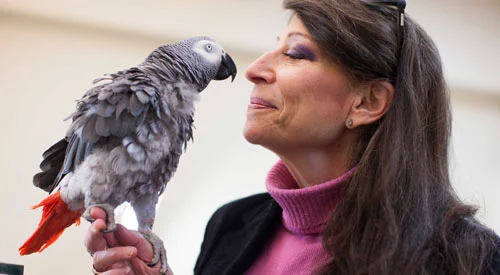
My career as a scientist has been incredibly rewarding. Mostly because of the chance to discover new information and to share it with anyone and everyone interested. And this last part means that I travel a lot to give colloquia and attend conferences all over the U.S. and the world. Although it sounds rather glamorous, most times all I see of some exotic place is the airport, the hotel, the conference center, and, maybe if I’m lucky, a local restaurant for dinner one night; I have to be back in the lab without time for sightseeing.
Then there’s the sleep deprivation and almost constant jet lag. And I’ve had my share of negative experiences: having to travel to Sweden just days after 9/11; being stranded in Heathrow en route to Berlin after a bomb scare and another time due to awful weather; being in New Orleans during a horrific hurricane (though not Katrina-level, still one that caused widespread flooding for ~24 hrs). There was an extra week in the Netherlands after the Icelandic volcano stopped all air traffic, and, of course, the usual craziness caused by missed connections (like arriving at a conference just in time for my talk, with almost no sleep and in the clothes I wore to the banquet the night before, after a very delayed red-eye). But, I have to say, being in a war zone was never on my bucket list…and that’s where I find myself now thanks to the new Gulf War.
So, to dispel any remaining glamour associated with business travel: I arrived in Dubai on February 21st to do a study on falcons, a continuation of the work from last year. We got some terrific data from some of the birds and were very excited! We made some tentative plans for me to return next year, and were thinking of how the study would proceed (yes, that is the good part!)…And then my colleague took me to the airport on February 28th…
Let me start by saying that I’m currently safe, and that is the most important thing, but the past few days have not been easy. The first day, I stayed with my colleague, and the blowback from several missile interceptions rocked his house and rattled the windows! Another colleague found a website that said that the UAE would cover all hotel and food for those stranded, so we figured I should move to a safer area. (Turns out that the offer seems to be only for those flying Emirates, which I’m not, but that’s another story.) Anyway, I’m now in a hotel near the airport, so that when flights do take off, I’ll be ready to go!
From Dubai, With Uncertainty
The serene facade of international scientific collaboration in Dubai was dramatically disrupted by escalating regional hostilities, leaving Dr. Irene Pepperberg, a renowned scientist specializing in avian cognition, unexpectedly stranded. Dr. Pepperberg, who arrived in Dubai on February 21st to continue her vital research on falcons, found herself caught in a rapidly evolving geopolitical crisis that led to widespread flight cancellations and significant travel disruptions.
Her planned research expedition, which had yielded promising initial data, was abruptly overshadowed by the announcement of a new Gulf War. Dr. Pepperberg’s account details the unsettling experience of witnessing missile interceptions from a colleague’s residence, the subsequent displacement to a hotel near the airport, and the growing uncertainty surrounding her departure. The situation highlights the precariousness of international travel and scientific endeavors in the face of unforeseen global events.
A Scientist’s Unexpected Detour
Dr. Pepperberg’s initial arrival in Dubai on February 21st was met with professional enthusiasm. Her ongoing study of falcons, a continuation of work from the previous year, had already produced "terrific data," sparking excitement for future research phases. However, this promising trajectory was shattered on February 28th when the geopolitical landscape shifted dramatically, leading to the grounding of most commercial flights.
The immediate aftermath of the escalating conflict was palpable. Dr. Pepperberg recounted the unnerving experience of being in a colleague’s home when missile interceptions caused vibrations that "rocked his house and rattled the windows." This direct exposure to the conflict underscored the immediate danger and the need for a more secure location.

Navigating Displacement and Disruption
Seeking a safer environment, Dr. Pepperberg and her colleagues explored options for accommodation. An initial discovery of a website suggesting the UAE would cover hotel and food expenses for stranded individuals offered a glimmer of hope. However, this proved to be a limited offer, primarily for passengers of Emirates, a criterion Dr. Pepperberg did not meet. This bureaucratic hurdle added another layer of complexity to her already stressful situation.
She has since relocated to a hotel situated conveniently near Dubai International Airport, a strategic move to capitalize on any immediate flight opportunities. "So that when flights do take off, I’ll be ready to go!" she stated, reflecting a determined, albeit anxious, outlook.
The Unforeseen Consequences of Conflict on Scientific Pursuits
While physically safe, Dr. Pepperberg’s days have been characterized by a pervasive sense of uncertainty and a struggle to maintain focus. The initial days were marked by the direct impact of the conflict, including the unsettling vibrations from missile interceptions. The decision to move to a hotel near the airport was a pragmatic response to the escalating security concerns.
"The first day, I stayed with my colleague, and the blowback from several missile interceptions rocked his house and rattled the windows!" she described. This immediate experience served as a stark reminder of the proximity of danger.
The logistical challenges of being stranded have been significant. While the UAE offers some provisions for those affected, Dr. Pepperberg encountered the limitations of these support systems, particularly regarding airline affiliations. Her reliance on Qatar Airlines, a partner of British Air/American Airlines, has been stymied by the closure of Doha airspace. This situation has led to a cascade of flight cancellations and rebookings, resulting in a substantial increase in her mobile phone bill, reportedly exceeding $500.
"I have the highest rank on American Airlines, so that gives me priority on Qatar, but they have to be allowed to fly, and Doha airspace is still closed… and I just saw that they are evacuating residents near the U.S. Embassy in Doha, so who knows if they will re-open air space anytime soon?" she lamented, illustrating the complex web of international aviation regulations and geopolitical instability.
The scientific work for which she traveled to Dubai has been significantly impacted. While she has managed to continue her falcon research on Tuesdays and Fridays, the pervasive anxiety has made deep intellectual engagement challenging. "Basically, I am sitting in my hotel room, trying to do a bit of work. Unfortunately, I am too distracted to think clearly to do anything really useful (I’ve tried to read some journal articles, and keep re-reading the same paragraph!)," she admitted.
The immediate vicinity of her hotel has provided some solace, with a nearby mini-mall offering access to food and essential medications. The UAE’s relatively lenient prescription policies for items like allergy and blood-pressure pills have been a practical benefit. Constant monitoring of news updates via the BBC provides a critical, albeit often distressing, link to the unfolding events.
Official Responses and Limited Recourse
Dr. Pepperberg’s attempts to seek assistance from the U.S. State Department have thus far yielded little tangible support. "I’ve tried contacting the State Department, and they will do nothing," she reported, detailing a frustrating 20-minute hold time with minimal resolution. The lack of direct consular assistance for citizens caught in such travel disruptions highlights a common challenge faced during international crises.
The operational status of Dubai International Airport, while reopened, remains severely restricted. Flights are primarily operated by Emirates and FlyDubai, leaving passengers on other carriers, like Dr. Pepperberg’s Qatar Airlines, in a significantly disadvantaged position. The booking capacity for Emirates is reportedly exhausted for weeks, and Dr. Pepperberg acknowledges her lack of "clout" with the airline.
The timeline for her potential departure remains highly fluid. As of her writing on March 5th, the earliest possible departure date was March 8th, contingent on the reopening of airspace and flight availability. The cancellation of earlier flights underscores the unpredictable nature of the situation. The feeling of being trapped is palpable, with Dr. Pepperberg drawing a poignant parallel to Dorothy in "The Wizard of Oz," expressing a profound longing for home: "There’s no place like home…"
Broader Implications and Geopolitical Context
The experience of Dr. Irene Pepperberg in Dubai serves as a stark illustration of how geopolitical conflicts can have immediate and far-reaching consequences, extending beyond military and political spheres to impact scientific research, international travel, and the personal lives of individuals. The disruption to her falcon study highlights the vulnerability of scientific collaborations that rely on global mobility and stable travel conditions.
The ongoing conflict in the Gulf region, initiated by renewed hostilities, has triggered widespread regional instability. This instability has directly affected air travel, with airspace closures and flight cancellations becoming commonplace across the Middle East. The United Arab Emirates, a major international hub, has been particularly affected, experiencing disruptions to its once-seamless connectivity.
The incident also raises questions about the efficacy of international protocols and support systems for citizens stranded abroad during crises. Dr. Pepperberg’s account of limited State Department assistance and the complexities of securing alternative flights underscores the challenges faced by individuals navigating bureaucratic and logistical hurdles amidst a backdrop of escalating tensions.
The economic implications of such disruptions are also considerable. The grounding of flights impacts airlines, tourism, and businesses reliant on international trade and travel. For individuals like Dr. Pepperberg, the prolonged stay and rebooking expenses represent a significant financial burden.
The situation in Dubai, while currently focused on flight disruptions, is indicative of a broader pattern of instability in the region. The ongoing conflict has the potential to further disrupt international relations, trade, and scientific exchange, underscoring the interconnectedness of global affairs and the fragility of peace and cooperation. As Dr. Pepperberg anxiously awaits her departure, her experience serves as a powerful reminder of the human cost of conflict and the importance of maintaining stable international relations for the continuity of research, education, and global connectivity. The image of a plume of smoke from a drone hit, visible from her hotel window, serves as a constant visual reminder of the volatile environment in which she finds herself, a stark contrast to the serene scientific pursuits she had intended to undertake. The damage, while described as minor and limited to a small part of one terminal, was still a deeply unsettling sight, occurring just before her arrival and contributing to the palpable sense of unease.