
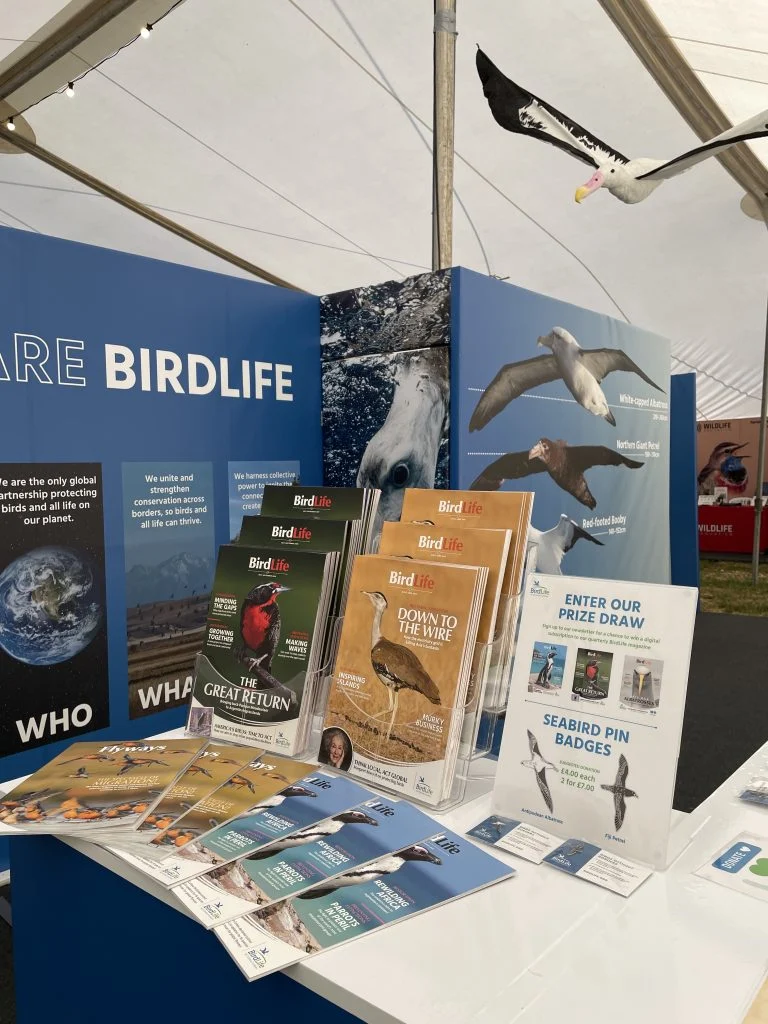
The global avian conservation community is poised for its largest annual gathering, Global Birdfair 2026, scheduled to take place from July 10th to 12th at Rutland Water, UK. This seminal event, renowned for galvanizing substantial support for bird conservation initiatives worldwide, will dedicate its 2026 fundraising efforts to BirdLife International’s critical work in São Tomé and Príncipe, specifically targeting the prevention of extinctions among the island nation’s unique endemic bird species. The focus underscores an urgent global imperative to protect biodiversity in vulnerable island ecosystems, where species face heightened risks of disappearance.
A Legacy of Conservation: The Global Birdfair Story
Global Birdfair has evolved into the preeminent international platform for birdwatchers, ornithologists, conservationists, and wildlife enthusiasts. Its origins trace back to the original Birdfair, established in 1989 by Tim Appleton MBE and the late Martin Davies, conceived as a means to raise funds for conservation projects. What began as a modest gathering quickly blossomed into a colossal event, earning it the moniker "the birdwatching Olympics." Over decades, the fair has consistently raised millions of pounds for various conservation causes across the globe, supporting projects ranging from habitat restoration in the Amazon to species protection in the Himalayas.
Rutland Water, an expansive reservoir in the East Midlands of England, serves as an ideal backdrop for the fair. Its status as a significant wetland site, celebrated for its diverse birdlife including ospreys, waders, and various wildfowl, provides an immersive and inspiring environment for attendees. The choice of location reinforces the fair’s core mission: to connect people with birds and the natural world, fostering a deeper understanding and commitment to their protection. The transition to "Global Birdfair" in recent years, spearheaded by co-founder Tim Appleton MBE and Penny Robinson, reflects an expanded vision, emphasizing international collaboration and a more direct, impactful fundraising model that sees 100% of profits channeled into selected conservation projects. Their tireless dedication and passion have been instrumental in building the fair into the global phenomenon it is today, driven by a team of dedicated volunteers.
São Tomé and Príncipe: A Biodiversity Hotspot Under Threat
São Tomé and Príncipe, a small island nation nestled in the Gulf of Guinea off the western equatorial coast of Africa, is a true biological treasure trove. Comprising two main islands—São Tomé and Príncipe—and several smaller islets, the archipelago is a remnant of ancient volcanic activity. Its isolation over millions of years has fostered an extraordinary evolutionary process, resulting in an exceptionally high degree of endemism, meaning many species are found nowhere else on Earth. The lush, verdant rainforests that blanket much of the islands are home to a staggering array of unique flora and fauna, making it a critical biodiversity hotspot.
However, this rich biodiversity is precariously balanced. Island ecosystems are inherently fragile, particularly vulnerable to external pressures due to their small size, limited resources, and often specialized species. São Tomé and Príncipe face a multitude of threats, including habitat destruction driven by agricultural expansion (especially cocoa and coffee plantations), logging, and human settlement. Climate change poses an existential threat through altered weather patterns, increased storm intensity, and sea-level rise. Furthermore, the introduction of invasive alien species, such as rats, cats, and various plants, has had a devastating impact on native populations, many of which evolved without natural predators or competitors. These factors collectively push many of São Tomé’s unique species, especially its birds, to the brink of extinction.

The Critically Endangered Trio: A Closer Look
At the heart of Global Birdfair 2026’s conservation focus are three critically endangered avian species, icons of São Tomé’s unique natural heritage, all listed on the IUCN Red List as Critically Endangered:
-
The Dwarf Ibis (Bostrychia bocagei): Also known as the São Tomé Ibis, this elusive bird is one of the smallest ibis species in the world, measuring around 30 cm. Characterized by its dark plumage, iridescent green sheen, and a distinctive short crest, it inhabits the dense, humid primary forests of São Tomé. Its diet likely consists of insects and small invertebrates gleaned from the forest floor. The Dwarf Ibis is incredibly rare, with its total population estimated to be very small, possibly numbering only in the hundreds. Its secretive nature and the remoteness of its habitat make it challenging to study, leading to significant knowledge gaps regarding its ecology, population dynamics, and specific threats, though habitat degradation is certainly a major factor.
-
The São Tomé Grosbeak (Crithagra concolor): This large finch is another spectacular endemic, often described as one of the world’s most enigmatic and rarest birds. Sporting a robust, conical bill perfectly adapted for cracking tough seeds, its plumage is generally dull olive-green, providing excellent camouflage within the forest canopy. Restricted to the pristine montane forests of São Tomé, its population is thought to be extremely small, possibly fewer than 250 mature individuals. Like the Dwarf Ibis, the São Tomé Grosbeak is highly susceptible to habitat loss and fragmentation. Its specialized diet and reliance on specific forest conditions make it particularly vulnerable to environmental changes.
-
Newton’s Fiscal (Lanius newtoni): This striking shrike is named after Sir Edward Newton, a colonial administrator and ornithologist. It exhibits typical fiscal characteristics with its black and white plumage, though it possesses a unique combination of features distinguishing it from its mainland relatives. Primarily an insectivore, it hunts from prominent perches in the forest understory and canopy. Newton’s Fiscal is confined to the remaining primary rainforest patches on São Tomé, particularly at higher altitudes. Its population is critically low, likely numbering fewer than 250 individuals, making it one of the most endangered birds globally. The primary threats include habitat destruction and potentially predation by introduced species.
The precarious existence of these three species highlights the urgent need for concerted and well-funded conservation action. Their survival is intrinsically linked to the health of São Tomé’s forests, which also provide vital ecosystem services to the island’s human population, including water regulation and soil stability.
BirdLife International’s Crucial Intervention
Global Birdfair’s support will directly fund BirdLife International’s targeted conservation work in São Tomé and Príncipe. BirdLife International, a global partnership of conservation organizations working in over 120 countries, is a leading authority on avian conservation. Its approach often involves empowering local partners and communities to implement effective, science-based conservation strategies.

The supported project in São Tomé is meticulously designed to address the most pressing conservation challenges. A primary objective is to fill critical knowledge gaps about these endangered birds. Decades of underfunding and limited research have left many aspects of their biology, distribution, and population trends poorly understood. Researchers will employ a combination of field surveys, bioacoustics, and advanced monitoring techniques to map their exact habitats, estimate population sizes more accurately, and identify key ecological requirements. This data is fundamental for developing effective conservation management plans.
Crucially, the project also focuses on strengthening local capacity to protect these species. This involves training local researchers, park rangers, and community members in modern conservation techniques, including species monitoring, habitat management, and anti-poaching measures. By empowering local stakeholders, the project aims to build a sustainable, long-term conservation framework that is locally led and resilient. Community engagement is a cornerstone of this strategy, recognizing that the success of conservation efforts ultimately depends on the active participation and support of the people who live alongside these unique birds. Education and awareness programs will be implemented to foster a sense of ownership and responsibility for the island’s natural heritage.
"The plight of São Tomé’s endemic birds is a stark reminder of the biodiversity crisis unfolding globally, particularly on vulnerable island ecosystems," stated an inferred spokesperson for BirdLife International. "Global Birdfair’s commitment provides a lifeline for these critically endangered species. The funds raised will enable us to undertake vital research, empower local communities, and implement direct conservation actions that are essential to securing their future. This isn’t just about saving birds; it’s about preserving unique evolutionary pathways and the health of an entire island ecosystem."
Experiencing Conservation: What to Expect at Global Birdfair 2026
Global Birdfair 2026 promises an immersive and educational experience for all attendees, directly connecting them with the conservation efforts in São Tomé and Príncipe. The event is structured to be both informative and engaging, offering a diverse range of activities.
Visitors will have the unique opportunity to learn extensively about the Dwarf Ibis and its fellow critically endangered species at BirdLife International’s interactive stand. Here, attendees can meet São Tomé experts—ornithologists and conservationists who have dedicated their lives to studying and protecting these rare birds. These experts will share insights into the challenges and triumphs of fieldwork in remote island environments, offering firsthand accounts of the species and the broader conservation landscape.
Beyond the specific focus on São Tomé, the fair will feature a multitude of exciting talks from leading ornithologists, wildlife photographers, and conservationists covering a vast array of topics from global bird migration patterns to the latest advancements in conservation technology. Activities designed for all ages will engage families and young enthusiasts, fostering the next generation of conservationists. A highlight will be the opportunity to relax in a specially designed "pod" where visitors can listen to the authentic sounds of the São Tomé forest, offering a sensory journey to the heart of the conservation project and deepening appreciation for the island’s unique soundscape.
Attendees can also embark on a "migratory journey" around Global Birdfair itself, visiting various partner stands and collecting stamps in a "Flyways Passport." This interactive element not only educates participants about global migratory routes and the interconnectedness of avian populations but also rewards their engagement with an exclusive pin badge, symbolizing their contribution to conservation.

Crucially, every ticket purchased for Global Birdfair directly contributes to the São Tomé and Príncipe conservation project. This direct funding mechanism ensures that visitor contributions have a tangible and immediate impact on the ground. The project’s holistic approach, encompassing research, capacity building, and community involvement, signifies a comprehensive strategy to reverse the decline of these unique species.
The Broader Implications: Island Endemism and Global Conservation
The conservation efforts in São Tomé and Príncipe, amplified by Global Birdfair, resonate far beyond the shores of the Gulf of Guinea. The plight of island endemic species is a microcosm of the global biodiversity crisis. Islands, despite covering only a small fraction of the Earth’s landmass, harbor a disproportionately high number of unique species and have historically accounted for a significant percentage of recorded extinctions. Their vulnerability makes them critical laboratories for understanding the impacts of human activity and climate change on biodiversity.
Protecting these species involves more than just preserving individual populations; it’s about safeguarding entire evolutionary lineages and the intricate ecological processes they sustain. The loss of a single endemic species can trigger a cascade of negative effects throughout an ecosystem, impacting other species and ultimately diminishing the resilience of the entire natural system. Moreover, the focus on strengthening local capacity in São Tomé serves as a model for conservation in other developing nations, emphasizing the importance of empowering local communities as stewards of their natural heritage. This localized approach ensures that conservation efforts are culturally sensitive, economically viable, and sustainable in the long term.
Events like Global Birdfair play a pivotal role in mobilizing not only financial resources but also public awareness and political will. By bringing together a diverse international audience, the fair fosters a sense of global responsibility for conservation. It highlights that biodiversity loss is a shared challenge requiring collective action, transcending national borders. The funds raised, coupled with the increased visibility, can catalyze further investment and policy changes necessary for enduring conservation success.
Looking Ahead: A Future for São Tomé’s Avian Treasures
The future of the Dwarf Ibis, São Tomé Grosbeak, and Newton’s Fiscal hangs in the balance, but the dedication of Global Birdfair and BirdLife International offers a strong beacon of hope. The project’s emphasis on robust scientific inquiry will provide the essential data needed to make informed conservation decisions, moving beyond guesswork to targeted, evidence-based interventions. Simultaneously, the focus on human capacity building ensures that the expertise and passion for conservation will continue to grow within São Tomé and Príncipe itself, creating a legacy that extends far beyond the duration of the current project.
As attendees gather at Rutland Water in July 2026, they will not only celebrate the wonder of birds but also actively participate in a critical mission to prevent the extinction of some of the world’s rarest avian treasures. The collaborative spirit of Global Birdfair, uniting bird enthusiasts from across the globe, underscores a powerful message: with concerted effort, scientific rigor, and community engagement, it is possible to make a genuine difference in the fight to protect our planet’s irreplaceable biodiversity, securing a vibrant future for São Tomé’s unique avian inhabitants and the rich ecosystems they call home.