
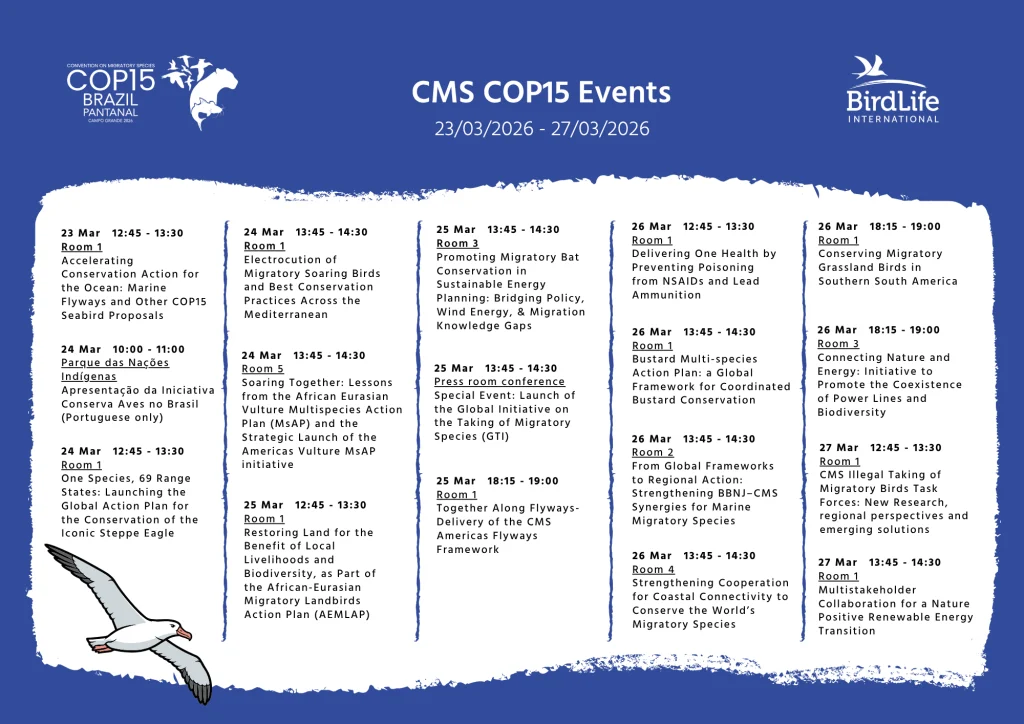
In March 2026, governments from around the world will converge in Campo Grande, Brazil, for the 15th Conference of the Parties (COP15) to the Convention on Migratory Species (CMS). Scheduled from March 23rd to 29th, with a preceding series of preparatory meetings and events, this global summit arrives at a profoundly critical juncture for the planet’s natural heritage. The meeting is anticipated to be a pivotal moment for international biodiversity conservation, particularly for species that traverse vast distances, underscoring the interconnectedness of global ecosystems and the urgent need for transboundary cooperation.
Migratory species, from the smallest insects to the largest marine mammals, serve as powerful indicators of ecological health and the integrity of natural systems across continents and oceans. Their remarkable journeys highlight how nature inherently transcends political boundaries, making their survival dependent on a concerted, international response. However, the latest scientific assessments paint a concerning picture. An interim report, the State of the World’s Migratory Species (SWMS) report, released in early 2026, revealed an alarming trend: nearly half of the migratory species populations protected under the CMS are now experiencing decline. This stark statistic amplifies the urgency of COP15, transforming it from a routine meeting into an essential platform for course correction.
The Convention on Migratory Species: A Crucial Framework
The Convention on the Conservation of Migratory Species of Wild Animals, commonly known as CMS or the Bonn Convention, is the only global treaty specializing in the conservation of migratory species and their habitats. Established in 1979 and entering into force in 1983, CMS aims to conserve terrestrial, aquatic, and avian migratory species throughout their range. Its appendices list species requiring strict protection (Appendix I) and those that would benefit from international cooperative agreements (Appendix II). The Convention operates on the principle that because migratory species cross national jurisdictional boundaries, their conservation requires the concerted action of all range states. Without such coordinated efforts, the localized protection of a species can be rendered ineffective if its migratory routes or distant habitats remain unprotected.
CMS COP15 is thus not merely another conference; it represents a vital opportunity to translate the high-level ambitions of global biodiversity frameworks, such as the Kunming-Montreal Global Biodiversity Framework (KMGBF), into tangible, on-the-ground conservation actions. With just five years remaining to deliver on the KMGBF’s ambitious targets for 2030, the CMS’s role in providing targeted measures for species, their habitats, and crucial ecological connectivity becomes indispensable. The Convention serves as a practical mechanism for governments to operationalize broader biodiversity commitments, focusing specifically on the unique challenges and opportunities presented by migratory wildlife.
Addressing the Decline: Key Agendas for COP15

Conservation organizations, scientific bodies, and government delegations will arrive in Campo Grande with a clear set of priorities, largely informed by the alarming findings of the SWMS report and the overarching goals of the KMGBF. One of the central objectives championed by leading conservation groups, including BirdLife International and its global partnership, is the adoption of a new resolution specifically targeting seabirds and marine flyways. Seabirds represent one of the most threatened avian groups globally, facing an onslaught of pressures. These include incidental bycatch in fisheries, pervasive plastic and chemical pollution, the escalating impacts of climate change leading to shifts in prey distribution and breeding failures, and widespread habitat degradation at breeding colonies.
The proposed resolution on seabirds and marine flyways aims to establish a robust framework for strengthening coordinated conservation efforts across the world’s oceans. This initiative seeks to fill a critical gap in existing CMS efforts, which have historically focused more on terrestrial and coastal migratory routes. By addressing species that spend significant portions of their lives on the high seas – areas beyond national jurisdiction – this resolution would provide an essential foundation for enhanced international cooperation, data sharing, and the implementation of conservation measures in these challenging environments. Specific proposals under consideration include strengthening legal protections for some of the world’s most critically endangered seabirds, such as multiple species of gadfly petrels and the Flesh-footed Shearwater (Ardenna carneipes). The listing of these species on CMS Appendices would unlock new avenues for international collaboration and dedicated conservation funding.
Beyond seabirds, the broader concept of flyway conservation will be a major thematic focus. Pre-COP discussions have already begun to shape the future of the CMS Americas Flyways Framework, aiming to foster stronger coordination among countries along these vital migratory corridors. The objective is to lay the groundwork for more effective long-term governance, improved monitoring, and integrated implementation strategies that consider the entire lifecycle of migratory species. This includes addressing threats at breeding, staging, and wintering sites, as well as along the migratory pathways themselves.
Raptors, another group facing significant demographic pressures worldwide, will also feature prominently on the COP15 agenda. Delegates will support measures to bolster their conservation, including progress towards a multi-species action plan for vultures in the Americas – a group vital for ecosystem health but suffering drastic declines. The adoption of a new action plan for the Steppe Eagle (Aquila nipalensis), a species facing severe population crashes, is also a priority. Furthermore, proposals for the listing of the iconic Snowy Owl (Bubo scandiacus) on the CMS Appendices will be considered, alongside efforts to expand the concept of Internationally Important Raptor Areas (IIRAs) to a global scale, mirroring the success of Important Bird and Biodiversity Areas (IBAs) for other avian groups. These collective priorities underscore a broader goal: to equip governments and other stakeholders with clear, practical, and scientifically sound tools to conserve migratory species effectively and contribute meaningfully to global biodiversity commitments.
The Role of a Global Partnership: BirdLife International at COP15
The robust presence of conservation organizations like BirdLife International at COP15 reflects the strength and imperative of a global partnership in driving conservation action. With approximately 40 delegates from across the world, including representatives from national partners working directly with government delegations, BirdLife will play an active and influential role throughout the negotiations. This extensive network, comprising 21 attending partners, ensures diverse perspectives and localized expertise are brought to bear on discussions across multiple thematic and cross-cutting issues. Their engagement extends to a wide range of official side events, bilateral meetings with governments, UN bodies, and other crucial stakeholders, ensuring that scientific evidence and conservation priorities are well-represented.
The conservation community recognizes the power of a unified voice. BirdLife International, for instance, is actively collaborating with the wider conservation sector to forge a strong and coherent civil society position. This includes supporting the development of a joint NGO opening statement that articulates shared concerns and proposed solutions. Participation in key pre-COP workshops and task force meetings, particularly those focused on strengthening flyway conservation, further illustrates this collaborative approach. Such coordinated efforts are essential to influence outcomes, raise awareness, and ensure that the needs of migratory species are given due prominence in the final resolutions and decisions.

From Global Commitments to Local Impact: A Case Study from Uruguay
While global agreements forged in international meeting rooms are undoubtedly essential, their ultimate success is measured by their implementation and tangible impact on the ground. Across the BirdLife Partnership, extensive work is already underway to translate these international commitments into concrete conservation action. A compelling example comes from Uruguay, where BirdLife Partner Aves Uruguay is working closely with government agencies and local communities to protect vital grassland habitats crucial for migratory birds.
Through the innovative "Grassland Alliance Initiative" (Alianza del Pastizal), Aves Uruguay promotes sustainable land use practices among ranchers. This initiative skillfully combines conservation incentives with livelihood support, demonstrating how ecological protection can be integrated with economic viability for local communities. The program encourages practices that maintain healthy grasslands, which are critical for numerous migratory species, including several raptors and shorebirds. Importantly, the initiative also actively fosters the inclusion of women and youth, thereby strengthening social resilience and ensuring intergenerational continuity in conservation practices. This holistic approach not only benefits biodiversity but also empowers local populations, showcasing how global frameworks like CMS can translate into real, measurable benefits for both nature and people, creating a model for sustainable development.
A Decisive Moment for Nature
As governments and conservationists gather in Campo Grande, the stakes could not be higher. The alarming rate of decline in migratory species populations, the intensifying pressures on their habitats, and the rapidly approaching 2030 deadline for global biodiversity targets collectively underscore the gravity of the moment. CMS COP15 represents a critical, perhaps even last-chance, opportunity to alter the current trajectory of biodiversity loss.
The success of this summit will ultimately not be defined by the meticulously crafted language of resolutions or the number of pledges made within the meeting rooms. Instead, it will be measured by the recovery of species in the wild, the restoration of their habitats, and the resilience of the ecosystems they depend upon. Migratory birds, with their incredible journeys spanning continents and oceans, serve as powerful and unmistakable indicators of the health of our planet. Their continued survival and flourishing migrations are a testament not only to the intrinsic value of nature but also to humanity’s collective ability to cooperate across borders, overcome complex challenges, and secure a sustainable future for all life on Earth. The decisions made in Brazil will resonate far beyond Campo Grande, shaping the fate of countless species and influencing the ecological integrity of our shared global heritage.