
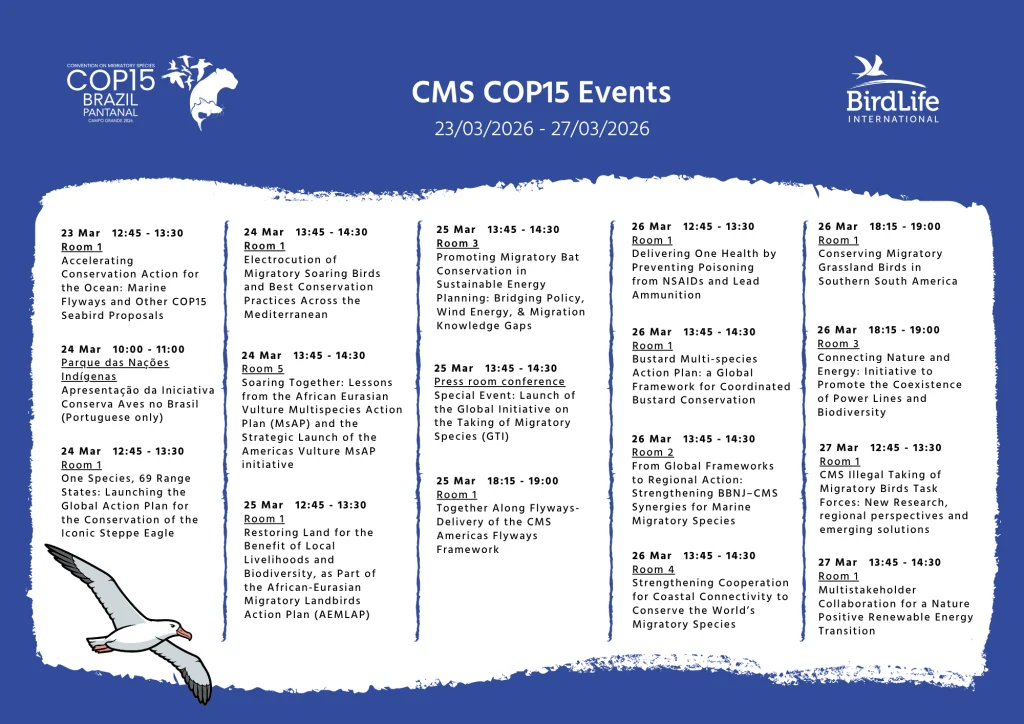
In March 2026, governments from around the world will convene in Campo Grande, Brazil, for the 15th Conference of the Parties (COP15) to the Convention on Migratory Species (CMS). Scheduled from March 23rd to 29th, with a series of crucial pre-COP meetings and events preceding it, this global summit arrives at a profoundly critical juncture for global biodiversity and the very fabric of nature. The stakes are unequivocally high, as a recent interim report has revealed a stark reality: nearly half of the world’s migratory species populations, safeguarded under the CMS framework, are now in precipitous decline, underscoring an urgent imperative for decisive, coordinated international action.
The Critical Juncture: A Crisis for Migratory Species
Migratory species, from the vast oceanic journeys of seabirds to the intercontinental flights of raptors and the epic migrations of land mammals and marine life, serve as poignant indicators of the interconnectedness of our planet’s ecosystems. Their very existence transcends political borders, making their survival intrinsically dependent on robust, cooperative international conservation efforts. Yet, the findings of the "State of the World’s Migratory Species" (SWMS) interim report, released ahead of COP15, paint a grim picture. The report indicates that 44% of species listed in Appendix I of CMS – those considered endangered – are experiencing population declines, while a staggering 70% of CMS-listed migratory fish species are also in decline. This alarming trend highlights a systemic failure to adequately protect these vital components of global biodiversity.
The Convention on Migratory Species, often referred to as the Bonn Convention, stands as the only global treaty specifically dedicated to the conservation of migratory species and their habitats. Established in 1979 and entering into force in 1983, CMS provides a global platform for the conservation and sustainable use of migratory animals and their habitats worldwide. Its two appendices list species requiring international cooperation: Appendix I includes migratory species threatened with extinction, while Appendix II covers migratory species that have an unfavourable conservation status and would benefit significantly from international cooperative agreements. The upcoming COP15 represents a vital opportunity for member states to translate high-level biodiversity commitments into tangible, on-the-ground measures for species, their critical habitats, and the maintenance of ecological connectivity across their migratory routes.
Anchoring Global Ambition: The Kunming-Montreal Global Biodiversity Framework
With just five years remaining to deliver on the ambitious targets set forth by the Kunming-Montreal Global Biodiversity Framework (KMGBF), agreed upon at the 15th Conference of the Parties to the Convention on Biological Diversity (CBD COP15) in December 2022, the CMS COP15 gains even greater significance. The KMGBF, often hailed as a Paris-style agreement for nature, outlines a comprehensive set of goals and targets to halt and reverse biodiversity loss by 2030, including the ambitious "30×30" target to protect 30% of the world’s land and oceans. For migratory species, achieving these goals necessitates dedicated, cross-border strategies that CMS is uniquely positioned to facilitate. The Campo Grande summit is therefore not merely another conference but a critical implementation phase, where global aspirations must be meticulously transformed into practical conservation action.
Chronology of a Crisis and Response:
- 1979: Convention on Migratory Species (CMS) adopted in Bonn, Germany.
- 1983: CMS enters into force, providing a legal framework for international cooperation.
- 2020 (CMS COP13, Gandhinagar, India): The previous Conference of the Parties, themed "Migratory species connect the planet and together we welcome them home," saw significant discussions on climate change impacts and infrastructure development.
- December 2022 (CBD COP15, Montreal, Canada): Adoption of the Kunming-Montreal Global Biodiversity Framework (KMGBF), setting ambitious global targets for biodiversity by 2030.
- Early 2026: Release of the interim "State of the World’s Migratory Species" (SWMS) report, highlighting widespread declines.
- March 23-29, 2026 (CMS COP15, Campo Grande, Brazil): The current summit, focused on developing concrete action plans to implement KMGBF targets for migratory species.
- 2030: Deadline for achieving the KMGBF targets, making the outcomes of COP15 crucial for the next phase of conservation efforts.
Key Agendas for COP15: Protecting Avian Migrants and Beyond
A central focus for many conservation organizations, including BirdLife International and its global Partnership, at COP15 will be on migratory birds, a group facing particularly acute threats. Building on extensive research and the Global Flyways Programme, several key priorities are set to shape the discussions:
Seabirds and Marine Flyways: A New Frontier for Conservation
One of the most anticipated outcomes is the adoption of a new resolution specifically addressing seabirds and marine flyways. Seabirds, often spending the majority of their lives on the high seas, are among the most imperiled avian groups globally. They contend with a myriad of threats, including accidental capture in fishing gear (bycatch), pervasive plastic and chemical pollution, the relentless impacts of climate change driving shifts in prey distribution and breeding success, and severe habitat degradation at their nesting sites. This proposed new framework aims to significantly strengthen coordinated conservation efforts across the world’s vast marine flyways, thereby filling a critical void in existing CMS initiatives and providing a much-needed impetus for species that navigate and rely on international waters.
Complementing this overarching resolution, governments will also deliberate on proposals to enhance the legal protections for some of the world’s most threatened seabirds. This includes multiple species of gadfly petrels, a diverse group of highly pelagic birds known for their agile flight, and the Flesh-footed Shearwater (Ardenna carneipes), a species facing severe pressures from plastic ingestion and bycatch. Should these listings be adopted onto the CMS Appendices, they would establish an essential legal foundation for bolstered international cooperation and targeted conservation actions across their expansive migratory ranges.
Continental Flyways and Raptor Conservation
Beyond marine environments, the conservation of continental flyways will be a major theme. Pre-COP discussions have been instrumental in shaping the future of the CMS Americas Flyways Framework, an initiative designed to foster stronger coordination among countries across the Americas. This framework is critical for establishing more effective long-term governance and implementation mechanisms for migratory species that traverse the continent.
Raptors, another group experiencing significant population pressures globally, will also feature prominently on the agenda. Efforts are underway to support measures strengthening their conservation, including progress toward a multi-species action plan for vultures in the Americas, many of which are critically endangered due to poisoning and habitat loss. The adoption of a new action plan for the iconic Steppe Eagle (Aquila nipalensis), a long-distance migrant facing habitat destruction and poisoning, is also expected. Furthermore, proposals include the listing of the majestic Snowy Owl (Bubo scandiacus) on the CMS Appendices, acknowledging its vulnerable status across its Arctic and sub-Arctic breeding grounds. Initiatives to expand the concept of Internationally Important Raptor Areas to a global scale will also be advanced, aiming to identify and protect crucial sites for raptor migration and overwintering. These comprehensive priorities collectively underscore a broader objective: to ensure that CMS equips governments and other stakeholders with clear, practical, and enforceable tools necessary to conserve migratory species and meet global biodiversity commitments.

The Host and the Context: Brazil’s Significant Role
The choice of Campo Grande, Brazil, as the host city for CMS COP15 is particularly significant. Brazil, a megadiverse country, boasts unparalleled biodiversity, encompassing vast swathes of the Amazon rainforest, the Pantanal wetlands (one of the world’s largest tropical wetland areas), and the Atlantic Forest. It is home to an extraordinary array of migratory species, from jaguars and giant anteaters to countless bird species that traverse its diverse landscapes. Hosting COP15 underscores Brazil’s critical role in global conservation efforts, particularly within the Americas flyways context. The nation’s experience with large-scale ecosystems and the challenges of balancing development with conservation will provide invaluable insights for the discussions. Furthermore, it offers an opportunity for Brazil to showcase its commitment to environmental stewardship on the international stage and to galvanize regional efforts for migratory species protection.
Stakeholder Engagement: A Unified Front for Conservation
The success of CMS COP15 hinges not only on governmental agreements but also on the active engagement and collaboration of a diverse array of stakeholders. Conservation organizations, indigenous communities, scientific bodies, and local populations play indispensable roles in both shaping policy and implementing conservation strategies on the ground. BirdLife International, for instance, exemplifies this multi-stakeholder approach. With a robust global Partnership comprising around 40 delegates from across the world, including representatives from national partners working directly with government delegations, the organization is poised to play an active and influential role throughout the negotiations.
This collective presence, encompassing 21 attending partners, ensures a broad contribution to discussions across multiple thematic areas and cross-cutting issues. These delegates will engage in a wide range of official side events and bilateral meetings with governments, various UN bodies, and other key stakeholders. Beyond direct negotiations, conservation groups are also working collaboratively to foster a strong and unified voice for civil society. This involves supporting the development of joint NGO opening statements and actively participating in crucial pre-COP workshops and task force meetings specifically focused on strengthening flyway conservation. Such coordinated advocacy is vital to ensure that the scientific imperative for action is heard and translated into concrete policy outcomes.
From Global Policy to Local Impact: Tangible Success Stories
While global agreements forged in international forums are undeniably essential, their ultimate success is measured by their tangible implementation and impact on the ground. Across the BirdLife Partnership, pioneering work is already underway to transform these international commitments into effective, localized conservation action.
A prime example comes from Uruguay, where BirdLife Partner Aves Uruguay is working in close collaboration with government agencies and local communities to protect vital grassland habitats crucial for numerous migratory bird species. Through its innovative "Grassland Alliance Initiative" (Alianza del Pastizal), the organization actively promotes sustainable land-use practices among ranchers. This initiative skillfully combines direct conservation incentives with crucial livelihood support, demonstrating a holistic approach that benefits both nature and people. By fostering sustainable grazing practices and preserving native grasslands, the initiative helps maintain essential stopover and wintering sites for migratory birds, while simultaneously supporting the economic well-being of local communities. Importantly, the initiative also champions the inclusion of women and youth, thereby strengthening social resilience and ensuring intergenerational continuity in conservation practices. This exemplary work in Uruguay powerfully illustrates how global frameworks like CMS can be effectively translated into real, measurable benefits for both biodiversity and human societies, showcasing a model for integrated conservation.
Challenges and the Path Forward
Despite the renewed focus and urgent calls for action, CMS COP15 faces considerable challenges. Funding gaps remain a persistent hurdle, often impeding the full implementation of agreed-upon conservation measures, particularly in developing nations. Political will and commitment, while often expressed, must be consistently translated into robust national policies and enforcement mechanisms. The inherently cross-border nature of migratory species conservation also presents complexities in terms of coordination and equitable responsibility-sharing among diverse nations with varying capacities and priorities. Furthermore, the accelerating impacts of climate change—manifesting as altered migratory routes, extreme weather events, and habitat shifts—add another layer of urgency and unpredictability to conservation efforts.
To navigate these challenges, COP15 must not only secure ambitious agreements but also lay the groundwork for continuous monitoring, adaptive management, and the integration of cutting-edge scientific research. The active involvement of indigenous peoples, who often possess invaluable traditional ecological knowledge, along with local communities and the private sector, will be paramount in fostering sustainable solutions.
A Decisive Moment for Planetary Health
As governments, scientists, and conservationists gather in Campo Grande, the stakes for the planet could not be higher. Migratory species are declining at an alarming rate, ecosystems are under unprecedented pressure, and the 2030 deadline for achieving global biodiversity targets is rapidly approaching. CMS COP15 represents a critical, perhaps decisive, opportunity to alter this trajectory.
Success will ultimately be measured not by the words meticulously agreed upon in conference rooms, but by the tangible recovery of species in their wild habitats. Migratory birds and other mobile species are more than just captivating creatures; they are powerful, living indicators of the health of our planet and a profound testament to our collective ability—or failure—to work together across borders for a shared future. The decisions made in Brazil will reverberate across continents and oceans, shaping the fate of countless species and defining humanity’s commitment to preserving the rich tapestry of life on Earth.