
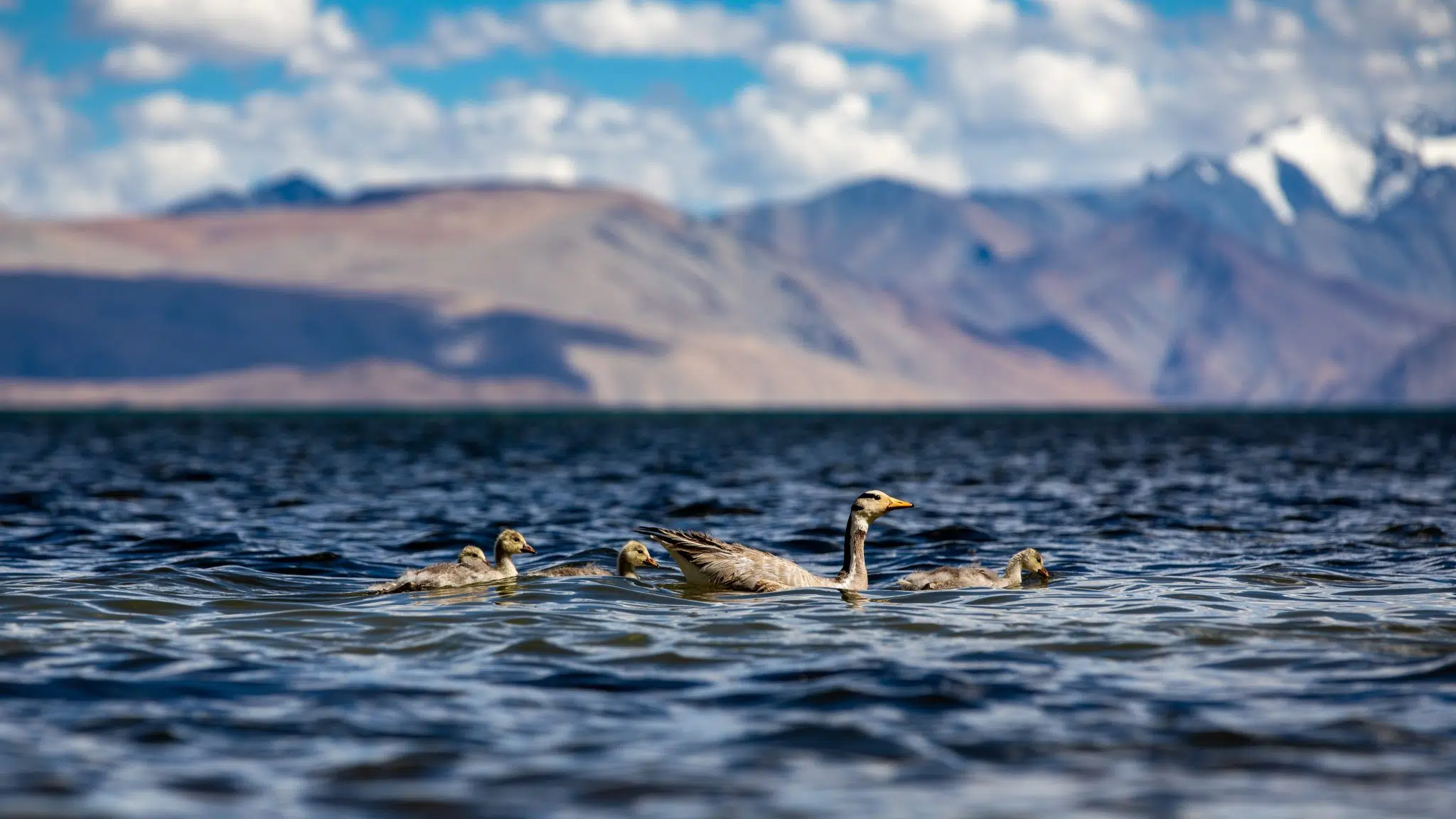
On World Water Day, a global observance dedicated to highlighting the importance of freshwater, attention turns to the majestic Himalayas, often referred to as the "Water Tower of Asia." This ancient mountain range, born from a colossal geological collision over 60 million years ago, holds vast reserves of snow and ice in its high-altitude glaciers. These frozen giants are not merely geological marvels; they are the lifeblood for billions of people and countless species, including three iconic avian residents whose survival is inextricably linked to the cool, pristine glacial waters: the Brown-headed Gull, the Bar-headed Goose, and the Black-necked Crane. Their stories serve as poignant reminders of the delicate balance of nature and the profound implications of climate change on the planet’s most vital resource.
The Geological Tapestry: Birth of the Himalayas and its Glaciers
The narrative of the Himalayas begins deep within Earth’s crust, a testament to immense geological forces. Approximately 60 to 70 million years ago, the Indian subcontinent, then an island drifting northward, began its inexorable collision with the Eurasian continent. This slow-motion tectonic dance, continuing to this day, has crumpled the Earth’s crust, pushing rock formations upwards to create the world’s highest peaks, including Mount Everest. As these mountains ascended to dizzying altitudes, the unique atmospheric conditions at nearly 8,000 meters above sea level fostered the accumulation of snow and ice. Over millennia, these layers compressed and transformed into the vast network of glaciers we observe today. These glaciers, numbering in the tens of thousands, collectively constitute the third-largest ice mass on Earth, after the polar caps, making the Himalayas a critical global water source.
Lifeblood of Asia: Glacial Waters and Human Dependence
For the countries surrounding the Himalayas, the water originating from these glaciers is nothing short of a tremendous life force. The gradual melt feeds ten of Asia’s largest rivers, including the Indus, Ganges, Brahmaputra, Yangtze, Mekong, Salween, and Yellow River. These river systems sustain the livelihoods of over 1.6 billion people across South and Southeast Asia. Beyond providing essential drinking water, glacial meltwater irrigates vast agricultural lands, supporting staple crops like rice and wheat that feed hundreds of millions. It powers hydroelectric dams, generating clean energy crucial for industrial development and urban centers. Moreover, these waters underpin diverse ecosystems, creating unique wetland habitats, lakes, and rivers that are teeming with biodiversity, making them critical environmental assets. The intricate web of human and natural systems dependent on this glacial flow underscores its immense strategic and ecological importance.
Avian Icons of the High Altitudes: Sentinels of Glacial Health
This World Water Day, as global communities reflect on the importance of freshwater, the spotlight falls on three remarkable bird species that have evolved to thrive in the challenging yet bountiful environments nurtured by Himalayan glaciers. Their existence offers a direct barometer of the health of these vital water systems.

The Brown-headed Gull: A High-Altitude Mariner
While gulls are typically associated with coastal environments, the Brown-headed Gull (Larus brunnicephalus) presents a fascinating exception, spending a significant portion of its life around the high-altitude lakes and wetlands of the Tibetan Plateau and the broader Himalayan region. These freshwater bodies, fed by the slow, consistent melt of glaciers, provide crucial breeding and feeding grounds. Unlike their coastal cousins, these gulls are expert foragers in freshwater ecosystems, primarily preying on the abundant fish populations that thrive in these cold, oxygen-rich waters. Their diet also includes insects, small crustaceans, and even carrion, showcasing their adaptability.
During the breeding season, which typically spans from May to July, Brown-headed Gulls form large, bustling colonies, often numbering in the hundreds or even thousands, on islands or shores of these remote mountain lakes. Locations like Pangong Tso, straddling the border between India and China, and Tso Moriri in Ladakh, are renowned havens for these birds. The sheer concentration of gulls in these isolated, high-altitude environments is a testament to the rich productivity of glacial-fed lakes, which, despite their extreme location, offer a reliable food source and safe nesting sites away from terrestrial predators. The consistent availability of water and aquatic life dictates their presence and success in these unique inland habitats.
The Bar-headed Goose: A Master of Extreme Flight
No other bird embodies the spirit of the Himalayas quite like the Bar-headed Goose (Anser indicus). Famed for its extraordinary migratory feats, this species holds the record for one of the highest-altitude migrations known in the avian world. Unlike most migratory birds traversing the Central Asian Flyway, which carefully navigate through mountain passes, Bar-headed Geese possess the astonishing ability to fly directly over the towering peaks of the Himalayas. This incredible journey sees them ascend to altitudes of nearly 7,000 meters (approximately 23,000 feet) while crossing some of the world’s most formidable mountain ranges, including the Karakoram and the main Himalayan range.
The physiological adaptations that enable this feat are still a subject of intense scientific study. Researchers have discovered that these geese possess larger lungs, more efficient respiratory systems, and specialized hemoglobin in their blood that allows for more effective oxygen uptake at extreme altitudes where oxygen levels are critically low. This unparalleled ability permits the birds to access and utilize high-altitude lakes, marshes, and riverine habitats as vital staging posts during their migratory journey from their breeding grounds in Central Asia (like the Tibetan Plateau) to their wintering grounds in India and other parts of South Asia. At these glacial-fed stopovers, the geese rest, replenish their energy reserves by grazing on grasses, roots, and aquatic vegetation, and prepare for the next leg of their arduous journey. The sustained availability of these high-altitude wetlands, directly nourished by glacial melt, is absolutely critical for the success of their epic migrations.
The Black-necked Crane: Sentinel of the Wetlands
With a magnificent two-meter wingspan, the flight of the Black-necked Crane (Grus nigricollis) is an awe-inspiring spectacle that commands attention. This species, revered in many Himalayan cultures and often considered sacred, is the only high-altitude crane species in the world, primarily found on the Tibetan Plateau and in parts of Ladakh, India, and Bhutan. Despite their impressive wingspan, Black-necked Cranes undertake relatively short migrations compared to the Bar-headed Goose, typically moving between lower and higher elevation wetlands within the greater Himalayan region.

These majestic birds are intimately tied to the health of the high-altitude wetlands and marshes that are consistently fed by glacial meltwater. Their diet consists primarily of roots, tubers of aquatic plants, small fish, insects, and other invertebrates found in these waterlogged environments. They are particularly sensitive to habitat disturbance and water availability, making them excellent bio-indicators of environmental health.
Interestingly, the immediate impact of climate change presents a complex and somewhat paradoxical situation for the Black-necked Crane. As mountain glaciers melt at an accelerated rate, there has been a short-term increase in the volume of meltwater, leading to the temporary expansion of certain wetland habitats. This has, in some instances, offered a fleeting advantage to the cranes by providing more extensive foraging and breeding grounds. However, this is a precarious and transient benefit. Scientific projections indicate that this accelerated melting will eventually lead to a significant reduction, and in some cases, the complete disappearance of glaciers. In the long term, this would catastrophically shrink the high-elevation wetland habitats that these cranes depend upon, threatening their survival and that of countless other species. The Black-necked Crane’s situation underscores the urgent need for a long-term perspective on climate change impacts.
The Accelerating Crisis: Climate Change and Glacial Retreat
Throughout the Himalayas, climate change poses an urgent and existential threat to these critical glaciers. Scientific consensus, supported by extensive research from institutions like the Intergovernmental Panel on Climate Change (IPCC) and the International Centre for Integrated Mountain Development (ICIMOD), confirms that Himalayan glaciers are retreating at an unprecedented rate. Data indicates that the rate of ice loss has doubled since the turn of the 21st century compared to the period from 1975 to 2000. Some studies project that a third of the region’s glaciers could vanish by 2100 even if global warming is limited to 1.5°C above pre-industrial levels, with more dire scenarios predicting losses of up to two-thirds.
This accelerating melt has profound implications. In the short term, increased meltwater can lead to glacial lake outburst floods (GLOFs), posing immediate dangers to downstream communities and infrastructure. However, the long-term prognosis is one of severe water scarcity. The disappearance of these "water towers" would lead to drastically reduced river flows, particularly during dry seasons, jeopardizing agriculture, energy production, and basic human consumption for billions.
Impact on Avian Habitats and Migration
For the avian species discussed, the implications are dire. The Brown-headed Gulls’ breeding grounds on high-altitude lakes would shrink or disappear as their glacial sources dwindle. The Bar-headed Geese’s critical migratory stopovers, the high-altitude wetlands and marshes, would dry up, disrupting their epic journeys and potentially leading to population declines. For the Black-necked Cranes, the temporary expansion of wetlands due to initial rapid melt will be short-lived, replaced by a devastating loss of their specialized habitats, pushing an already vulnerable species closer to the brink. The intricate ecological balance of these unique mountain ecosystems, which have evolved over millennia in tandem with glacial cycles, is being fundamentally disrupted at an alarming speed.
Consequences for Human Populations

Beyond wildlife, the human cost of glacial retreat is immeasurable. Water scarcity could lead to widespread food insecurity, increased poverty, and potential transboundary conflicts over dwindling resources. Hydropower generation, a cornerstone of economic development in many Himalayan nations, would be severely impacted. The cultural and spiritual significance of these mountains and their pristine waters, deeply interwoven into the fabric of local communities, would also suffer irreparable loss.
Conservation Imperatives and Collaborative Efforts
Recognizing the urgency of this crisis, conservation organizations and international bodies are intensifying their efforts. BirdLife International, for instance, is actively working to prevent additional carbon from entering the atmosphere through a dual strategy: protecting vital habitats and biodiversity, and advocating for and implementing "nature-safe" renewable energy solutions. Their vision is for a future where glaciers remain intact, streams flow perpetually, and both human and avian communities can thrive in harmony.
This global challenge necessitates a collaborative and multi-faceted approach. Regional initiatives, such as those championed by ICIMOD, focus on monitoring glacial health, understanding climate impacts, and building resilience among mountain communities. International cooperation is crucial for sharing scientific data, developing adaptive strategies, and mobilizing resources for sustainable development. Efforts also include promoting sustainable land and water management practices, restoring degraded wetlands, and establishing protected areas to safeguard critical habitats for species like the Bar-headed Goose and Black-necked Crane. Advocacy for stronger global climate action, including significant reductions in greenhouse gas emissions, remains paramount.
Conclusion: A Shared Future for Water, Wildlife, and Humanity
The stories of the Brown-headed Gull, Bar-headed Goose, and Black-necked Crane are not just tales of remarkable avian survival; they are urgent warnings from the roof of the world. They underscore the profound interconnectedness of geological processes, climate systems, biodiversity, and human well-being. The fate of the Himalayan glaciers, and by extension the fate of these iconic birds, is a direct reflection of humanity’s stewardship of the planet. On World Water Day, the call to action is clear: protect these life-giving waters, mitigate climate change, and ensure a sustainable future where the majestic peaks of the Himalayas continue to nourish all life that depends on them, allowing both birds and people to flourish side by side for generations to come.