
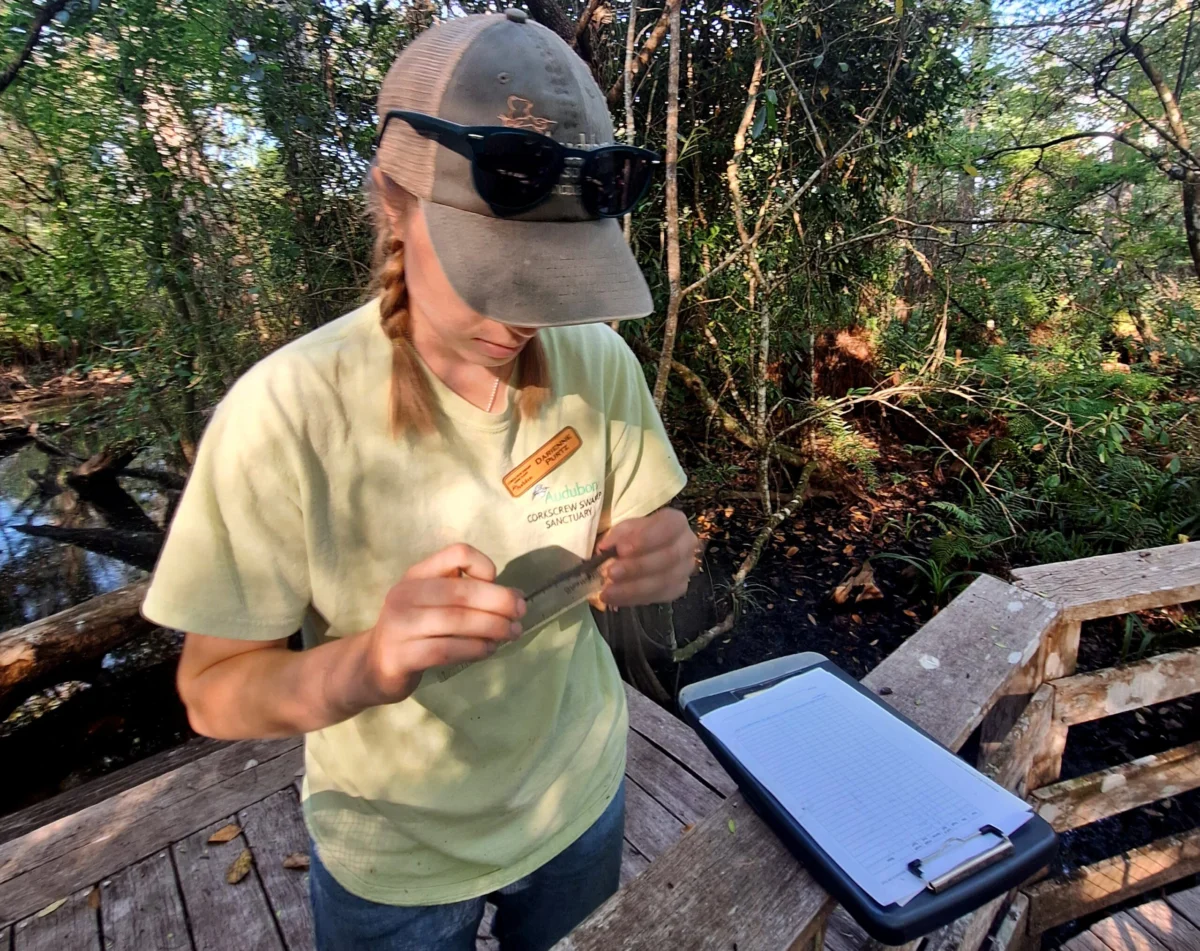
In the heart of Florida’s Western Everglades, where ancient cypress trees rise from pristine wetlands, a meticulous and long-running scientific endeavor is underway, crucial for understanding the health of one of North America’s most vital ecosystems. Audubon’s Corkscrew Swamp Sanctuary, a sentinel of biodiversity against the relentless tide of urban expansion, employs dedicated research associates like Darienne Purtz to meticulously monitor aquatic life, a practice that serves as a fundamental barometer for environmental conditions. This ongoing research is not merely an academic exercise; it forms the bedrock of conservation strategies, informing efforts to protect birds, other wildlife, and the delicate balance of the natural world from the mounting pressures of human development.
The Sanctuary’s Enduring Legacy and Ecological Significance
Audubon’s Corkscrew Swamp Sanctuary, established in 1954, encompasses approximately 13,000 acres of prime wilderness, including the largest remaining virgin bald cypress forest in the world. This ancient forest is a critical component of the greater Everglades ecosystem, providing essential habitat for a vast array of species, many of which are endangered or threatened. The sanctuary’s unique hydrology, characterized by the seasonal ebb and flow of water, dictates the rhythm of life within its boundaries. The intricate network of sloughs, ponds, and strands supports a rich tapestry of aquatic flora and fauna, which in turn sustains a diverse population of wading birds, alligators, otters, and countless other creatures.
The sanctuary’s mission extends beyond mere preservation; it actively engages in restoration, research, and education, striving to mitigate the "unintended consequences" of burgeoning development in surrounding Collier and Lee counties. The sprawling urban and agricultural landscapes nearby exert immense pressure on the natural environment, impacting water quality, altering natural flow regimes, and fragmenting habitats. In this context, scientific monitoring programs become indispensable tools for detecting early warning signs of ecological stress and guiding proactive conservation measures.
The Aquatic Surveying Program: A Window into Wetland Health
At the core of Corkscrew’s environmental surveillance is its comprehensive aquatic surveying program. Audubon staff systematically monitor populations of small aquatic animals—including fish, amphibians, and insects—because these organisms serve as critical bioindicators of wetland health. Their presence, absence, abundance, and diversity directly reflect the quality and quantity of water, the integrity of the habitat, and the overall productivity of the ecosystem. Furthermore, these small creatures constitute the primary prey base for a vast array of larger predators, from the iconic wading birds of the Everglades to alligators and river otters. A decline in these populations can trigger a cascading effect throughout the food web, signaling potential systemic distress.
Darienne Purtz, a research associate with Audubon’s Corkscrew Swamp Sanctuary, is a key figure in this program. Her work involves rigorous fieldwork across five distinct survey sites within the sanctuary, where data is collected three times annually. Four of these sites are strategically located in areas associated with ongoing wetland restoration activities, allowing researchers to gauge the effectiveness of these interventions. The fifth site, along the CLASS loop of the boardwalk, serves a dual purpose: it provides valuable data and offers a unique opportunity for public engagement during educational programs, allowing visitors to witness scientific research in action.
Methodology and Chronology of Data Collection
The aquatic sampling methodology is precise and standardized to ensure consistent and comparable data over time. At each study site, Purtz deploys six wire mesh minnow traps. These traps are carefully placed in water depths of at least 20 inches, a critical parameter to ensure effective capture of target species and to reflect conditions where aquatic life can thrive. After approximately twenty-four hours, Putz returns to retrieve the traps. The captured animals are then carefully collected and transported back to the sanctuary’s laboratory. Here, a detailed process of identification, sex determination (for certain species), and measurement takes place. This meticulous data collection provides crucial insights into population dynamics, reproductive success, and overall community structure.
The timing of these surveys is paramount, designed to capture the dramatic seasonal changes inherent to the Everglades’ hydroperiod. Sampling events are scheduled for the late-wet season (typically October-November), the early-dry season (December), and the mid-dry season (January-February). This strategic timing allows biologists to observe how aquatic animal populations respond to the annual rise and fall of water levels. As Purtz explains, "Minnow trapping only works if there is enough water for fish and other species to move around, and if that water is warm enough that they are active." During prolonged dry periods, aquatic life concentrates in deeper refugia, while during wet periods, they disperse across the flooded landscape. Understanding these movements and population shifts is vital for comprehending the resilience and vulnerabilities of the ecosystem.
Commonly encountered fish species in the traps include the vibrant flagfish, the agile golden topminnow, and the ubiquitous Eastern mosquitofish. However, the traps also yield a surprising diversity of other aquatic organisms, such as various species of crayfish, both adult and larval amphibians, and a fascinating array of aquatic insects, including the formidable predaceous diving beetles. Each species contributes a unique piece to the ecological puzzle, offering clues about water quality, food availability, and habitat structure.
A Day in the Field: Unveiling the Sanctuary’s Secrets
On a recent sampling day, Purtz navigated the boardwalk, her wheeled cart laden with her clipboard, boots, and other essential gear, threading her way past curious visitors. While her work often takes her into the sanctuary’s remote backcountry, the opportunity to interact with the public on the boardwalk site is one she embraces. Visitors frequently express their appreciation for the vital research being conducted, underscoring the public’s growing awareness of conservation efforts.
Upon arriving at the CLASS loop site, Purtz meticulously records the time the traps are pulled and the precise water depth, critical data points for contextualizing her findings. Opening the first trap, she prepares her ruler, ready to measure the squirming catch. Amidst a flurry of small fish, her attention is drawn to a significant find: a peninsula newt, Notophthalmus viridescens piaropicola. These amphibians are particularly reliant on calm, fresh waters rich in vegetation, which provide both shelter from predators and abundant foraging opportunities. From the moment they hatch as larvae to their adult forms, these newts play a unique role in the ecosystem. Interestingly, they are unpalatable to many fish species due to skin toxins, but they still fall prey to crayfish, turtles, and various wading birds. Purtz’s observation of several slough crayfish in the same traps where newts were found offers valuable insight into potential predator-prey dynamics within that microhabitat.
Once all trap contents are carefully removed, identified, and recorded, Purtz loads the empty traps back onto her cart. The journey back to the lab marks the transition from fieldwork to data processing, where samples are further analyzed, and the collected information is meticulously entered into a comprehensive database. This data then becomes part of a long-term record, allowing for trend analysis and comparison across years and seasons.
The Indispensable Value of Bioindicator Data
The aquatic fauna sampling program is just one facet of Audubon staff’s multi-pronged approach to monitoring wildlife populations at Corkscrew Swamp Sanctuary. Combined with vegetation surveys and studies of terrestrial animals, this data paints a holistic picture of the ecosystem’s health, directly supporting the conservation and restoration of natural ecosystems throughout the Western Everglades.
As Purtz emphasizes, "The presence and absence of some species confirm adequate water levels and water quality conditions." The specific species caught and their relative numbers provide nuanced information. For instance, the prevalence of pollution-sensitive species indicates good water quality, while an abundance of tolerant species might signal environmental degradation. Seasonal variations in species composition and abundance are also crucial indicators, reflecting how the ecosystem responds to the natural hydrological cycle and, increasingly, to human-induced alterations.
The detailed data on fish, insect, amphibian, and reptile populations provides biologists with a clear understanding of how the ecosystem responds to fluctuations in wetland water levels. More critically, this data offers invaluable insight into the food available for higher-level predators, such as the sanctuary’s diverse wading bird populations (including federally protected species like the Wood Stork), alligators, and otters. A robust and diverse prey base is essential for the successful breeding and survival of these apex predators. Without sufficient food resources, their populations would decline, disrupting the entire trophic structure.
By "connecting the dots" between the annual rise and fall of water levels, species composition, and population health, the research team can develop a deeper understanding of ecosystem function. This knowledge is then translated into adaptive management strategies within the sanctuary, guiding decisions on prescribed burns, water management, and invasive species control.
Broader Implications and the Future of Everglades Conservation
The findings from Corkscrew’s aquatic monitoring program extend far beyond the sanctuary’s boundaries. The Western Everglades faces myriad challenges, including significant habitat loss due to agricultural expansion and urban sprawl, altered hydrology from extensive canal systems, and the looming threat of climate change, which manifests as changes in rainfall patterns and rising sea levels. The data collected by Audubon scientists contributes directly to regional conservation efforts, informing broader water management policies and land-use planning decisions.
Audubon’s scientific rigor provides a credible voice in policy debates, advocating for policies that protect critical wetlands and ensure adequate freshwater flows to sustain the Everglades. The long-term nature of the monitoring program at Corkscrew, which has been ongoing for decades, provides invaluable baseline data against which current changes can be measured. This historical perspective is crucial for understanding long-term ecological trends and predicting future impacts. For example, a consistent decline in certain indicator species over several years could signal a fundamental shift in the ecosystem, prompting immediate investigation and intervention.
Furthermore, the public engagement aspect of the program, particularly at the CLASS loop boardwalk site, plays a vital role in fostering environmental stewardship. By allowing visitors to observe scientists at work, the sanctuary demystifies research and highlights the tangible benefits of conservation. Educating the public about the interconnectedness of aquatic life and overall ecosystem health is essential for building a constituency that supports environmental protection.
In essence, the work of Darienne Purtz and the entire Audubon research team at Corkscrew Swamp Sanctuary is a testament to the power of meticulous scientific observation. Through the careful counting of minnows, newts, and beetles, they are not just tracking small creatures; they are charting the pulse of an entire ecosystem, providing the critical data needed to safeguard one of Florida’s most precious natural treasures for generations to come. As environmental pressures intensify, the insights gleaned from these aquatic surveys will become even more invaluable in the ongoing battle to preserve the unique beauty and biodiversity of the Western Everglades.