
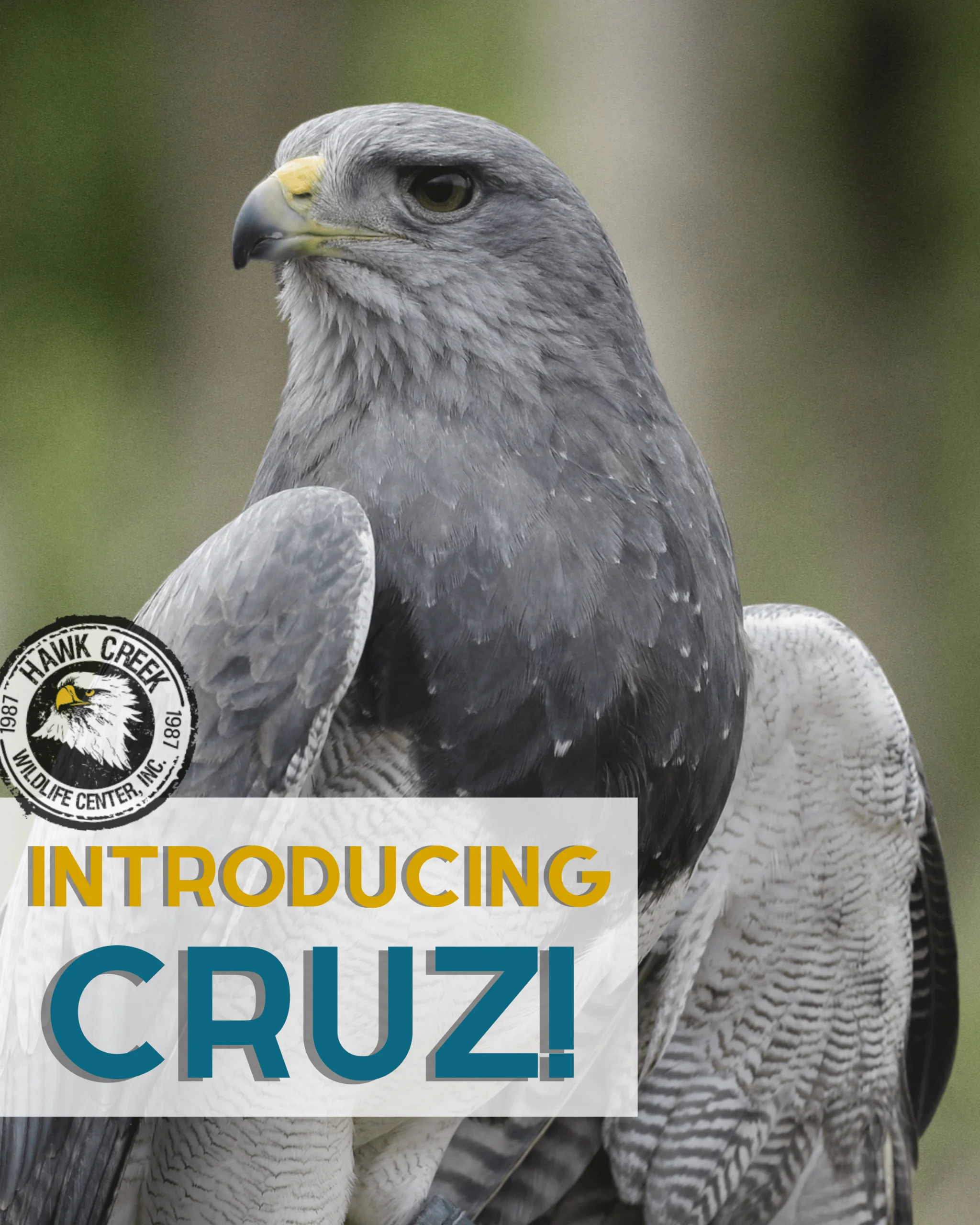
Hawk Creek is thrilled to announce the arrival of its newest avian resident, a magnificent specimen of the species known across its native South American range by a variety of names, including the Black-chested Buzzard-eagle, Chilean Blue Eagle, Patagonian Eagle, and Gray Buzzard Eagle. Here at Hawk Creek, this impressive raptor will be affectionately known as Cruz. This introduction signifies not only a new educational opportunity for the local community but also underscores Hawk Creek’s commitment to global bird conservation through vital partnerships.
A Majestic New Resident: Understanding Cruz and His Species
Cruz, the Black-chested Buzzard-eagle, is a raptor of considerable beauty and ecological significance. Native to the elevated, open habitats of South America, these birds are a testament to the diverse avian life found on the continent. Their striking plumage and powerful build are adapted for life in high-altitude environments, where they are apex predators. Their scientific name, Geranoaetus melanoleucus, hints at their distinctive coloration and their resemblance to buzzards in their hunting style.
These eagles are primarily diurnal hunters, spending a significant portion of their day soaring through the skies, employing their keen eyesight to locate prey. Their diet consists of a variety of animals, with a particular fondness for small to medium-sized mammals such as degus, a common rodent species in their native range. Notably, Cruz’s presence also brings attention to the impact of invasive species. In some regions, these eagles play a crucial role in controlling populations of introduced animals, such as the European hare, which can otherwise disrupt local ecosystems. This ecological function highlights the interconnectedness of species and the importance of maintaining healthy predator-prey relationships, both native and introduced.
The typical lifespan of a Black-chested Buzzard-eagle in the wild is estimated to be between 15 to 20 years, though they can live longer in protected environments. Their breeding season usually occurs during the spring and summer months, and they construct large nests, often on cliffs or tall trees, where they lay one to three eggs. The development of young eagles is a lengthy process, with fledglings often remaining dependent on their parents for several months after hatching.
A Partnership Forged in Conservation: Sia and Hawk Creek
The acquisition of Cruz by Hawk Creek is the direct result of a significant and ongoing partnership with leading eagle conservationists at Sia, located in Oklahoma. This collaboration is instrumental in facilitating the exchange of avian species for educational purposes and, more importantly, in supporting a broad spectrum of eagle conservation programs operating on a global scale. Through this alliance, Hawk Creek gains the ability to introduce its community to raptor species that are rarely encountered in the United States, thereby fostering a deeper appreciation for avian diversity and the challenges these magnificent birds face worldwide.
Sia, which stands for the Comanche Ethno-Ornithological Initiative, is a vital organization dedicated to the study, preservation, and understanding of birds, particularly those with cultural and ecological significance. Their work extends beyond mere species preservation; it encompasses a holistic approach that often integrates traditional ecological knowledge with modern scientific methodologies. This integration is particularly relevant when working with indigenous communities who have long-standing relationships with the natural world and its inhabitants.
The partnership between Hawk Creek and Sia is not a recent development but rather a cultivated relationship built on shared goals and mutual respect. Over time, this collaboration has allowed for the successful introduction of several remarkable species to the Hawk Creek facility. Among these are Jara, a Short-toed Snake Eagle (Circaetus gallicus), known for its specialized diet and hunting techniques, and Onyx, a Verreaux’s Eagle (Aquila verreauxi), a formidable raptor of African mountain ranges, celebrated for its impressive size and aerial prowess. The presence of these birds at Hawk Creek provides invaluable educational opportunities, allowing visitors to witness firsthand the diversity and specialized adaptations of raptors from different continents.
Wild Earth Event: A Deep Dive into Eagle Conservation
The arrival of Cruz coincides with an upcoming event at Hawk Creek designed to illuminate the critical field of eagle conservation. This event, titled "Wild Earth," will feature a distinguished guest speaker: Waha Thuweeka, also known as William "Two-Raven" Voelker, a globally recognized expert in eagle conservation. Voelker is a prominent figure associated with Sia and the Comanche Ethno-Ornithological Initiative.
The "Wild Earth" event, scheduled for May 13th, promises to be an enlightening experience for all attendees. Voelker is expected to deliver a comprehensive presentation that will delve into the multifaceted aspects of eagle conservation. This will likely include discussions on the threats faced by various eagle species, such as habitat loss, pollution, and human-wildlife conflict, as well as the innovative strategies and ongoing efforts to mitigate these challenges. His expertise, rooted in both scientific research and potentially indigenous perspectives, offers a unique and invaluable insight into the complex world of raptor conservation.
The choice of Voelker as a speaker is particularly significant. His dual identity, Waha Thuweeka and William "Two-Raven" Voelker, suggests a bridging of cultural and scientific approaches to understanding and protecting birds. This approach is increasingly recognized as crucial for effective conservation, acknowledging that local knowledge and cultural connections to wildlife can be as vital as scientific data. The Comanche Ethno-Ornithological Initiative’s focus implies a dedication to understanding the relationship between human cultures and avian populations, a perspective that can enrich the dialogue on conservation.
The event’s timing, shortly after Cruz’s introduction, is strategic. It allows visitors to connect the abstract concepts of conservation with the tangible presence of a new, exotic species. The opportunity to learn from an expert like Voelker, in the context of observing species like Cruz, Jara, and Onyx, transforms a simple visit into an immersive educational experience. Attendees will gain a greater understanding of the global efforts required to protect these iconic birds and their habitats.
The Broader Implications: Education, Awareness, and Global Reach
The introduction of Cruz and the "Wild Earth" event at Hawk Creek represent more than just the addition of a new animal to an exhibit or a single lecture. They are components of a larger strategy aimed at fostering environmental stewardship and promoting a global perspective on conservation challenges. By bringing species like the Black-chested Buzzard-eagle to a wider audience, Hawk Creek and Sia are actively working to:
- Enhance Public Awareness: Many people may not be aware of the existence or the ecological importance of species like the Black-chested Buzzard-eagle. Providing direct observation opportunities and expert-led discussions can spark curiosity and a sense of wonder, which are often the first steps toward genuine concern for conservation.
- Promote Biodiversity Appreciation: The presence of diverse raptor species from different continents serves as a powerful reminder of the Earth’s rich biodiversity. It highlights that conservation efforts are not confined to local ecosystems but are a global imperative.
- Support Conservation Funding and Action: Increased public engagement and awareness can translate into greater support for conservation organizations, both through donations and volunteerism. Events like "Wild Earth" can directly contribute to the funding of crucial conservation projects implemented by Sia and their partners.
- Foster International Collaboration: Partnerships like the one between Hawk Creek and Sia exemplify the power of international cooperation in addressing shared environmental concerns. Such collaborations are essential for tackling complex issues like habitat fragmentation and the illegal wildlife trade that transcend national borders.
- Educate Future Generations: For younger visitors, encountering these magnificent birds and learning about conservation efforts can inspire a lifelong passion for wildlife and environmental protection. This educational aspect is crucial for cultivating a future generation of informed and engaged environmental advocates.
The strategic importance of partnerships in conservation cannot be overstated. The challenges facing raptor populations are often complex and require a multidisciplinary approach. By combining the educational outreach capabilities of Hawk Creek with the specialized conservation expertise and global network of Sia, a more significant impact can be achieved. This synergy allows for the dissemination of critical information, the mobilization of resources, and the implementation of effective conservation strategies that might not be possible for either organization to achieve independently.
The introduction of Cruz, therefore, is a symbol of this broader commitment. It represents a tangible link between a local community and the vast, often unseen, natural world of South America. It is a reminder that even seemingly distant ecosystems and the creatures that inhabit them are interconnected with our own, and that their well-being is ultimately tied to our own. The "Wild Earth" event, with its focus on actionable conservation, provides the knowledge and inspiration for individuals to become active participants in protecting these vital natural resources. The success of these initiatives hinges on the ability to translate fascination into informed action, a goal that Hawk Creek and Sia are clearly dedicated to achieving.