
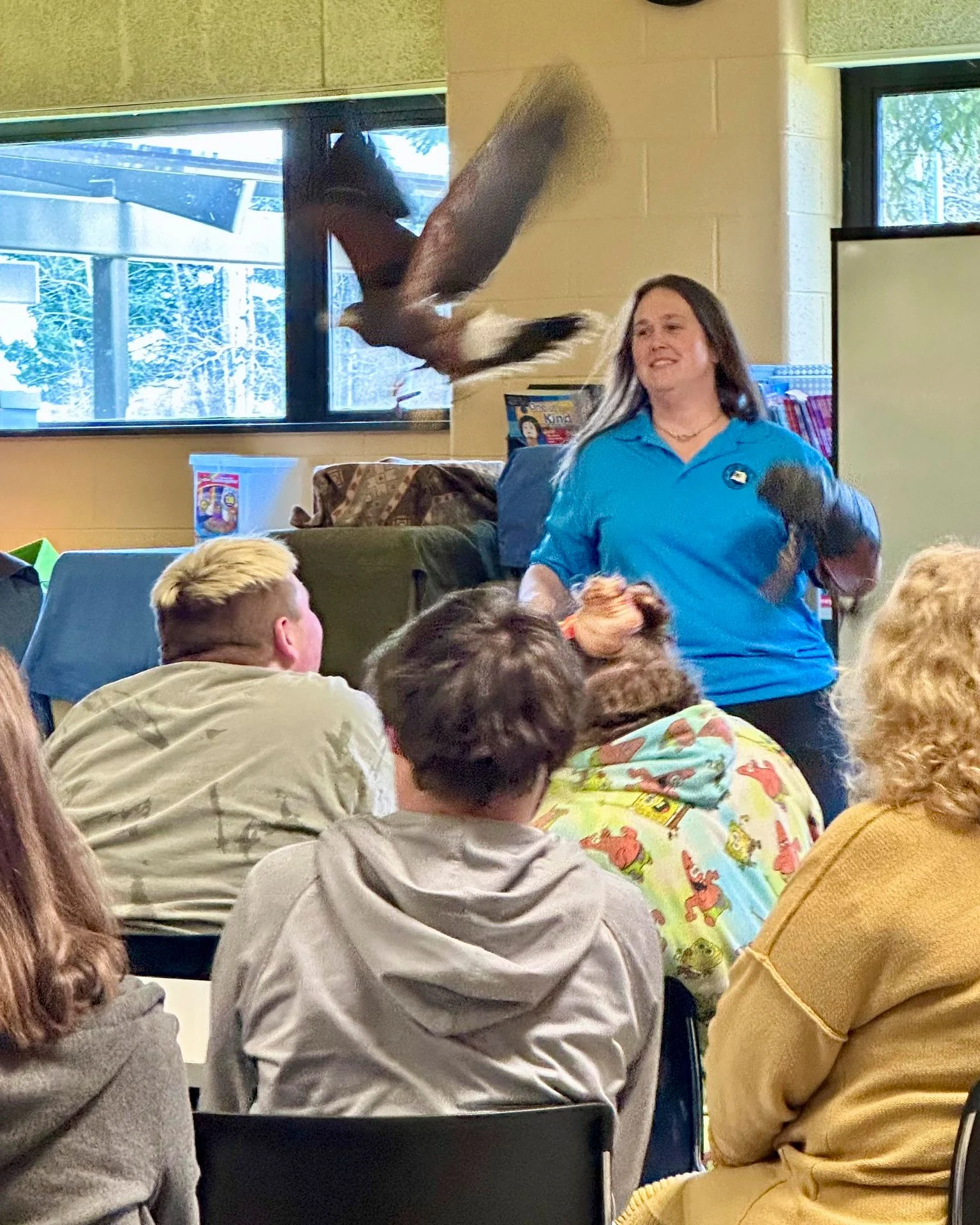
Students at the Hewes Educational Center recently experienced a captivating journey into the natural world, thanks to an engaging educational program hosted by the esteemed Hawk Creek Wildlife Center Inc. This initiative, designed to foster a deeper understanding and appreciation for wildlife, brought a dynamic array of native animals directly to the students, transforming abstract concepts into tangible, memorable experiences. The program underscored the vital role of wildlife education in cultivating environmental stewardship from an early age, aligning with the Hawk Creek Wildlife Center’s overarching mission of fostering compassion, saving species, and restoring ecological balance.
A Day of Discovery: Wildlife Takes Center Stage
The educational session at Hewes Educational Center was a vibrant display of biodiversity, featuring a carefully curated selection of raptors, mammals, and snakes. Led by two experienced wildlife naturalists from Hawk Creek, the program went beyond mere observation. Each animal served as a living textbook, providing students with invaluable insights into their respective natural habitats, unique behaviors, and the ecological niches they occupy. This hands-on approach allowed students to connect with the animal kingdom on a personal level, moving beyond the confines of textbooks and screens.
A particularly thrilling moment, described as a highlight of the day, occurred when a raptor gracefully soared directly overhead, its powerful wings momentarily casting a shadow over the captivated audience. This spontaneous demonstration of avian flight provided an unforgettable spectacle, likely etching a lasting impression of these magnificent predators onto the young minds present. Such visceral encounters are crucial in demystifying wildlife and fostering a sense of awe and respect.
The educational philosophy of Hawk Creek Wildlife Center emphasizes interactive learning. By bringing these animals to the students, the center facilitates direct engagement, allowing for questions, observations, and a deeper understanding of the intricate adaptations that enable these creatures to thrive. This method is particularly effective for younger learners, providing sensory experiences that solidify learning in a way that passive instruction often cannot. The program’s success is a testament to the center’s commitment to making conservation education accessible and impactful.
The Genesis of the Partnership: Cultivating Future Conservationists
The collaboration between Hawk Creek Wildlife Center and Hewes Educational Center represents a proactive effort to integrate essential environmental education into the academic curriculum. While specific details regarding the genesis of this particular partnership were not provided in the initial report, such collaborations typically stem from a shared commitment to student development and community enrichment. Educational institutions often seek external expertise to supplement their offerings, particularly in specialized fields like wildlife biology and conservation.
Hawk Creek Wildlife Center, with its established reputation for delivering high-quality educational programming, is an ideal partner. Their mission statement, "Fostering Compassion, Saving Species, Restoring Balance," directly aligns with the educational goals of fostering responsible citizens who understand and value the natural world. Such programs are not merely supplementary; they are increasingly recognized as integral to a well-rounded education, equipping students with the knowledge and empathy needed to address contemporary environmental challenges.

The timing of such educational initiatives is also noteworthy. As global environmental concerns, including habitat loss, climate change, and species endangerment, continue to escalate, the importance of early environmental education cannot be overstated. By introducing students to the wonders and complexities of wildlife at a formative age, centers like Hawk Creek are actively investing in the next generation of conservationists, scientists, and informed decision-makers. The direct exposure to animals fosters a sense of responsibility and a desire to protect these creatures and their habitats for future generations.
Hawk Creek Wildlife Center: A Legacy of Conservation and Education
Founded on principles of wildlife rehabilitation, conservation, and public education, Hawk Creek Wildlife Center has been a beacon for environmental awareness for many years. The center’s work extends beyond educational programs to encompass the rescue, rehabilitation, and release of injured and orphaned wildlife. This dual focus on direct intervention and public outreach allows them to address immediate conservation needs while simultaneously building long-term support for environmental protection.
Their educational programs are meticulously designed to cater to diverse age groups and learning styles. Whether through in-person presentations, virtual encounters, or outreach events, Hawk Creek strives to make the intricacies of the natural world accessible and engaging. The use of live animals in their programs is a strategic choice, designed to create a powerful emotional connection and foster a deeper understanding of the interconnectedness of all living things. This approach is supported by pedagogical research that highlights the effectiveness of experiential learning in promoting retention and fostering lasting behavioral change.
The center’s commitment to "Restoring Balance" speaks to a broader ecological perspective. They understand that wildlife populations are not isolated entities but integral components of complex ecosystems. By educating the public about the roles and needs of various species, Hawk Creek aims to promote a holistic understanding of environmental health and inspire actions that contribute to the overall well-being of natural systems. Their logo, prominently displayed, serves as a constant reminder of their identity and mission, a visual anchor for their outreach efforts.
The Broader Impact: From Classroom to Conservation Action
The educational program at Hewes Educational Center is more than just a single event; it is a potential catalyst for significant long-term impact. For the students involved, the encounter with live wildlife can spark lifelong passions for biology, environmental science, or conservation careers. The firsthand experience of observing and learning about these animals can translate into a greater willingness to participate in conservation efforts, whether through volunteering, advocating for environmental policies, or making sustainable choices in their daily lives.
The ripple effect of such programs extends beyond the individual student. Children often share their newfound knowledge and enthusiasm with their families, influencing household decisions and fostering a broader community awareness of wildlife issues. This grassroots approach to conservation education is incredibly powerful, creating a network of informed individuals who are invested in the health of their local ecosystems and the planet as a whole.
Furthermore, the data gathered by organizations like Hawk Creek from their educational outreach can inform conservation strategies. By understanding which aspects of wildlife education resonate most with different age groups and communities, they can refine their programs to be even more effective. This continuous improvement cycle ensures that their educational efforts remain relevant and impactful in an ever-changing environmental landscape. The "Share This Story, Choose Your Platform!" prompt on their website further indicates a commitment to disseminating their message widely, leveraging digital tools to amplify their reach and impact.

Supporting Data and Scientific Context
The effectiveness of wildlife education programs is increasingly supported by empirical data. Studies in environmental psychology and education have consistently shown that direct contact with nature and wildlife, particularly during childhood, correlates with increased environmental awareness, pro-environmental attitudes, and a greater sense of personal responsibility towards nature. For instance, research published in journals like Environmental Education Research has highlighted how experiential learning, such as that provided by Hawk Creek, can lead to a deeper emotional connection with nature, which is a strong predictor of conservation behaviors.
The animals featured in Hawk Creek’s programs often represent species that are crucial indicators of ecosystem health. Raptors, for example, are apex predators whose populations can reflect the overall well-being of their prey species and the health of their habitats. Mammals, from small rodents to larger carnivores, play diverse roles in seed dispersal, pollination, and nutrient cycling. Reptiles, often misunderstood, are vital in controlling insect and rodent populations and are essential components of food webs. Educating students about these animals and their ecological roles provides a foundational understanding of ecological interconnectedness.
The specific species presented would likely have been chosen not only for their educational value but also for their suitability for educational settings and their conservation status. Many wildlife centers focus on native species, and often those that are non-releasable due to injury or habituation, ensuring that the educational experience does not compromise the animal’s welfare or conservation potential. This approach aligns with ethical considerations in animal education, prioritizing the well-being of the animals while maximizing their educational impact.
Official Statements and Future Outlook (Inferred)
While no direct quotes from Hewes Educational Center officials were provided, it is highly probable that the administration and faculty would express strong support for such educational partnerships. Educators consistently seek to provide enriching, real-world learning experiences that go beyond traditional classroom instruction. A spokesperson from Hewes Educational Center would likely comment on the positive impact of the program on student engagement and learning outcomes, emphasizing the value of hands-on science education and the importance of fostering a connection with the natural world.
Similarly, the wildlife naturalists from Hawk Creek, though not directly quoted in the provided text, would undoubtedly express their passion for wildlife and their dedication to educating the public. Their statements would likely revolve around the transformative power of experiencing wildlife firsthand, the urgent need for conservation, and the hope that these educational encounters will inspire a new generation of environmental stewards. The "About the Author: Amanda" section suggests a dedicated individual within Hawk Creek is responsible for disseminating these stories, indicating a professional approach to communication and outreach.
Looking ahead, the success of this event at Hewes Educational Center likely paves the way for continued collaboration and expansion of similar programs. Hawk Creek Wildlife Center’s commitment to its mission suggests a proactive approach to seeking out new educational opportunities and forging partnerships with schools and community organizations. The ongoing need for effective environmental education, coupled with the demonstrable success of experiential learning, indicates a bright future for such initiatives. The potential for these programs to foster a generation of environmentally conscious individuals who are equipped to tackle the complex ecological challenges of the 21st century remains a powerful driving force. The center’s website, featuring a prominent "Donate" button, also highlights their reliance on public support to continue their vital work, underscoring the broader ecosystem of conservation that includes community engagement and financial contributions.